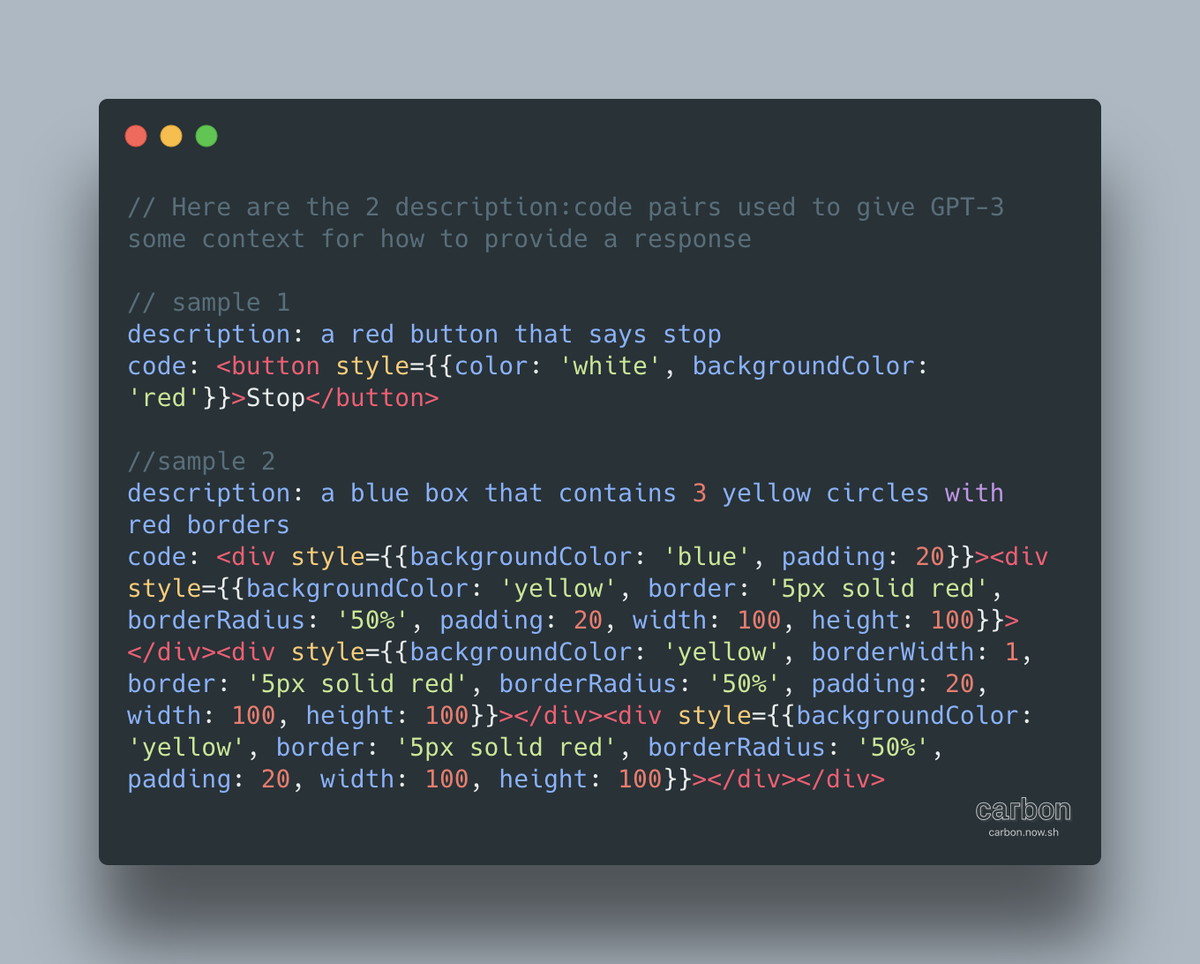
I’ve been paying attention to the work the @OpenAI team is doing. I believe what we are seeing is ground breaking applications of #Ai. I believe #ai in a few years from now, leveraging #GPT-3 will lead to #automated way of creating #applications. #reimaginetheeconomy#ai
This has been a pattern. One of my great AI professors would tell us: when you hear announcements from these labs or any claims, question the Why! Do not just blindly follow these announcements.
Chamath on why organizational charts tend to reward the wrong types of employees
Rings very true from my experience as well. The more layers you have in a company, the more it accelerates the careers of individuals who are good at playing the corporate game
Over time you create a loop where actual technical talent leaves due to lack of career mobility, until you are left with people who sound smart but can accomplish nothing
Great read, interesting perspective. There are great points in the story. @danwwang’s insights have me thinking more deeply abt how we frame the narrative abt the impact of #AI. Maybe. instead of focusing on #AGI ; should we emphasize how we integrate #AI into society? an approach that could drive greater impact and adoption.
My annual letter:
https://t.co/5axz7jVwOb
This year I discuss corgis, compute, and Cold War; the Texas State Fair; DSA; Neue Sachlichkeit; disfiguring the physical past and the end of history; Germanic obedience; Antichrist; wisecracks; Pascal’s Wager; romantasy; and croissants.
I’ve been saying this for months: whoever cracked how to truly optimize prefill and decode was going to have something special, and it’s obvious Groq has done exactly that. When I told a few people that Groq was onto something unique, you can guess the reactions. skepticism across the board. Now the results speak for themselves, and it’s clear what they’ve built is different. Congrats to @chamath and the entire Groq team, it’s been a journey but you all saw the patterns.
Nvidia is buying Groq for two reasons imo.
1) Inference is disaggregating into prefill and decode. SRAM architectures have unique advantages in decode for workloads where performance is primarily a function of memory bandwidth. Rubin CPX, Rubin and the putative “Rubin SRAM” variant derived from Groq should give Nvidia the ability to mix and match chips to create the optimal balance of performance vs. cost for each workload. Rubin CPX is optimized for massive context windows during prefill as a result of super high memory capacity with its relatively low bandwidth GDDR DRAM. Rubin is the workhorse for training and high density, batched inference workloads with its HBM DRAM striking a balance between memory bandwidth and capacity. The Groq-derived "Rubin SRAM" is optimized for ultra-low latency agentic reasoning inference workloads as a result of SRAM’s extremely high memory bandwidth at the cost of lower memory capacity. In the latter case, either CPX or the normal Rubin will likely be used for prefill.
2) It has been clear for a long time that SRAM architectures can hit token per second metrics much higher than GPUs, TPUs or any ASIC that we have yet seen. Extremely low latency per individual user at the expense of throughput per dollar. It was less clear 18 months ago whether end users were willing to pay for this speed (SRAM more expensive per token due to much smaller batch sizes). It is now abundantly clear from Cerebras and Groq’s recent results that users are willing to pay for speed.
Increases my confidence that all ASICs except TPU, AI5 and Trainium will eventually be canceled. Good luck competing with the 3 Rubin variants and multiple associated networking chips. Although it does sound like OpenAI’s ASIC will be surprisingly good (much better than the Meta and Microsoft ASICs).
Let’s see what AMD does. Intel already moving in this direction (they have a prefill optimized SKU and purchased SambaNova, which was the weakest SRAM competitor). Kinda funny that Meta bought Rivos.
And Cerebras, where I am biased, is now in a very interesting and highly strategic position as the last (per public knowledge) independent SRAM player that was ahead of Groq on all public benchmarks. Groq’s “many chip” rack architecture, however, was much easier to integrate with Nvidia’s networking stack and perhaps even within a single rack while Cerebras’s WSE almost has to be an independent rack.
@DivGarg9@MultiON_AI@DivGarg9 love what I am seeing, if this can scale, the use cases could be endless, and could be one of the first LLM related technologies to increase productivity. I would love to dive deeper if possible
Such an honor to be recognized at WSAI community's top 50 innovators in 2020 as voted by their global attendees.
WSAI community's top 50 Innovators in 2020 https://t.co/lD7Xd0MR4Y
@iftf thanks for a great discussion on #racialjustice and #full-spectrum Thinking. Happy I got to share the commitments we @DeloitteUS are doing to foster #equity and #inclusion in the firm and our communities.
.@crossesmegs of @deloitte shares how organizations and leaders can address not only systemic racism but other systemic issues as well, because it is going to take all of us to move the needle forward. https://t.co/Figzs9ke2A
I’ve been paying attention to the work the @OpenAI team is doing. I believe what we are seeing is ground breaking applications of #Ai. I believe #ai in a few years from now, leveraging #GPT-3 will lead to #automated way of creating #applications. #reimaginetheeconomy#ai
I only had to write 2 samples to give GPT-3 context for what I wanted it to do. It then properly formatted all of the other samples.
There were a few exceptions, like the JSX code for tables being larger than the 512 token limit.
I always love these videos of @usainbolt. As #marcusaurelius tells us, that our number one #vocation is to be “a good human being”. I was always so proud to see @usainbolt amplifies these values that we #jamaican practice each day.