Who is next after the Ramanujan?
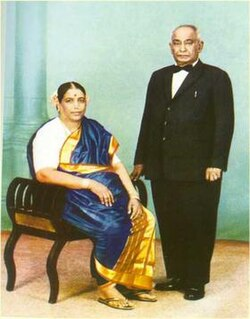
In the mid-20th century, Western academic cartels claimed that advanced mathematics was a European construct, brought to a colonized India via British education. Tekkath Amayankottukurussi Kalathil Sarasvati Amma responded by spending decades deep in the forgotten archives of Kerala, translating archaic Sanskrit palm-leaf manuscripts with razor-sharp mathematical precision.
She proved that centuries before Sir Isaac Newton/Gottfried Leibniz were even born, unheralded Indian astronomers had already built the foundations of calculus & high-level geometry. This is the story of how an Unsung Scholar reclaimed the Intellectual Sovereignty of a Nation.
For generations under colonial rule, a deeply damaging psychological narrative was hammered into the Indian psyche: Your ancestors were mystics & poets, but they lacked the rigorous, logical discipline for advanced science & mathematics. The global academic consensus was that high-level geometry, infinite series, & calculus were the exclusive property of Europe.
India was viewed as a nation that needed to be civilized with Western numbers, completely oblivious to the fact that it had once been the mathematical capital of the world.
T.A. Sarasvati Amma was born in Kerala, a land with a deeply hidden, rich intellectual undercurrent. She was not an "uneducated" woman in the literal sense, she was a brilliant scholar of Sanskrit & Mathematics, but to the global elite who only validated degrees from Oxford/Cambridge/Harvard, she was an outsider working in the shadows.
In the 1950s & 60s, while working under the guidance of legendary scholars like Dr. V. Raghavan at the University of Madras, she realized that the history being taught in schools was a lie. She did not seek validation from Western journals. She went straight to the dirt, the dust & the decaying private libraries of old Kerala families.
She began unearthing 100s of brittle, centuries-old palm-leaf manuscripts written in a highly technical, coded astronomical Sanskrit.
Sarasvati Amma undertook a brutal, lonely intellectual pilgrimage. For yrs, w/o the aid of computers/digital databases/massive research grants, she painstakingly translated & mathematically mapped out texts like the Yuktibhasa, the Karanapaddhati & the Tantrasangraha.
Her pitch to the skeptical academic community was uncompromising: "I will not give you theories. I will give you the exact geometric proofs, calculated centuries before your European heroes walked the earth."
She discovered that in the 14th century, a mathematician named Madhava of Sangamagrama & his disciples in the Kerala School of Mathematics had already solved problems that Europe would not touch until the late 17th century.
Against all odds, in 1979, Sarasvati Amma published her magnum opus: "Geometry in Ancient and Medieval India." It was a masterclass in mathematical archaeology that fundamentally shook the foundations of global history.
She systematically proved that:
The Madhava-Gregory Series: The infinite series for pi*(4 X (1 - 1/3 + 1/5 - 1/7.......), attributed to the Scottish mathematician James Gregory in 1671, was recorded in India 300 yrs earlier.
For the 1st time in modern history, the West could not look down its nose. The proofs were right there, written on palm leaves, preserved by a quiet woman who refused to let her nation’s history be erased.
Sarasvati Amma’s work didn't build corporate empires/software companies, but it did something far more powerful: it restored the intellectual self-respect of an entire civilization. Her book became the absolute gold standard reference for the history of mathematics worldwide, forcing global historians to slowly & reluctantly rewrite their textbooks.
She lived a fiercely quiet, simple life, retiring as a prof & spending her final yrs in her hometown in Kerala, completely disconnected from the blinding lights of fame. She passed away in 2000, largely unknown to the millions of Indian students who daily study the very calculus her work reclaimed.
T.A. Sarasvati Amma proved that the ultimate form of patriotism is the preservation of truth. She showed that a nation’s backbone is nott just built by industrial concrete/military might, but by its memory.
T.A. Sarasvati Amma proved that a lone Indian woman, armed with nothing but dusty palm leaves & an iron will, could rewrite the mathematical history of the world.
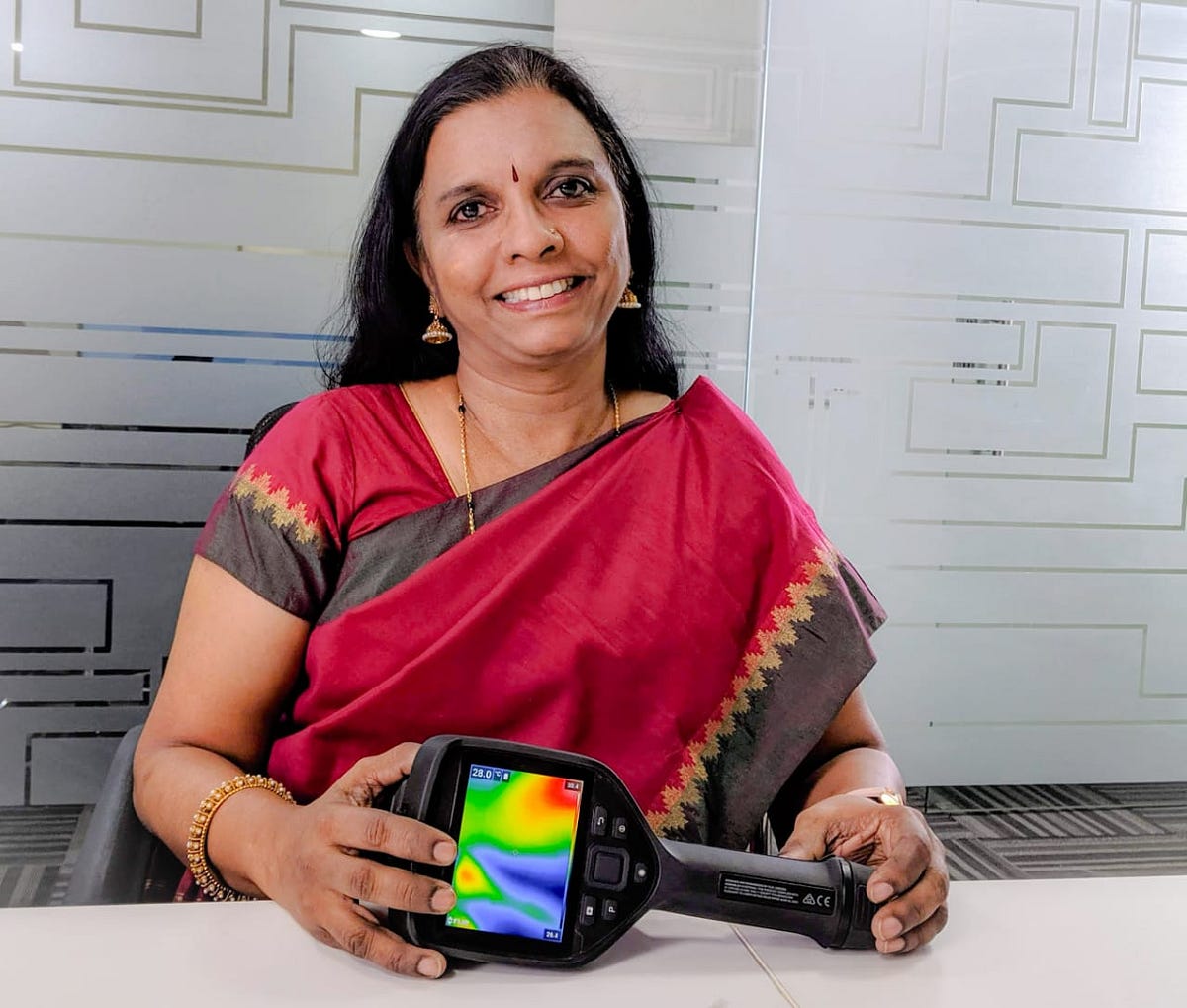
In 2016, Dr. Geetha Manjunath was heading AI research at Xerox's Bengaluru lab, a role that followed a PhD from IISc, a stint as Principal Scientist at HP Labs, and over two decades building enterprise AI systems. Then her cousin, in her early forties, was diagnosed with breast cancer at a stage too advanced to treat.
"The mammogram had missed her cancer earlier," Geetha would later say. She quit her job soon after.
Mammography, the global standard for breast cancer screening, has real limits. It uses ionising radiation, is often painful enough that women actively avoid it, and is known to be less reliable in younger women and in the dense breast tissue common across Indian women. In India, where breast cancer accounts for over a quarter of all cancer diagnoses and the five-year survival rate trails far behind the United States and Australia, late detection is not a statistic. It is the difference between a cure and a funeral.
Geetha had spent years working with thermal imaging on unrelated projects. She wondered if temperature variation in breast tissue could reveal what mammograms missed, and built the science to test it. The result, Thermalytix, requires no radiation, no incisions, and no physical contact: a woman sits before a thermal sensor for a few minutes, and an AI model trained on clinical data analyses the image.
Niramai Health Analytix, the company Geetha founded and now leads as CEO and CTO, has since screened over 300,000 women across more than 20 countries, built on 39 patents and validated in 55+ peer-reviewed clinical studies. Geetha herself has been named to Forbes India's Top 20 Self-Made Women and inducted as a Fellow of the Indian National Academy of Engineering.
For India, where cost and discomfort keep millions of women away from regular screening, a radiation-free test that can be deployed in a primary clinic is not a convenience. It is a chance to catch what would otherwise be caught too late.
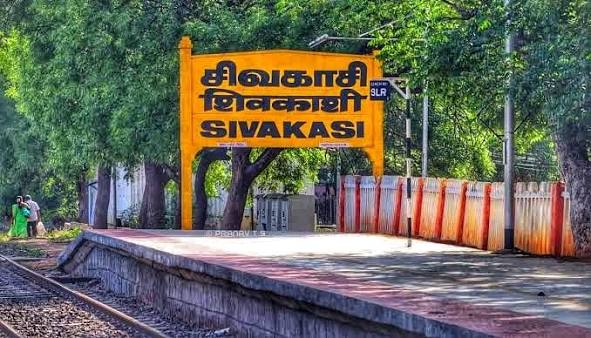
In 1922, Western colonial cartels told P. Ayya Nadar that a drought-prone, uneducated village in South India could never compete with Europe’s advanced industrial manufacturing. Ayya Nadar responded by traveling across the country, collecting the secrets of mechanized match production & returning to build a cottage industry that broke the Swedish match monopoly forever.
This is the story of how a Tiny Spark built a Great Nation. In the early 1900s, India was 1 of the largest consumers of matches in the world, but every single strike of fire was controlled by foreign giants. A Swedish billionaire named Ivar Kreuger known globally as the "Match King" had established an absolute, suffocating monopoly over the global market.
Foreign-aligned giants like WIMCO flooded India with imported matches, making massive profits off the daily needs of ordinary Indians. The narrative was carefully maintained: Complex chemical formulations & high-precision splints require European machinery; the Indian villager is only meant to be a consumer.
While European corporate lords grew unimaginably wealthy, rural regions in India like Sivakasi were dying of drought & poverty. The land grew nothing & the people had no jobs. They were living on a literal powder keg of potential, but lived in absolute poverty.
P. Ayya Nadar had no foreign degree/massive inheritance, but he had a PhD in Survival. Seeing his hometown of Sivakasi starving due to failed monsoons, he refused to accept that destiny. He approached traditional elite financiers for loans to import Western matchmaking machinery. They laughed him out of the room. The narrative was that uneducated, rural Indians could not handle hazardous volatile chemicals like phosphorus & potassium chlorate, nor could they manage industrial balance sheets.
Ayya Nadar did not look for foreign machinery. He went to find the secret process himself. Ayya Nadar & his partner undertook a journey to Calcutta, where a few primitive, highly secretive match factories existed. To bypass corporate espionage guards, they worked in disguise as low-level laborers, observing the exact chemical ratios, drying times & wood-slicing techniques with laser-sharp focus.
He did not come back with heavy, imported machines; he came back to Sivakasi with a simple, handwritten blueprint for a decentralized, hand-made cottage industry. The Pitch to his drought-stricken townspeople was simple: "Give me your labor, not your money. We do not need automated European factories; we will build this with our own hands."
Poor villagers, who had lost all hope due to dried-up farms, dug into their meager savings & offered their sweat. They built simple wooden hand-frames & mixing tables because Ayya Nadar promised them they would no longer import their fire from Europe, they would manufacture it.
Against all odds, in the 1920s, the indigenous match factories of Sivakasi were born. To fight the massive marketing budget of the Swedish cartel, Ayya Nadar engineered a brilliant, highly localized weapon: Patriotic Branding.
He plastered images of Indian freedom fighters, local deities & national symbols onto the matchboxes. For the 1st time in history, the profits from a matchbox did not cross the Atlantic to line the pockets of a Swedish billionaire; they stayed entirely within the community. Striking a local matchbox became a daily act of defiance against colonial rule.
The dusty, barren outpost of Sivakasi completely transformed into a booming industrial powerhouse of fireworks, printing presses & safety matches, funded entirely by indigenous match money. Ayya Nadar’s decentralized model created the blueprint for India's cottage industry revolution.
This model of labor-intensive, localized manufacturing was so wildly successful that it forced the govt to place high excise duties on foreign mechanized matches to protect Indian hands. W/o Ayya Nadar's "Tiny Spark" victory, India’s massive home-grown printing & fireworks sectors would simply not exist.
Today, Sivakasi fulfills ~90% of India's fireworks & safety match demands, employing 100s of 1000s of rural families. P. Ayya Nadar proved that industrialization does not have to be Top-Down (from heavy Western machines to the poor); it can be Bottom-Up.
He showed that a community of determined human hands is vastly more powerful than a million-dollar automated factory from a European cartel. P. Ayya Nadar built a Backbone. He proved that a drought-stricken Indian villager could spark an industrial revolution that could burn down a global monopoly.
In 2012, a 19-year-old aeronautical engineering student from Coimbatore presented propulsion research at a NASA event. Dr. APJ Abdul Kalam noticed, sought him out for a meeting, and handed him a recommendation letter with one challenge: prove your concept.
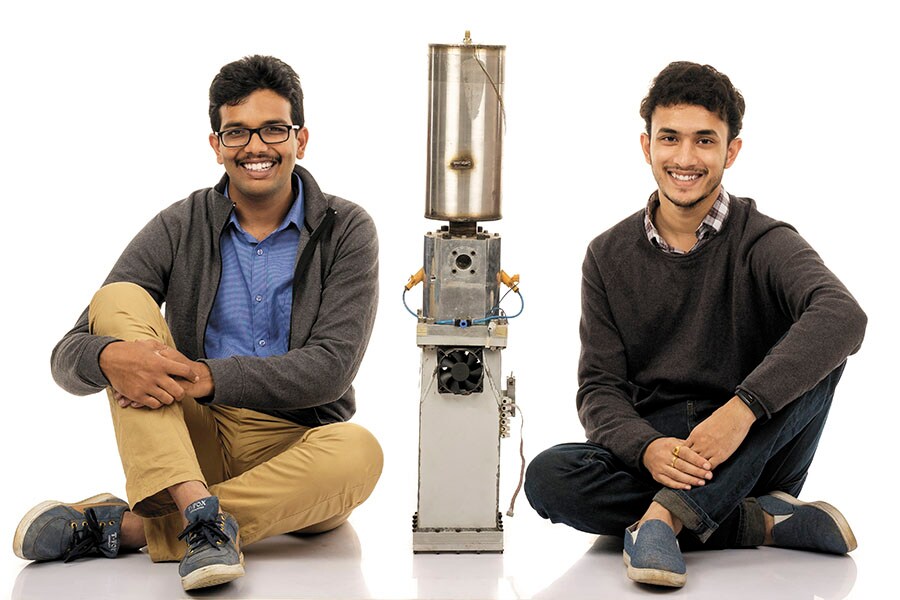
That student was Rohan M. Ganapathy. Three years later, he and family friend Yashas Karanam co-founded Bellatrix Aerospace from IISc's incubation lab in Bengaluru. The problem they chose to solve touches every satellite in orbit.
Nearly all satellites run on hydrazine, a propellant that has been standard since the 1960s. It is deeply toxic, carcinogenic, and so hazardous that it requires specialized crews and loading facilities near the launch site. India imports all of it. Nobody was building an alternative.
Bellatrix built two. Rudra is India's first high-performance green propulsion system, delivering hydrazine-equivalent thrust while cutting handling costs by over 60%.
Jal is a microwave plasma thruster that uses water as propellant, which Bellatrix claims is the world's first such system built by a private company. Both have been tested in orbit: Rudra fired on ISRO's POEM-3 in January 2024, and again on POEM-4 in January 2025.
Their third product, Pushpak, is an orbital transfer vehicle the company says can bring satellite deployment costs from $45,000 to $25,000 per kilogram. In October 2024, Bellatrix signed an MoU with ISRO's commercial arm, NewSpace India Limited, to integrate Pushpak into its launch missions. The company has raised $31 million to date, backed by BASF Venture Capital, Inflexor Ventures, and Cactus Partners.
For India, a domestic green propulsion stack means less dependence on imported hydrazine, lower costs for Indian satellite startups, and export-ready technology in a global market actively moving away from toxic fuels.
Kalam asked Rohan to prove his concept. More than a decade later, the proof has been fired in orbit.
@rohanooty@BellatrixAero@YashasKaranam
There is considerable propaganda today surrounding Sage Agastya and his place in Tamil tradition. From Sangam literature and post-Sangam epics to Bhakti literature, Pandya copper-plate inscriptions, and the Siddha tradition, Agastya is consistently revered as Tamil Muni.
He is one of the strongest pillars of Tamilakam’s civilisational unity with Bharath.
540 Janapadas! 🔥
This is the total number of Janapadas - kingdoms- in Bharata Varsha, as per Mahabharata.🔥
This will blow your mind as this is several times more than the number of Sixteen Janapadas that the mainstream history taught you!
Itihāsa Mahābhārata is inseparable from Bhāratavarṣa. No other ancient text contains this much information about the Geography of Bhāratavarṣa.
Mahābhārata mentions around 540 Janapadas, more than 100 cities, towns, & villages, 230 rivers & lakes, 100 mountain ranges & peaks, 20 forests, 59 regions, and 280 holy spots (Tirtha Stanas).
But what did we learn in schools?
Just 16 Janapadas!
प्रश्न :- अगर श्री राम का मंदिर तोड़ा गया तो इसका जिक्र तुलसीदास ने क्यो नही किया..??
प्रश्न वाजिब था..
खैर तलाश, रिसर्च प्रारम्भ हुआ और मिल भी गया....
पढ़ें तुलसीदास जी ने भी बाबरी मस्जिद का उल्लेख किया है!
सच ये है कि कई लोग तुलसीदास जी की सभी रचनाओं से अनभिज्ञ है और अज्ञानतावश ऐसी बातें करते हैं l
वस्तुतः रामचरित मानस के अलावा तुलसीदास जी ने कई अन्य ग्रंथो की भी रचना की है . तुलसीदास जी ने *तुलसी शतक* में इस घंटना का विस्तार से विवरण भी दिया है .
हमारे वामपंथी विचारको तथा इतिहासकारो ने ये भ्रम की स्थति उत्पन्न की, कि रामचरितमानस में ऐसी कोई घटना का वर्णन नही है .
*"तुलसी दोहा शतक "* का अर्थ इलाहाबाद हाई कोर्ट में प्रस्तुत किया है |
प्रत्येक दोहे का अर्थ उनके नीचे दिया गया है , ध्यान से पढ़ें |
*(1) मन्त्र उपनिषद ब्राह्मनहुँ बहु पुरान इतिहास ।*
*जवन जराये रोष भरि करि तुलसी परिहास ॥*
श्री तुलसीदास जी कहते हैं कि क्रोध से ओतप्रोत यवनों ने बहुत सारे मन्त्र (संहिता), उपनिषद, ब्राह्मणग्रन्थों (जो वेद के अंग होते हैं) तथा पुराण और इतिहास सम्बन्धी ग्रन्थों का उपहास करते हुये उन्हें जला दिया ।
*(2) सिखा सूत्र से हीन करि बल ते हिन्दू लोग ।*
*भमरि भगाये देश ते तुलसी कठिन कुजोग ॥*
श्री तुलसीदास जी कहते हैं कि ताकत से हिंदुओं की शिखा (चोटी) और यग्योपवीत से रहित करके उनको गृहविहीन कर अपने पैतृक देश से भगा दिया ।
*(3) बाबर बर्बर आइके कर लीन्हे करवाल ।*
*हने पचारि पचारि जन तुलसी काल कराल ॥*
श्री तुलसीदास जी कहते हैं कि हाँथ में तलवार लिये हुये बर्बर बाबर आया और लोगों को ललकार ललकार कर हत्या की । यह समय अत्यन्त भीषण था ।
*(4) सम्बत सर वसु बान नभ ग्रीष्म ऋतु अनुमानि ।*
*तुलसी अवधहिं जड़ जवन अनरथ किये अनखानि ॥*
(इस दोहा में ज्योतिषीय काल गणना में अंक दायें से बाईं ओर लिखे जाते थे, सर (शर) = 5, वसु = 8, बान (बाण) = 5, नभ = 1 अर्थात विक्रम सम्वत 1585 और विक्रम सम्वत में से 57 वर्ष घटा देने से ईस्वी सन 1528 आता है ।)
श्री तुलसीदास जी कहते हैं कि सम्वत् 1585 विक्रमी (सन 1528 ई) अनुमानतः ग्रीष्मकाल में जड़ यवनों अवध में वर्णनातीत अनर्थ किये । (वर्णन न करने योग्य) ।
*(5) राम जनम महि मंदरहिं, तोरि मसीत बनाय ।*
*जवहिं बहुत हिन्दू हते, तुलसी कीन्ही हाय ॥*
जन्मभूमि का मन्दिर नष्ट करके, उन्होंने एक मस्जिद बनाई । साथ ही तेज गति उन्होंने बहुत से हिंदुओं की हत्या की । इसे सोचकर तुलसीदास शोकाकुल हुये ।
*(6) दल्यो मीरबाकी अवध मन्दिर रामसमाज ।*
*तुलसी रोवत ह्रदय हति त्राहि त्राहि रघुराज॥*
मीर बाकी ने मन्दिर तथा रामसमाज (राम दरबार की मूर्तियों) को नष्ट किया । राम से रक्षा की याचना करते हुए विदीर्ण ह्रदय तुलसी रोये ।
*(7) राम जनम मन्दिर जहाँ तसत अवध के बीच ।*
*तुलसी रची मसीत तहँ मीरबाकी खाल नीच ॥*
तुलसीदास जी कहते हैं कि अयोध्या के मध्य जहाँ राममन्दिर था वहाँ नीच मीर बाकी ने मस्जिद बनाई ।
*(8)रामायन घरि घट जँह, श्रुति पुरान उपखान ।*
*तुलसी जवन अजान तँह, कइयों कुरान अज़ान ॥*
श्री तुलसीदास जी कहते है कि जहाँ रामायण, श्रुति, वेद, पुराण से सम्बंधित प्रवचन होते थे, घण्टे, घड़ियाल बजते थे, वहाँ अज्ञानी यवनों की कुरआन और अज़ान होने लगे।
गोस्वामी तुलसीदास जी की इस रचना में जन्मभूमि विध्वंस का विस्तृत रूप से वर्णन किया किया
है!
सभी से विनम्र निवेदन है कि सभी देशवासियों को अपने सभ्यता के स्वर्णिम युग के गौरवशाली अतीत के बारे में बताइये....Read News
This is the condition of the Punjab mansion of Hindu businessman Todar Mal who paid 7,800 gold coins and bought 4 yards of land from the Mughal emperor Aurangzeb to bury the bodies of the 2 young sons and mother of Guru Gobind Singh on December 13, 1705.
The Mughal faujdar Wazir Khan had ordered the two young children be bricked alive as they refused to accept Islam. When they died, their grandmother died of shock
The Mughals did not want to allow the cremation to humiliate the martyrs. They stipulated that the buyer can take only as much space as he could cover with give gold coins for the land. All the Sikh chiefs just stood helplessly
That's when Todar Mal produced the coins and bought the piece of land, and cremated the three bodies.
This is biggest irony of life, India is only country where its true heritage is hidden from next generation and falsehood Is taught.
We need to bypass the so called "standard", reductive textbook narratives that often treat ancient indian achievements as mere "accidental primitive labor" & Kailasa Temple is 1 such example. We need to treat it like a project that required a level of mathematical precision, spatial visualization & resource optimization that rivals modern aerospace/architectural design.
Advanced tech does not necessarily mean electricity/lasers/computer chips. In civil engineering, advanced tech is defined by the systems, instruments & mathematical models used to manipulate massive amounts of energy & matter with near-zero tolerance for error.
To carve Kailasa from the top down out of a single volcanic mass, the ancient Sthapatis (master engineers) had to solve problems that modern CAD software handles today.
Before a single chisel touched the stone, the entire multi-story complex including its internal rooms, floating balconies, drainage systems & columns had to be mathematically mapped out in 3Ds. In a traditional building, if a room is misaligned, we can tear down a wall & rebuild it. In rock-cut monolithic architecture, we cannot put back rock that has been carved away.
A single 5" calculation error on the roof would cause a column on the 3rd floor below to completely miss its load-bearing alignment, collapsing the ceiling. The then engineers used a highly sophisticated system of geometric grids based on micro-measurements (Angula & Hasta). They used a technique called Volumetric Prototyping. They modeled the mountain as a massive 3D coordinate matrix (X, Y, Z axes), translating a highly advanced, non-surviving theoretical blueprint seamlessly onto the undulating, uneven surface of a natural cliffside.
Carving 400000 tons of basalt, hardened volcanic lava rich in silica & iron cannot be done by simply swinging ordinary iron tools. The tools would blunt/deform/break within mins. The construction period correlates with India's absolute peak in Wootz steel production. This was a form of nanotech where iron was smelted with specific carbon-rich organic materials in sealed crucibles, creating a matrix of ultra-hard iron carbides (cementite).
Now to move 100s of 1000s of tons of rock rapidly w/o modern explosives, they likely used controlled thermal stress. By heating targeted fracture lines along the basalt's natural crystalline planes using massive, localized fires & then instantly dousing them with cold water, they forced the rock to cleanly shear itself apart along flat planes. This is a highly calculated application of thermodynamics.
In ancient India, advanced scientific & engineering knowledge was not published in open-source public libraries. It was fiercely guarded within highly specialized, hereditary engineering guilds (Shrenis/Vishwakarmas). Knowledge was passed down from master to apprentice via encrypted architectural texts (Vastu Shastras) & oral mathematical mnemonics.
This kept the IP secure from foreign theft, but it made the entire scientific system highly vulnerable to a SPOF. If a single elite guild of master builders was wiped out in a war, the complex mathematical formulas for calculating rock stress & monolithic geometric projections died with them instantly.
When British colonial historians arrived in India, they encountered marvels like Kailasa. Accepting that ancient Indians possessed a level of structural engineering, metallurgy & geometry that surpassed 18th century Europe was a direct threat to the colonial narrative of the "civilizing mission." They claimed Kailasa was built simply by throwing a massive, infinite army of "primitive, cheap slave labor" at a mountain with simple stone chisels over 100s of yrs.
This narrative deliberately substituted brute force for brain power. It ignored the complex geometry, the structural dynamics & the materials science, reducing a masterpiece of hyper-advanced calculation to a mere story of "many people digging for a long time."
Kailasa was just scanned with lasers, and if you haven’t been following this place, hold on.
What’s being uncovered here won’t just rewrite Indian history. It could rewrite human history and prove Ancient India had tools far more advanced than we’ve been told.
But first, you have to understand what you’re looking at. Kailasa wasn’t built. It was removed from the side of a mountain. That means there was no room for mistakes while carving one of the hardest rocks on Earth. Between 200,000 and 400,000 tons of basalt were removed to create it. The first mystery is simple: we don’t know where it all went. We also don’t truly know when it was built. The main dating sources are two land grants, but that doesn’t tell us when the actual carving began. Dating matters because it would tell us what tools they had. Ancient India had steel by 600 BC, which later became the famous Damascus steel. But basalt is hardened lava. It’s around a 6 on the Mohs scale, meaning steel barely scratches it. In 1682, a Mughal emperor ordered 1,000 workers to destroy Kailasa. They failed. That alone shows how hard this stone is. Even with modern alloys, humans barely make a dent. Russian researchers tested this by having people strike basalt with modern tools, then measuring the removed volume with photogrammetry. The result? One person working every day for 3 years could remove only about 1 cubic meter. And since Kailasa is unfinished, we still have tool marks. Those marks show cuts deeper than what modern hydraulic breakers can achieve. To penetrate basalt that deeply, we’d normally need huge machinery. But machines that size wouldn’t fit in many of these spaces. So clearly, they had different tools. Not just powerful tools. Precision tools. The detail in Kailasa’s carvings looks like work done in soft soapstone, except it’s carved into basalt. What we know for sure is that our assumptions about ancient India are wrong. At minimum, they were far more advanced than we give them credit for. At most, something was happening back then that we still don’t fully comprehend.
With blessings from elders and other well wishes , Guhan completed chanting the entire taitireeya shaakha of KY alone with no errors. This included chanting the 2 prashnas of ekaakgni kaandam as well.
During your next visit to the Madurai Meenakshi Amman temple, don’t pass by without spotting this incredible Thiruvilaiyadal story beautifully carved into the pillars in the Kambathadi Mandapam of the temple 🛕✨
Wonder what "Thiruvilaiyadal" is?
These are Shiva's Divine plays, performed out of pure grace to shatter the spiritual bonds and karmas of individual souls.
Now the story.
It is one of the most moving and unique chapters among the 64 Thiruvilayadalgal, known as the பன்றிக் குட்டிக்கு முலை கொடுத்த படலம் (The Chapter of Nursing the Piglets as a Sow).
The story begins with twelve human brothers who foolishly disrupted the deep meditation of Sage Brihaspati. Due to his severe karmic curse, they lost their human intellect and were reborn as wild piglets in the forests of Madurai, destined to be destitute and motherless. When their parent boars were later killed in a royal hunt, the curse reached its peak, the tiny piglets were left entirely orphaned and starving.
It was then that Lord Chokkanathar’s Karuna (compassion) intervened. Subverting the laws of nature, He assumed the physical manifestation of a mother boar, gathered the helpless piglets, and nursed them with His own divine milk.
This is the beautiful expression of the Divine acting as an unconditional mother to every living being. Drinking that divine milk didn't just save their lives; it instantly shattered their past karmic burdens and blessed them with supreme intellect. They eventually grew up to become revered, wise ministers in the Pandyan court.
Shiva's absolute compassion transcends species, forms, and conventional boundaries. 🙏🏽🌾
Hara Hara Mahadeva 🪷 🙏🙇
The common stages of a flower that we know of are bud & flower.
But in Tamil, there are different names for different stages right from the tiny bud till the stage where it dries off ready to fall back into the lap of the soil it grew from!
Native languages are far more sensitive to details as compared to English.
Have you noticed this in your native language also?
pic credit - அறிவோம் ஆயிரம் (arivom ayiram) on FB
A must listen brilliant video. On what is Dharma -- the law of universe. Jr. Stalin..first listen to this video..then say if you can eradicate Sanaathan Dharma..🤦
N. Swaminathan, eminent artist and head of the Thevara Padasalai of Dharumapuram Aadheenam, will be honoured with the Padma Shri for his exceptional contribution to Tamil Pann Isai, traditional Thirumurai hymns, and the preservation of ancient musical discourses.
Celebrated as a supreme artist and 'A' grade All India Radio performer with an artistic journey spanning over 55 years, he has dedicated his life to carrying Tamil devotional music to global audiences across continents and releasing over 100 albums. He is deeply revered for his commitment to oral traditions, training generation after generation of students in the fine art of Thirumurai Isai at the grassroots level.
#PeoplesPadma #PadmaAwards2026
@HMOIndia@PadmaAwards@MinOfCultureGoI@pibchennai@airchennai
1500 வருடங்களுக்கு
முன்பே தமிழ்நாட்டில்
பயன்படுத்தப்பட்ட
திரிகோணவியல் விதி.
கூறுகிறார்
கல்வெட்டு ஆய்வாளர்,
வரலாற்று ஆய்வாளர்,
தொல்பொருள்
ஆய்வாளர்,
ஈரோட்டை சேர்ந்த
கண் மருத்துவர்
M.L . ராஜா
When I first learned that the proofreading symbol commonly known as carat, an inverted V that we use for adding words in sentences actually came from Sanskrit, I was astounded! In Mrichhakatikam, a Sanskrit play written over 2000 years ago, the villain Shakaara rudely uses the word Kakapada to insult someone’s marking on the forehead. Our teacher Sarvesh Tiwari casually remarked that it is the same symbol we use today. How many more gems am I going to find in Sanskrit language?
Not Fibonacci, but Piṅgala
Sorry, no #melody moment or portmanteau here.
The numbers currently known as Fibonacci numbers, after the Italian mathematician Leonardo Bonacci or Fibonacci, should rightly be called the Piṅgala numbers, after the Indian prosodist Piṅgala.