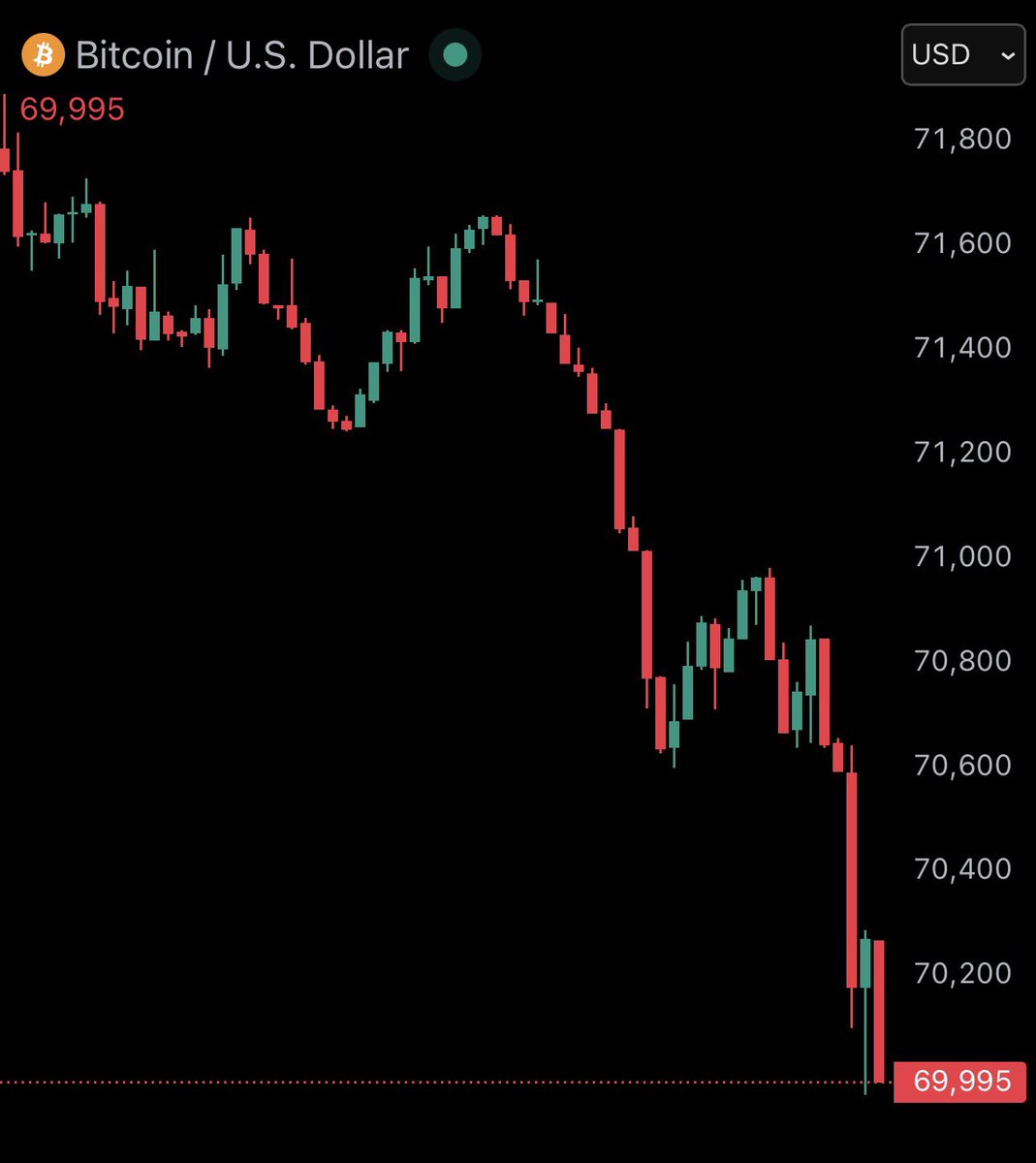
JUST IN: $15 trillion BlackRock CEO tells CNBC that Bitcoin has "more stability at these levels" and is "very bullish on the market over the next 12 months" 🚀
Spent the past few days at WebX 2026 in Tokyo, hosted by CoinPost. Walking the floor and speaking with builders, investors, institutions, and regulators gave me one clear takeaway:
The Web3 industry has fundamentally changed.
A few years ago, crypto conferences were dominated by conversations around price action, speculation, and the next narrative. This year, the focus was almost entirely different. The discussions centered on regulation, institutional adoption, stablecoins, and real-world assets (RWA).
A few observations that stood out:
1. Regulation is no longer optional. It's the foundation.
Whether you're building a blockchain protocol, an exchange, or an RWA platform, long-term success depends on operating within a clear regulatory framework. Japan has become one of the strongest examples of how thoughtful regulation can encourage innovation while protecting investors.
2. Yen stablecoins are becoming a key piece of Japan's digital financial infrastructure.
Many panels focused on compliant JPY stablecoins. Since Japan updated its payment regulations, only licensed banks and trust institutions can issue fully backed yen stablecoins. This creates a solid foundation for tokenized assets, cross-border settlement, and broader institutional participation.
3. RWA is no longer just another trend.
One of the biggest shifts I noticed was how little attention was given to speculative narratives. Instead, the conversations were about bringing real assets on-chain—real estate, government bonds, commodities, and other productive assets. Institutions are looking beyond token prices and focusing on infrastructure that connects traditional finance with blockchain.
My biggest takeaway:
The era of Web3 driven purely by hype is fading.
The next phase belongs to projects that combine regulatory compliance, real-world utility, and institutional capital.
Japan is positioning itself as one of Asia's leading hubs where TradFi and Web3 are converging, and after spending time at WebX, it's easy to see why.
Had some great conversations with international investors and teams building real-world blockchain applications. Looking forward to sharing more insights from those discussions over the coming weeks!
JUST IN: @PayPal's stablecoin $PYUSD now available in 70 countries instead of just U.S. and U.K.
The expansion enables cross-border transfers and stablecoin rewards in markets where PayPal operates.
🚨DID MORGAN STANLEY PULL OFF THE BIGGEST CRYPTO MANIPULATION?
The sequence of Bitcoin’s October crash and January recovery looks like a planned setup, and the data supports it.
Let’s go through it 👇
1) OCTOBER 10: THE TRIGGER
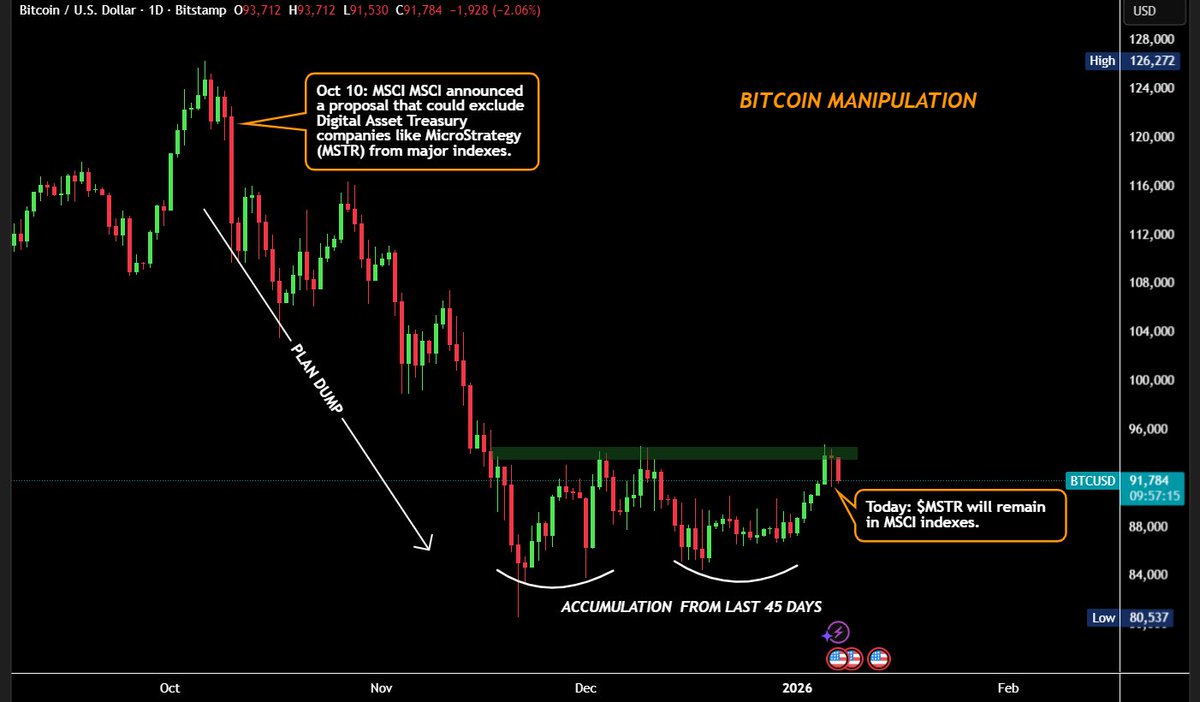
On October 10, MSCI, originally a Morgan Stanley division, announced a proposal to remove Digital Asset Treasury Companies from its global indexes.
That included firms like MicroStrategy and Metaplanet, whose balance sheets hold billions worth of Bitcoin. This wasn’t a small change because MSCI indexes guide trillions of dollars in passive flows.
If those firms were removed:
• Pension funds and ETFs would be forced to sell
• Institutional exposure to Bitcoin would shrink
• Liquidity would tighten sharply
Minutes after the announcement, Bitcoin dropped nearly -$18,000, erasing more than $900 billion from crypto’s total market cap.
2) THEN THE 3-MONTH PRESSURE WINDOW.
The consultation stayed open until December 31, meaning three full months of uncertainty.
That overhang froze demand:
• Passive investors avoided exposure
• Index-linked funds risked forced selling
• Prices stayed weak
• Sentiment collapsed
During this period, Bitcoin dropped about 31%, altcoins even more.
It was the worst quarter for crypto since 2018.
3) JANUARY 1st: SUDDEN PUMP STARS
From Jan 1st, Bitcoin starts pumping without any bullish news, and in the first 5 days of 2026, Bitcoin jumped 8%, that’s a $7300 pump from $87,500 to $94,800.
No one knew why, but somehow the relentless selling stopped, and Bitcoin was printing back-to-back green candles.
These were probably insiders who knew what was coming in the next few days.
4) JANUARY 5th-6th: THE REVERSAL
Then, somehow, in 24 hours, everything flipped.
First, Morgan Stanley filed for its own spot Bitcoin, ETH, and Solana ETFs.
Then, in a few hours, MSCI announced that it would not remove the crypto-heavy companies after all.
The exact rule that caused three months of selling pressure was suddenly withdrawn the same day Morgan Stanley launched a product that benefits from a recovering market.
That’s not a coincidence.
Here’s the full sequence in order:
1. MSCI threatens index removals (October 10)
2. Crypto crashes, uncertainty lasts 3 months
3. Prices stay suppressed while institutions wait
4. Morgan Stanley files its ETF (January 5)
5. MSCI cancels the removal threat (January 6)
It’s a clear pattern:
Create pressure
accumulate at low prices
launch product
remove pressure
Make money
MSCI controls index inclusion.
Morgan Stanley controls capital distribution.
Together, they can influence how and when institutional money reaches Bitcoin.
The October crash wasn’t just market panic. It was a structural play.
Now that the overhang is gone, liquidity is returning, and the same players who engineered the pressure are positioned to profit from the rebound.
There is no official confirmation that this was coordinated, but the sequence, the timing, and who benefited raise real questions.
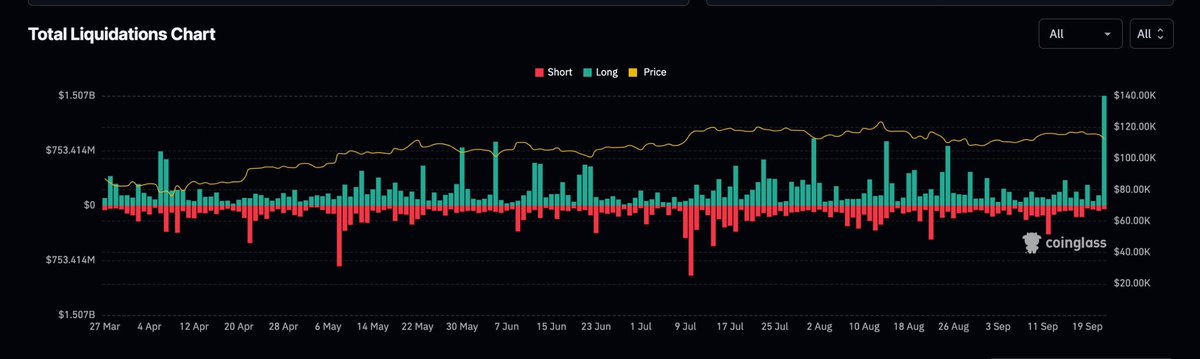
This is the biggest liquidation since March, with over 95% coming from long positions
Why is an event like this important?
-The market is overheating
- Over-leveraged Longs need to get flushed to reset the market.
Now, the market is setting the stage for the next major move in Q4