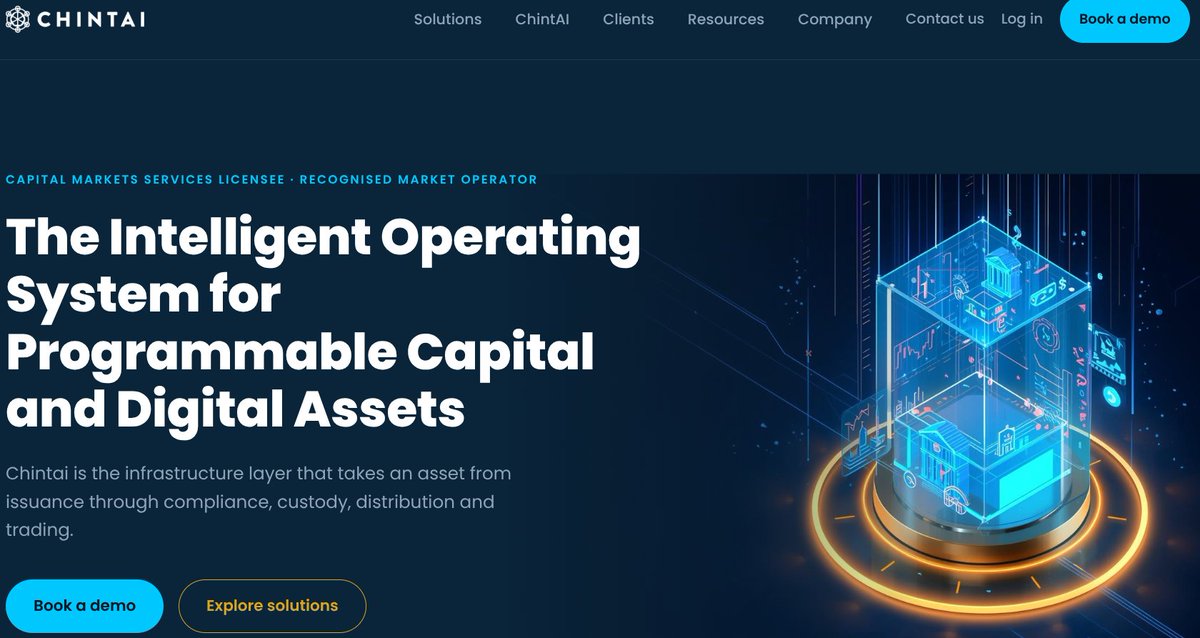
$CHEX isn’t another RWA meme — Chintai is MAS-regulated infrastructure built for issuance, trading + compliance, with projects spanning real estate, funds and a $28B Maluku tokenization pipeline. 🏦🔥
Add Solana RWA distribution, institutional fund launches + CHEX utility tied to the network economy… this is TradFi
× blockchain rails being built in real time. ⚡
Why the f*ck $CHEX?
If trillions of assets migrate onchain, regulated tokenization infrastructure could become one of crypto’s biggest picks-and-shovels plays. 🚀
#CHEX #Chintai #RWA
Time to roll with https://t.co/6H9aFcTCsn v3 enterprise-grade RWA infrastructure powered by $CHEX!
Visit https://t.co/05VEf15JKU for CHEX due diligence
Join our Telegram community:
https://t.co/PxfrTOOXLS
@Motoswap Would be great to explain what happens with the early adopters from opnet migrated to ETH. Tokenomics x10. Same for the migrated ones. Staked for 12 months
🟧 BLOCK IDO Phase 2 — Status Update
103,000+ MOTO raised
7.5M+ BLOCK — 37.7% of total supply
Phase 1 filled ✅ — Phase 2 is 13.2% in
25% bonus on every purchase.
When Phase 2 fills, bonus drops to +10%.
👉 https://t.co/zjqeikotvH
@opnetbtc@blockLot_opnet#Bitcoin#OPNet #BLOCK
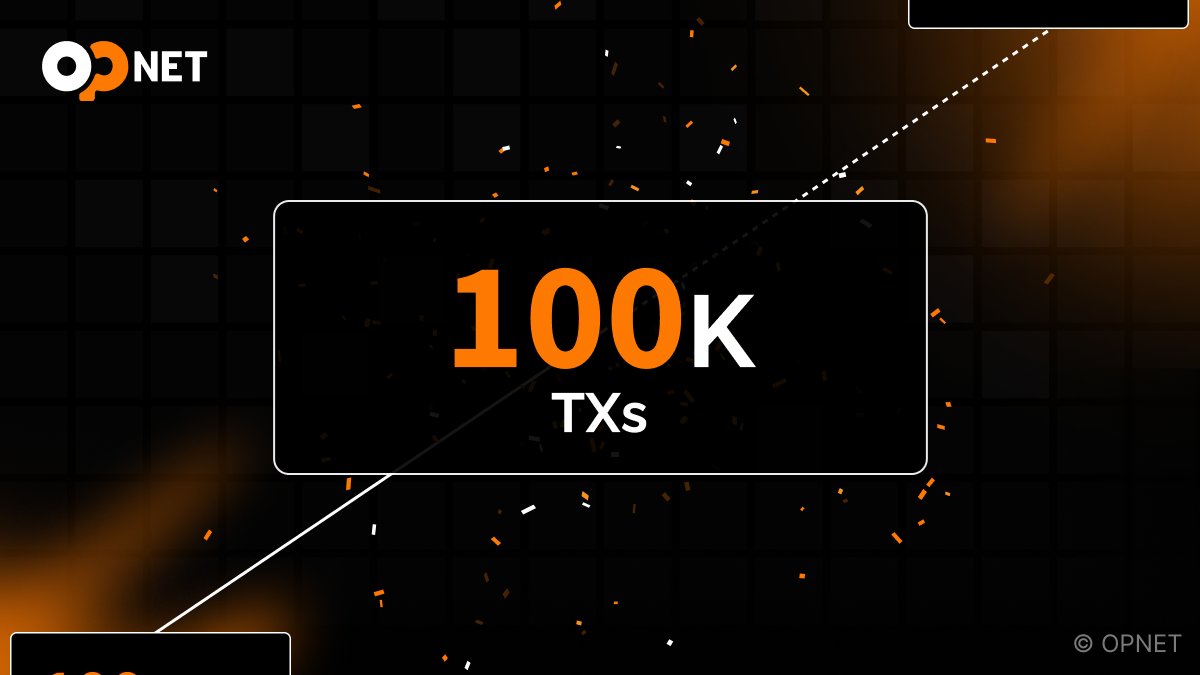
We crossed 100,000 transactions on Bitcoin Layer 1.
The Bitcoin DeFi ecosystem is starting to take shape through smart contract deployments, token mints, and staking all on the base chain.
This is just the beginning of what execution on Bitcoin looks like.
Just minted 2x $PILL on @orangepillonbtc
Bitcoin L1 smart contracts are here. Free mint is live -- take the orange pill before it ends.
https://t.co/j5bcn4yrn8
The projects you listed aren't comparable to each other or to OPNet.
Fractal is a Layer 2, completely different category.
OPNet actually can run on Fractal. It works on most UTXO chains.
BRC2.0 started as a token standard on Ordinals and later bolted on a programmability module using a custom EVM engine (revm). It's still built on top of the BRC20 indexer stack, still dependent on Ordinals infrastructure, and runs on an Ethereum derived execution model grafted onto Bitcoin.
Alkanes ran WASM contracts on Bitcoin L1 through the Ordinals and Protorunes stack, but it was rushed out and ultimately abandoned. No consensus between indexers, no node incentives, heavy dependency chains inherited from the Ordinals ecosystem. It was built to ship fast, never designed to be future proof.
Their network forked multiple times because there was nothing to prevent indexers from disagreeing on state. There was never a public testnet stress tested with the kind of adversarial scenarios that real money demands.
I'm not here to shit talk other attempts. Alkanes was the most serious one I've seen from people actually trying to build. But they skipped parts of the process.
OPNet went through multiple testnet iterations over three years. Each cycle uncovered new edge cases, forced optimizations, and led to fundamental rethinks of how the system should work. The architecture wasn't designed once and shipped. It was designed, broken, redesigned, and hardened repeatedly.
The goal was never to compete with Ethereum. Bitcoin has real constraints and OPNet was built to work within them, not pretend they don't exist.
Developers don't need to manage UTXOs. Users press one button and it works. But none of that convenience comes at the cost of cutting corners on security or determinism.
The broader problem every Bitcoin project runs into is the same: the ecosystem has no standard. Libraries are outdated, poorly documented, and built on assumptions that break the moment you try to do anything beyond basic transactions.
OPNet rewrote the stack from scratch. Over 100 libraries patched or built new because nothing that existed was reliable enough for deterministic contract execution handling real money. The only external dependency is Bitcoin Core.
When you build on top of someone else's infrastructure, you inherit every bug, every design limitation, and every abandoned dependency they leave behind.
If the Ordinals indexer has a bug, every protocol built on top of it inherits that bug. If the maintainer walks away, your project is dead and you can't fix it because the problem is below your layer.
Every dependency is also an attack surface. More code you didn't write means more code you haven't audited. Supply chain attacks, silent breaking changes, abandoned packages with known vulnerabilities that never get fixed.
Building your own stack is slower and harder. But you understand every line, you audit every line, and when something breaks at 3am you can actually fix it because you know how it works. You're not asking AI to "fix this" because you're completely lost.
Now, I'm not here to sell you a product. If you start using OPNet, you're introducing a new third party to your application, and I just told you why that's bad. So the only tip I can give you is: do your own research.
When the tooling is broken and the claims don't match reality, the only honest move is to start from zero. Go back to first principles. Don't pretend to be what you're not. Hiding a multisig in your architecture is not clever. Hiding the fact that your contract logic can partially revert, or that your system can't do what you claim, is lying to the people building on top of you.
OPNet is fully transparent about what it can and cannot do. No trusted entities. You run your own node. You own your full stack. That's it.
When someone asks how you do BTC swaps on a smart contract layer, you don't disguise a multisig behind marketing language or introduce centralization that will never scale. You sit down and solve the actual problem.
And if something isn't possible, you say so.
OPNet allows BTC to be used in contracts. Contracts can't hold BTC. You can make a contract witness a Bitcoin transfer. That's it. If a developer builds a poorly designed dapp, users can lose Bitcoin. That's on the developer, not the protocol. OPNet has been upfront about this from the beginning.
That's not a weakness.
That's honesty about how Bitcoin works.
I can't express how much I hate that most marketing in this space is just fucking bullshit.
The amount of misleading marketing in this space is staggering.
ZK proofs on Bitcoin, or anywhere? Centralized. Someone has to run the prover, and you're trusting them.
Bitcoin is already quantum resistant to a degree. If you rotate addresses and never reuse them, long term quantum attacks can't touch you. But no wallet implements this properly because almost nobody in this ecosystem actually understands Bitcoin at that level.
OPWallet isn't just another wallet. It's built to understand the technology it runs on. Try consolidating 2,000 UTXOs on any wallet today. Five minutes if it works at all. OPWallet does it in five seconds. And it will implement quantum proofing against long term key exposure.
You think it's bullshit? Don't use it. Code your own.
This space is full of promises backed by marketing and misleading claims.
I've spent the last 3 years watching projects promise the world, ship nothing but marketing, and vanish the second real engineering problems show up.
If I started listing every bullshit claim I've seen in this space, I'd be here for 6 hours and wouldn't have covered 1% of them.
Don't trust. Verify.
Go look at OPNet's libraries yourself. Read the code. If you find something, come tell me. I've been waiting three years for devs who actually bother to verify what they're running.
DeFi is now native to Bitcoin L1.
In just 3 weeks builders shipped yield farms, lending protocols, prediction markets, play-2-earn and more...
400+ dApps. Some would be flagship products on any other chain.
Today we show you the best of them.
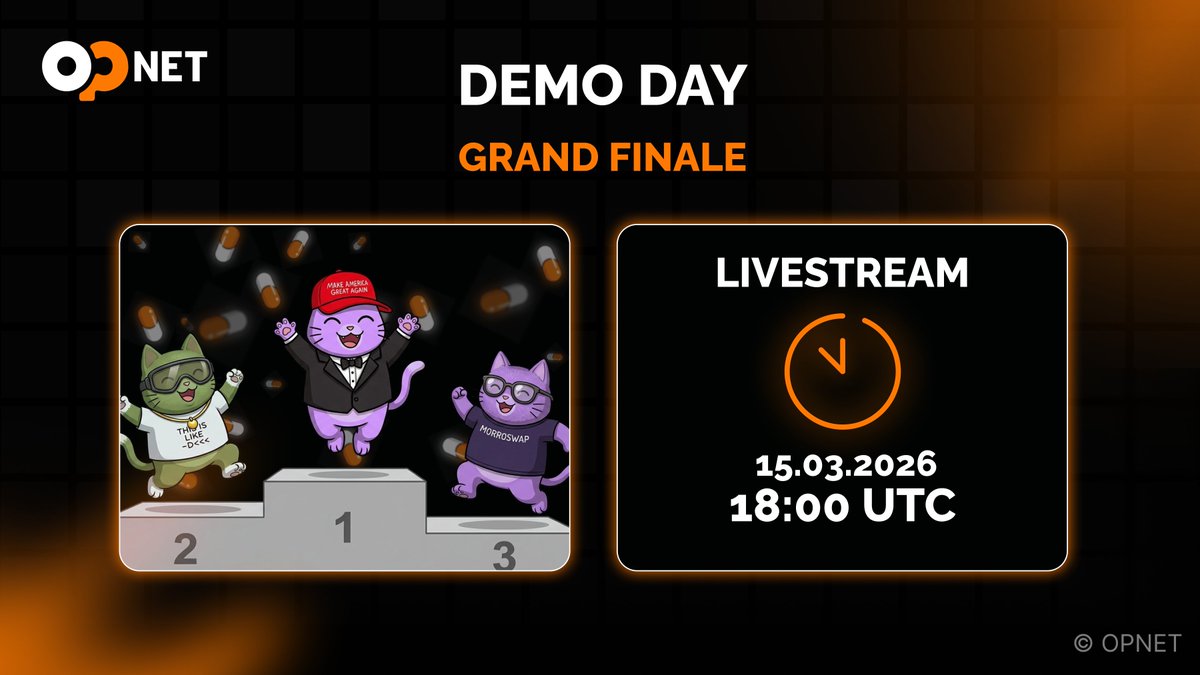
Demo Day starts at 18:00 UTC.
OP_NET (@opnetbtc) just raised $5 Million after 3 years of building their Bitcoin L1 Smart Contract Protocol
Not a sidechain or a bridge, directly on Bitcoin
Mainnet live March 17
SlowFi is here (🍊,🐌)
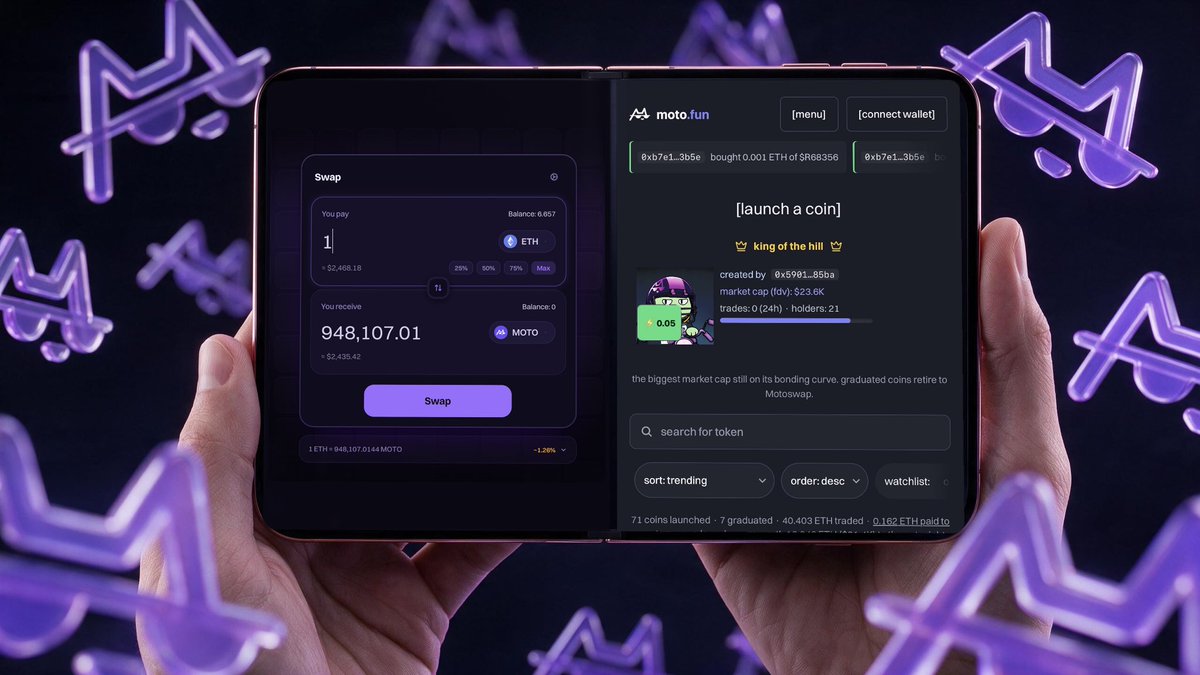
All roads lead to @Motoswap (🛵,🐈⬛)
With AI and @Solana, latency between "Idea" and "Execution" has collapsed to zero.
If you wake up with a vision at 8 AM, you want to ship it by noon.
You do not have the patience to call a lawyer, draft bylaws, or wait 3 weeks for a legal entity.
In the AI era, waiting for incorporation is death.
The modern builder demands instant feedback, not permission.
@Solana is the new jurisdiction.
It is the only environment that matches the speed of your thoughts. It replaces bureaucratic friction with creator economy.
This is the shift:
- Legacy World ❌ : Idea ➡️ Lawyers ➡️ Paperwork ➡️ Wait ➡️ Build ➡️ Launch.
- Solana World ✅ : Idea ➡️ Build ➡️ Deploy Token ➡️ Market Validation.
We proved this reality with @collaterize:
We didn't wait for a board meeting. We deployed code.
Result: 5,000 users and immediate revenue in 24 hours.
The market validated the product before the ink would have dried on a legal contract.
Ownership Coin is the ultimate MVP.
It allows you to test demand and align incentives instantly.
But you need the right rails to do it without looking like a gamble.
This is why we built Fundry.
We provide the professional infrastructure for builders who move too fast for the old world.
• Launch instantly.
• Structure your economy.
• Build a DAO, not just a group chat.
Stop waiting for the legacy system to catch up.
It’s time to build on Solana.
Launch your vision today. 👇
https://t.co/zQebMOxUmP