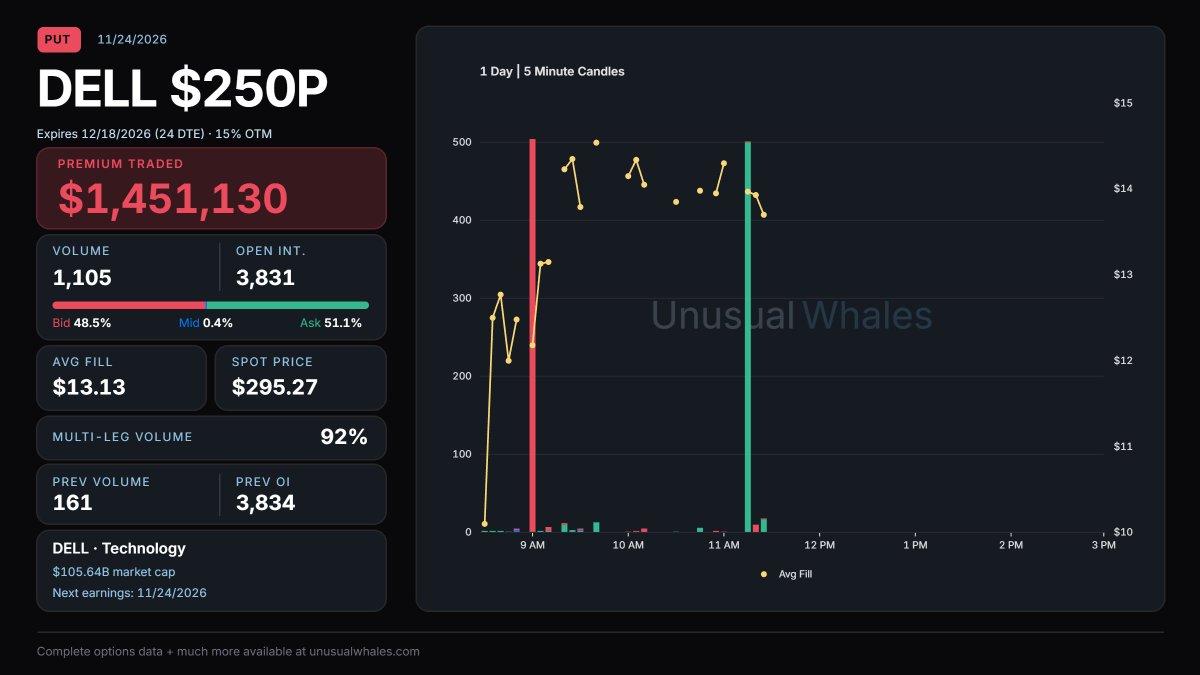
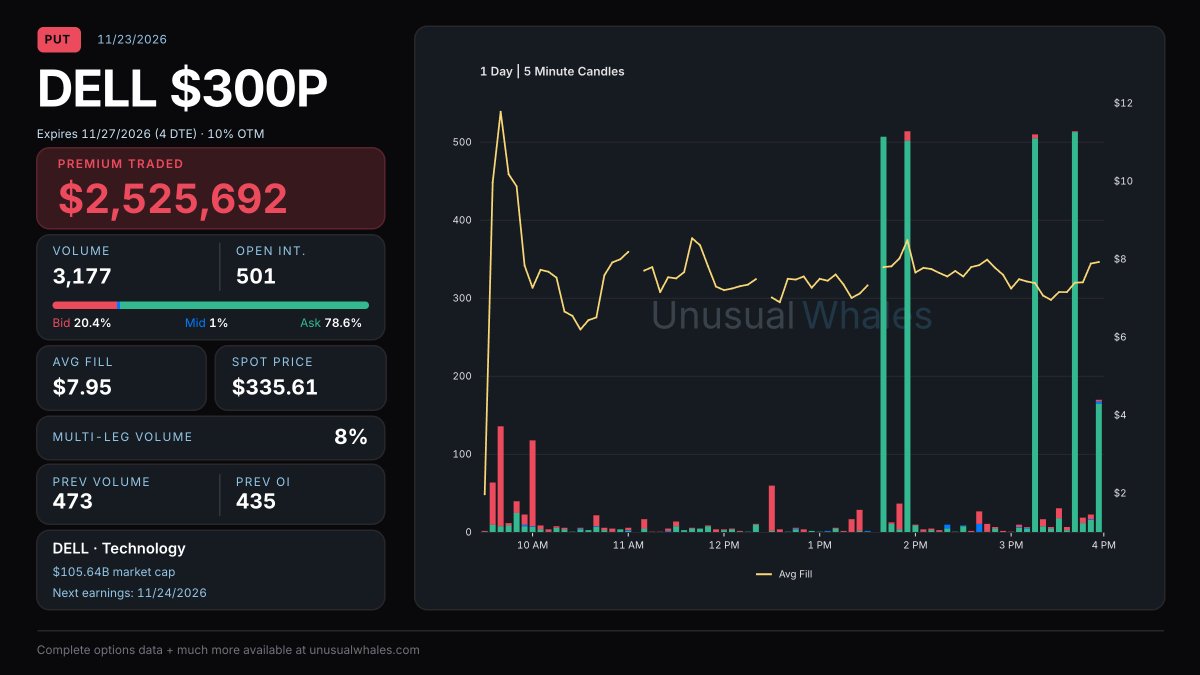
🚨 $DELL Another ~$700K in Put Buying
After apparent profit-taking near the open, ~500 of the 12/18 $250 puts traded at the ask around $14.
• $1.45M total premium traded
• 15% OTM | 24 DTE
• 92% of volume was multi-leg
Warren Buffett: "Even if a stock drops 50%, there's no need to panic."
Investor: "What should you do when a stock drops 50%?"
Buffett: "First, you need to understand what a stock really is."
Investor: "What do you mean?"
Buffett: "If you buy stocks, you must be mentally prepared for them to fall 50% or even more."
Investor: "But doesn't that mean losing half your money?"
Buffett: "Yes."
Investor: "Wouldn't most people panic and want to sell?"
Buffett: "In fact, Berkshire Hathaway's stock has fallen by roughly 50% on three separate occasions."
Investor: "Really? Even Berkshire?"
Buffett: "Yes."
Investor: "Was there something wrong with the business?"
Buffett: "No. There was nothing fundamentally wrong with the business."
Investor: "Then why did the stock price collapse?"
Buffett: "Because stock prices and business values don't always move together."
Investor: "Even so, a 50% drop is terrifying."
Buffett: "That's exactly why you should never buy stocks with borrowed money."
Investor: "Why not?"
Buffett: "Because when prices fall, you may not be able to handle the pressure."
Investor: "So when is the right time to buy?"
Buffett: "Nobody can predict the bottom. Nobody."
Investor: "So buying today doesn't necessarily mean I've made the right decision?"
Buffett: "Of course not."
Investor: "And you would still invest?"
Buffett: "Because I look at investments with a 20- or 30-year time horizon."
Every investor should ask themselves this.
But that doesn't mean every stock is a hold forever.
If the company's numbers or long-term outlook have gotten worse, selling in time might be smart.
Too many investors panic-sell the second the price drops.
The hardest part of investing is never buying the bottom or selling the top.
It's staying rational when the market falls and judging whether the company still deserves your trust.
A market crash is the real test of an investor's mindset
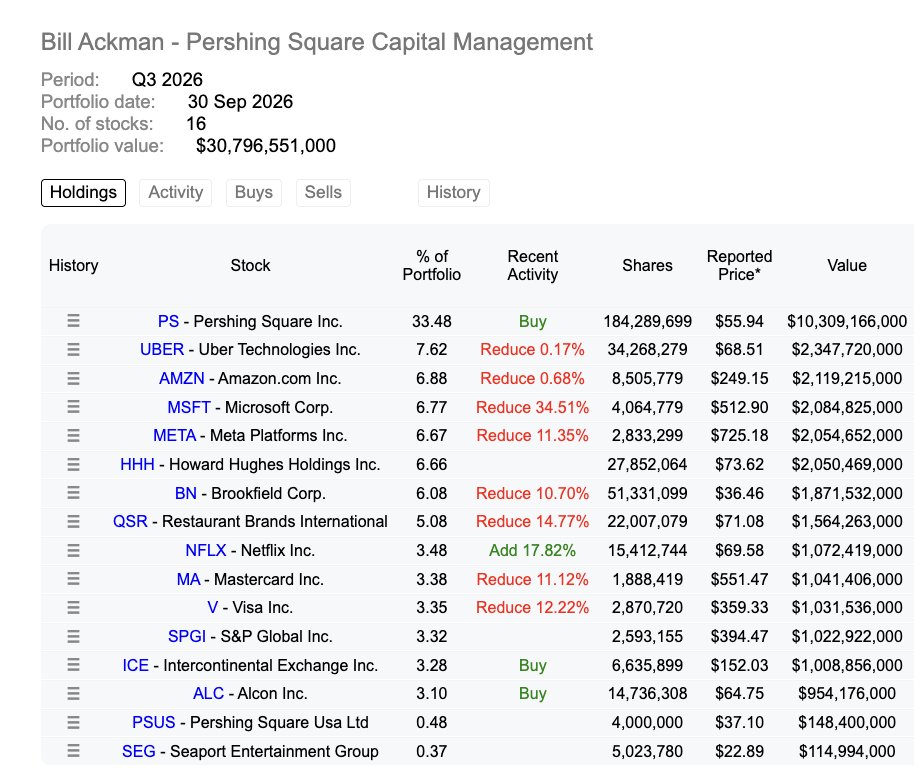
BILL ACKMAN JUST UPDATED HIS PORTFOLIO $30.8 BILLION PORTFOLIO
This is everything Pershing Square owned as of the end of Q3
$10.31B of Pershing Square $PS (new)
$2.35B of Uber $UBER (cut 0.17%)
$2.12B of Amazon $AMZN (cut 0.68%)
$2.08B of Microsoft $MSFT (cut 34.51%)
$2.05B of Meta $META (cut 11.35%)
$2.05B of Howard Hughes $HHH
$1.87B of Brookfield $BN (cut 10.70%)
$1.56B of Restaurant Brands $QSR (cut 14.77%)
$1.07B of Netflix $NFLX (added 17.82%)
$1.04B of Mastercard $MA (cut 11.12%)
$1.03B of Visa $V (cut 12.22%)
$1.02B of S&P Global $SPGI
$1.01B of Intercontinental Exchange $ICE (new)
$954M of Alcon $ALC (new)
$148M of Pershing Square USA $PSUS
$115M of Seaport Entertainment $SEG
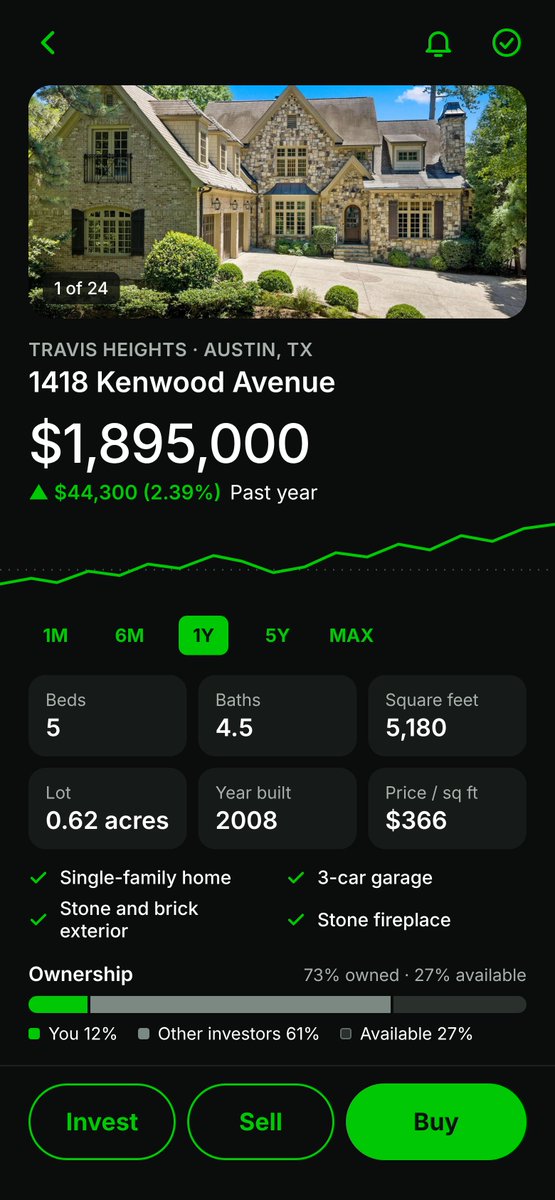
$HOOD: Buying a home in America should be as easy as buying a stock
• Buy, sell, or invest in any US home in 30 seconds
• One open marketplace for every buyer and seller
• List your own house in minutes
• Invest in any neighborhood you believe in
• No middlemen
Homeownership built the American middle class. Today the process is slow, expensive, and full of people taking a cut. The technology already exists. It's time to open up residential real estate to every American.
$SOFI just auto-raised my credit card limit for the 2nd time. No request. No hard pull.
Issuers don’t do that by accident. They review the book, like what they see, and extend more line. Card products are still a small slice of $SOFI relative to loans and deposits — which is the point. Automatic CLI’s usually mean they think the unit economics work and they want more spend, more interchange, more of the relationship.
They’re not just issuing a card. They’re trying to grow a card business.