En France, si plusieurs personnes vous agressent avec un couteau pour voler votre voiture, qu'on vous poignarde, qu'on frappe votre copine, mieux vaut ne pas se défendre et juste espérer être épargné.
Car si vous vous défendez et que sous le coup de l'adrénaline intense générée par la peur de mourir, vous frappez votre agresseur de manière "disproportionnée" (il meurt, et vous survivez) alors vous êtes bon pour 12 ans de prison ferme (et le complice lui seulement condamné à 5 ans dont 3 avec sursis).
Alors oui "je ne connais pas le dossier" mais je ne vois vraiment pas ce qui peut justifier une telle analyse lunaire de la notion de proportionnalité. Comment peut on demander à quelqu'un qui joue sa vie contre un agresseur armé de retenir ses coups, d'être capable de viser des zones incapacitantes mais non mortelles et surtout de savoir s'arrêter au bon moment !
Si on me poignarde, que ma femme se fait agresser à côté de moi, et que par extraordinaire je reprends le contrôle de la situation, je frappe comme un dingue jusqu'à ce que tous les agresseurs sont au sol et ne bougent plus.
Source : https://t.co/5pJGuY3Xcl
À propos de l’anonymat sur internet, je rétro-pédale car le drame à venir est déjà sous nos yeux :
👉🏻Normalisation du débat :
Les influenceurs, non anonyme par natures, des centaines de vidéastes/streamers, TOUS entrepreneurs émérites, se retrouvent à se prétendre du camp de la vertu systématiquement (absolument impossible statistiquement).
Les débats moraux complexes mais nécessaires se retrouvent balayés pour ne pas décevoir une partie de son audience et conserver le soutien des sponsors
👉🏻Dissidence induite
Une opposition à cette vertu est immédiatement vu comme une dissidence car extrêmement minoritaire dans les médias mainstream (consommés par les 20-40 ans), à moins d’être dans des bulles de biais cognitifs.
Qui voudra encore donner un avis « anti-vertueux » si l’anonymat est remis en cause même spéculativement (hack de base de donnée potentielle, mise en danger futures)
👉🏻Parole libérée que pour les ahuris
S’en retrouvent à n’oser donner leur avis que :
- Les lucides qui n’ont rien à perdre (rarissime)
- Les ahuris inconscients et biaisés
La deuxième catégorie vous la connaissez très bien : les complotistes du dimanche sur Facebook qui, bien qu’arborant fièrement leur nom et leur prénom, n’ont que faire de passer leurs journées à partager leurs complots ou leur racisme décomplexé.
👉🏻Conséquences
L’état de finalité de ce petit scénario, c’est bien évidemment une normalisation encore plus grande du débat.
Mais surtout une opposition toujours plus caricaturale. Alors que cette opposition requiert une approche chirurgicale pour approcher avec morale et empathie des problèmes qui nécessitent de se salir les mains.
L’encrassement de notre société est pour moi dû à cette appétence à vouloir toujours ne rien faire car faire engendrerait une partie de débats moraux, en omettant tout ceux qui découlent de ne rien faire. Une deresponsabilisation basique en somme.
Cette perte de l’anonymat sur internet, même spéculative, entraînera indirectement une version encore plus catastrophique de cette situation, entravant un débat sain.
If you're a text-based learner like me and someone who genuinely enjoys reading as the primary way to absorb information, I've stumbled onto something that might be incredibly useful to you. What I've been doing is dumping all my bookmarks on a topic into Claude and asking it to first identify the content clusters (essentially, what themes and ideas these articles actually revolve around), and then turn everything into an interactive e-book tailored to how I learn.
The magic isn't just in the summarization but in making the material interactive in ways that articles typically aren't. Think reflection questions, scenarios to consider, connections between ideas that weren't obvious before. It transforms passive reading into something that actually sticks. Obviously, this heavily depends on the complexity of the topic you're dealing with (you definitely need some level of expertise to spot slop) but with the right prompting and iteration, you can drastically reduce it.
For anyone who's autodidactic by nature, this is genuinely a bit of a paradise. You get to take that chaotic pile of "I'll read this later" bookmarks and turn it into structured, personalized learning material that meets you where you are. The depth depends on the topic and what you're after, but I've found it especially powerful for making dense or scattered information feel coherent and engaging. If this sounds like your kind of thing, here's the prompt I currently use, treat it as a starting point. Tweak it for your purposes, go back and forth with the model, and iterate until it actually fits how YOU learn:
I have [X] articles/sources saved on [general topic]. I want to turn them into a cohesive, interactive e-book that fits my learning style and actually helps me retain what I read.
About me (the reader):
[Your background, what you already know and where the gaps are]
[Why this topic matters to you right now]
[What you're ultimately trying to learn or achieve]
What I want from the e-book:
Written for someone at my level: no talking down, no assuming too much
Explains concepts from first principles when needed
[Length preference: tight, focused guide vs. comprehensive deep-dive]
[Tone: practical and actionable vs. reflective and exploratory]
Designed to be read cover-to-cover, not just referenced
What makes it "interactive":
Include reflection questions, thought exercises, or mini-scenarios throughout
Prompt me to connect ideas to my own experience or goals
Surface tensions or open questions worth sitting with
What "good" looks like:
Synthesizes the best insights across all sources, don't just summarize each one separately
Explains the "why" and "how," not just the "what"
Uses concrete examples and analogies to make abstract ideas tangible
Builds logically, earlier sections lay groundwork for later ones
Process:
First, read through all the sources I provide
Ask me clarifying questions about scope, emphasis, and structure before writing
Propose an outline for my approval
Then write the e-book
One final word of caution: don't outsource your cognitive skills to the machine to the point where you lose the ability to spot slop yourself. The goal here is to use AI as an enhancer for how you approach information, not as a substitute for doing the thinking. It should sharpen your learning process, not replace it. And I'll be honest, this is a thin line to walk. It's easy to get comfortable and let the model do the heavy lifting. But the moment you stop engaging critically with what it produces, you've lost the very thing that makes this approach valuable. Stay in the driver's seat.
99% of VPNs are scammers stealing your data. I've spent years in privacy and here's the uncomfortable truth nobody wants to hear.
VPNs don't give you privacy. They move the trust. Read carefully to defend yourself.
When you use a VPN, you're not becoming anonymous. You're just deciding to trust your VPN provider instead of your ISP. That's it. You've moved who can see your traffic from one company to another.
"No logs" is marketing, not reality
Every VPN claims "no logs." It's unverifiable. You cannot audit their servers. You cannot see what they actually store. You have to trust their word—the same trust model they told you to escape from.
Some VPNs have been caught logging despite promises. Others have been acquired by data harvesting companies. The "no logs" claim is worth exactly nothing without proof.
Bitcoin payments don't save you
Pay with Bitcoin. Pay with cash. Pay with Monero. Doesn't matter.
The moment you connect, your VPN sees your real IP address. They know exactly who you are. Your payment method is irrelevant when they can identify you directly through your connection.
Decentralized VPNs are even worse
dVPNs sound great in theory. In practice, they create a financial incentive to spy on you.
Anyone can run a node and earn tokens. This is a perfect Sybil attack setup. Bad actors spin up hundreds of nodes, earn money, AND collect user traffic data. You're literally paying people to surveil you.
The only 3 setups I trust:
1. @mullvadnet
They've proven themselves through actions, not marketing. They deleted user data when raided by police. They pioneered anonymous accounts (no email, no username—just a random number). They accept cash in envelopes. They push the industry forward on privacy standards.
2. @obscuravpn
This is Mullvad improved. Obscura adds a two-hop architecture:
Entry server (Obscura): sees your IP, but not your traffic
Exit server (Mullvad): sees your traffic, but not your IP
No single party knows both who you are AND what you're doing. This is actual privacy architecture, not marketing.
3. Self-hosted entry + Mullvad exit
Same concept as Obscura, but you control the entry point:
Your VPS as entry: you control it, sees your IP
Mullvad as exit: sees traffic, not your identity
More technical, but removes trust in the entry server entirely.
Everything else? Marketing dressed up as privacy. Stop giving money to companies that sell you a false sense of security while potentially harvesting your data.
The privacy industry has a trust problem. Start asking harder questions. Don't trust, verify.
🚨🔴🇫🇷 France identité devrait donc stocker des millions de pièces d'identité de français... MAIS PROBLÈME, elle ne respecterait pas la notion de DOUBLE ANONYMAT !
Je vous explique tout ça très simplement 👇🏾
👉🏾 Le double anonymat est un principe essentiel de protection de la vie privée numérique qui cherche à créer un subtil équilibre : permettre de vérifier l'âge d'un utilisateur ↔️ tout en préservant son anonymat.
✅️ Comment ça fonctionne ?
Imaginez 3 acteurs dans le système :
👉🏾 L'utilisateur (toi, par exemple)
👉🏾 Un tiers de confiance (une plateforme INDÉPENDANTE chargée de vérifier l'âge)
👉🏾 Le réseau social (TikTok, Insta, ...)
⚙️ Le processus est le suivant :
1️⃣ Toi → Tu prouves ton identité/âge au tiers de confiance en lui montrant ta pièce d'identité/ton visage
2️⃣ Le tiers de confiance → Il vérifie que tu as vraiment 15+ ans, puis génère une simple preuve d'âge (i.e, un code ou un jeton disant : OUI, il est majeur numérique 15+ ans.)
3️⃣ Le réseau social → Il reçoit uniquement cette preuve d'âge sans connaître ton identité !
Pour résumer :
👉🏾 le tiers de confiance connaît qui tu es, mais ignore sur quel réseau social tu veux te rendre.
👉🏾 Le réseau social, lui, sait que tu as l'âge requis, mais n'apprend jamais qui tu es réellement.
❌️GROS PROBLÈME AVEC FRANCE IDENTITÉ
Le gouvernement🇫🇷 en utilisant France Identité sait qui est qui et à quel réseau social la personne accède !
⚠️ DONC ASSIMILABLE À DU FICHAGE NUMÉRIQUE !
Au lieu de recourir à un vrai tiers indépendant, l'État pourrait/va potentiellement centraliser des millions de pièces d'identité dans une seule application...
Contrairement au principe du double anonymat, l'État aurait à la fois l'identité complète (via France Identité) ET le lien vers le réseau social consulté... 😬
Cela contrevient à l'idée que le tiers de confiance "ignore" le service accédé...
Les risques vous les connaissez ...
👉🏾 centralisation
👉🏾 fliquage
👉🏾 piratage
👉🏾 perte de confiance
👉🏾 défiance
Quelle folie, que le parlement et les députés n'aient absolument pas consultés les experts pour avoir toutes ces infos !
Cybèrement vôtre,
SaxX ¯\_(ツ)_/¯
Every transaction you make on @Solana is public
Here’s how I fixed that:
1��⃣ @theprivacycash
• 14 audits completed
• Transfers live for months, $180M+ processed
• Private transfers + swaps
• Assets: SOL, USDC, USDT, stORE, ORE, ZEC
• 0.35% fee
Private swaps was launched this week with the same asset pairs + fees
2️⃣ @turbine_cash
• 3 live products: Transfers, Swaps, Private LST
• 0.3% fee (currently 0% due to privacy hack)
• Assets: USDC, USDT, SOL, zSOL, JupUSD, ZEC, ORE, BONK
• Institutional security partners
• Fully non-custodial
It's MetaDao project, they have first private LST called zSOL generating 13% APY
3️⃣ @vanishTrade
• Reached $1M in TVL
• Backed by Colosseum, Solana Ventures
• Only private swaps, and it's still in Beta
• Assets: SOL, FDUSD, ONyc, USDC, JitoSOL, DBR, USD*, JUP, and more
• Priority Fee + Rewards from fees in SOL
That’s it
Most other privacy protocols aren’t live yet, either still building on Arcium or missing proper security
If you care about actual privacy today, these are your options
R.I.P. basic prompting.
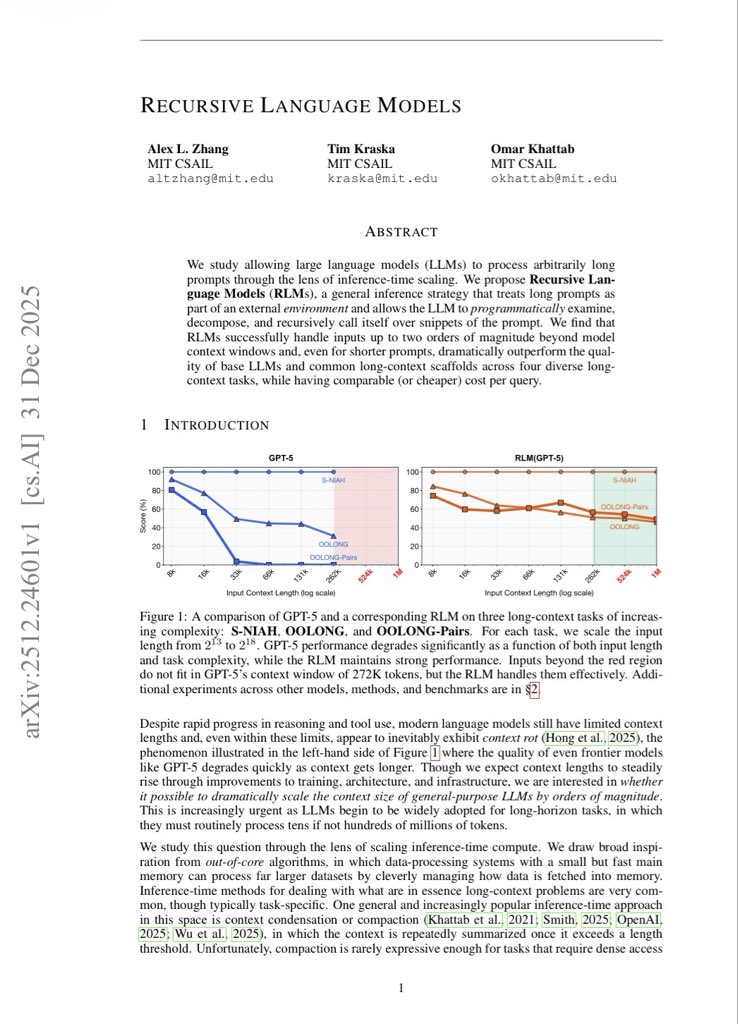
MIT just dropped a technique that makes ChatGPT reason like a team of experts instead of one overconfident intern.
It’s called “Recursive Meta-Cognition” and it outperforms standard prompts by 110%.
Here’s the prompt (and why this changes everything) 👇
Depuis plusieurs mois on voit une multiplication d’enlèvements et de tentatives de kidnapping visant des détenteurs de cryptos en France. Ce phénomène n’apparaît pas par hasard. Il est le résultat d’un alignement très problématique de plusieurs facteurs.
Premièrement, tant qu’il n’existera pas une crainte réelle, tangible, d’une sanction pénale lourde et systématique, ces crimes continueront. Aujourd’hui le risque encouru par les auteurs est trop faible au regard de la gravité des faits. On parle de violences extrêmes, de séquestrations, parfois de tentatives d’homicide et mutilations pour des opérations qui échouent souvent. Dans beaucoup de cas les ravisseurs n’obtiennent même pas les fonds. Pourtant la faiblesse ou l’irrégularité des sanctions entretient l’idée que le jeu en vaut la chandelle.
➡️ Ce n’est pas un problème de moyens policiers. C’est un problème de réponse judiciaire et de cadre légal.
Ensuite, nous vivons dans un pays qui exige toujours plus d’informations sur ce que les citoyens possèdent. Argent, crypto-actifs, activités professionnelles, patrimoine, localisation, tout doit être déclaré, centralisé, numérisé.
En « théorie » au nom de la transparence et de la lutte contre la fraude. En pratique ces bases de données deviennent les points de vulnérabilité majeurs.
Les exemples s’accumulent:
-Une agent du fisc qui revend des informations sur des détenteurs de crypto-monnaies.
-Des données issues de registres administratifs ou professionnels qui fuitent.
-Des personnes enregistrées légalement auprès de l’URSSAF ou d’autres organismes qui se retrouvent exposées.
-Et ca ne touche pas que la crypto… Des détenteurs d’armes à feu parfaitement légaux, pratiquant le tir sportif, contraints de déclarer en ligne leur adresse personnelle, le nombre d’armes détenues, leur lieu de stockage… avant que ces registres ne fassent eux aussi l’objet de fuites.
À chaque fois, le schéma est le même:
L’État impose la déclaration et centralise les données.
La sécurité est insuffisante. Les informations circulent.
Et ce sont les citoyens qui deviennent des cibles.
Il y a une forme d’accoutumance collective qui me dégoûte. Plus personne ne semble réellement choqué on continue d’ajouter des obligations déclaratives dans un contexte où l’insécurité augmente. On exige toujours plus de transparence individuelle alors même que les institutions qui stockent ces données ne sont pas à la hauteur des risques qu’elles font peser sur les personnes concernées.
Aujourd’hui tout donne l’impression que rien ne changera. Je n’ai même pas les mots. C’est précisément ce sentiment d’impunité et d’irresponsabilité institutionnelle qui alimente ce type de crimes
Le piratage qui vient d’avoir lieu va nous faire vivre le plus grand scandale de l’ère internet.
Comment des données confidentielles, portant sur l’ensemble des procédures judiciaires du pays, peuvent-elles tomber entre les mains de hackers ?
Comment des données du FISC, donc des informations du fichage financier de particuliers et d'entreprises, ont-elles pu tomber aux mains de hackers ?
Je ne sais pas si on se rend bien compte de l’ampleur du hack. Si les données de 16 millions de particuliers ont bien été piratées, cela signifie que des réseaux criminels, des États étrangers ou même des particuliers pourront y avoir accès.
Ceux qui sont dans la liste n’auront plus de vie privée. Ils seront tous en danger.
Dans ce fichier, il y a des témoins d’affaires judiciaires. L’État était censé les protéger. Ils auront dorénavant une cible sur le dos.
Dans ce fichier, il y aura les données financières de millions de personnes, dont probablement des gens fortunés et même pas exposés sur les réseaux sociaux. Hier, ils étaient anonymes. Demain, ils se feront kidnapper contre rançon.
L’ÉTAT VOUS MET TOUS EN DANGER. On savait qu’il n’était pas capable de nous protéger physiquement, mais il n’est même pas capable de protéger nos données.
Ce même État veut vous demander votre carte d’identité pour utiliser internet, et donc vous ficher. La prochaine fois, tous vos identifiants de réseaux sociaux fuiteront.
C’est juste sans précédent. Trop c’est trop. L’État doit rendre des comptes.
Quand on paie des impôts, le contrat social veut qu’en échange l’État protège ses citoyens. Pas les mettre en danger.
Les Français doivent demander une enquête et les responsables de cet échec doivent être traduits en justice. C’est honteux.
Really just a phenomenal article on dopamine cycles and phone usage.
Highly suggest reading.
Some additional tips from someone who cut their phone usage in half the last month or so:
- Opal is a great application
- Put my phone in grayscale
- Practice memory recall as a game
- Use laptop instead, way less addicting
David Goggins dropped a truth bomb that will rewire how you see your entire life:
Even billionaires pull him aside after talks and quietly admit:
“I have everything money can buy… but I still feel like something’s missing.”
His response is ice-cold and life-changing:
“You’re missing the version of yourself that only shows up when you voluntarily walk through hell.
The one you meet when you stop making excuses and start making yourself unbreakable.”
In this electric 3:18 clip, Goggins lays it out plain and simple:
Real peace isn’t bought.
It’s forged.
In the dark mornings.
In the moments you want to quit but don’t.
In the relentless decision to keep expanding your mind, body, and soul when everything screams stop.
That’s where the emptiness ends.
That’s where you stop living at 40% and finally step into 100%.
That’s where you become the rare human who never has to ask, “Is this all there is?”
No shortcuts. No hacks. Just you choosing to become the hardest, strongest, most alive version of yourself—every single day.
Watch this clip. Let it hit you. Then go do the hard thing you’ve been avoiding.
The version of you that’s waiting on the other side is worth it.
j'ai dev un bot qui détecte les smarts traders sur des événements similaires et ça fait beaucoup trop d'argent
le but du tool c'est de renvoyer les wallets par PnL décroissant qui ont des trades similaires (à celui linked) dans leurs positions closed
par exemple je link un événement sur OpenAI, je mets alors ce mot clé en paramètre et je demande qu'il me renvoie seulement les wallets qui ont des trades (en position closed) sur des événements qui comportent ce même mot clé. Je récupère finalement les meilleurs traders sur des mots clés et thèmes précis
c'est comme ça que j'ai pu acheter YES à $34 et revendre mes shares à 85$ sur l'événement : "Will DraftKings launch a prediction market in 2025?"
le bot a analysé toutes les positions closed des wallets in sur l'événement, et a renvoyé ceux qui avaient déjà trade un événement qui comportait le mot clé "DraftKings". Ces wallets semblaient clairement être des insiders avec seulement 2 trades sur leurs profils, un active et un closed, mais tous 2 comportant le même mot clé
ce tool représente un véritable hedge sur le marché
j'ai en + rajouté une petite UI qui apporte des données supplémentaires :
>winrate sur ces événements similaires
>PnL total
>détail de chaque trade similaire
j'ai pleins de tools du genre qui m'aident à optimiser ma productivité de digging et traiter des milliers de données ce qui serait impossible à la main (je travaille sur d'autres bot beaucoup + poussés peut être que je vous montrerai ça prochainement)
si vous voulez poser des questions pour approfondir le sujet faites le dans le discord en bio
start outperforming prediciton market
I can’t believe what I’m seeing.
Yesterday this Jayden guy posted about how to make a polymarket bot that snipes guaranteed winning trades that trade at slight discounts just before they close guaranteeing you money.
Today he’s just reverse engineered a $100k a month bot for you.
HOW IS THIS FOR FREE?
Quick “Maximum Privacy in One Day” Checklist (2025)
Below you will find a checklist for basic digital hygiene and privacy.
[ ] Install Brave or Mullvad Browser
[ ] Install uBlock Origin + Cookie AutoDelete + Bitwarden
[ ] Create ProtonMail + SimpleLogin account
[ ] Subscribe to Mullvad or IVPN (pay with Monero/cash
[ ] Enable full-disk encryption
[ ] Switch phone to GrapheneOS (if Pixel) or at least disable Google services
[ ] Start using Signal with disappearing messages
[ ] Delete or compartmentalize Facebook/Google/Instagram accounts
Stay safe!