Regardless of whether it gets approved or not, but the 26% unrealized gains proposal is the most insane and stupid proposal I've seen from the Dutch government ever.
It's literally forcing you to sell #Bitcoin while simply holding it if it goes up against the EUR.
No wonder a ton of people are flying the country.
🚨 BREAKING
🇺🇸 WARREN BUFFETT JUST SAID LIVE:
"THE CURRENT MARKET DROP IS NOTHING. A MUCH LARGER DECLINE IS AHEAD."
HE IS NOW SITTING ON $350,000,000,000 IN CASH.
JUST LIKE IN 1999 BEFORE THE DOT-COM CRASH, AND IN 2007 BEFORE THE GREAT RECESSION.
HE DEFINITELY KNOWS SOMETHING BAD IS COMING...
STANDARD CHARTERED TARGETS $250 SOL -- SHIFT BEYOND MEMECOINS 🔥
The ~$1T bank says $SOL is evolving from memecoin trading to stablecoin micropayments, with ultra-low fees enabling high-frequency use.
Stablecoin activity in Solana is already 2-3x faster than Ethereum, signaling real adoption.
Trump is back with new tariffs.
The US is now planning a 25% tariff on the full value of goods that use imported steel and aluminum.
Last time when Trump announced the tariffs, $BTC and the crypto market dropped hard.
And this time, uncertainty is already elevated because of war.
If this turns into another full tariff war, it adds even more pressure on the market.
The government of the Netherlands are so worried about the important things.
- No military at all, didn't seem 'necessary' over the past few years.
- 80% of taxes on petrol.
- A large gas field in the North, but no, that's not important for the economy.
- We don't build houses because of some protected animals or nitrogen bullshit.
No wonder a lot of the entrepreneurs are leaving the country.
Absolutely no wonder.
BANKS ARE STARTING TO PANIC ABOUT CRYPTO ACCESS
Banks are already pushing back after Kraken Financial was approved for a Federal Reserve master account.
The Independent Community Bankers of America warned that letting crypto institutions access Fed accounts -- something traditionally reserved for regulated banks -- could create risks for the banking system.
Their real concern is obvious.
A crypto firm plugging directly into the Fed’s payment rails means less reliance on traditional banks.
For years crypto companies struggled just to get bank accounts. Now one of them is getting direct access to the system itself.
No surprise the banking lobby is nervous. 👀
🚨BREAKING: Kraken just became the first crypto firm to gain access to the Fed’s core payment systems that big banks use every day.
This means Kraken can settle money transfers on the same rails as traditional banks.
🚨JUST IN: 21shares files for a spot $ONDO ETF, the native token of Ondo Finance.
Bloomberg ETF analyst Eric Balchunas highlighted the filing on X saying he’d never heard of “Ondo” before.
“I probably should know, but there are 5,000 ETFs and crypto is just 1% of the market,” he added.
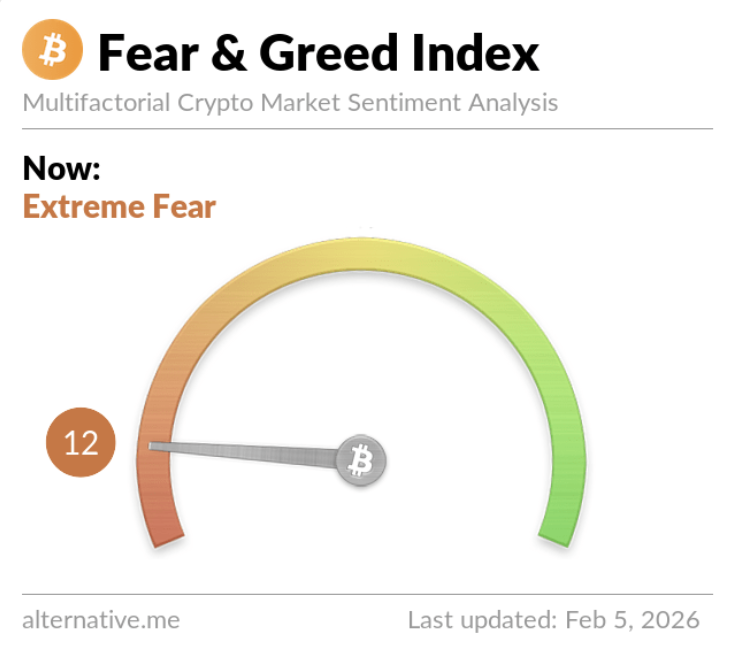
ABSOLUTE BLOODBATH IN MARKETS IN THE LAST 24 HOURS
Gold dumped 5.5%, wiping out $1.94 trillion in market value.
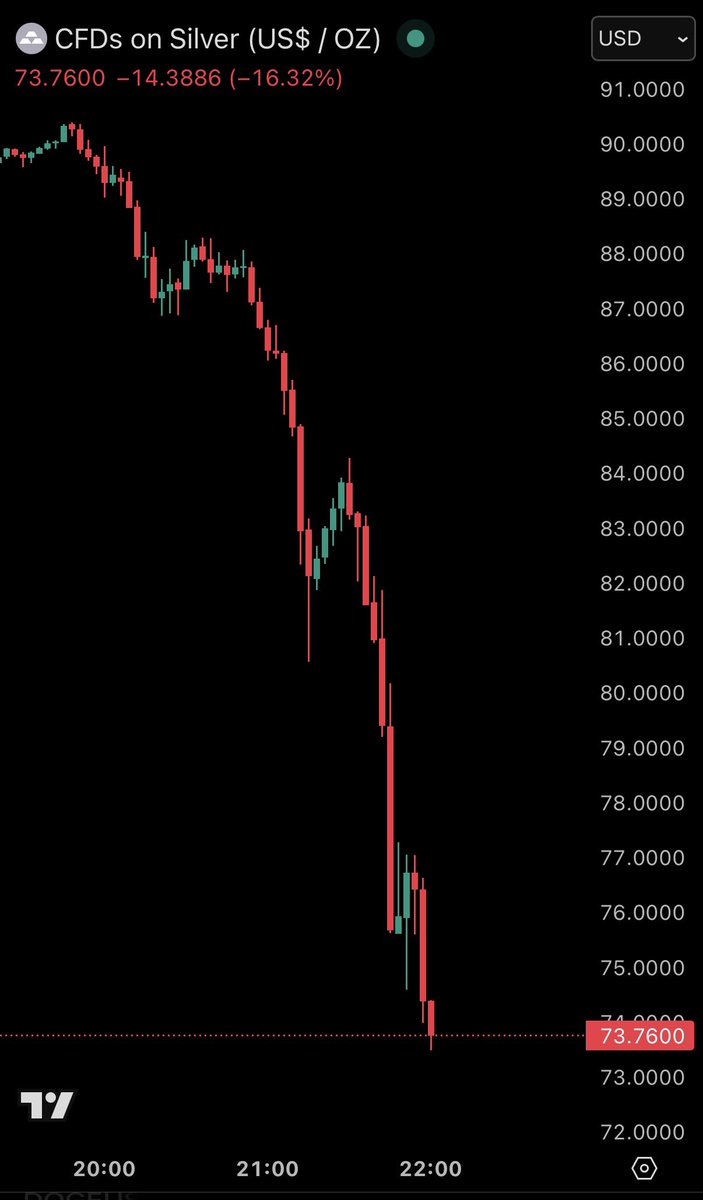
Silver dumped 19%, wiping out $980 billion in market value.
S&P 500 dumped 0.95%, wiping out $580 billion in market value.
Nasdaq dumped 2.5%, wiping out $1 trillion in market value.
Russell 2000 dumped 2%, wiping out $65 billion in market value.
Bitcoin dumped 8%, wiping out $120 billion in market value.
The total crypto market dumped 7%, wiping out $184 billion in market value.
Nearly $5 Trillion was wiped out without any major bad news.
Reflections on this bill from a Dutch citizen who has closely followed this process for years.
First: the old system. It was pretty simple: the government assumed that you make ~5% return on your assets per year. That return is then taxed (~35%). Assets include savings, stocks, crypto, etc. There is an exemption of ~€55.000 per person. Assets are measured on the 1st of January every year.
Imagine you hold one bitcoin worth €75,000. Subtracting the exemption leaves €20,000 taxable. The government presumes a €1,000 return (5%), resulting in €360 tax (35%).
In summary, this system is:
- Very simple to understand
- Low administrative burden
- Advantageous to investors where ROI >5%
- Disadvantageous to investors where ROI <5%
Savers fall into that latter group. Years of sub-5% interest rates led the government to overestimate savers' returns.
In 2021, the Supreme Court ruled that this was unlawful and that this needed to change. The government should calculate taxes based on the actual return on investment instead of the assumed return.
At this point, I want to make a few things clear:
- I don't mind paying taxes
- I think the Supreme Court's decision was correct
What I do mind is:
- Tax on paper gains
- Added administrative complexity for tax filings
- The Government is not listening to the advice of the Netherlands’ highest advisory body on legislation
- That the Tax Authority is pressuring the legislative process to make a quick decision
- Making obviously bad legislative decisions
And these are exactly the things that are happening.
For some reason, the Government decided against a capital gains-like system and chose an unrealized capital gains system.
This means that you pay tax on the paper profit you made during the year.
Let's say you have one Bitcoin on January 1st, valued at €70.000. On December 31st, Bitcoin is at €115.000. A return of €45.000. Taxes to pay: €15.750 (35%). No exemption in the new bill.
The problem: all your money is in Bitcoin.
But that is not a problem! That is what I want! That is why I stacked every single Satoshi I could since 2016. The same goes for stocks, gold, silver, or real estate: the goal is to have as little fiat as possible!
But in the short term, I have to pay €15.750 in taxes. In this example, it means I have to sell some of my Bitcoin (0.137 BTC, to be precise). After the tax, I'm left with 0.863 BTC (€99.245).
So on paper I'm doing fine (from €70.000 to €99.245 in a year). But my underlying assets are diminishing (1BTC to 0.863 BTC). The amount of Bitcoin, stocks, and gold in my portfolio is decreasing each year.
This creates a dilemma: I don’t want to sell. I expect bitcoin, stocks, and gold to rise over time. But I have to, because the Government demands it.
The obvious better choice was to tax when people decide to take a profit. I don't really have a problem with paying taxes on my realized profit. When I decide to sell, instead of being forced to sell when I don't want to.
I'm not the only one who thinks there are better options. The Council of State (the Netherlands’ highest advisory body on legislation):
"Don't do it. It's too complex (for both the tax authority and the citizens). Look for alternatives."
And still, the government marches on. And the House of Representatives 'reluctantly agrees'. What the fuck does that even mean?
"Yeah, we also don't like this bill, but we still are going to sign it into law."
It's batshit crazy. But it's where we are. That's what the quoted tweet is about.
Not all is lost, though:
- House of Representatives (2e kamer) still has to approve this bill (quote tweet is wrong here).
- Senate (1e kamer) still has to approve.
- The Tax Authority is unable to comply with this bill (too complex)
- Complexity makes this bill filled with loopholes
So, to sum it up: hopefully, Parliament comes to their senses and stops this monstrosity of a bill, and chooses one of the better options instead.