$LINK scaled DeFi throughout web3. AI tokens like $FET $AKSH $TAO and Gensyn all need Verifiable AI - verifiable compute for geo-local compute clusters, verifiable data to train models, verifiable GPUs. With #vAI web3 can define #genai - $CHEQ and #vAI is the $LINK of #AI
I have been following a lot lately what’s happening in AI, especially with the AI agents narrative.
And I’m more focused on projects that actually build something meaningful - not just another AI agent meme hyping its token on X.
In the sea of projects, I’ve found a few solid ones that performed pretty well over the last couple of weeks.
One of them is @openservai / $SERV - a hub to find, curate, and employ AI agents
,and another I really like is @verticalAI / $VERTAI - the no-code platform for AI model fine-tuning!
Of course, this space has its fair share of disappointments - like the rug pulls from $BRAIN and other flashy projects that look good at first glance but fall apart quickly.
This is where I see a massive opportunity for @cheqd_io and the solutions they are bringing to the AI space.
Instead of being just another hype driven project, $CHEQ focuses on solving foundational issues for AI agents.
Building infrastructure that allows AI agents to operate with trusted, verifiable data, which is critical in environments where accuracy and integrity matter.
Decentralised identity solutions give AI agents unique identities, bringing them accountability and trust in their interactions.
Additionally, their support for compliance-ready credentials helps AI integrate seamlessly into regulated industries like finance, healthcare, and supply chain.
I believe in the near future, we’ll see more and more projects integrating $CHEQ infrastructure to handle these critical challenges.
The projects that succeed in the AI narrative will be the ones building on strong fundamentals!
There is nothing like $CHEQ on the market right now!
Gm legends,
I have so much material in my head, but I can't stand looking at the screen because I've caught a bad cold and my head is falling apart...
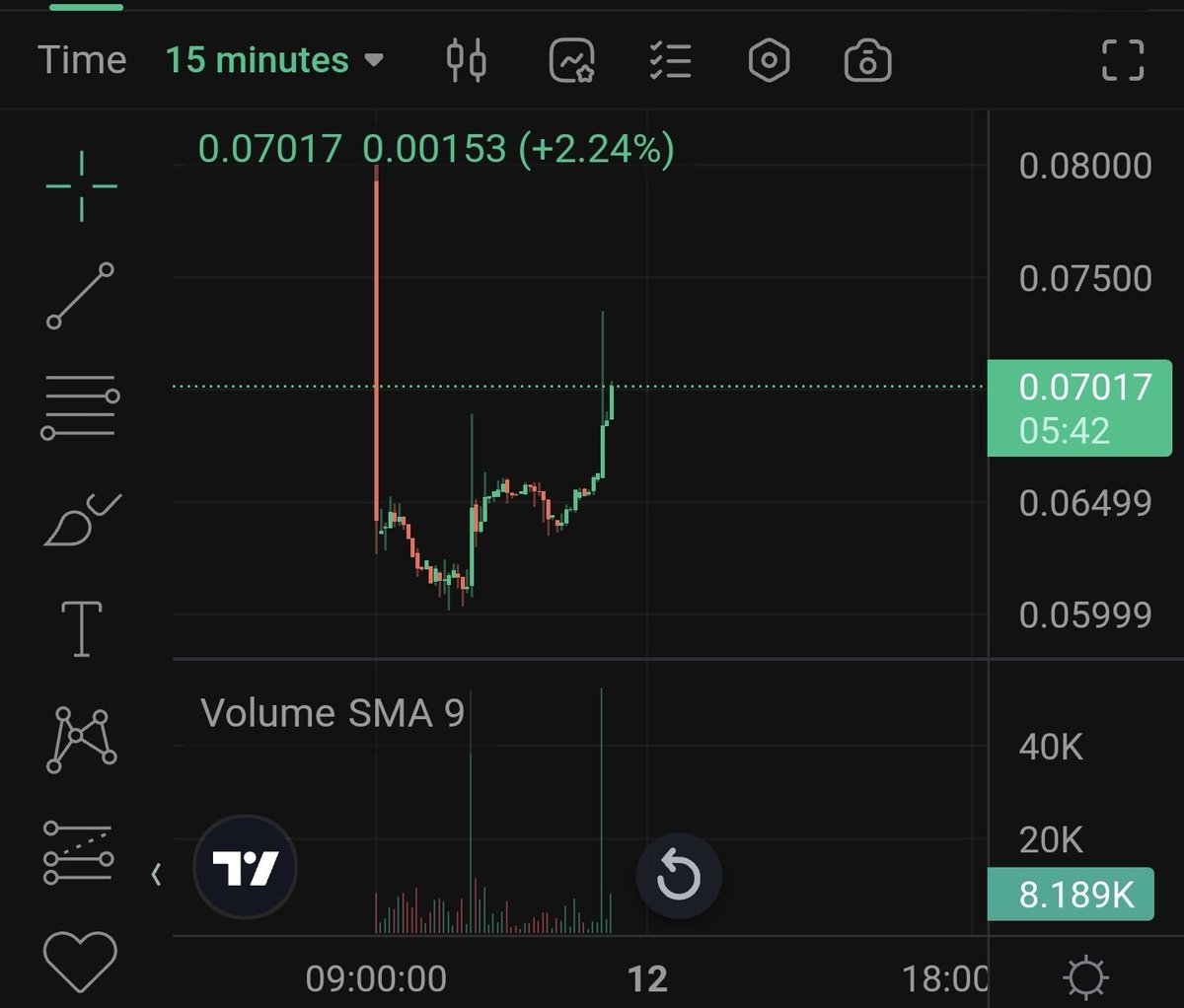
Only a little $CHEQ fire in me won't let me rest to look at the charts and the Cheqmates crew grinding 100%.
All things slowly coming into place, big times ahead!
@cheqd_io 🔥
Big three threads everyone should read:
https://t.co/uIfjmePikf
https://t.co/ptZplfQKTj
https://t.co/OtWX6nu6We
It's crazy that you can buy $CHEQ now at the same price you could get it at two years ago.
Since then, @cheqd_io has:
✅ Made their chain interoperable with other identity chains
✅ Created the ability to pay people for identity transactions, the first in the industry to commercialise the technology like this
✅ Partnered with multiple AI projects including @devolvedai, @elys_network & @AndromedaProt
✅ Joined the @C2PA_org, a body focused on helping us find out where our content comes from (e.g. is it AI-generated? Edited?) with other members such as @Adobe, @OpenAI and @Microsoft
✅ Have been invited into the @EuropeanSandbox to work on Trust Registries with their partners
✅ Have created a community management product called @Creds_xyz capable of proving who you are (super useful against social engineering & fraud)
This is a serious project done by serious people who are aiming to be part of a positive change for the world. They are not pump and dumpers. @rorypiant of @chainlink recently said that their team didn't tweet for the first TWO YEARS of the project.
cheqd is not quite at that level but it is as serious a project as $LINK, with as much potential to change the world - in a few years Verifiable Credentials (the tech behind cheqds) will be ubiquitous (literally enshrined in EU law) and these guys are years ahead.
Price action has been through a period of high inflation which is now over. Slow mover, but a fundamentally very VERY good team worth looking at.
$CHEQ them out.
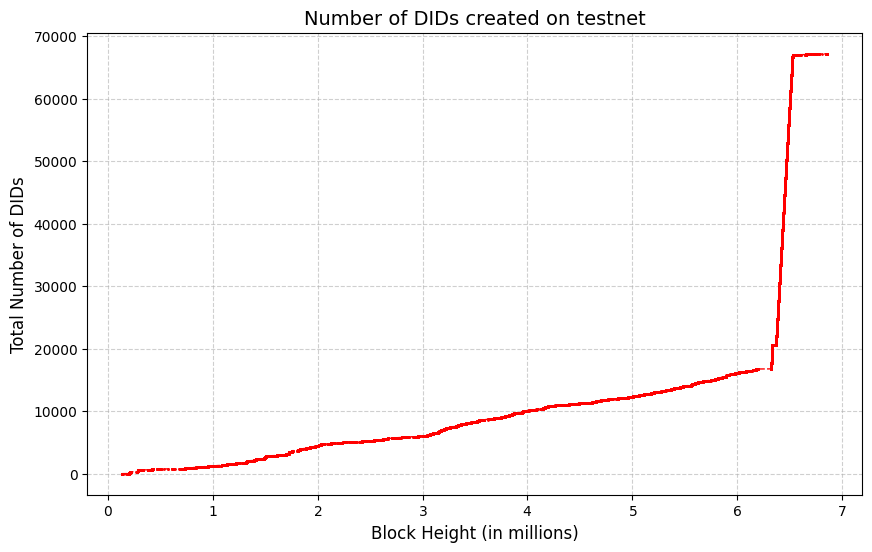
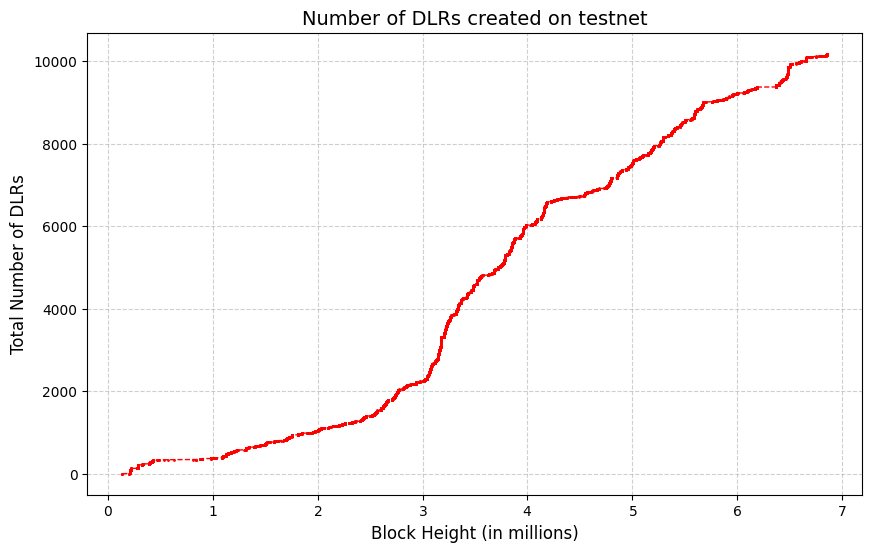
Something veeeeeery interesting happened last month on @cheqd_io's testnet: we suddenly shot up from approx. 18k DIDs to 70k+ DIDs, and 10k+ DID Linked Resources.
We're not quite sure who did, but this to me is a tell-tale sign of someone running a performance test, where you fire off requests at a rapid pace to simulate whether a software can handle the volumes necessary for large-scale production use cases. The absolute numbers themselves aren't very relevant, but the rate of change. And I'm happy to say that as far as the network was concerned, we kept chugging along without any issues - didn't even realise this took place until a few weeks later when looking into product stats! And this is likely not even pushing the system to its real limits.
Performance tests come in many shapes and forms:
1. Ramp and hold: Slowly ramp up the rate of requests, e.g., from 1 per second to 10s per second to 100s per second and so on. At each "step" you hold at that rate for a defined time, say 1 hour or 2 hours.
2. Soak tests: Fire off a high rate of requests, say, 10-100s per second and sustain it for a long period, e.g., 24 hours, 72 hours etc.
From the data analysis, we think this was a soak test running over multiple hours.
If you're the developer(s) who were working on this, do get in touch with us! We'd love to chat to figure out what use cases you're working on and what sort of performance you require.