Woop! Woop! A neat new preprint with @AKShcherbakova and Daniel Buchan, using variational autoencoders to generate minimal E. coli genomes:
https://t.co/7tGUQZpiB1 @ucl@uclcdb@uclcs
🧬🤖 NEW PhD opportunity in my group: Using AI genome design tools to halt antimicrobial resistance spread!
Combining LLMs with synthetic biology to tackle one of medicine's biggest challenges! #SynBio#AMR#AI
https://t.co/NHJfDWKez4
Project application:
https://t.co/STuTruK4Yh
Thrilled to see this paper published @PNASNews!
Check it out at https://t.co/sDAKJ512HA.
In it, we describe how swimming bacterial suspensions spontaneously organize themselves in unexpected ways when oxygen starts running out.
Summary in the tweetorial below ⬇️
Online now @ Cell is the yeast multicellular engineering paper from @DrFankangMeng - the fruits of his productive PhD. He developed modular synthetic biology tools to bring multicellular behaviours to yeast - adhesion, juxtacrine signalling and more. https://t.co/6ZxfUAkNL5
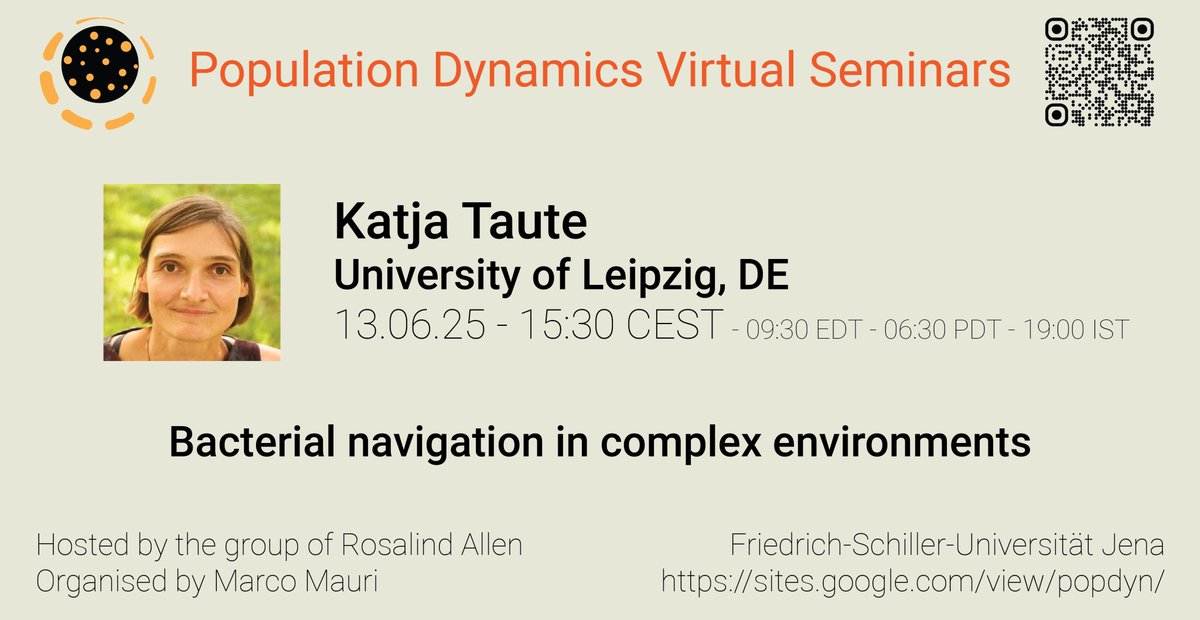
🚨 Next Friday 13/06 at 15:30 EU time, Katja Taute (Uni Leipzig) will present the talk
Bacterial navigation in complex environments
at the Population Dynamics Seminars. Info and subscription https://t.co/o1XQtgrFKC
What if we could universally recombine, insert, delete, or invert any two pieces of DNA?
In back-to-back @Nature papers, we report the discovery of bridge RNAs and 3 atomic structures of the first natural RNA-guided recombinase - a new mechanism for programmable genome design
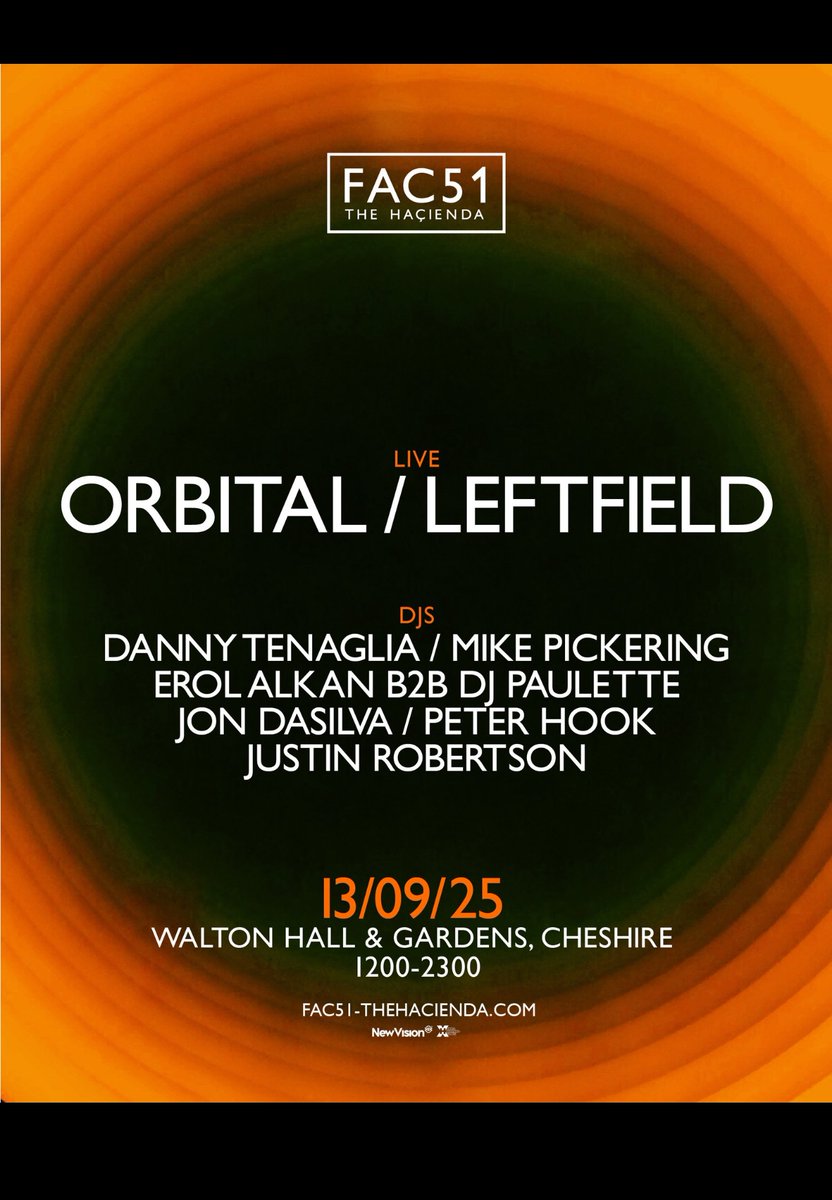
We’re playing the @Fac51hacienda open-air show @Walton_Gardens, Cheshire w/ our friends, the awesome @orbital . What a DJ line up too!
Tickets go on sale Friday, April 25th. Register for ticket access on the link below!
👉 https://t.co/1zKVjoB20n
I’m currently looking for a short-term candidate for a #Research#Associate#Postdoc position in my group @LeoRiosLab@UCLBiochemEng1 , focusing on the scale-up of yeast fermentation. The position will run from 13 June to 30 September 2025.
If you know of any suitable candidate who might be interested, please feel free to pass this on and ask them to get in touch with me directly.
📢Registration is open for our IPLS Annual Symposium, 11th June 2025!
We will showcase exciting #interdisciplinary#research performed by IPLS researchers and collaborators.
Limited spaces, register early to avoid disappointment 👇
https://t.co/WWXwXFftRz
Our model provides quantitative insights into the relationships among breakage-fusion-bridge cycles, chromothripsis, seismic amplification, and extrachromosomal circular DNA. We also used the model for Bayesian inference in whole-genome sequencing data to infer key parameters.
I'm excited to share our latest research published in Nature Communications: "Cell-cycle dependent DNA repair and replication unifies patterns of chromosome instability."
https://t.co/g3fRJX5NUV
@lubingxin@wchcross
Despite numerous studies on detecting various SV patterns, general quantitative models of SV generation have been lacking. In this study, we developed a computational cell-cycle model including double-strand break formation, followed by end-joining repair and replication.
Are you interested in cancer genomics and cancer evolution? A 3-year postdoc position available
to join my MRC-funded project on #ChromosomalInstability#CancerPhylogenetics!
Please get in contact if you are interested.
Deadline 30 Apr 2025.
https://t.co/RHxcpEdXDu
🚀 Our paper introducing ImmuneLENS, a new tool that measures T and B cell fractions from WGS data. This builds on our previous method, T cell ExTRECT, that used a signal from V(D)J recombination to measure T cells. Out today in @NatureGenet
https://t.co/U4PNpQBk29
🧵👇
Generator: A Long-Context Generative Genomic Foundation Model
1/ The "Generator" is introduced as a long-context generative genomic model that has revolutionized genomic sequence analysis by leveraging a 98k base pair context length and 1.2B parameters. Trained on a massive dataset of 386B base pairs of eukaryotic DNA, it provides state-of-the-art performance across multiple genomic tasks.
2/ One of the key innovations of the Generator is its ability to generate protein-coding DNA sequences that align with the central dogma of molecular biology, effectively generating functional proteins that mirror known families. This opens up new possibilities for protein structure and function prediction.
3/ The model excels in optimizing sequences by generating promoter sequences with targeted activity profiles. This is significant for applications like gene regulation and synthetic biology, where precise control over gene expression is necessary.
4/ Notably, Generator outperforms existing models on genomic benchmarks, demonstrating superior performance in tasks such as gene classification and taxonomic classification. This broad capability is a result of the model’s extensive and diverse training data.
5/ By generating biologically relevant sequences, the Generator has the potential to enhance biotechnology, particularly in drug discovery and genomic interventions, positioning it as a crucial tool for future genomic research.
6/ The model also demonstrates its versatility through the design of promoter sequences with specific activity profiles, a key feature for advancing biotechnological applications and potentially enabling precision medicine.
7/ Generator’s training on a comprehensive set of eukaryotic genomes, combined with its long-context capability, makes it a pioneering tool in the field of genomic modeling, advancing our ability to predict and design complex biological systems.
📜Paper: https://t.co/jwoRUsjjTE
#Genomics #MachineLearning #Bioinformatics #SyntheticBiology #DNASequencing #AIinBiology #ProteinDesign #ComputationalBiology #DeepLearning #PrecisionMedicine #GenomicResearch
📢 Applications are now open for IPLS and Biological Physics Undergraduate Summer Research Studentships for #multidisciplinary#research projects @UCL.
Details on our website👇
https://t.co/Xn63Y7l8yI