In a paper out in @nature today, the ultimate origin story…we can now explain how all nearby star formation (within ~ 500 light years of our Sun) began. A thread. (More from @AlyssaAGoodman) (1/N) https://t.co/XjDCtRAMmh
Roman's fast surveying speeds, Hubble-like resolution, wide field of view, and optical and infrared capabilities will capture the Milky Way like never before! 🌌
Learn more about the galactic plane survey: https://t.co/IlQLwO4kxt
Nice paper on arxiv today by SAO REU alums Theo O'Neill and Catherine Zucker with 3D maps of the Local Bubble. ("local" means 500 light years or so here :-))
https://t.co/RIIN8QMmPi
The Radcliffe Wave! "Who ordered that?" Our story on this big thing out there they just discovered, and the hints of a big galactic disturbance. Fun stuff! https://t.co/tqKmRjjO2Y
The Radcliffe Wave doesn't just look like a wave...it moves like one too! To find out more, check out the article (https://t.co/v28qBG95sW) published in @NaturePortfolio today, led by @RalfKonietzka (and for much more, see https://t.co/hWPS2uui7n)
Want to discuss the latest methods for unveiling the 3D structure and dynamics of our Milky Way in the era of large surveys? Do you want to stay in a castle? If "yes" to both, you have just over one week left to apply for this Ringberg workshop! https://t.co/iEmtC6GwPz
Astronomers! Briefly showing back up on X because this is important. If you are a AAS member, you should have just gotten an action alert. PLEASE DO IT. Congress is negotiating federal spending levels RIGHT NOW for the coming year.
DO IT and I'll send you a virtual gold star :)
Now even more timely! @NASARoman WILL be surveying the Galactic plane as part of the early-definition astrophysics survey program. Come to this #AAS243 special session to learn more about all the wondrous scientific possibilities this future community-driven effort will bring!
Will you be at the @AAS_Office meeting this January? Do you want to learn why it would be fantastic to survey the Milky Way's disk with Roman? If so, please come to our special session on "The Future of Galactic Plane Science with the Roman Space Telescope." Flyer attached!
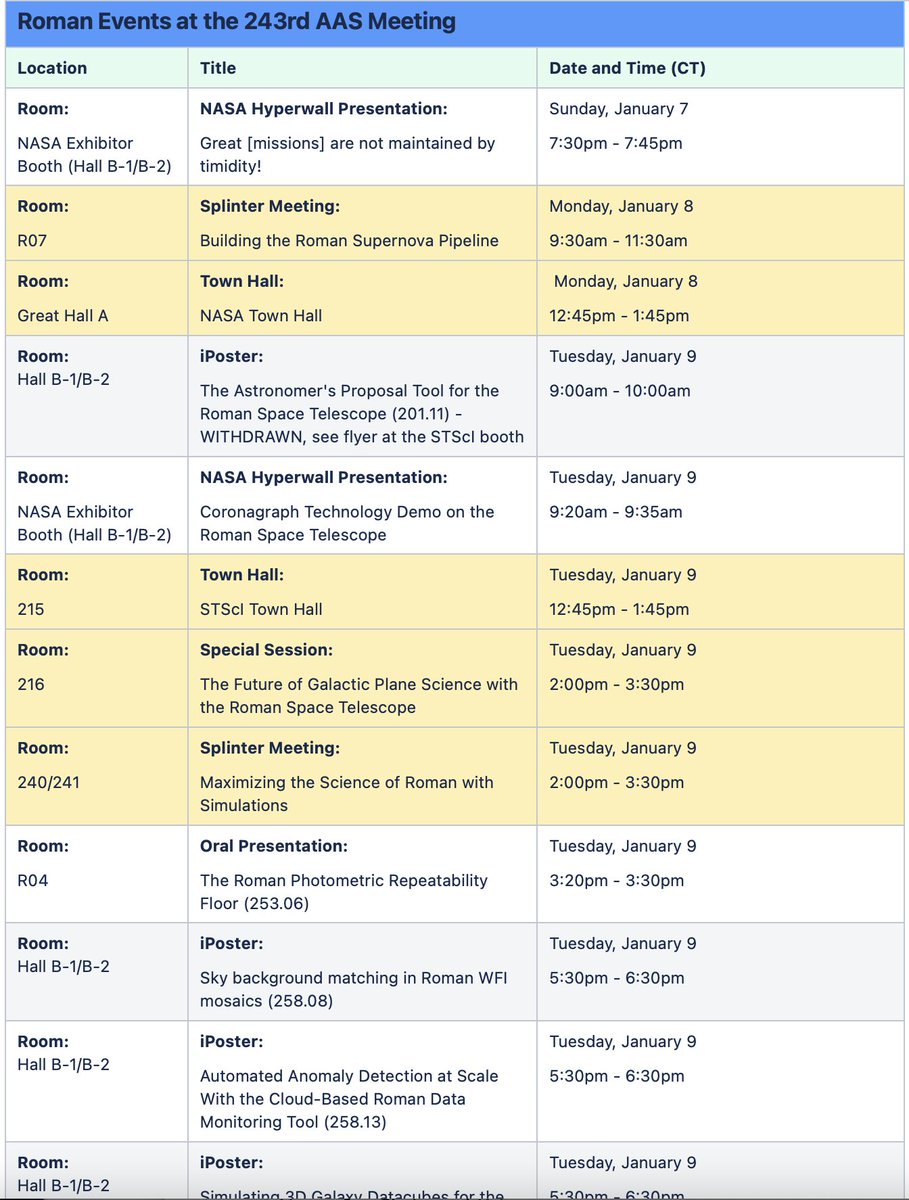
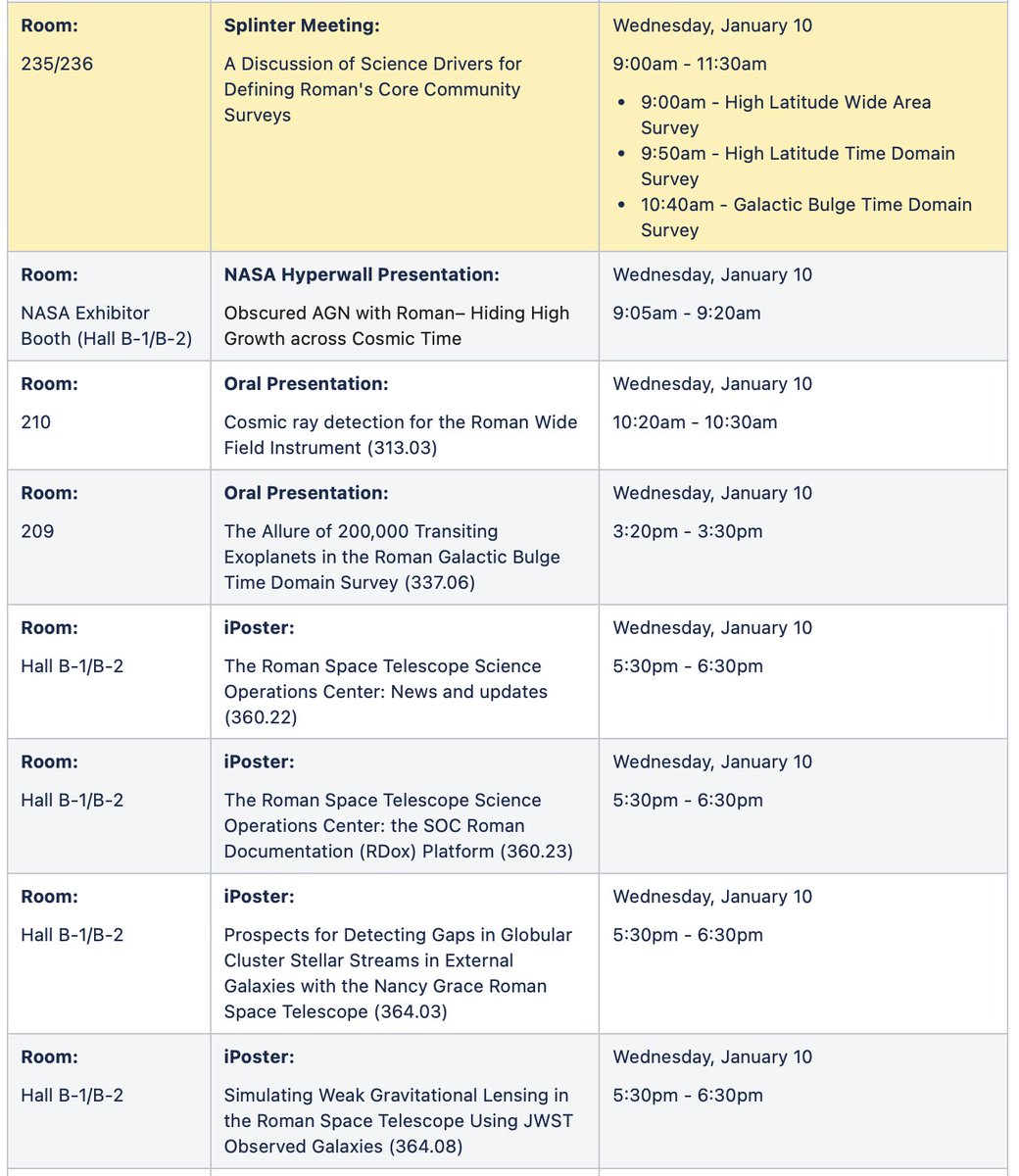
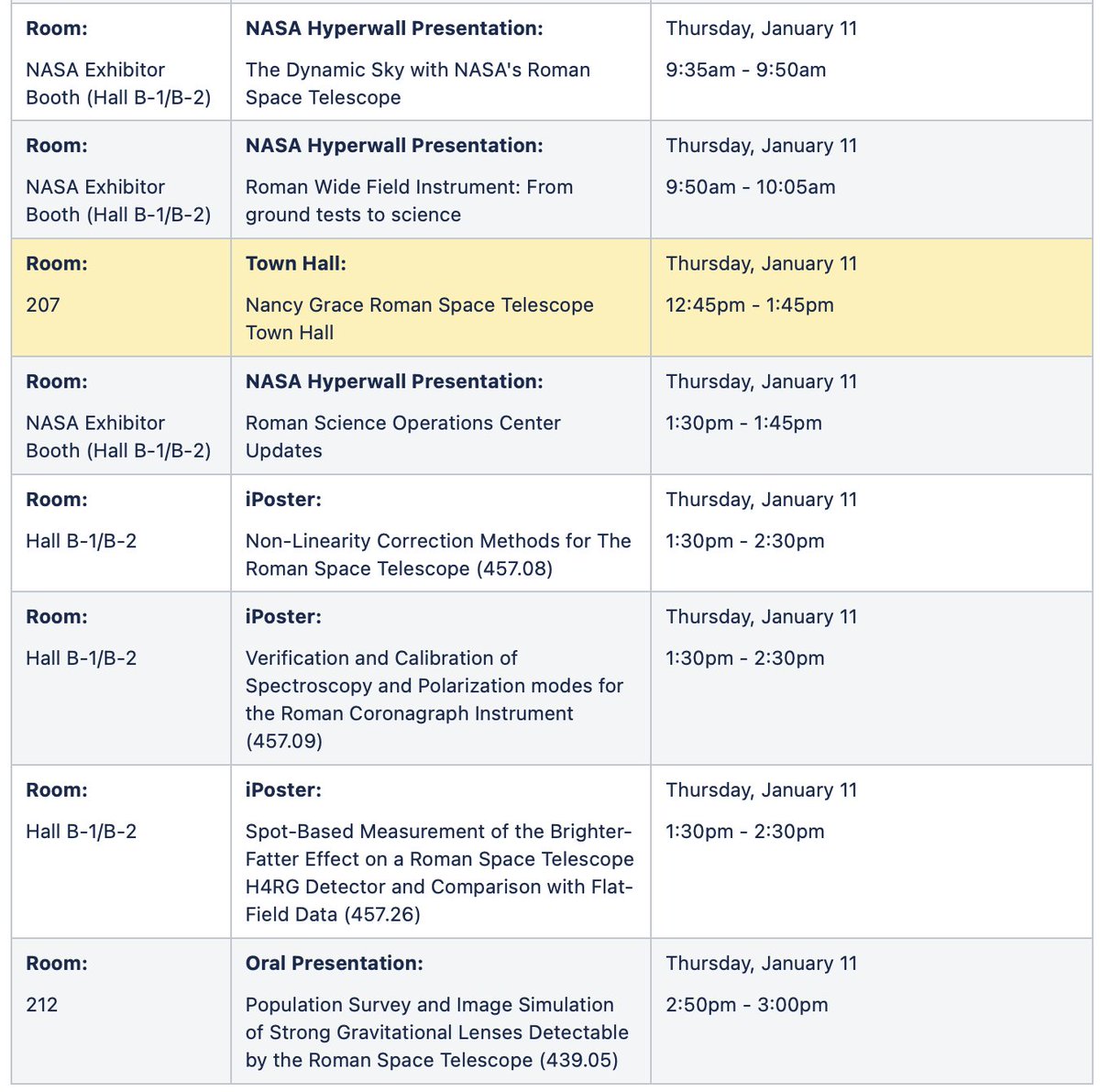
Who's excited for #AAS243? @NASARoman has a lot of exciting updates and new messaging for community involved. Please see full list of Roman presentations here and come say hi! https://t.co/MQRjSFy5b7
🌌🌌🌌🌌🌌🌌🌌🌌🌌🌌🌌
Holy crap Milky Way enthusiasts, get psyched! @NASARoman has selected a Galactic plane survey as one of its main activities in the first 5 years. This would produce a catalog of 100,000,000,000+ stars and a dust map that extends across the Galactic plane!
Will you be at the @AAS_Office meeting this January? Do you want to learn why it would be fantastic to survey the Milky Way's disk with Roman? If so, please come to our special session on "The Future of Galactic Plane Science with the Roman Space Telescope." Flyer attached!
Excited to be heading to @AMNH, for @cszucker & my 1st official data-driven "live" planetarium show, on 12/12 at 7, using some @glueviz and @WWTelescope, with @jfaherty and Brian Abbott. Micah Acinapura will "fly" for us in @OpenSpaceProj. Join us? https://t.co/CVJ5HIPwL6
I'm hiring a postdoctoral fellow! If you'd like to join the vibrant scientific community at the CfA and work on the interstellar medium, star formation, stellar populations, or the structure and dynamics of the Milky Way/nearby galaxies, please apply! https://t.co/jYzJieD8kV
Late May 2023 a star exploded in the Pinwheel Galaxy!
See the supernova (SN 2023ixf) brighten, and learn how astronomers determine the type of supernova with data from @MicroObs in this mini @WWTelescope interactive!
https://t.co/xSQlWrH3Uc
Register now for #MilkyWayConf and get the lowest rate! Abstracts for contributed talks are also welcome.
Though this is a hybrid conference, in-person attendees will have opportunities to have lunch with invited speakers!
https://t.co/L2qDBg5eLm
Super excited about this result! Combining 3D dust + spectral-line maps reveals that the Taurus molecular cloud is being smooshed between two superbubbles. Thanks to @juandiegosoler for leading this!
#PaperDay "A panoptic view of the Taurus molecular cloud I. The cloud dynamics revealed by gas emission and 3D dust."
We found that one of the best-studied molecular clouds is being compressed and the young stars don't seem to know about those gas dynamics
https://t.co/aXRPZM9fHq