@PamelaKunzMD This is so important, we spend a lifetime focused on achieving clinical expertise, awards, etc…but at the end of the day this is what counts
��how we make our patients feel!”
@Elizabeth_Comen @drdonsdizon @ASCO Truly inspiring Dr. Comen! I am so blessed and thankful to have Dr. Comen as my Oncologist, she is caring, empathetic, and brilliant…takes the time to listen, hold my hand if I need it but also take the lead in helping me make critical decisions in a scientific and rational way!
@tmprowell My Onc/surgeon returns my calls between his breaks within a couple of hours…his bedside manner is unbelievable, I am beyond grateful for his care and incredible surgical skills:
Dr. Giacomo Montagna from MSKCC!!
LDL, a particle with its apo B component, causes atherosclerosis. If the entire population maintained LDL (apoB) concentrations akin to those of a neonate (or to those of most other animal species), atherosclerosis might well be an orphan disease. https://t.co/oewgYTocIy
🤯 Mind Clutter = STRESS!!!
@ctibbles1 is teaching us about the importance of clearing our minds to be more efficient and productive!
The "To-Do" list shouldn't live in our 🧠
#HMSMedEd21@BIDMCEM
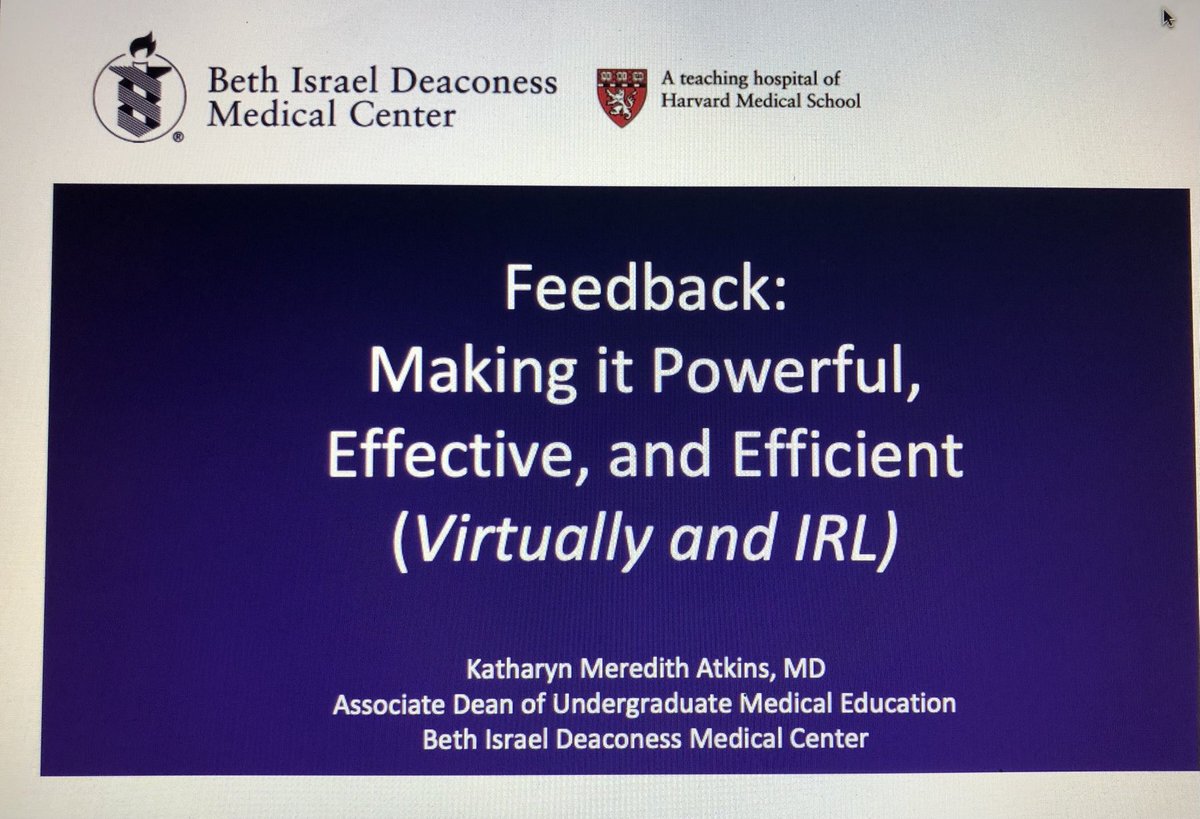
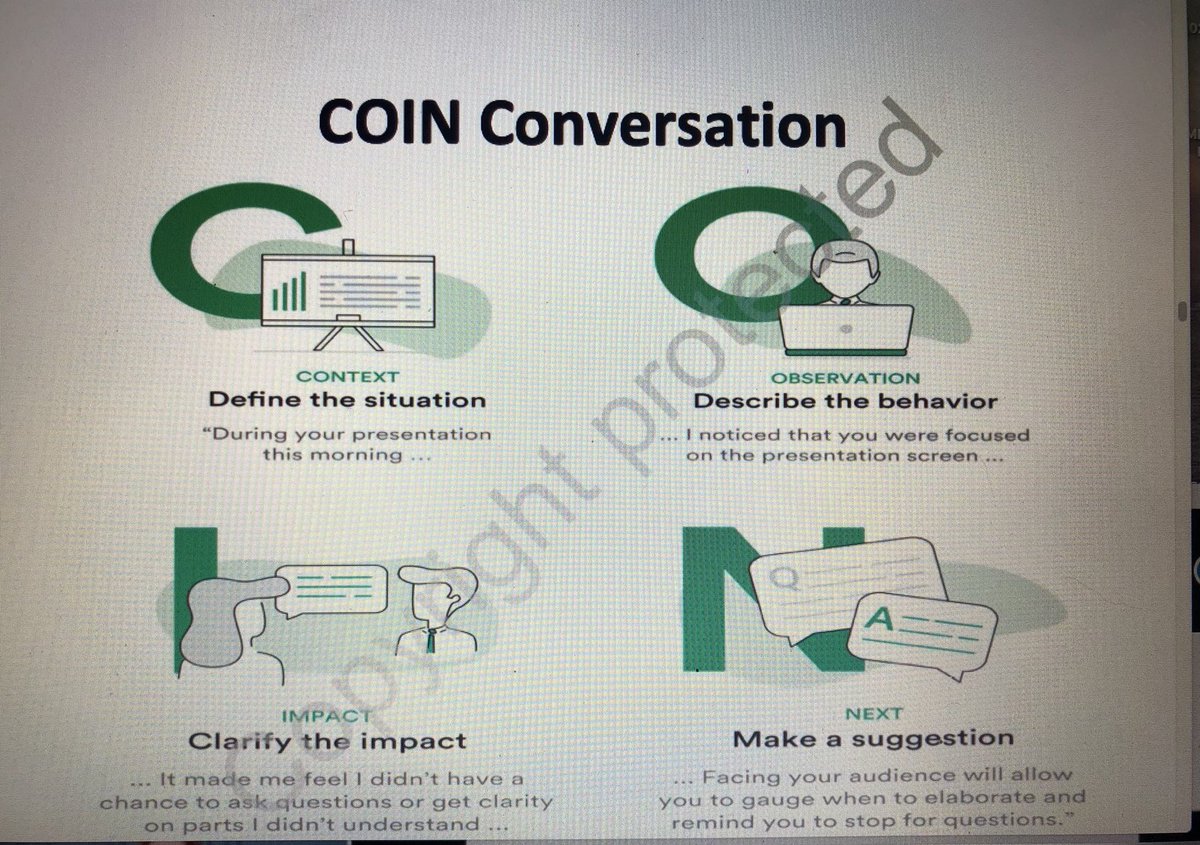
Make feedback easy, learning yesterday from Executive coach and author @AnnaCarroll, MSSW developed the the COIN Conversation Model in 2003 and discusses it in her book, "The Feedback Imperative: How to Give Feedback to Speed Up Your Team's Success."
“In education there's a lot of talk about valuable failure, the necessity of mistakes for learning and celebrating the learning that comes out of being wrong” revealed @kathrynschulz in her TED Talk,
Mistakes are revealing things.
I’ve often found that one of the greatest differences between masters and novices is their approach to mistakes.
It’s not that masters never blunder. It’s that they realize what the mistakes really are.
Opportunities.
For learning, and growth.
10 take homes from Dr. Hatem:
1)Engage healing
2)Be mindful
3)Cultivate curiosity
4)Adopt effective dx strategy
5)Pursue context
6)Stay current
7)Engage uncertainty
8)Embrace "I don't know"
9)Reflect on mistakes
10)Don't worry alone
#HMSMedEd21
#epigenetics “This is important because, as Meaney adds, “...abused individuals are less healthy in adulthood... (ScienceNOW)���The epigenetics of child abuse | Nature Reviews Neuroscience https://t.co/bAyxkNvCwr
1/14
Why do we feel cold (i.e., experience "chills") when we have a fever? Shouldn't we feel hot?
And what are rigors?
Answers to these questions will help us better understand when we should obtain blood cultures.
When do you think is the best time to draw them?