A Staff Engineer isn’t an “extra strong Senior.” It’s a fundamentally different job.
At the Staff level, your primary output is decision quality, not code velocity. If the company only needed more throughput, they’d scale headcount or buy tools. They bring in Staff Engineers when the cost of a bad decision exceeds the cost of an extra hire.
On paper, a team with multiple Staff Engineers looks inefficient. In practice, that leverage is what prevents the organization from collapsing under its own complexity. As systems grow, the biggest risk is no longer “can we build this?” but “are we building the right thing, the right way, at the right time?”
A Staff Engineer’s real work starts when things are unclear:
– Requirements are fuzzy
– Trade-offs are uncomfortable
– Deadlines conflict with correctness
– Short-term wins threaten long-term health
Your job is to slow the team down just enough to ask the questions others don’t have time—or permission—to ask.
Where many new Staff Engineers go wrong is mistaking authority for impact. Complaining about legacy systems, proposing rewrites, or benchmarking against famous companies is easy. It feels productive. But without deep context, it’s just noise. Most legacy exists because it once solved a real problem under real constraints.
A good Staff Engineer does the opposite: They learn why the system is the way it is. They understand the business pressures shaping technical decisions. They identify which constraints are real—and which ones can be challenged.
The most valuable thing you do is not writing elegant code. It’s preventing irreversible mistakes:
– Choosing the wrong abstraction too early
– Over-engineering before scale exists
– Under-engineering systems that must scale
– Creating coupling that blocks future product moves
You guide product and engineering leadership through trade-offs they don’t have the technical depth to fully see. You translate long-term technical risk into business language. You help the team avoid decisions that feel good this quarter but cripple the roadmap next year.
Senior Engineers ship features. Staff Engineers protect the system and the business that depends on it.
If you measure your impact by commits or tickets closed, you’ll miss the point. If nothing explodes on your watch, that’s usually success.
From the art of reading minds to a robot that can do your chores, these are the most-watched TED Talks of this year — did any of your favorites make the list?
Watch them all here: https://t.co/4e1mbW4ldX
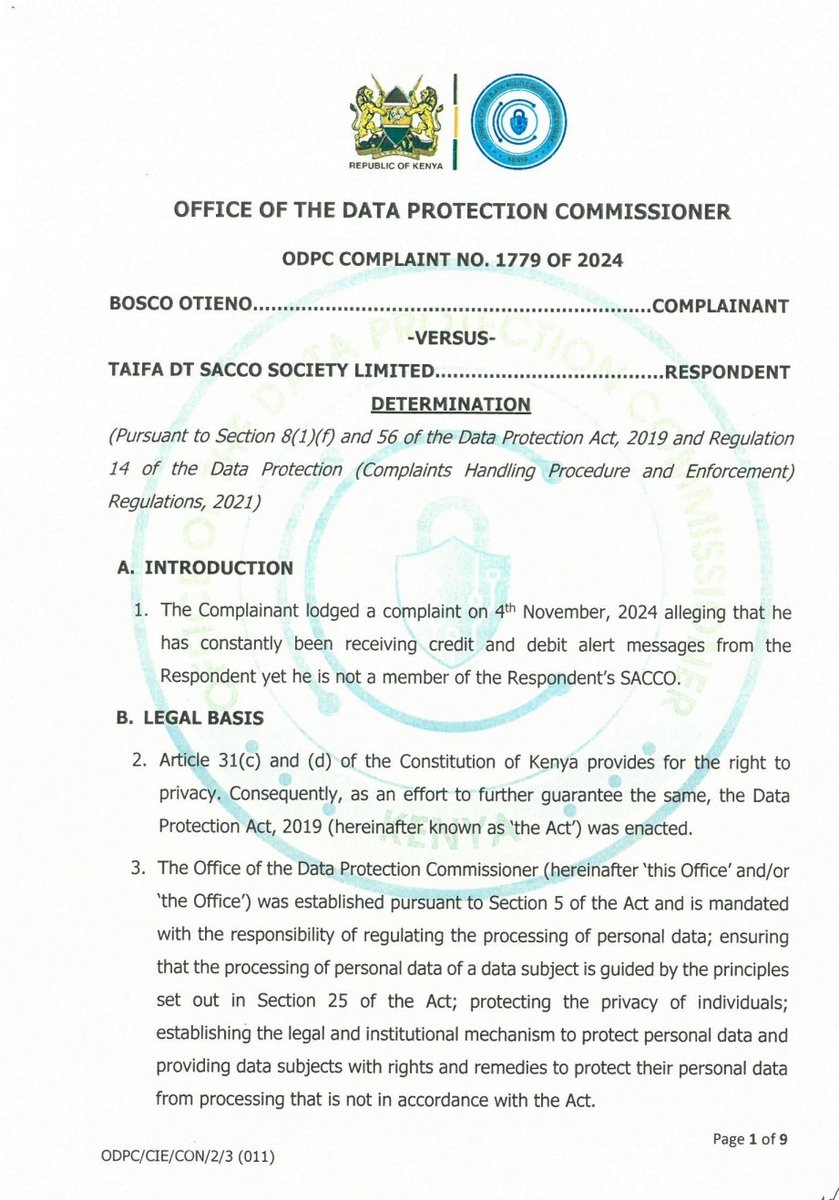
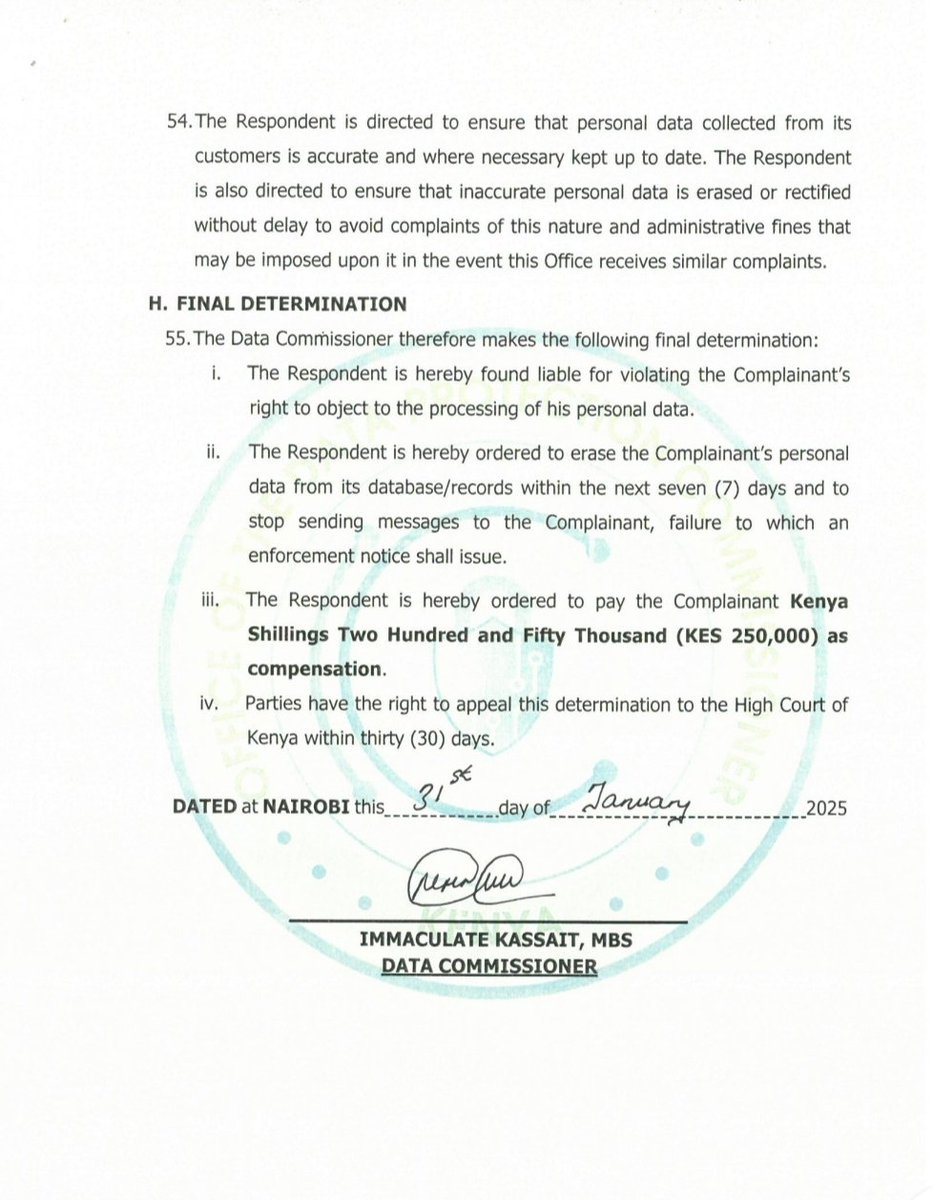
DT Sacco has been ordered to pay Ksh 250,000 to Bosco Otieno for sending him messages yet he wasn't even a member.
The SACCO claimed to have investigated the matter, identified the source of the problem, and resolved the issue by removing the Complainant's mobile number from the member's account. They apologized for the inconvenience caused.The ODPC refused their apology and ordered them to pay 250k.
The best Chinese open agentic/reasoning models. When to use each?
• Kimi K2 – if you need a well-rounded, strong open base with agentic plus long-context strength.
• GLM-4.5 – the most tool-savvy, agent-native model today.
• Qwen3 – the best one if you need control, multilingualism, and switching between thinking/non-thinkin modes.
• Qwen3-Coder – for repo-scale coding with powerful agentic behavior.
• DeepSeek-R1 – when prioritizing reasoning accuracy over agentic capabilities
Explore the tech that drives each model and the full range of what they can do here: https://t.co/UeBzofVWrN
New Course: ACP: Agent Communication Protocol
Learn to build agents that communicate and collaborate across different frameworks using ACP in this short course built with @IBMResearch's BeeAI, and taught by @sandi_besen, AI Research Engineer & Ecosystem Lead at IBM, and @nicholasrenotte, Head of AI Developer Advocacy at IBM.
Building a multi-agent system with agents built or used by different teams and organizations can become challenging. You may need to write custom integrations each time a team updates their agent design or changes their choice of agentic orchestration framework.
The Agent Communication Protocol (ACP) is an open protocol that addresses this challenge by standardizing how agents communicate, using a unified RESTful interface that works across frameworks. In this protocol, you host an agent inside an ACP server, which handles requests from an ACP client and passes them to the appropriate agent. Using a standardized client-server interface allows multiple teams to reuse agents across projects. It also makes it easier to switch between frameworks, replace an agent with a new version, or update a multi-agent system without refactoring the entire system.
In this course, you’ll learn to connect agents through ACP. You’ll understand the lifecycle of an ACP Agent and how it compares to other protocols, such as MCP (Model Context Protocol) and A2A (Agent-to-Agent). You’ll build ACP-compliant agents and implement both sequential and hierarchical workflows of multiple agents collaborating using ACP.
Through hands-on exercises, you’ll build:
- A RAG agent with CrewAI and wrap it inside an ACP server.
- An ACP Client to make calls to the ACP server you created.
- A sequential workflow that chains an ACP server, created with Smolagents, to the RAG agent.
- A hierarchical workflow using a router agent that transforms user queries into tasks, delegated to agents available through ACP servers.
- An agent that uses MCP to access tools and ACP to communicate with other agents.
You’ll finish up by importing your ACP agents into the BeeAI platform, an open-source registry for discovering and sharing agents.
ACP enables collaboration between agents across teams and organizations. By the end of this course, you’ll be able to build ACP agents and workflows that communicate and collaborate regardless of framework.
Please sign up here: https://t.co/csyHrswJuB
OpenAI is expanding the access to Box within ChatGPT. To get the promise of AI, we need interoperability between our systems so AI Agents can use any tools and data sources to execute their work. This is what the future will look like.
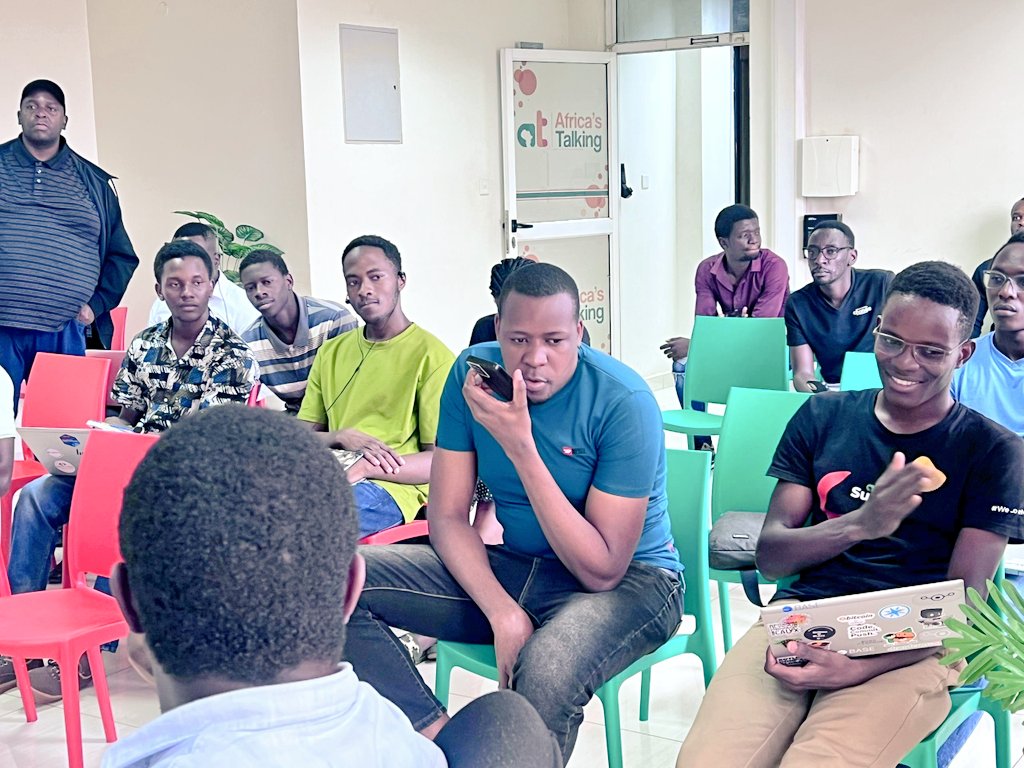
The 2025 edition of the Riara Design Thinking Hackathon is officially underway at Riara University, running from July 18–20, 2025, under the theme "Sustainable Innovation for Africa’s Future."
Organized in partnership with Riara University, Anza Village and the Technical University of Kenya (TUK), the hackathon brings together students from over 10 universities and leading high schools for a 72-hour innovation sprint structured to spark bold solutions across four challenge tracks:
✅️ Climate & Green Innovation
✅️ Smart Agriculture & Agritech
✅️ Inclusive Education & Future Skills
✅️ Health & Community Wellbeing
With strong support from partners such as NCBA, Huawei, KCB Foundation, KEPSA, Konza Technopolis, UK- Kenya Tech hub and Retrak, the hackathon reflects the growing commitment to nurturing Kenya’s next generation of changemakers through interdisciplinary collaboration, creativity, and entrepreneurial thinking.
The NeoEyes AI Camera is a rugged, open source IoT camera for computer vision applications that offers LTE or Wi-Fi HaLow connectivity. https://t.co/1cLhJT7Nu9
Over the next 12 months, we'll see 1,000+ companies built with AI.
AI will create more millionaires than any single technology before it. I personally know many people who are making more money than they ever had, thanks to AI.
I went to college. Back then, it was the only path to success. This is no longer true.
Today, if you have an idea, you can get it very far using AI tools alone. I recommend checking out Emergent. They are collaborating with me on this post.
Here is one of the easiest ways to build anything you want:
1. Go to https://t.co/mSbtU01Cq4
2. Write what you want to build
3. Deploy it
4. Show a few people around you
5. Gather feedback
6. Iterate on the app
It's pretty insane to realize that English can take you this far!
Bonus points: Try Grok 4 + Emergent. Grok is seriously good at building software!
How is a Solutions Engineer different from/ similar to a Forward Deployed Engineer?
(As I understand, both roles help customers integrate the offering of the vendor: SE is common for cloud providers like AWS, GCP. FDE got big at Palantir, now AI startups are doubling down)
AI Agents having the right context to execute their tasks is the defining factor for agent success. Getting the deepest domain understanding, task instructions, tool use, and the right chunks of corporate knowledge are some of the most important problems in software now.