I have a major result to share.
I’ve found conclusive forensic evidence that the top 4 Chinese AI labs—DeepSeek, Moonshot, MiniMax and Ant Group—have built their newest models on NVIDIA’s most advanced Blackwell chips, which are barred from export to China.
This sounds insane, but I discovered that almost every AI model carries a hidden signature of the GPU that trained it. When a model is first set up, the starting values of its weights are laid out in a pattern that depends on the exact GPU. Each combination of GPU and seed number produces a unique pattern—a sort of fingerprint of the hardware used to create the model. Traces of that pattern survive training into the published model.
Again, this evidence isn’t based on any insider information or leaking. It’s based on a forensic analysis of the model weights released by the companies themselves.
I searched more than six trillion combinations of chip layout and seed number and matched them to open-weights models. In doing so, I found conclusive evidence that six Chinese AI models—including DeepSeek-V4-Pro, Kimi K3, and MiniMax-M3—were initialized on NVIDIA Blackwell systems. Four of the models match Grace Blackwell, the GB200 and GB300 parts in NVIDIA’s flagship liquid-cooled rack-scale systems.
I then verified these results on real hardware. Running unmodified PyTorch with the seeds I’d recovered, a Blackwell B300 reproduced DeepSeek-V4-Flash’s untouched starting weights bit for bit, and a rented GB200 reproduced Kimi K3’s to a correlation of 0.999995. A Hopper H100 reproduced none of DeepSeek-V4-Flash’s, and changing the seed by one broke the match. (DeepSeek’s seed is 953049583 by the way.) The method also was verified to match 24 known open-weights models to the hardware that developers said they used.
It is exceedingly unlikely that these results are a coincidence. Across six trillion combinations, the best accidental match should reach only about 8 sigma (i.e., eight standard deviations above what random chance would produce). The real matches range from 49 to 1,385 sigma, and even the weakest single test hits 20.
These were data-center-scale training runs. With some analysis of release schedules and model details, I estimate that the largest, Kimi K3 and DeepSeek-V4-Pro, used 2,000 to 3,000 Blackwell GPUs each. Clusters of this size cost on the order of $150 to $200 million each to buy, and across these labs alone would add up to more than half a billion dollars of export-controlled GPUs, not counting experimental compute or otherwise. It’s quite likely that we see multi-billion dollar expenditure on export-controlled GPUs.
I am highly confident in this result, and it has been independently verified by senior researchers at OpenAI and Anthropic. You can read the full report at https://t.co/YOtzND0Jqk.
There is much more I’ve identified about these models through other forms of checkpoint forensics like this, and will have more to share soon.
😮Mandelson’s lobbying firm linked to Chinese military.
Mandelson was a strong influence over the development of current @GOVUK China “policy”. Everything he has touched in govt should be considered tainted and urgently reviewed. #Mandelsonaudit
https://t.co/16CxDHLCuB
She now avoids crowded spaces, fearful of another attack. Sadly, such incidents are not rare. In 2023–24, the UK recorded 140,000+ hate crimes; ~70% were race-related. Asians are often targeted.
A Taiwanese girl, V, was brutally assaulted by four white girls near King’s Cross, London. Hate crimes in the UK are alarming. 😔
Yesterday, I met V. A quiet, pretty girl, still in shock. “I don’t understand why this happened,” she said.
V just graduated with a master’s and had secured a new job. Yet, only five minutes from home, she suffered a racially motivated assault. The bus driver and passengers did nothing.
Profit, Control, and the Illusion of Openness (translated and repost w a title added)
China’s propaganda machine portrays the country as a champion of globalization and a defender of free trade.
But that’s not the reality.
State-owned enterprises (SOEs) account for over 60% of China’s total GDP by annual revenue.
As of the end of 2023, China’s SOEs held total assets of 371.9 trillion yuan. State-owned financial institutions held assets worth 445.1 trillion yuan, while administrative and institutional state assets totaled 64.2 trillion yuan.
According to the 2024 report on China’s Top 500 Private Enterprises, these firms collectively hold only 49.85 trillion yuan in total assets—less than the assets of China’s administrative institutions alone.
Private and foreign enterprises are responsible for over 80% of employment in China and carry out the vast majority of exports, earning the country its foreign exchange. In contrast, SOEs are mainly responsible for imports—especially bulk commodities. In other words, SOEs are primarily responsible for spending money.
See the division of labor now?
All of this comes from publicly available data. The data speaks for itself—what’s needed is someone who can interpret it correctly.
Moreover, China enforces strict capital controls, imposing tight restrictions on outbound investments by residents and businesses. But capital controls are the enemy of free trade. If capital can’t move freely, how can there be free trade?
China also imposes heavy censorship on news, film and television, and the internet. Major Western media, publishers, streaming platforms, and tech companies are effectively shut out of the Chinese market.
China is a regulatory state. What it defends is not “free trade,” but “trade surpluses.”
Let me say that again: China is not defending free trade—it’s defending trade surpluses, which represent the government’s ability to earn U.S. dollars. Only with a dollar surplus can SOEs and the government have money to spend.
And yet, SOEs and the government are highly inefficient spenders. But this is baked into the system—it’s an extractive system. That’s also why China will never carry out meaningful reforms to wealth distribution. Do you think the government is stupid enough to make itself poor?
Chinese people must remain poor. They can only remain poor. That’s how the distribution system works. It distorts wealth distribution, and even more so the industrial structure and job market. That’s why the Chinese end up in a constant state of “involution.” In a system designed for “profits flowing through a single channel,” how could there not be involution?
Understand China’s land system, its household registration (hukou) system, and its distribution system—understand the Legalist thinker Guan Zhong’s idea of “profits through one channel”—and you’ll understand why involution is so pervasive in China.
China must encourage and expand exports while restricting and reducing imports. That’s why even in first-tier cities like Shenzhen and Shanghai, where per capita GDP exceeds $20,000—approaching the level of a moderately developed country—the statutory minimum wage is still only a little over 2,000 yuan.
Back in the 1960s, Premier Zhou Enlai famously said: “Everything for foreign trade.” Even when ordinary Chinese were struggling to survive, China continued to export massive amounts of grain, cotton, meat, and cooking oil.
“Everything for foreign trade” remains national policy today. To put it plainly: everything is for the surplus, everything is for U.S. dollars.
If Chinese people became wealthy, “Made in China” goods would no longer be affordable to foreigners. And if Chinese consumers had money, they’d spend it abroad—on shopping, real estate, even immigration. China’s current account surplus would disappear, and the government would become poor.
(Continue)
Look at Japan: its government is broke. Japan’s current account surplus comes from returns on overseas investments by the private sector. The government is in debt, while the private sector is rich—the wealth is hidden among the people, among private enterprises.
Japan has the world’s highest public debt—more than 200% of its GDP—and is nearly bankrupt. Yet the Japanese don’t worry, and neither do Chinese. Many wealthy Chinese are eager to move to Japan, and send their children there to study or immigrate.
Japan’s system is relatively free. The government operates transparently. There are no capital controls. Social welfare is strong. Quality of life is high. Jobs are plentiful. And with the yen depreciating, Japan has become even more cost-effective as a migration destination for Chinese.
Only a free country can support true free trade.
A Chinese operation to absorb Taiwan would likely begin not with tanks and missiles but with covert attempts to undermine civilian morale and public confidence in the Taiwanese government, write @dbyman and @SethGJones. https://t.co/o3jF2RZwIq
A past interview of Syrian activist Mazen al Hamada after he was released and forced out of syria, speeking about the brutal torture and rape that he endured by the Assad regime.
his body was found in the Sednaya prison in Damascus.
By watching his interview and observing his expressions and emotions, I could feel the pain he endured and It was evident in every word and gesture, Tragically, he eventually returned to Syria after being lured there by the Ragime where he disappeared on arrival. His fate remained unknown until yesterday, when his body was discovered in Sednaya prison in Damascus.
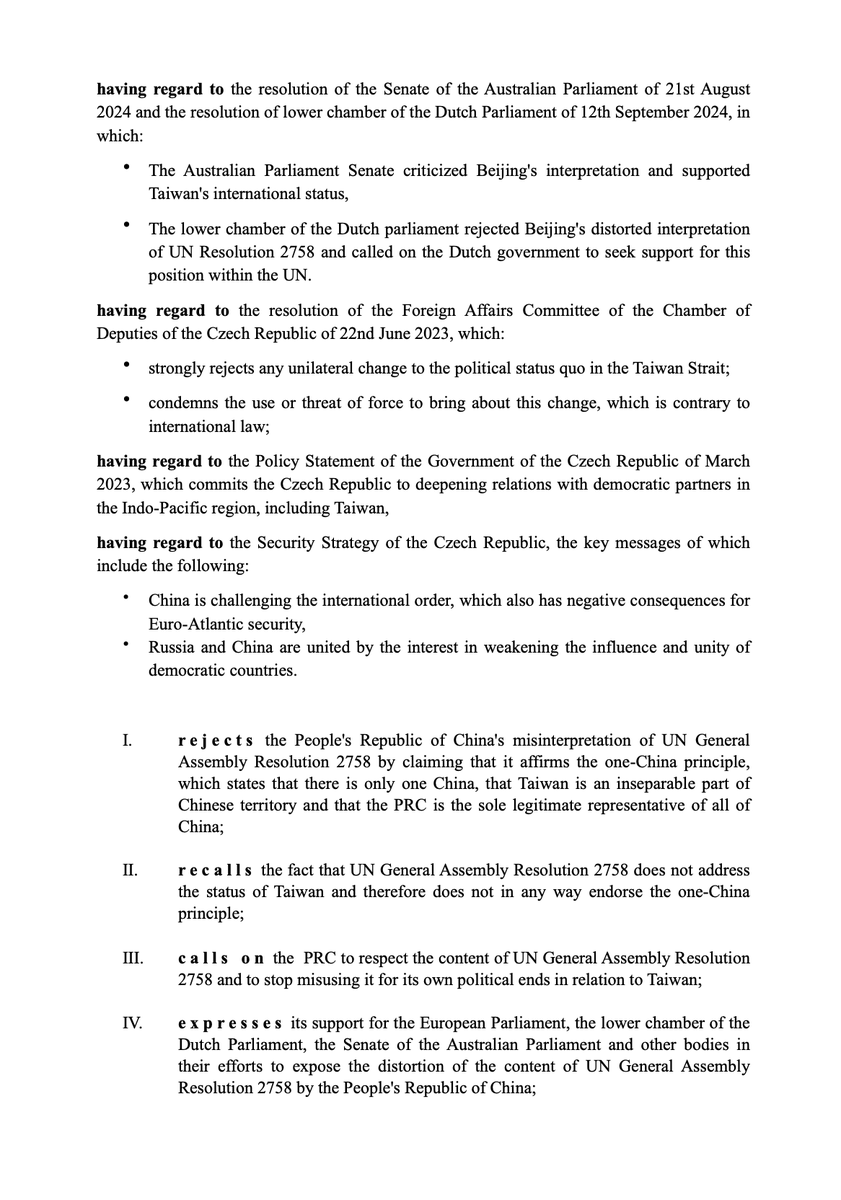
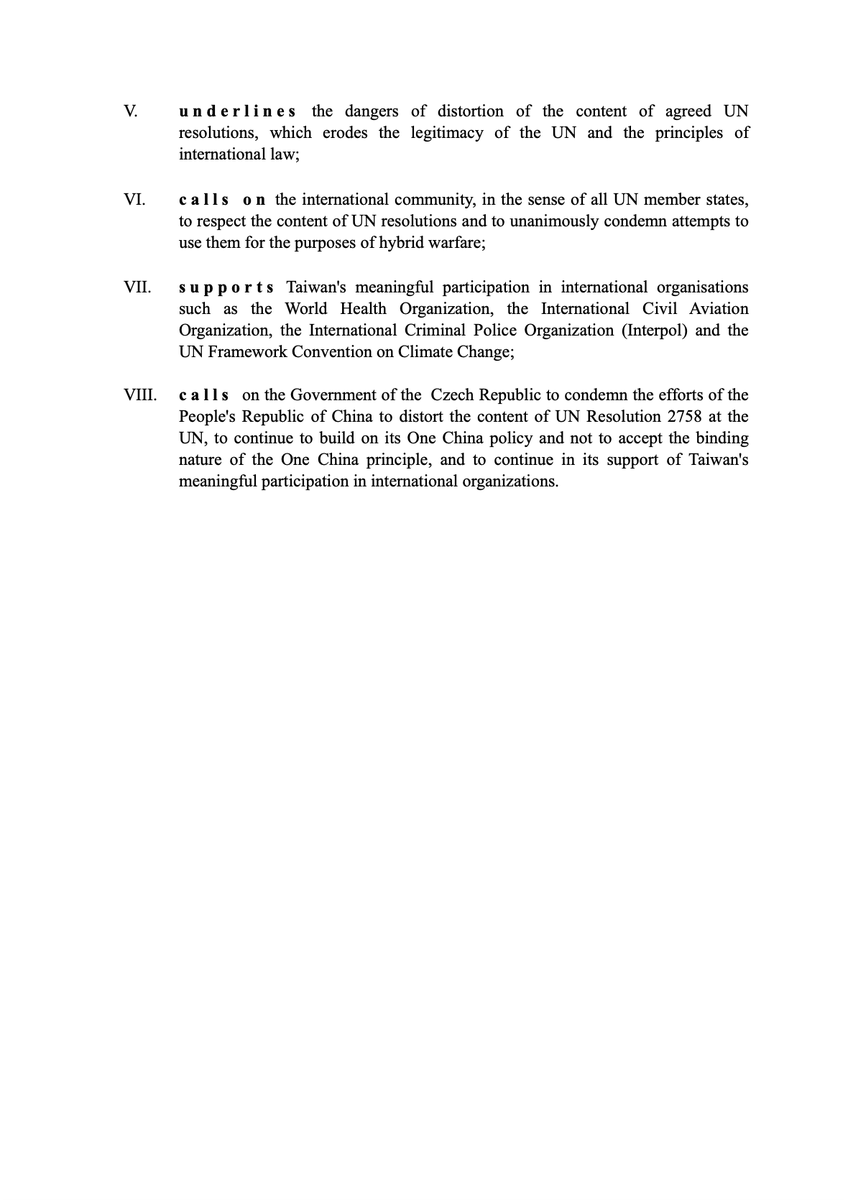
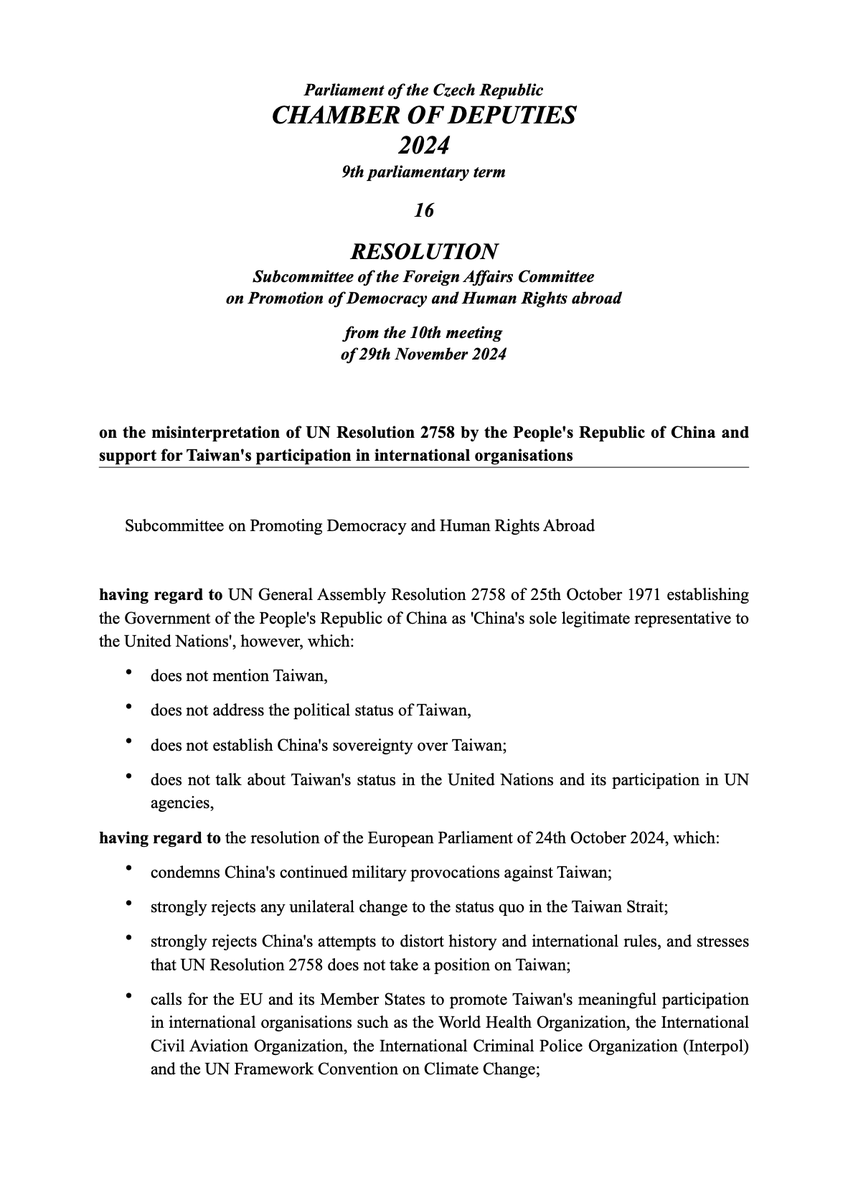
#BREAKING: 🇨🇿 Chamber of Deputies adopts motion rejecting 🇨🇳's distortion of 🇹🇼's status.
Led by 🇨🇿 Co-Chair @eva_decroix, supported by members @HayatoOkamura@H_Langsadlova, this is the 6th parliament to pass a motion as part of IPAC’s #Initiative2758 following 🇦🇺🇳🇱🇪🇺🇨🇦🇬🇧.
#BREAKING Tower Hamlets Council votes to REJECT Chinese Embassy application.
Now to local enquiry in February, before @AngelaRayner final decision.
If the Government overrides local residents AND the Council to approve this, it’ll be a clear sign that Xi gets what he wants.
The criminalization of democracy in Hong Kong recalls the dark days of Taiwan’s Martial Law era. It is also a reminder that we cannot take freedom for granted. Defending our democracy and our freedom to think, to speak, to vote, & to live, is a duty.
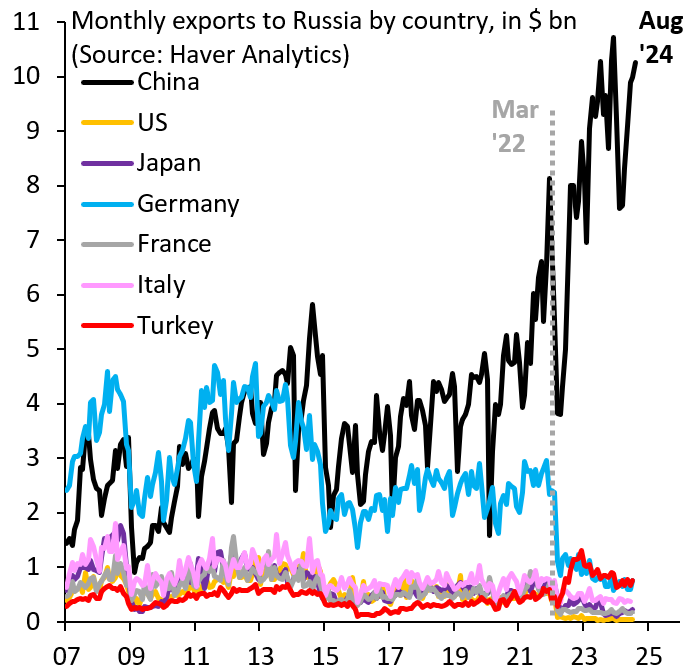
China's exports to Russia have grown so massively, their rise more than offsets the entire fall in Western exports to Russia. Russia's war economy wouldn't be able to keep going without China. It really is that simple. China is Putin's biggest enabler...