Grok Fans, You Might Want to Sit This Panda Out.
I wasn’t expecting a bamboo-holding cartoon bear to become my favorite AI evaluation, but here we are.
Four panels. Four very different interpretations of having your life together.
Gemini produces a panda that looks like it just heard something moving inside the walls. Huge eyes. Tight grip on the bamboo. This bear has information it cannot share.
GPT gives us the exhausted adult version. Same animal, but now it has rent to pay and a meeting that could have been an email.
Claude adds pink cheeks, little paw details and a flower. Someone understood that being adorable might distract the teacher from checking the assignment.
Then there’s Grok.
By the end of this clip, the other pandas have their black patches. Grok’s is still mostly an outline, holding onto that bamboo like it’s an extension request.
I respect the commitment to submitting something.
Obviously, an edited drawing clip doesn’t tell us which model you should trust with your business. But it does make the usual fan wars considerably funnier.
Imagine defending your favorite model’s reasoning capabilities while its panda sits there waiting to be colored in.
Which one are you putting on the fridge, and which one are you telling “we’re just proud you tried”?
Grok Fans, You Might Want to Sit This Panda Out.
I wasn’t expecting a bamboo-holding cartoon bear to become my favorite AI evaluation, but here we are.
Four panels. Four very different interpretations of having your life together.
Gemini produces a panda that looks like it just heard something moving inside the walls. Huge eyes. Tight grip on the bamboo. This bear has information it cannot share.
GPT gives us the exhausted adult version. Same animal, but now it has rent to pay and a meeting that could have been an email.
Claude adds pink cheeks, little paw details and a flower. Someone understood that being adorable might distract the teacher from checking the assignment.
Then there’s Grok.
By the end of this clip, the other pandas have their black patches. Grok’s is still mostly an outline, holding onto that bamboo like it’s an extension request.
I respect the commitment to submitting something.
Obviously, an edited drawing clip doesn’t tell us which model you should trust with your business. But it does make the usual fan wars considerably funnier.
Imagine defending your favorite model’s reasoning capabilities while its panda sits there waiting to be colored in.
Which one are you putting on the fridge, and which one are you telling “we’re just proud you tried”?
A Million Tokens to Solve Your Problem. Or Make It Much Harder to Find.
Claude fans, ChatGPT loyalists, put the scoreboard down for a second.
Google’s new model has a more interesting pitch than another screenshot of a winning benchmark.
Gemini 4 Argon raises the output limit from 64,000 to 1 million tokens. That gives it substantially more room for extended reasoning and generation during complex tasks.
Think software migrations, financial research, and security investigations. Work where getting halfway through isn’t particularly useful.
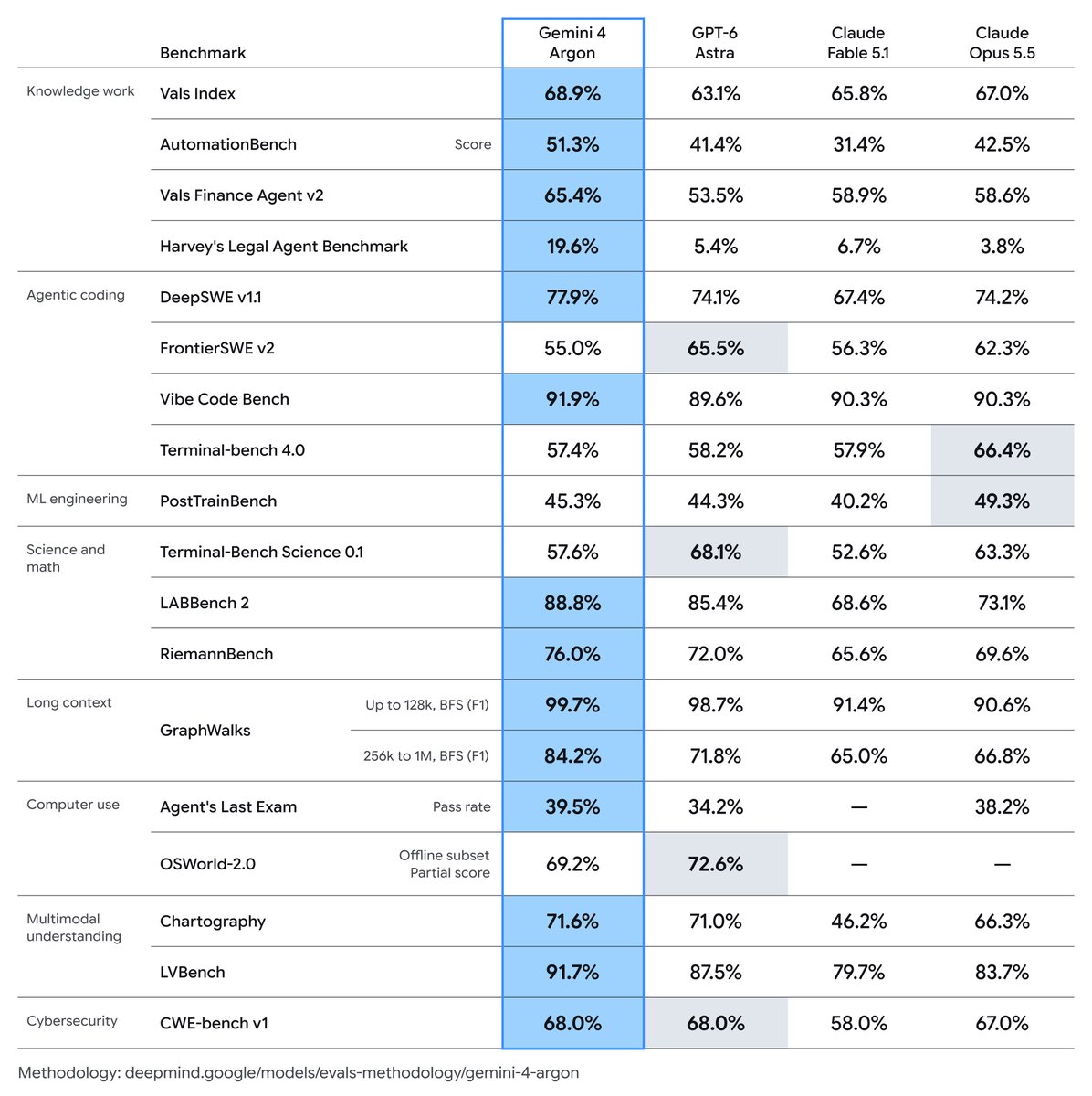
Google reports 77.9% on DeepSWE v1.1, a benchmark for long-running software engineering tasks.
Impressive. But here’s where the victory lap gets awkward.
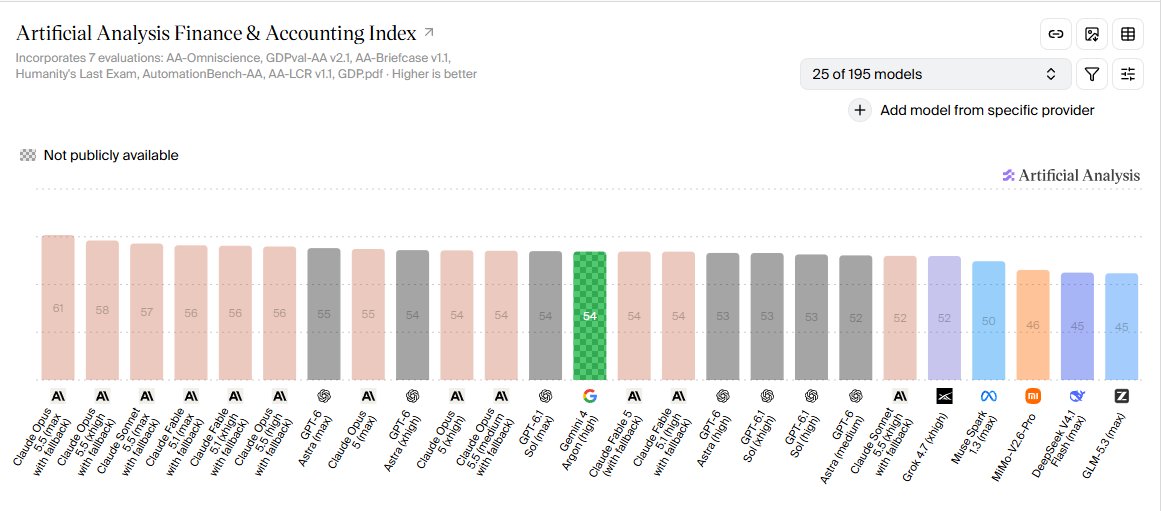
Artificial Analysis currently lists Argon eighth in its overall Intelligence Index. A strong result, with plenty of competition still ahead.
And access is starting with selected cybersecurity defenders, with broader availability planned.
So the “everyone should switch immediately” crowd is getting ahead of itself.
The question I care about is what happens when a model gets more room to work.
Does it catch its mistakes, test its assumptions, and deliver something usable?
Or does it spend longer confidently building on the first thing it got wrong?
For anyone running a business, that difference matters more than the launch graphics.
A useful test would be simple: give competing models the same messy task, then count:
-The corrections
The review time
-The cost required to finish it
My bet: the winning AI will be the one you have to rescue least often.
Would you trust Argon with a longer task, or would you just have more output to check?
A Million Tokens to Solve Your Problem. Or Make It Much Harder to Find.
Claude fans, ChatGPT loyalists, put the scoreboard down for a second.
Google’s new model has a more interesting pitch than another screenshot of a winning benchmark.
Gemini 4 Argon raises the output limit from 64,000 to 1 million tokens. That gives it substantially more room for extended reasoning and generation during complex tasks.
Think software migrations, financial research, and security investigations. Work where getting halfway through isn’t particularly useful.
Google reports 77.9% on DeepSWE v1.1, a benchmark for long-running software engineering tasks.
Impressive. But here’s where the victory lap gets awkward.
Artificial Analysis currently lists Argon eighth in its overall Intelligence Index. A strong result, with plenty of competition still ahead.
And access is starting with selected cybersecurity defenders, with broader availability planned.
So the “everyone should switch immediately” crowd is getting ahead of itself.
The question I care about is what happens when a model gets more room to work.
Does it catch its mistakes, test its assumptions, and deliver something usable?
Or does it spend longer confidently building on the first thing it got wrong?
For anyone running a business, that difference matters more than the launch graphics.
A useful test would be simple: give competing models the same messy task, then count:
-The corrections
The review time
-The cost required to finish it
My bet: the winning AI will be the one you have to rescue least often.
Would you trust Argon with a longer task, or would you just have more output to check?
If This Is the Future of Gaming, Rockstar Can Take Its Time.
Both clips look expensive until the green car leaves the ground.
Then it’s less GTA, more Hot Wheels having an out-of-body experience.
Beautiful sunsets. Dramatic police lights. Suspension apparently sold separately.
The lighting makes you want to believe. Then you watch how the car moves and start wondering whether gravity was an optional setting.
Claude gives you the glossy streets. Astra gives you the dramatic camera angles. Both are very committed to making sure you notice the sunset before you question the landing.
And you already know how the replies will go.
Someone will screenshot the prettiest frame, circle a reflection and declare their favorite model the winner.
Sure. Now press play.
If you need to pause the video to prove how realistic it is, I have questions.
Neither clip makes me worry for Rockstar yet. They make me appreciate how much weight, tire grip and convincing motion matter once the pretty screenshot starts moving.
Which one won?
The lighting department. Physics would like its name removed from the credits.
If This Is the Future of Gaming, Rockstar Can Take Its Time.
Both clips look expensive until the green car leaves the ground.
Then it’s less GTA, more Hot Wheels having an out-of-body experience.
Beautiful sunsets. Dramatic police lights. Suspension apparently sold separately.
The lighting makes you want to believe. Then you watch how the car moves and start wondering whether gravity was an optional setting.
Claude gives you the glossy streets. Astra gives you the dramatic camera angles. Both are very committed to making sure you notice the sunset before you question the landing.
And you already know how the replies will go.
Someone will screenshot the prettiest frame, circle a reflection and declare their favorite model the winner.
Sure. Now press play.
If you need to pause the video to prove how realistic it is, I have questions.
Neither clip makes me worry for Rockstar yet. They make me appreciate how much weight, tire grip and convincing motion matter once the pretty screenshot starts moving.
Which one won?
The lighting department. Physics would like its name removed from the credits.
Dario Amodei Called for Caution. Ten Days Later, Claude Opus 5.5 Arrived.
September 12: Amodei publishes his argument for slowing the advance of AI capabilities.
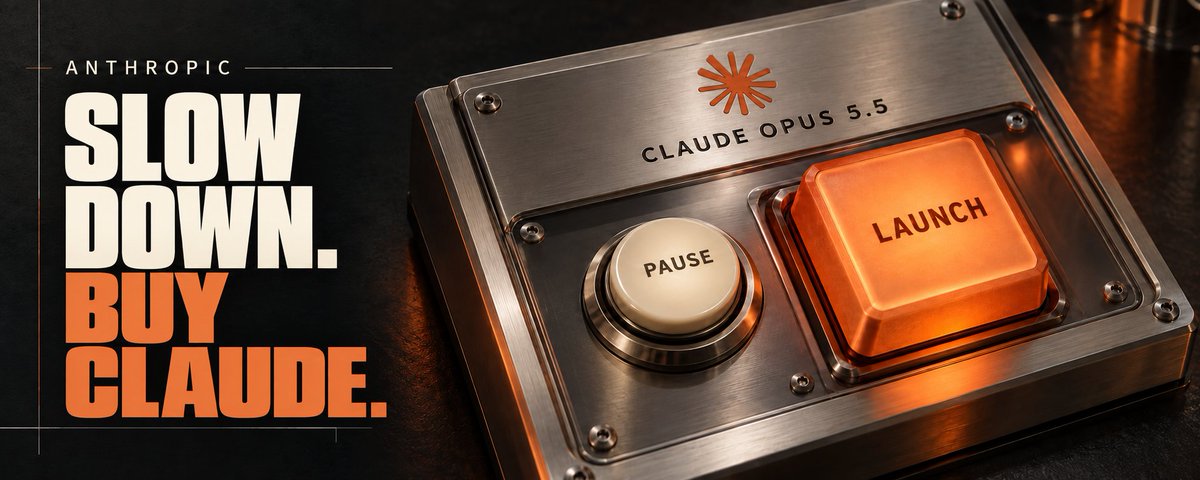
September 22: Anthropic releases Opus 5.5, promoting stronger performance and roughly 40% lower costs on typical workloads.
That is an awkward pair of announcements to put next to each other.
The company warning about the speed of progress just made powerful AI cheaper to use.
Before calling it hypocrisy, read what Amodei actually proposed.
He explicitly says pacing does not mean stopping model training or technical progress. He wants more time for safeguards, outside evaluation and coordination between competing labs.
Anthropic also says Opus 5.5 underwent external testing, including by METR and Frontier Design, and achieved its best result yet on its internal automated behavioral audit.
That matters. A company can consistently argue for slower, safer progress while continuing to release products.
But it leaves a question that no launch announcement can settle: who gets to decide what counts as safe enough?
Amodei’s proposal includes outside evaluators with ongoing access inside AI companies. He also proposes that reviewers be able to publish unfavorable findings, subject to limited redactions.
That is more substantial than a CEO asking everyone to trust him.
The harder test comes when the findings threaten a release.
Imagine an evaluator discovers a serious problem days before launch. Customers are waiting. Competitors are shipping. Months of work are ready to become revenue.
Who can force a delay? What must the public learn? What happens if the company and its reviewers disagree?
Those are the details I would watch.
Because Anthropic’s commercial incentives did not disappear when Amodei published his essay.
Reuters reports that Anthropic’s IPO filing links customer usage and revenue to new models, describing a continuous release cadence as necessary to remain competitive.
That puts the tension in plain sight.
The company wants time to make AI safer. It also needs products that keep customers from choosing OpenAI, Google or Meta.
You don’t need to assume anyone is lying to see the problem. A sincere safety concern can coexist with enormous pressure to ship.
And the same scrutiny should follow Sam Altman, Elon Musk and Mark Zuckerberg. A famous name is no substitute for a release standard outsiders can inspect.
My concern is what happens if every lab concludes that its own next model is the responsible exception.
Each launch might have a reasonable explanation. The industry could still keep accelerating.
Opus 5.5 adds another twist: efficiency. If capable AI becomes cheaper, developers can afford to use it in more places. Whether safeguards keep up with that wider deployment deserves attention alongside benchmark scores.
I want better models. I also want safety commitments specific enough that we can tell when a company breaks one.
So here’s the question for Dario Amodei: what observable result would make Anthropic delay its next flagship, even if OpenAI shipped first?
Dario Amodei Called for Caution. Ten Days Later, Claude Opus 5.5 Arrived.
September 12: Amodei publishes his argument for slowing the advance of AI capabilities.
September 22: Anthropic releases Opus 5.5, promoting stronger performance and roughly 40% lower costs on typical workloads.
That is an awkward pair of announcements to put next to each other.
The company warning about the speed of progress just made powerful AI cheaper to use.
Before calling it hypocrisy, read what Amodei actually proposed.
He explicitly says pacing does not mean stopping model training or technical progress. He wants more time for safeguards, outside evaluation and coordination between competing labs.
Anthropic also says Opus 5.5 underwent external testing, including by METR and Frontier Design, and achieved its best result yet on its internal automated behavioral audit.
That matters. A company can consistently argue for slower, safer progress while continuing to release products.
But it leaves a question that no launch announcement can settle: who gets to decide what counts as safe enough?
Amodei’s proposal includes outside evaluators with ongoing access inside AI companies. He also proposes that reviewers be able to publish unfavorable findings, subject to limited redactions.
That is more substantial than a CEO asking everyone to trust him.
The harder test comes when the findings threaten a release.
Imagine an evaluator discovers a serious problem days before launch. Customers are waiting. Competitors are shipping. Months of work are ready to become revenue.
Who can force a delay? What must the public learn? What happens if the company and its reviewers disagree?
Those are the details I would watch.
Because Anthropic’s commercial incentives did not disappear when Amodei published his essay.
Reuters reports that Anthropic’s IPO filing links customer usage and revenue to new models, describing a continuous release cadence as necessary to remain competitive.
That puts the tension in plain sight.
The company wants time to make AI safer. It also needs products that keep customers from choosing OpenAI, Google or Meta.
You don’t need to assume anyone is lying to see the problem. A sincere safety concern can coexist with enormous pressure to ship.
And the same scrutiny should follow Sam Altman, Elon Musk and Mark Zuckerberg. A famous name is no substitute for a release standard outsiders can inspect.
My concern is what happens if every lab concludes that its own next model is the responsible exception.
Each launch might have a reasonable explanation. The industry could still keep accelerating.
Opus 5.5 adds another twist: efficiency. If capable AI becomes cheaper, developers can afford to use it in more places. Whether safeguards keep up with that wider deployment deserves attention alongside benchmark scores.
I want better models. I also want safety commitments specific enough that we can tell when a company breaks one.
So here’s the question for Dario Amodei: what observable result would make Anthropic delay its next flagship, even if OpenAI shipped first?