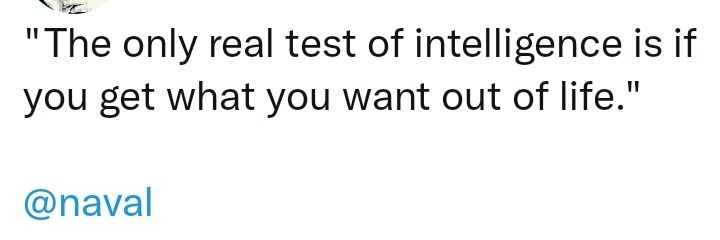
Met a telco airtime dealer who had a similar problem many years ago. He had made 500m and didn't want to keep putting it in the business because it was stressful for him. He always had all his eggs in one basket. He wanted to do payments with the money he had made because he thought it was better and less stressful.
I showed him that airtime sales was more profitable than payments but the only risk be had with airtime then was that there was almost no digital payments infrastructure and cash was stressful. He eventually invested that 500m into real estate.
He still remained in the airtime business until banks came to almost wipe him out. He still regrets that he didn't do payments instead of real estate when he started hearing of unicorns. What he didn't remember was that the very first payment companies like VoguePay and others didn't make it. Our first merchant cost us 200m Naira in fraudulent chargebacks.
His real estate portfolio is now collateral for him to do a myriad of other businesses as he uses bank money to finance them and they hold his properties as collateral. He is still a rich man and richer than most fintech people today.
On the enjoyment part, I think that the greatest form of enjoyment is seeing your risk free money grow without stress. He is still below the threshold of most wealth managers and should grow everything until he does 20m monthly.
At over 200m a year, the wealth managers will be working for him at the distributorship 😂😂😂
A big shift is happening in Nigeria's financial space.
S&P Global is taking a controlling stake in Agusto & Co., one of the country's leading credit rating agencies.
If you've ever wondered how banks or investors decide who deserves to borrow money, this is part of the answer. Credit rating agencies dig into an organisation's finances and judge how likely it is to repay its debts.
Agusto & Co. has been around since 1992. It was founded by Olabode Agusto and it became Nigeria's first credit rating agency licensed by the Securities and Exchange Commission (SEC).
The company has since assigned more than 3,000 credit ratings across banks, corporations, investment funds, governments, and debt issuances, making it one of the most established credit rating agencies in Africa.
The acquisition is part of S&P Global Ratings' expansion strategy in Africa. S&P says it wants to combine its global expertise with Agusto's established presence across African debt markets.
Oladimeji Ajegbile, the father behind the viral videos of biking with his 2-year-old son, Iremide, told CBS News that he’s “not going to stand in his way of getting a baby bike,” as the toddler recently requested — but at the same time, Ajegbile has no plans to stop riding with his son.
1. Seek for the next big opportunity that is right before you.
2. Build a daily confession of its present reality in your life mix it with thanksgiving and praise.
3. Go to God for wisdom to teach you how to get it done.
4. Go to work obeying his instructions.
Dear Blessing,
I just came across your tweet, and it truly inspired me.
To graduate with a First Class in Mathematics from UNILORIN and then earn a fully funded Master's admission in Italy is an extraordinary achievement. You have demonstrated excellence and the promise that exists in so many young Nigerians.
No young person who has worked this hard should have such an opportunity limited by the cost of getting there. It would be my privilege to support your journey by covering what is left in the cost of your relocation.
@nancy_i_i from my office will reach out to you today.
Congratulations once again. Go, excel, and continue to make Nigeria proud.
@SirJarus It's about career growth trajectory for EAs?
Just wanted to add another layer to the conversation, particularly because the role of EAs and Chief of Staff overlap in some organisations.
@FabrizioRomano James Milner at Liverpool:
🏟️ 230 appearances
🏆 Premier League
🏆 Champions League
🏆 FA Cup
🏆 League Cup
🏆 Club World Cup
🏆 UEFA Super Cup
A true Liverpool legend. ❤️
”𝐅𝐀𝐊𝐄 𝐍𝐄𝐖𝐒 𝐀𝐋𝐄𝐑𝐓: “𝐓𝐀𝐈𝐖𝐎 𝐎𝐘𝐄𝐃𝐄𝐋𝐄 𝐅𝐈𝐍𝐀𝐋𝐋𝐘 𝐀𝐃𝐌𝐈𝐓𝐒 𝐄𝐑𝐑𝐎𝐑𝐒 𝐈𝐍 𝐓𝐇𝐄 𝐍𝐄𝐖 𝐓𝐀𝐗 𝐋𝐀𝐖𝐒”
Our attention has been drawn to misleading media reports claiming that the Honourable Minister of State for Finance, Mr. Taiwo Oyedele has "finally admitted errors in the new tax laws." These publications misrepresent the Minister's statements, falsely alleging that he urged Nigerians to await the outcome of a "legislative probe", a process that has long been concluded and the gazetted copies certified by the National Assembly published since early January 2026.
This twisted narrative is unhelpful as it risks distorting public understanding and misleading the very people the reforms were designed to benefit.
The Minister, during a recent fireside chat at the NBA SLP conference in Lagos, highlighted the early positive impact of the new tax laws, including thousands of informal businesses now seeking CAC registration daily while the number of individuals registered for tax purposes nationwide has increased from barely 10 million before the reform to over 100 million.
These impressive results stem from the robust design and progressive nature of the new laws, which include:
- Exemption of small companies from tax.
- Increased exemption thresholds for low-income earners.
- Tax exemptions on basic consumption items like food, education, healthcare, transportation, and rent.
- Introduction of the Tax Ombud to protect taxpayer right.
The Minister contrasted the transformative changes in the new laws with the regressive provisions in the old laws. He however emphasised that no law is perfect. Therefore, ongoing stakeholder engagement is essential to identify and address any errors or gaps for appropriate legislative updates through Finance Bills as part of a continuous improvement process.
We urge members of the public to disregard sensational headlines and twisted narratives and rely exclusively on official sources and credible media organisations for accurate information regarding the tax reform and other government policies.
God bless Nigeria!
-𝑷𝒓𝒆𝒔𝒊𝒅𝒆𝒏𝒕𝒊𝒂𝒍 𝑭𝒊𝒔𝒄𝒂𝒍 𝑷𝒐𝒍𝒊𝒄𝒚 & 𝑻𝒂𝒙 𝑹𝒆𝒇𝒐𝒓𝒎𝒔 𝑪𝒐𝒎𝒎𝒊𝒕𝒕𝒆𝒆
This is evangelism in full display. I remember reading an article by Rick Warren when he said a former CEO of Adidas wanted to resign to be a full time evangelist/ministry and he said to him that could he reach more people as a CEO or as a pastor. He advised him to keep his job and influence and draw people to Christ with his role.
Victor Glover is displaying evangelism on a large scale with his work.
I am encouraging every Christian to use their skills/influence to draw people to Christ. Remember do your work as though you are doing it for Christ.
Each time we visit my mother in law’s grave in Ibadan, I see the headstone of a South African Air Force officer in front of her’s.
Lt. Pieter de Jager Fritz, a 22-year-old pilot, died in 1941.
I know the Commonwealth keeps meticulous grave records, so I decided to research.
Enforcement of Tax Law Won’t Be Random, Says Taiwo Oyedele
Minister of State for Finance, Taiwo Oyedele, assured that enforcing Nigeria’s new tax laws will not be arbitrary, emphasizing that reforms are rooted in clear policy intent, transparency, and fairness.
Speaking during a fireside chat at the 2026 Annual Conference of the Nigerian Bar Association Section on Legal Practice, the theme was: “From Policy to Practice: Making Sense of Nigeria’s New Tax Reforms.”
Oyedele stressed the importance of understanding the rationale behind tax laws rather than focusing solely on their provisions.
According to him, many professionals often overlook the underlying purpose of tax legislation, noting that policy intent should guide both interpretation and implementation.
Oyedele highlighted inconsistencies in Nigeria’s previous tax regime, particularly the disparity between personal and corporate tax burdens, which discouraged business formalisation.
“Under the old system, an individual could pay an effective tax rate of about 19 per cent, but registering the same business as a company pushed the burden above 40 per cent. This was the opposite of global best practice,” he said.
He explained that the reform process prioritised creating incentives for businesses to formalise, while ensuring policy consistency and reducing discretion in tax administration.
Reflecting on past challenges, Oyedele recounted instances where policy inconsistencies discouraged foreign investment, including abrupt proposals to significantly increase taxes on gas companies.
“If policies can change overnight, it sends the wrong signal to investors. Consistency is critical,” he noted.
On inclusivity, Oyedele said the new tax framework deliberately protects low-income earners and small businesses.
He revealed that individuals earning around ₦1 million annually and a large portion of small businesses, estimated at 30 to 40 million, have limited capacity to pay taxes and are therefore shielded under the reforms.
“Nearly half of working Nigerians earn less than ₦70,000 monthly. Taxing them aggressively would be unjust,” he said.
The reforms also eliminate practices such as minimum tax payments on loss-making businesses, which he described as effectively taxing capital rather than profit.
Oyedele noted that essential goods and services, including food, education, and healthcare, have been exempted from Value Added Tax (VAT), making the system more progressive.
He further explained that the reforms consolidated multiple tax laws into four major pieces of legislation, including the Nigeria Tax Act and the Nigeria Tax Administration Act, aimed at simplifying compliance and improving coordination among tax authorities.
Addressing concerns about discrepancies in the law-making process, Oyedele acknowledged that errors occurred due to manual processes and multiple stages of review.
He said steps are underway to correct identified issues through a proposed finance bill.
“What we need is a more transparent and reliable legislative process where every version of a law is publicly available,” he stated.
Oyedele also underscored the critical role of legal practitioners in shaping economic outcomes through tax advisory and compliance.
“The decisions lawyers help businesses make will determine investment, job creation, and revenue generation,” he said.
While acknowledging improvements in public revenue utilisation, he called for greater impact and efficiency, noting that Nigeria still lags behind countries like South Africa in tax collection.
“If we improve collection, we can significantly increase funding for infrastructure, education, and healthcare,” he added.
He urged lawyers to focus on effective implementation, stressing that the success of the reforms ultimately depends on how well they are applied in practice.