AI’s hottest new job title: Forward Deployed Engineer.
But the title is not the story.
The story is that AI value no longer comes from access to the best model.
It comes from getting AI into real workflows, with real people, until behavior changes.
The next winners won’t have more pilots.
They’ll have stronger adoption muscle.
We keep hearing the same thing from leaders trying to drive AI adoption:
“We gave people the tools.”
“We ran the workshops.”
“Teams are experimenting.”
“But we still don’t know if work is actually changing.”
That gap is becoming the real AI adoption problem.
Anthropic is trying to read Claude’s thoughts.
That matters because AI outputs are no longer enough.
Companies need to understand the reasoning behind the output.
But there is another black box inside every company:
human judgment.
Most teams measure training completion.
Very few measure whether people can make the right call under pressure.
The next enterprise problem is not only model interpretability.
It’s capability interpretability.
AI is not only taking junior tasks.
It is taking the practice that helped juniors become experts.
A junior used to learn by doing messy work:
write the first draft, make mistakes, get feedback, try again.
Now AI does many of those steps.
The company gets output faster.
But the person may not build judgment.
The danger is not just fewer junior jobs.
It is fewer future experts.
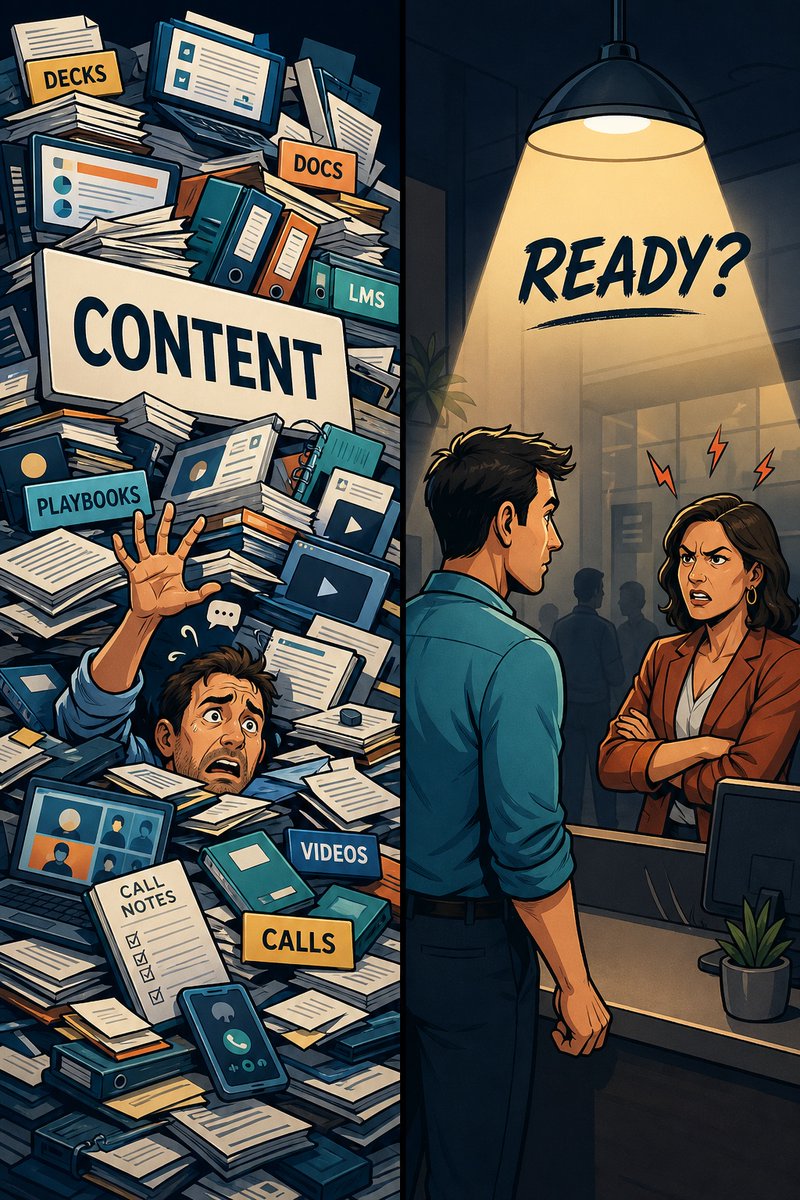
Companies don’t have a learning problem.
They have a readiness problem.
Most teams already have enough content:
docs, decks, playbooks, LMS modules, call recordings.
But leaders still can’t answer the question that matters:
Can this person perform when it counts?
Content doesn’t create readiness.
AI won’t make managers less important.
It will make good managers more important.
As AI takes over more execution, managers create value somewhere else:
judgment
readiness
coaching
performance in real situations
Better tools raise the premium on better managers.
Capability is still built through people.
OpenAI knows model quality is not enough.
That’s why it’s investing so heavily in implementation.
Same inside companies:
AI does not improve performance by itself.
People do, when learning is built into the work.
Content is input.
Capability is the outcome.
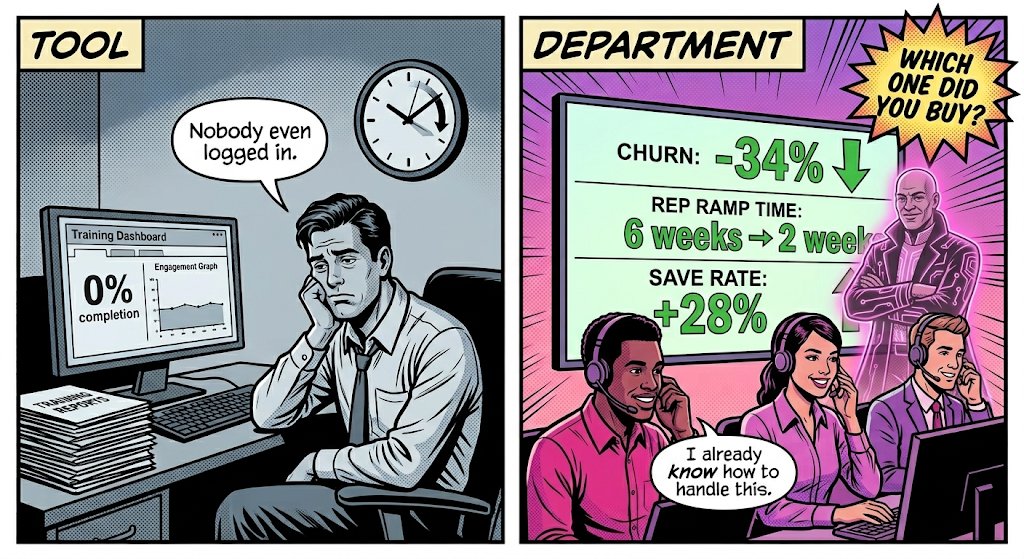
You're buying an AI training product.
Quick test:
If your L&D team disappeared for a week, would your employees still get trained?
If the answer is no, you bought a tool.
Your team still does the work.
Just on a shinier screen.
If the answer is yes, you bought a training department.
One that runs itself, improves over time, and actually owns the outcome.
Which one did you buy?
A top designer says Claude Code is his primary design tool.
Karpathy hasn't written code in months.
Two roles. Same phase shift.
When production costs zero, the only thing that matters is judgment.
Most companies are still teaching people to do the work.
The winners?
They're building people who can judge the work.
Are your people ready?
@gregisenberg Great breakdown.
One thing most people miss about agents: The hard part isn't building the agent. It's defining what "done" looks like. Agents that generate output ≠ agents that generate outcomes.
@sama The effort isn't disappearing - it's shifting.
Character-by-character coding is becoming capability-by-capability training.
The next wave isn't writing software. It's teaching systems to learn.
NVIDIA just launched NemoClaw at GTC.
Translation: the biggest GPU company in the world looked at autonomous AI agents and said:
"this needs enterprise-grade security, now."
Not in a year. Now.
That tells you everything about where agentic AI is headed.
Sequoia just dropped the autopilot thesis.
One line should haunt every L&D leader:
"If you sell the tool, you race the model. If you sell the work, every improvement makes you stronger."
Most companies are still in copilot mode.
Distributing tools. Generating content. Calling it "AI adoption."
Result?
↳ More files per quarter
↳ Zero capability gain
↳ No one actually ready to perform
Autopilots don't give your team better tools.
They make your team capable.
That's the shift.
Autopilot > Copilot.
@JulienBek@sequoia
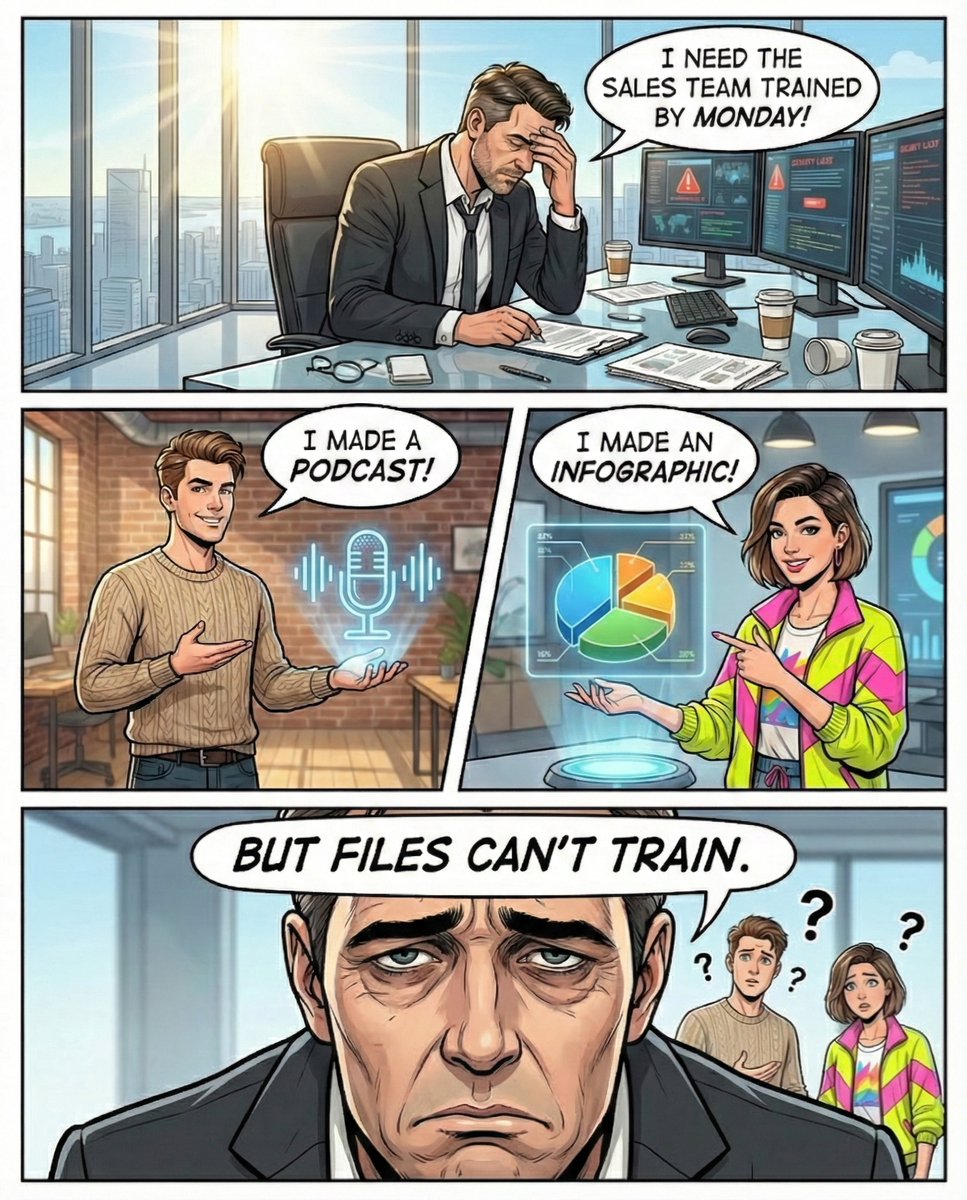
Your L&D team spent $2M on AI training.
6 months later: employees have 10,000 generated files and zero new capability.
Congratulations. You automated content creation, not learning.
I wrote about why this always fails: https://t.co/n4NumRLiR6
In honor of the new school year, we wanted to wish all teachers and students - a successful school year 🚀
We should overcome together all the challenges that the current period brings us - in every difficulty, there is an opportunity!
#edtech#teacher
https://t.co/CgBz6GJRrr