There's a simple piece of geometry behind a lot of AI chip design and LLM tuning: data has to cross 1D edges, while math happens in 2D area.
That 1D-vs-2D mismatch shows up in two places on modern chips.
Monty Hall is easy: suppose there are 1000 doors, you pick one at random, then the host opens 998 other doors that are empty. Do you switch your original guess?
two agents swarms are currently working on humanity’s biggest problems:
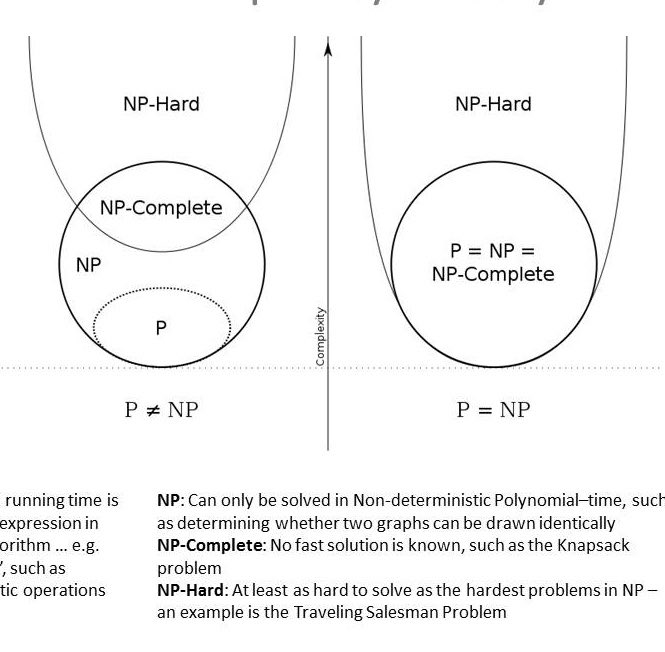
> solving P vs NP
> getting GTA 6 to run on PC
the full spectrum of human ambition.
While I do believe RH has been proved I find the asymmetry striking between the problem being 167 years old with many brilliant people dedicating years to solving it and the fact that the Lean 4 kernel has had multiple soundness bugs in the past.
@PatrickToulme@t3dotcodes@theo he brings it upon himself when he tweets engagement bait like “engineers deserve to be unemployed”
with that being said spreading misinformation is always a self own
Personal view and I said this many times to people: Without a frontier model, we will not have frontier hardware for very long. You can juice the share price by killing research but this will fundamentally sacrifice the business.
We invented the TPU, started water cooling at scale in 2018, and is working on many frontier hardware programmes because we are a frontier research lab.
@ObhishekSaha how can we be certain the proof didn’t build substantial amounts of theory? my understanding is that nobody can understand it yet even though we can attest to its correctness?
Say what you want about LLMs - and how smart you are without them. I can say without hesitation that they’ve made me smarter. Being able to interrogate an idea, ask anything, and go as deep or sideways as I want has changed how I think. Bottom line: I’m learning more, and better, than at any other point in my professional life.
That extra boundary comes with real tradeoffs.
A TPU's giant units pass each input across 256 neighbors cheaply, but dims under 256 get padded. Forcing performance engineers to jump through a lot of hoops when dealing with small tensor dimensions.
A GPU's small units fit uneven shapes easily, but you pay for more control logic and SMs re-reading the same data.
There's a simple piece of geometry behind a lot of AI chip design and LLM tuning: data has to cross 1D edges, while math happens in 2D area.
That 1D-vs-2D mismatch shows up in two places on modern chips.
The same geometric pattern happens inside the chip.
v7x and GB200 can do BF16/FP8 matrix math roughly at the same speeds, but v7x uses 4 huge 256×256 MXUs while GB200 uses 592 small ~16×8×32 Tensor Cores (148 SMs).
Chop an area into N pieces and total edge grows by √N, giving the GPU ~6–12× more boundary.