13 million of people in #Afghanistan -- 30% of the total population -- face acute food insecurity.
Close to 1 million children are severely malnourished and 2.3 million are suffering from moderate acute malnutrition. With immune systems weakened and in the face of a harsh winter, they are at higher risk of dying from infectious diseases.
With limited humanitarian aid delivery, these numbers are likely to increase in coming weeks and months.
@WHO needs $185 million to continue providing medicines and supporting hospitals to prevent more Afghan children and women dying of malnutrition and the consequences of food insecurity.
Thank you @IndraManiPR for your service to @WHO and global health as @IndiaUNGeneva Ambassador.
Your leadership was vital in establishing the @WHO Global Centre for Traditional Medicine in 🇮🇳 and, through India’s @G20 leadership, creating the Global Initiative on Digital Health.
I wish you all success in your new role as @BimstecInDhaka Secretary-General and look forward to our continued collaboration.
🆕 @WHO TAG-VE Risk Evaluation of JN.1
Due to its rapidly increasing spread, WHO is classifying JN.1 as a separate variant of interest (VOI) from the parent lineage BA.2.86. It was previously classified as VOI as part of BA.2.86 sublineages.
Short 🧵
https://t.co/VNvjJn8Xcv
In 2023, @WHO allocated more than US$78 million in response to 22 emergencies in 29 countries and territories from its Contingency Fund for Emergencies (CFE).
My heartfelt thanks to all donors who supported this life-saving fund 🇫🇷🇨🇦🇩🇪🇨🇳🇮🇪🇳🇿🇵🇹🇦🇹🇰🇼🇳🇴🇵🇭🇸🇰🇨🇭🇪🇪
https://t.co/EaRvArujld
My best wishes to Sheikh Mishal Al-Ahmad Al-Jaber Al-Sabah in his role as the Amir of #Kuwait. We look forward to continuing our work with him and 🇰🇼 to protect and promote the health of people around the world, including in humanitarian settings. Thank you for your ongoing support to @WHO.
https://t.co/zg19ScmKm2
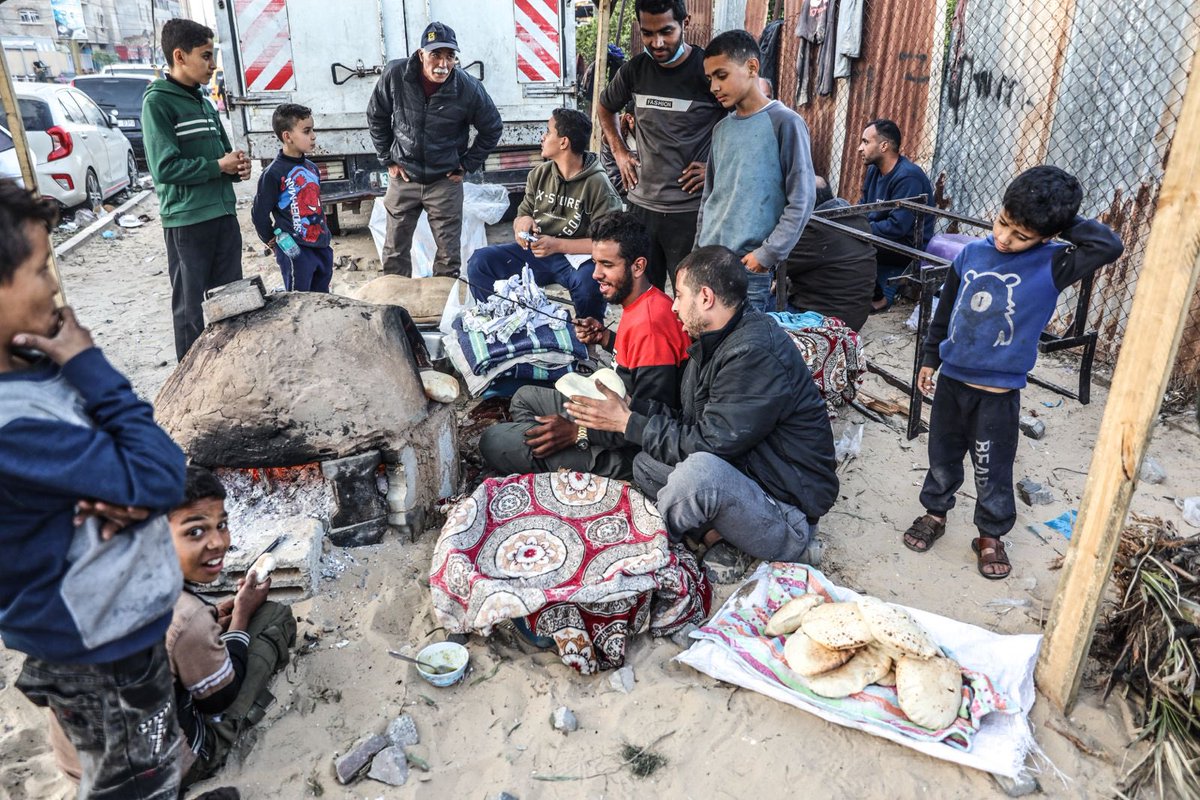
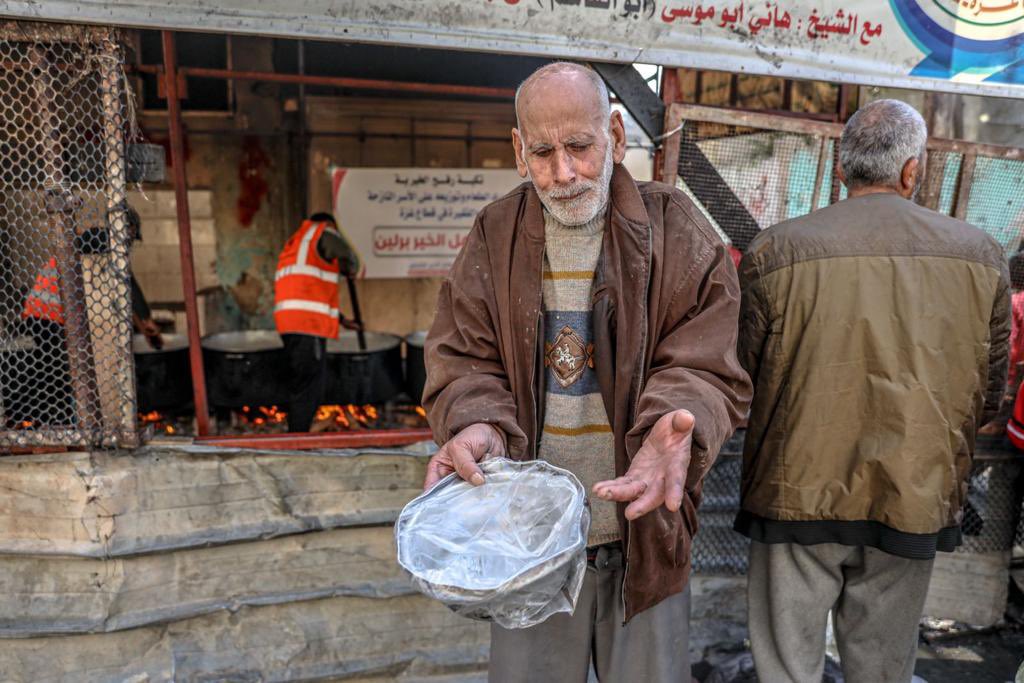
I am deeply concerned about the toxic mix of disease, hunger and lack of hygiene and sanitation that people in #Gaza are facing right now.
Hunger weakens the body’s defenses and opens the door to disease.
Gaza is already experiencing soaring rates of infectious disease outbreaks. Diarrhoea cases among children aged under 5 are 25 times what they were before the conflict.
Such illnesses can be lethal for malnourished children, more so in the absence of functioning health services.
We need a ceasefire now.
Al-Ahli Arab Hospital is a “shell” of its former self due to lack of fuel, staff, supplies – @WHO/@UN mission to north #Gaza finds.
WHO and UN partners undertook another high-risk joint mission today to Al-Ahli Arab and Al-Shifa hospitals in northern Gaza.
Our teams delivered medicines, IV fluids and supplies for surgery, treating the wounded, and supporting women giving birth.
However, colleagues struggled to describe the immense impact recent attacks have had on these health facilities, and the catastrophic conditions remaining patients and health workers face.
Al-Ahli Hospital has been overwhelmed with patients needing emergency care. In its courtyard, bodies were placed in rows as they couldn’t be given safe and dignified burials.
Until two days ago, Al-Ahli was northern Gaza’s last hospital functioning where injured people could undergo surgery. But our team learned today that its operating theatres are no long functioning due to the depletion, or complete absence, of specialists, power, fuel, water, food and medical supplies.
That has left north Gaza with no functional hospital. Only four hospitals operate at a minimum level, providing very limited care.
About 10 health workers, all doctors and nurses, continue to provide basic first aid, pain management and wound care. 80 injured patients, including older people and small children, are sheltering in a church within the hospital grounds and its orthopedic section. They included a 10-year old girl who lost her leg and had no family left to care for her, and an older man awaiting surgery for a gun wound to the chest he may never get, whose entire family had been killed.
WHO will keep striving to supply health facilities in northern Gaza. But without medicines and other essential needs, all patients will die slowly and painfully.
More than ever, a humanitarian ceasefire is needed now to reinforce and restock remaining health facilities, deliver medical services needed by thousands of injured people and those needing other essential care, and, above all, to stop the bloodshed and death.