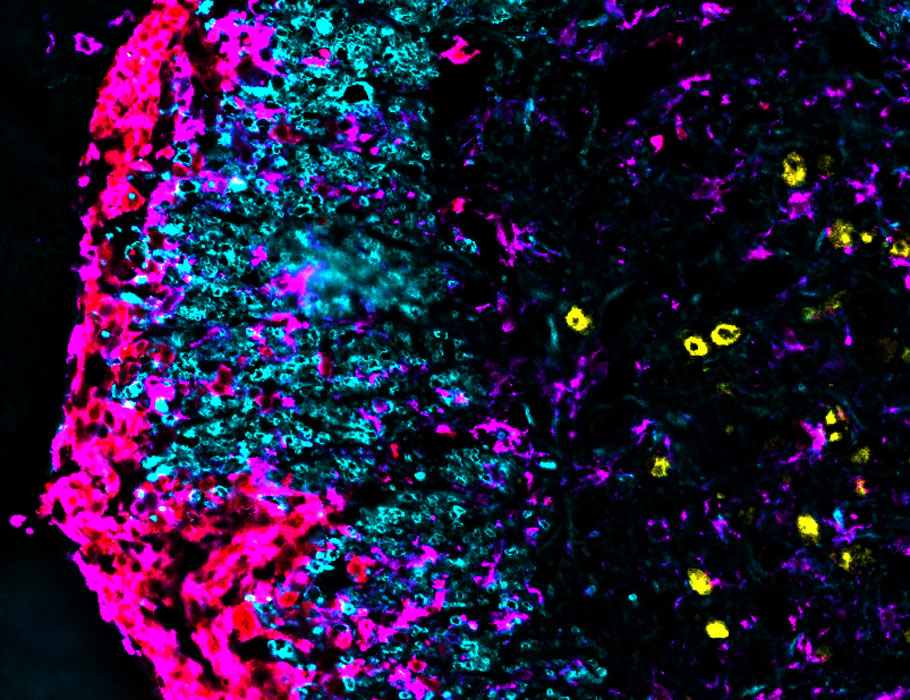
Happy to share with you this T cell aging and metabolism review that I was honoured to collaborate on, published in Semin Immunol
#gdTcells#ageing#metabolism#immunology
https://t.co/bhKSz8NllH
We wrote a review on T cell aging and metabolism, including unconventional T cells and impacts of aging T cells on organismal aging. We think it's pretty cool 😎 @DrQuinn4realz
https://t.co/NXOXxE36NK
Cell atlases are becoming coordinate systems for biology. Excited to share our latest preprint from the Human Cell Atlas Pancreas Bionetwork. 🎉🧬
We set out to build a healthy reference framework that allows us to interpret pancreatic disease, compare experimental models, and benchmark regenerative approaches within a common coordinate system.
This work brings together more than 2 million pancreatic transcriptomes analyzed within a single framework, including:
🔹 815,126 healthy single cell and single nucleus transcriptomes
🔹 109 healthy donors
🔹 12 independent studies
🔹 94 harmonized cell types and transcriptional states
And extending this healthy reference to:
🔹 1,018,479 transcriptomes from 261 donors spanning diabetes, pancreatic cancer, and stem cell derived islets
🔹 193,435 mouse endocrine cells for quantitative benchmarking of disease models
Some highlights:
🧩 A unified healthy reference that captures cellular diversity across donors, technologies, and biological variation.
🔬 Identification and multimodal support for a putative rare polyhormonal endocrine state, providing a candidate population for future investigation.
📍 Diabetes associated endocrine cells are best understood as remodeling within healthy cellular state space rather than as entirely new cell identities.
🎯 Distinct injury associated and malignancy associated epithelial ecosystem regions emerge when pancreatic cancer is viewed relative to the healthy reference.
🧪 Quantitative benchmarking of mouse diabetes models and stem cell derived islets against adult human pancreatic reference states.
More broadly, I believe this illustrates where the field is heading. Reference atlases are evolving from static cell catalogs into analytical frameworks. They provide a common coordinate system for interpreting disease biology, comparing experimental models, and ultimately accelerating translation into medicine.
Congratulations to Shrey Parikh, Daniel Strobl, Malte Luecken, Diego Balboa, the Human Cell Atlas Pancreas Bionetwork, and all collaborators on this outstanding team effort. It has been a privilege to be part of this journey.
Preprint:
https://t.co/1xF5SGHlPs
#HumanCellAtlas #SingleCell #Diabetes
Supercool paper on brain tumors and hormone regulation in today’s issue of @Nature! @juyeunlee31@justinlathia#Androgen loss accelerates brain tumour growth via HPA axis activation | Nature https://t.co/Ku7kolopYt
A new Science #Immunology Review delves into the transcriptional and #epigenetic regulatory mechanisms that shape #macrophage identity and function in health and disease. https://t.co/MYOZv9Edxy
Today we all lost our jobs.....
Three Nature papers showing that scientists in the conventional sense are obsolete
At least read the first one.... the AI replaced all things that the scientist does ....
https://t.co/zMsRLaaRDU
A new Science #Immunology study shows that anti–PD-1 antibodies trap #PD1 at nanoscale immune contacts and induce inhibitory checkpoint signaling, highlighting avenues for optimizing future #immunotherapies. https://t.co/GiMmCnRulJ
In this @ImmunityCP study, a single-cell immune aging clock identifies RUNX1 as a key regulator of T cell senescence and rejuvenation.
📄 Read the paper: https://t.co/TD2tBa3FXE
🎧 Listen to the discussion: https://t.co/h5wW37PtVa
RESEARCH | LC Guo, G Li, H Wu et al. (Soochow U, CN)
A signaling cascade that promotes glycolysis in KRAS-mutant colorectal cancer cells, driving extracellular lactylation of CD44 on CD8+ T cells and impairing their anti-tumor activity.
https://t.co/GIsORaQe6K