Introducing Claude 2! Our latest model has improved performance in coding, math and reasoning. It can produce longer responses, and is available in a new public-facing beta website at https://t.co/uLbS2JNczH in the US and UK.
Neural networks often pack many unrelated concepts into a single neuron – a puzzling phenomenon known as 'polysemanticity' which makes interpretability much more challenging. In our latest work, we build toy models where the origins of polysemanticity can be fully understood.
In "Language Models (Mostly) Know What They Know", we show that language models can evaluate whether what they say is true, and predict ahead of time whether they'll be able to answer questions correctly. https://t.co/ZmZJqycb39
Transformer MLP neurons are challenging to understand.
We find that using a different activation function (Softmax Linear Units or SoLU) increases the fraction of neurons that appear to respond to understandable features without any performance penalty.
https://t.co/5ew6iWHYtl
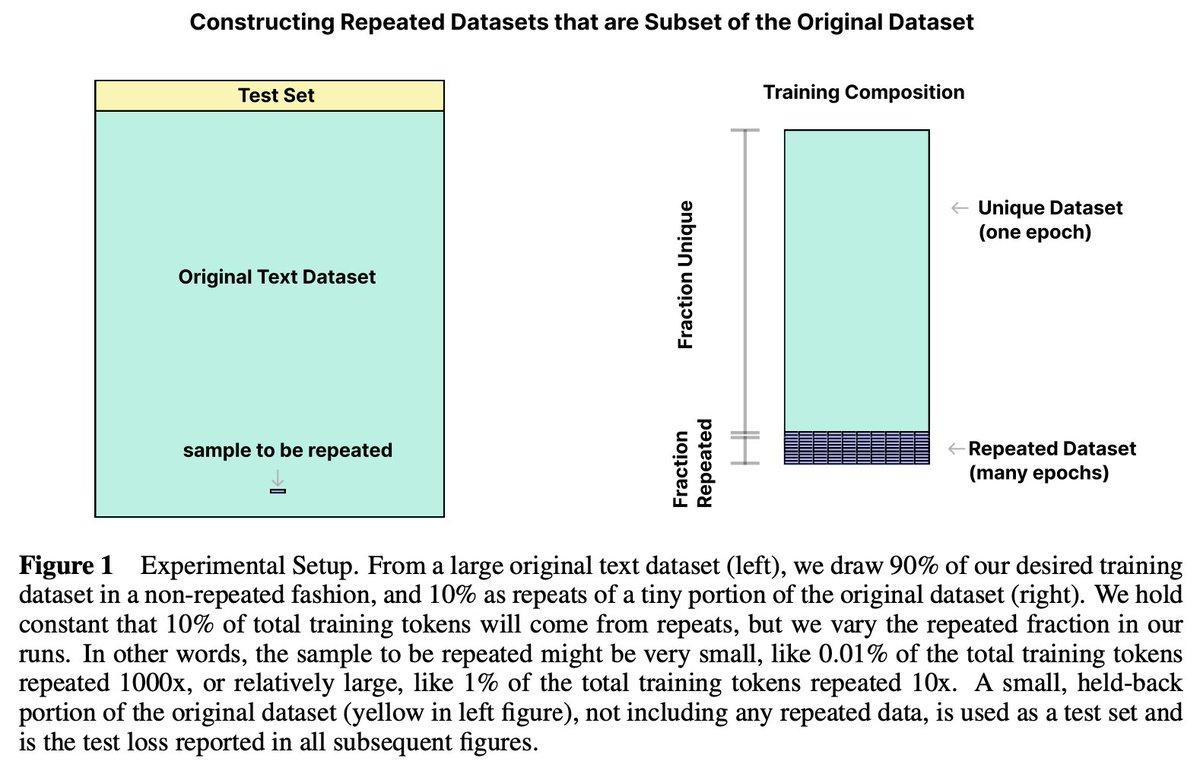
In a new paper, we show that repeating only a small fraction of the data used to train a language model (albeit many times) can damage performance significantly, and we observe a "double descent" phenomenon associated with this.
https://t.co/kkUdDSRJTI
Excited to announce our latest fundraising round! We’re genuinely honored to be entrusted with the resources to continue our work in frontier AI safety and research.
We’ve raised $580 million in a Series B. This will help us further develop our research to build usable, reliable AI systems. Find out more: https://t.co/bfrX7SzFBL
As well as steerability and robustness -https://t.co/gVvzRHUxfS - reinforcement learning - https://t.co/LDMFcSOYRV, societal impacts - https://t.co/QwJQzaboBK, and more!
We've trained a natural language assistant to be more helpful and harmless by using reinforcement learning with human feedback (RLHF). https://t.co/1lwcEASXvA
In our second interpretability paper, we revisit “induction heads”.
In 2+ layer transformers these pattern-completion heads form exactly when in-context learning abruptly improves.
Are they responsible for most in-context learning in large transformers?
https://t.co/28WWkMrjQm
Our first societal impacts paper explores the technical traits of large generative models and the motivations and challenges people face in building and deploying them: https://t.co/4DCdS7l8I2
Our first interpretability paper explores a mathematical framework for trying to reverse engineer transformer language models: A Mathematical Framework for Transformer Circuits: https://t.co/QFhQ8hB9jT
Our first AI alignment paper, focused on simple baselines and investigations: A General Language Assistant as a Laboratory for Alignment https://t.co/jdO81KZA1A
Excited to announce what we’ve been working on this year - @AnthropicAI, an AI safety and research company. If you’d like to help us combine safety research with scaling ML models while thinking about societal impacts, check out our careers page https://t.co/TVHA0t7VLc
We’re going to be focused on pushing forward our research for the next few months and are hoping to have more to share later this year. Thrilled to be working with so many talented colleagues!