We produced these Debt Briefs w @UNCTAD so unions can protect workers+public services when debt crises arise. With increased public spending to fight COVID19, these are now vital reading (part of our project with @financing4dev) @_markperera @AnnPettifor@MazzucatoM@jubileedebt
🇨🇱 Gabriel Boric, se incorpora a ICRICT como nuevo comisionado.
«La desigualdad extrema no es una ley de la naturaleza, es el resultado de decisiones políticas y tiene graves consecuencias para la democracia».
¡Bienvenido a ICRICT, @GabrielBoric!
🔗 https://t.co/oUbyM9jCnn
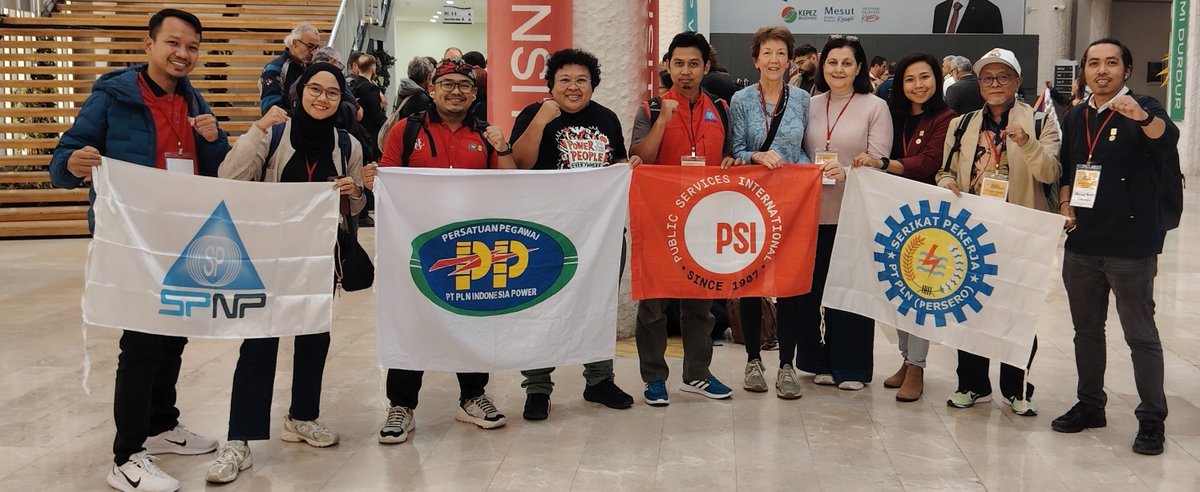
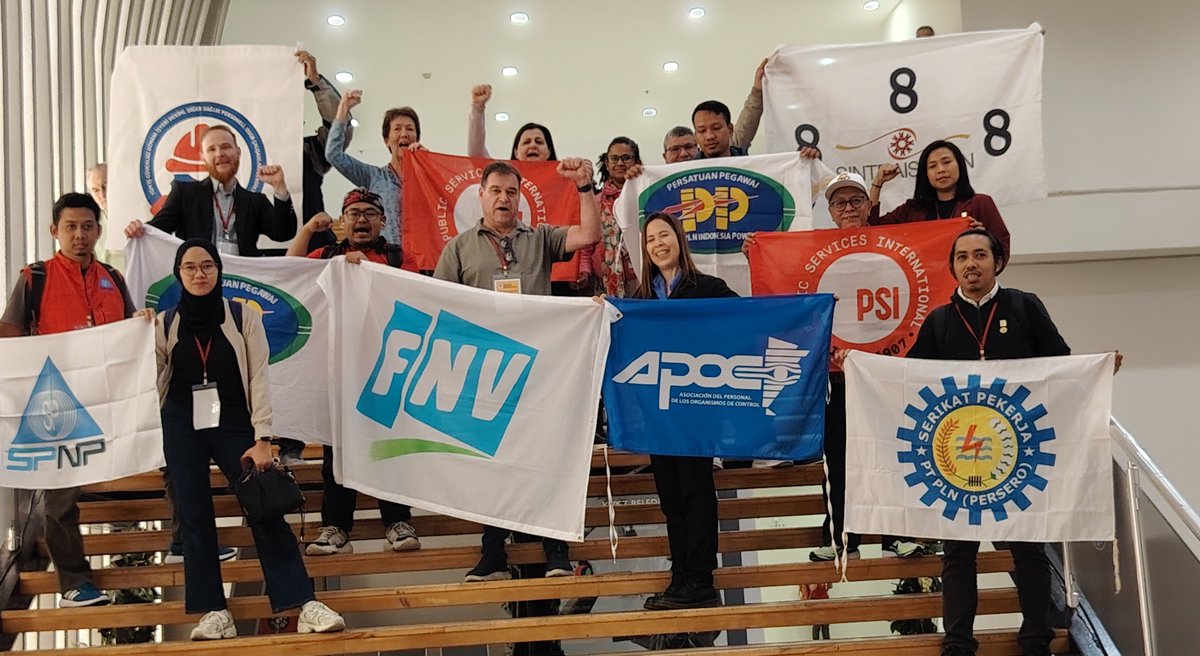
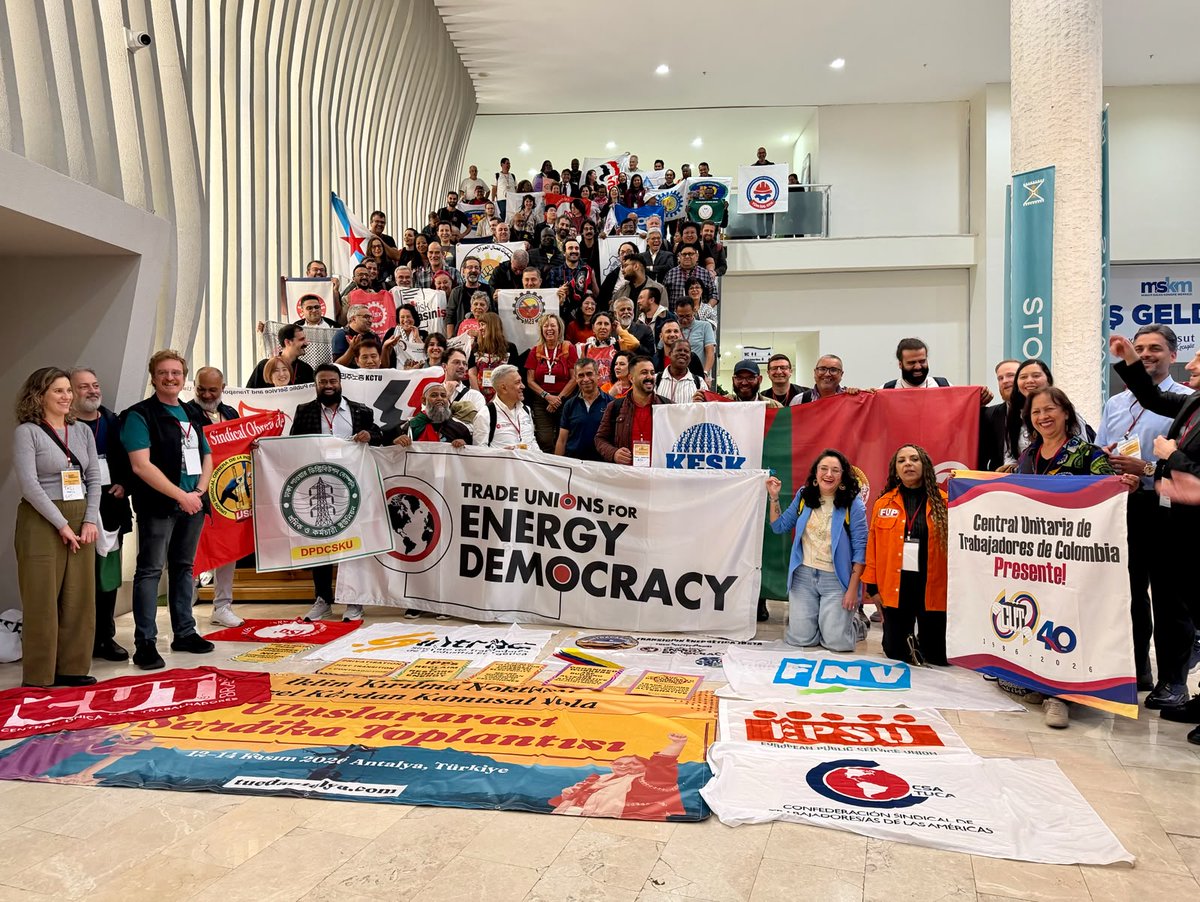
𝐏𝐒𝐈 𝐀𝐟𝐟𝐢𝐥𝐢𝐚𝐭𝐞𝐬 𝐑𝐚𝐢𝐬𝐞 𝐓𝐡𝐞𝐢𝐫 𝐕𝐨𝐢𝐜𝐞𝐬 𝐚𝐭 #𝐂𝐎𝐏𝟑𝟏: 𝐏𝐮��𝐥𝐢𝐜 𝐒𝐞𝐫𝐯𝐢𝐜𝐞𝐬 𝐅𝐢𝐠𝐡𝐭 𝐁𝐚𝐜𝐤! ✊🌍
At the the meeting hosted by Trade Unions for Energy Democracy (TUED) in Antalya, Türkiye, PSI affiliates joined trade unionists from across the world to raise their voices in solidarity and resistance during the ongoing Climate Meeting - COP31.
Together, we all stand against the rise of far-right forces, authoritarianism and extractivist agendas that threaten workers’ rights, democracy, public services and our planet.
✊ Resist the far right! Defend public services! Fight for climate justice!
#PublicServicesFightBack #COP31 #GlobalDayOfAction #WorkersRights #ClimateJustice #PeopleOverProfit
Today we handed our #WeShowUp petition, signed by tens of thousands of you, to @hmtreasury.
Our message is simple: invest in our public services, deliver fair pay and bring outsourced services back in-house.
And make banks, big business and the wealthy pay their fair share.
𝟏,𝟔𝟎𝟎 𝐄𝐥𝐞𝐜𝐭𝐫𝐢𝐜𝐢𝐭𝐲 𝐖𝐨𝐫𝐤𝐞𝐫𝐬 𝐑𝐚𝐥𝐥𝐲 𝐀𝐠𝐚𝐢𝐧𝐬𝐭 𝐄𝐥𝐞𝐜𝐭𝐫𝐢𝐜𝐢𝐭𝐲 𝐏𝐫𝐢𝐯𝐚𝐭𝐢𝐬𝐚𝐭𝐢𝐨𝐧 𝐢𝐧 𝐈𝐧𝐝𝐨𝐧𝐞𝐬𝐢𝐚
On 27 October 2026, around 1,600 members of SP PLN, the union representing workers at Indonesia’s state-owned electricity company PLN, gathered at PLN headquarters in Jakarta. The rally coincided with Indonesia’s 81st National Electricity Day.
Their message was clear: electricity is a public good, not a commodity. In line with Article 33 of Indonesia’s Constitution, electricity must remain under public control and serve the people, not private profit.
SP PLN warns that the National Electricity Supply Business Plan (RUPTL) 2025–2034 allocates 71% of new power generation projects to Independent Power Producers (IPPs), leaving only 29% to PLN. The union sees this as privatisation by stealth.
Take-or-pay contracts require the public to pay for electricity even when it is not used, while dollar-denominated power prices expose public finances to rupiah depreciation—all while private companies continue to profit.
“The energy transition is inevitable, but it must be just, without sacrificing PLN’s sovereignty and without leaving a single worker behind,” said SP PLN President M. Abrar Ali.
✊ PSI stands in solidarity with SP PLN in defending public energy, protecting workers’ rights, and ensuring an energy transition that puts people before profit.
⚡️ Public energy for the people, not profit!
#PublicServices #EnergyDemocracy #JustTransition #StopPrivatisation #SPPLN #PLN #PSI
On 28 October, the day before the UN International Day of Care and Support, we convene leaders and shapers from PSI care unions, @ilo and @WHO. Plus we present a new WHO report on integrating this essential workforce. 🇲🇻 🇫🇷 🇬🇭 🇨🇴 🇵🇰 ✊
⇲ https://t.co/qbNCRPCEjp
WHAT LULA’S RE-ELECTION TELLS US: The Class War Need Not End in Fascism
On Sunday, Brazilians did something that the commentariat had told us was a lost cause. On the eve of his eighty-first birthday, Luiz Inácio Lula da Silva, a former metalworker, turned the Trumpist, evangelical, neofascist, Zionist tide in Latin America to get re-elected President of Brazil.
Three weeks earlier, he had come second in the first round, behind Flávio Bolsonaro, son and political heir of the man who trumpeted the merits of fascism, who had embraced Trump as his lord and master, who plotted a cynical coup against Brazilian democracy – moreover, the main candidates that were eliminated were rightists whose voters were meant to move to Bolsonaro. Yesterday, Lula overturned this deficit and won with a margin of nearly four and a half million votes.
I want to use Lula’s victory to tell a broader story. A story about a war, the class war that the few are waging against the many across the Western world. And a story about how that war need not end, as so many now fear, in a neofascist revival.
THE HIDDEN CLASS WAR
“There’s class warfare, all right,” Warren Buffett once said, “but it’s my class, the rich class, that’s making war, and we’re winning.” Mr Buffett was not exaggerating. For almost four decades, Western governments and central banks have pulled every policy lever in the same direction: to make the assets of the few burgeon at the expense of the incomes of the many.
Consider the numbers. Between 1952 and 1988, economic growth explained nearly all the gains of the West’s stock market. From 1989 onwards, growth explains only about a quarter. The largest share, around 40 per cent, came from income diverted from workers to shareholders. Another third came from cheaper money and lower perceived risk. That is not wealth creation. It is wealth extraction: a transfer from those who work to those who own, inflated by cheap money and paraded on the evening news as “a strong economy”.
Then look at the rescues. 2001, 2008, 2020, the British gilt crisis of 2022, Silicon Valley Bank in 2023: each time, the state rushed in to save the asset holders. Together they reveal the rule: to save the economy, you must save the wealth of those who own it – not those who produce stuff, not even productive companies. In the United States, the top tenth own almost 90 per cent of all shares. The Fed and the US federal government insure it for them, doing ‘whatever it takes’ to prop them up whenever their prices tank. The rest of us in the West pay the premium, in the form of the austerity that always follows the bailout.
And the owners need never sell. Why do billionaires pay so little tax? Because they do not earn incomes - they accumulate capital gains, taxed only when sold. So they borrow against their soaring assets at 1 or 2 per cent and live on the loan. Then they die and pay no tax on their capital gains, passing on the loot to their kids at ridiculously low inheritance taxes. Meanwhile, to pay bills and put food on the table, the worker borrows on a credit card at 20 per cent, her debts the mirror image of their fortunes.
Then, a large chunk of these accumulating assets seek even higher rents in places like Brazil where the US government intervenes to ensure that the local governments will also place the defence of these assets’ values above all else.
CAPITAL IS NOT A THING, NOT MERELY AN ASSET
Why does austerity keep returning, even though it is economically self-defeating? Marx tells the story of Thomas Peel, who in 1829 sailed to Western Australia’s Swan River with £50,000 of provisions and three hundred working-class men, women and children. On arrival, his workers walked off into the bush and worked for themselves. Peel had brought money, tools and labour, but he could not bring capitalism along, because his workers had an alternative.
Capital, Marx concluded, is not a thing but a social relation: the power of those who own to get those who don’t own to do things they’d rather did not do. Austerity is not an economic policy. It is a disciplinary device, keeping the many sufficiently insecure and indebted to accept whatever is on offer. The ruling class’s deepest fear is not inflation or debt. It is to end up like Peel: rich, but without the power to compel.
IS FASCISM INEVITABLE?
Here is the part of the story that keeps so many of us awake at night. When centre-left politicians, from Bill Clinton, Barack Obama and Tony Blair to Gerhard Schröder, Francois Hollande and Andy Burnham abandoned the language of class, a void opened up in the working-class heartlands of the West. Into that void stepped a venomous storyteller with a century of experience in filling such voids: the recalcitrant far right, the rebranded fascists. They offer left-behind workers a story of dignity, then redirect their fury away from the owner who shipped their factory abroad or sold their council house to some fund and towards the migrant next door. It does not end the class war. It merely divides one side – the workers – to rule over them. It camouflages it.
From the red suburbs of Paris to south Piraeus, from England’s red wall to Italy’s rust belt in Taranto, from the American rust belt to eastern Germany, the pattern seems relentless. And so, a fatalism has set in: the class war waged from above, we are told, must inevitably end in a neofascist, racist, misogynist revival.
Brazil has just refuted this fatalism. Brazil knows the monster intimately. It lived through four years of Jair Bolsonaro, with his nostalgia for the military dictatorship. On 8 January 2023, his followers stormed the Congress, the Supreme Court and the presidential palace. Brazil’s far right is not a fringe. Unlike Trump’s rag tag storm troopers, they had years of running a dictatorship. It won the first round of this election. They had the White House fully behind them, while the US Democrats, once again demonstrating their irrelevance, stayed mute. And yet, yesterday, they were defeated.
How? Not by hand-wringing about “populism”, nor by a centrist promise to manage the status quo more efficiently. Lula won because he did what the Western centre-left forgot how to do: he spoke the language of class, and backed it with policies that shifted power, however modestly, from the few to the many. His government exempted those earning up to five thousand reals a month from income tax and paid for it with a minimum tax on the very richest. During Brazil’s G20 presidency, it proposed a global minimum tax on billionaires. When Lula tells Brazilian workers that the elites have rigged the game, he points his finger upwards, at the rentier and the speculator, not sideways, at the migrant or the poor.
PIX – AN EXAMPLE OF AN ANTI-OLIGARCHY DIGITAL TOOL
But the most innovative weapon in Brazil’s arsenal is one that few outside Latin America have heard of. It is called Pix.
Every time you tap a card to pay for a coffee, a toll is levied. Visa, Mastercard and the banks take a cut, often 2 or 3 per cent, from every transaction. Multiply this by billions of purchases a day and you grasp one of the most lucrative rent-extraction machines ever devised. These are not profits made in competitive markets but rent extracted by those who own the digital rails on which our economic lives now run. It is part of what I call technofeudalism.
Unlike Britain, Europe or, of course, America, Brazil’s central bank moved to limit this rabid exploitation. It launched an alternative: a public, instant payment system, free for individuals and with capped fees for merchants. A Brazilian pays a street vendor in Salvador or sends money to her mother in Recife, instantly, using Pix from her phone, with no card company or bank taking its slice. Brazilians took to it with astonishing enthusiasm. Last year, Pix processed almost 80 billion transactions and overtook credit cards as the most popular way to pay online.
Pix is, in effect, the Swan River of the digital age. It gave tens of millions of Brazilians, including the poorest, who had never had a bank card, an alternative to the toll booths of Big Finance. And, like Peel, the toll collectors did not take it lying down. This summer, Washington imposed 25 per cent tariffs on most Brazilian exports, and its trade representative explicitly named Pix as a grievance, complaining that it “unfairly disadvantaged” American payment companies! The most powerful government on Earth deployed its trade arsenal against a free public service for being too successful at denying rents to Visa and Mastercard.
Lula did not blink. He defended Pix as a Brazilian public good, and Brazilians rewarded him for it. Here, at last, is a concrete example of limiting the power of Big Business, Big Finance and Big Tech: not with slogans, but by building public digital infrastructure that removes the opportunity to extract rent in the first place.
NOT A REVOLUTION, BUT AN AUSPICIOUS PORTENT
Let me not romanticise. Lula is no revolutionary. His margin was narrow. Brazil’s Congress remains in the grip of agribusiness and evangelical blocs. Its central bank still keeps interest rates punishingly high, a weapon of the class war if ever there was one. Lula himself has compromised much too much with these vested interests, and lost support as a result.
But Brazil has shown three things the rest of us must learn. First, the class war waged against the many does not have to end in fascism. Fascism wins only when the left vacates the battlefield of class. Second, a progressive government can win by pointing upwards, at those who extract rent, rather than downwards, at those who suffer. And third, Big Business can be defeated, at least forced to lose some battles, by building public alternatives to its rent-extracting machines.
So, here is the challenge to Britain, to Europe, to the people of the United States.
-Build your own Pix: public payment rails that end the tolls of Visa and Mastercard.
-Tax capital gains, ill-gotten wealth that is, not just income.
-Make every rescue conditional, with the public receiving real, permanent equity in return.
-Create a public investment bank as an alternative to the bond markets. Restore the bargaining power of the workforce. And give working people what Peel’s workers found at Swan River: an alternative, and the freedom to say no.
Buffett was right. There is a class war, and his class has been winning hands down. But yesterday, in Brazil, it lost a battle though not the war. It lost because a working-class president dared to name the war and fight it using weapons fashioned to defend the many.
https://t.co/ns3sxkDpsH
@PSIglobalunion is part of the high-level trade union delegation from the Council of Global Unions (CGU) and will visit #Colombia to express its solidarity with the Colombian trade union movement and reaffirm its commitment to the defence of human rights and democratic freedoms.
Join AFSCME members in supporting the family of Fatou Traore, an AFSCME sister from Iowa who was working in the U.S. legally but was deported this month – to a country she has never visited.
You can donate to a GoFundMe page here: https://t.co/4hAP42CXlM
https://t.co/m5B13xoELc
🚒 Europe's firefighters are coming to Brussels!
On 3 November, firefighters and unions from across Europe will march for more staff, better protection and investment.
📍 11:00 | Gare du Nord → Tour & Taxis
✊ Help spread the word!
More info 👇
🇮🇪 ✊ After 15 years of austerity and below-inflation pay rises, Fórsa members have forced pay onto the government's agenda. More than 300,000 public service workers stopped work across Ireland on 14 October, the biggest strike since 2009.
The Dept for Health and Social Care told us to take down our spoof video criticising Palantir’s NHS contract. We checked with our lawyers, and we’ve not done anything wrong. So we’re reposting it, in case you missed it 👀
NHS patient records must be protected and employers must put ‘robust systems’ in place to prevent unauthorised access.
Alan Lofthouse, UNISON deputy head of health speaking to @PipTomson on @LBCNews
Listen: https://t.co/AtwpzYaDLM
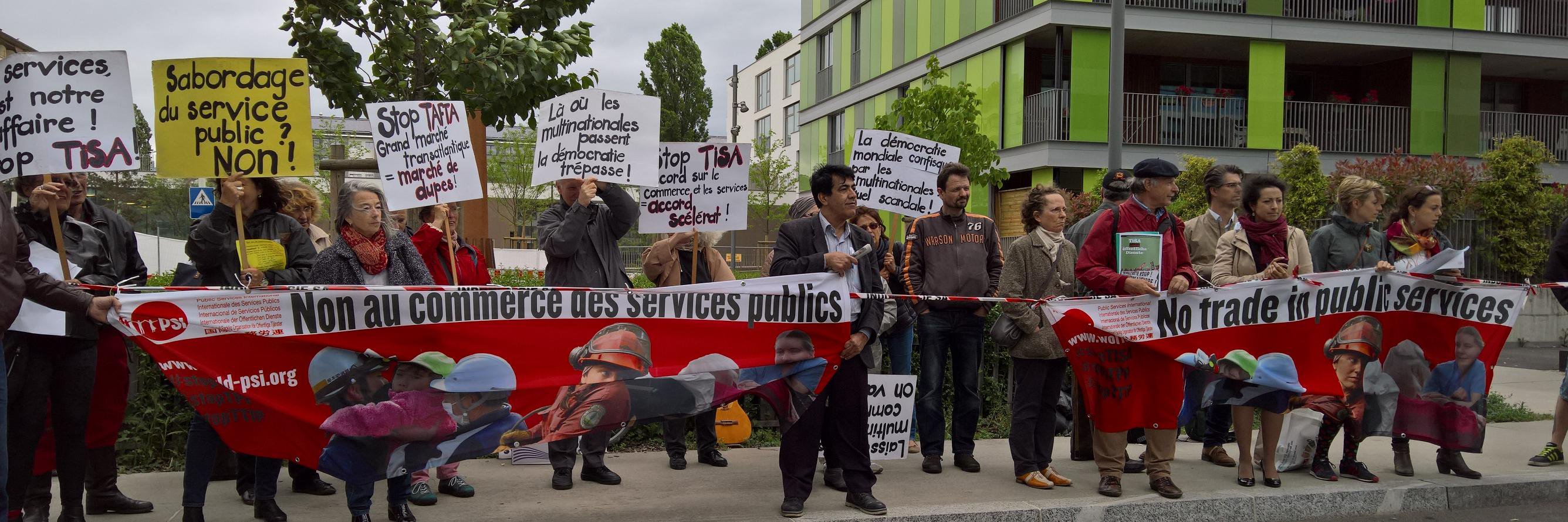
“Every pound of taxpayers’ money that lines the pockets of profiteers is a pound less for public services” @AndreaEganGS
Public services should be run for people, not profit.
Shocking new report from @Cmmonwealth on the cost of outsourcing ⬇️
#InsourceNow
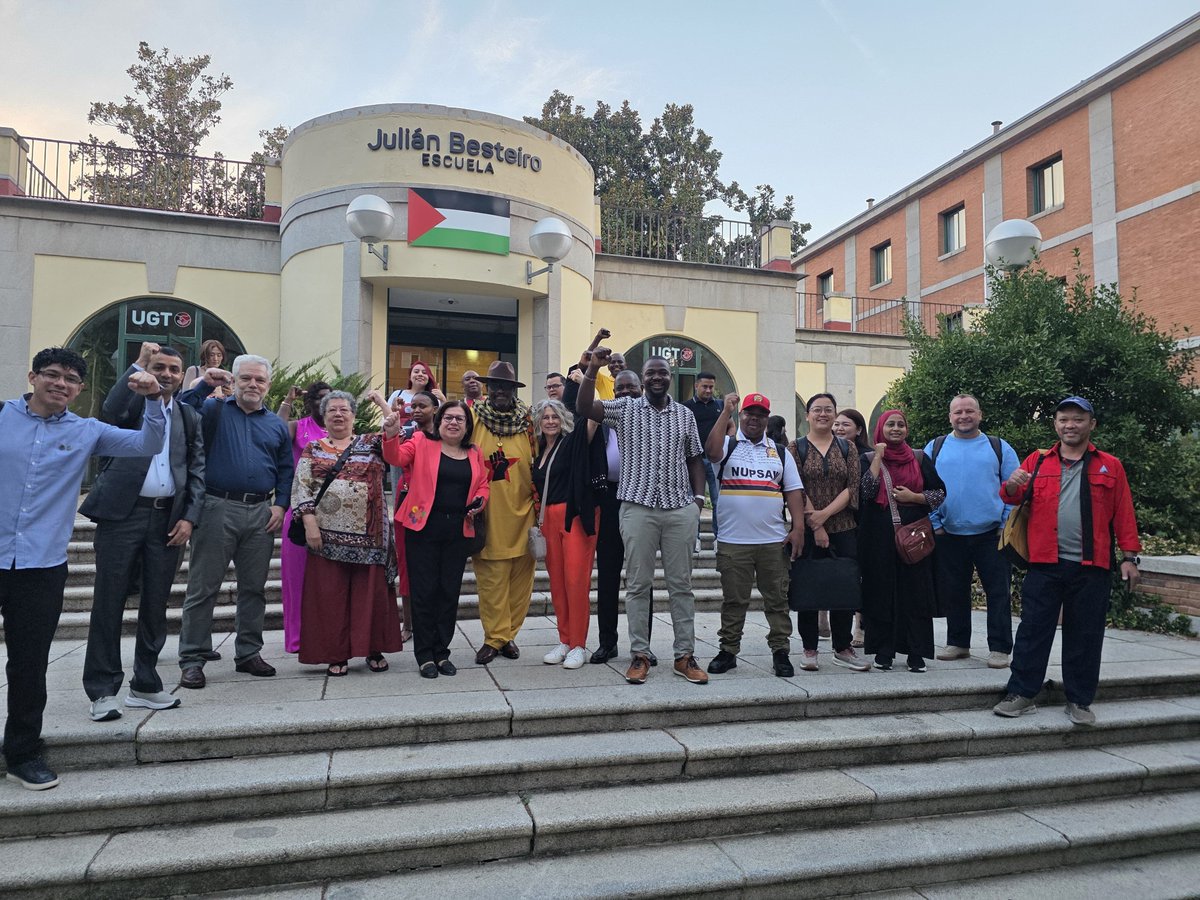
Today, we joined trade union leaders, public sector workers and civil society voices from across the world in Madrid for Day one of the Public Services Fightback Conference.
We have seen firsthand that when we fail to protect healthcare workers, we weaken the health systems that our communities depend on.
Today’s discussions brought us back to a fundamental truth: we cannot defend public services without defending the workers who deliver them.
Austerity, wage restraint, rising debt pressures and the weakening of public institutions are not abstract issues. They have real consequences for doctors, nurses, teachers, public servants and, ultimately, the people they serve.
We also reflected on the importance of protecting the right to organise and take collective action. Workers must have the freedom and collective power to demand dignity, fair working conditions and quality public services.
For me, the message from is clear: we must organise, build solidarity and expand our alliances beyond the workplace.
When workers, communities, young people and civil society stand together, we strengthen our ability to defend public institutions and demand economic justice.
Strong workers. Strong public services. Strong communities.
The struggle continues.
Photo of the Week: Nurses in the US states of California and Nevada will walk out for a day next week in solidarity with striking comrades in Chicago. 7 have been suspended for speaking out on behalf of patients. (Photo: NNU)