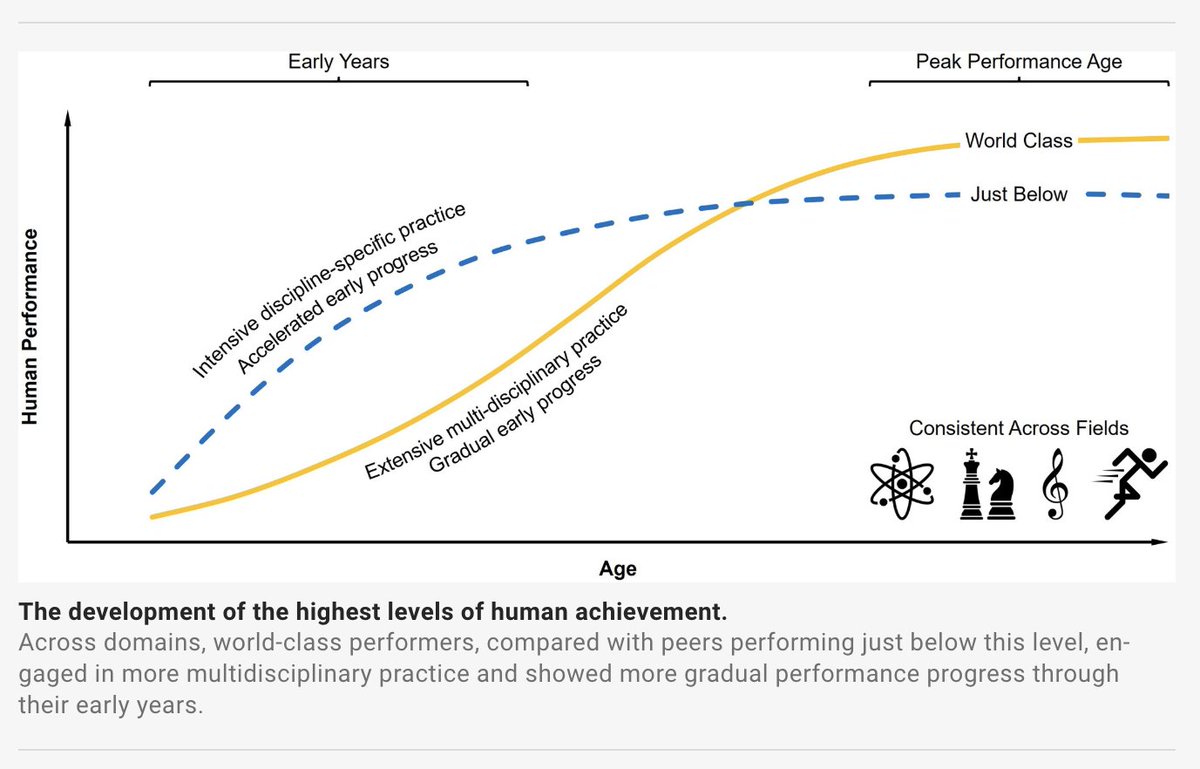
Enjoy the process of exploration, expand the breadth of your skillset and knowledge, and establish a curiosity-driven mindset.
The well-rounded human becomes more resilient as identity extends beyond a single specialization.
In short: have fun along the journey.
A massive new study on peak performance included 34,000 international top performers: Nobel laureates, renowned classical music composers, Olympic champs, and the world’s best chess players. It shows early specialization is a trap, and the road to greatness is long and varied.
@arthurbrooks Research continues to showcase that spirituality is a key ingredient of psychological resilience. Applying this to a relationship, I imagine, not only builds intimacy, but also relational resilience.
(Really enjoying @MatthewSacchet ‘s research on this.)
https://t.co/Zs4ZLiE0m0
Announcing the first results from our Program’s phenomenology research: advanced meditators’ report the extraordinary, and so far overlooked, potential of meditative development for mental health.
Mindfulness is widely recognized for its mental health benefits, yet growing evidence suggests that skill-based proficiency, not simply time spent practicing, is what predicts the most profound psychological change. Still, very little research has examined what happens when meditation is developed through advanced meditation states, stages, and endpoints as potential gateways to the deepest, most healing forms of well-being.
Our latest study provides the first-ever systematic analysis of advanced meditation in relation to mental health and well-being. This work is based on in-depth interviews of 28 advanced meditators who attest to radical, wide-spectrum, non-linear improvements in mental health. This qualitative research provides a foundation for increasingly rigorous multidisciplinary investigation.
Across participants, reports indicated:
— Large, stable increases in baseline well-being
— Heightened positive attitudes including openness and acceptance
— Enhanced clarity, attentional stability, and cognitive balance
— Positive shifts in life orientation, prosocial values, and interpersonal functioning
— Transformative improvements in mental health conditions
Participants described advanced meditation as affecting them at a deep psychological level. A recurring theme was a profound reduction in suffering and an expanded capacity to meet difficulty. As one put it:
“Not only did it save my life…I could get the worst news in the world right now, and I would be able to absolutely cope with it in the most wholesome way possible.”
Some described enduring reductions in self-focused rumination as a result of their advanced practice:
“Negative self talk, just seemed to drop…like 80% of it left and never returned.”
Most striking were reports of major improvements—or full resolution—of conditions such as anxiety, panic disorder, ADHD, trauma-related symptoms, addiction, and anger-related disorders. One participant claimed that their ADHD ceased completely after 12 years of practice; another, reflecting on reported recovery from panic, trauma, and suicidality, said:
“I’m happier than I’ve ever been.”
Echoing the ethos of our Program, first author Sebastian Ehmann, alongside co-authors Vanessa Naughton and Terje Sparby @terjesparby, argues that these findings highlight the importance of studying meditative development for psychiatry and public health—especially amid the global mental health crisis. Understanding how systematic reductions in self-centeredness and rigid self-identity, along with insights into one’s life and experience, can lead to profound psychological freedom that may be essential for designing highly effective, scalable, and personalized interventions.
We appreciate everyone in our growing community who reads and shares this work!
Full preprint ⤵️
No one is coming to save you.
… which is why your relationship with yourself is the most important in your life. How you feel reading the statement above (excited vs terrified) reveals the state of your self-relationship.
Any chance @microHQ is aggregating GPTs for queries, @thatguybg ?
Would be really powerful to add onto the Self Layer yall are building with email, messaging, calendar, etc
Is there a consumer-grade, interoperable orchestration layer for individual AI interactions yet?
As competing models continue the neck and neck race of improvement, I just want a single, user-friendly tool that:
- holds my portable, provider-agnostic “memory” (all chats, preferences, notes)
- routinely routes each query to the best model across multiple providers
Who is building this?
This is Gemini 3: our most intelligent model that helps you learn, build and plan anything.
It comes with state-of-the-art reasoning capabilities, world-leading multimodal understanding, and enables new agentic coding experiences. 🧵
my understanding is that:
Mem0, Zep, and MemMachine are more dev infra than consumer products.
Jan, LM Studio, and Ollama are more for cross-platform inquiry rather than shared contextual memory & data.
OpenRouter is aimed at developers and requests (not personal data).
My waking thought today was about magnetic personalities and physio/nueral implications. This led to reading research papers on biophoton emission, bioelectric fields, biomagnetic fields, and physiological synchrony. Following your thesis that ideas might find you, it’s fun to have stumbled upon your article today also.
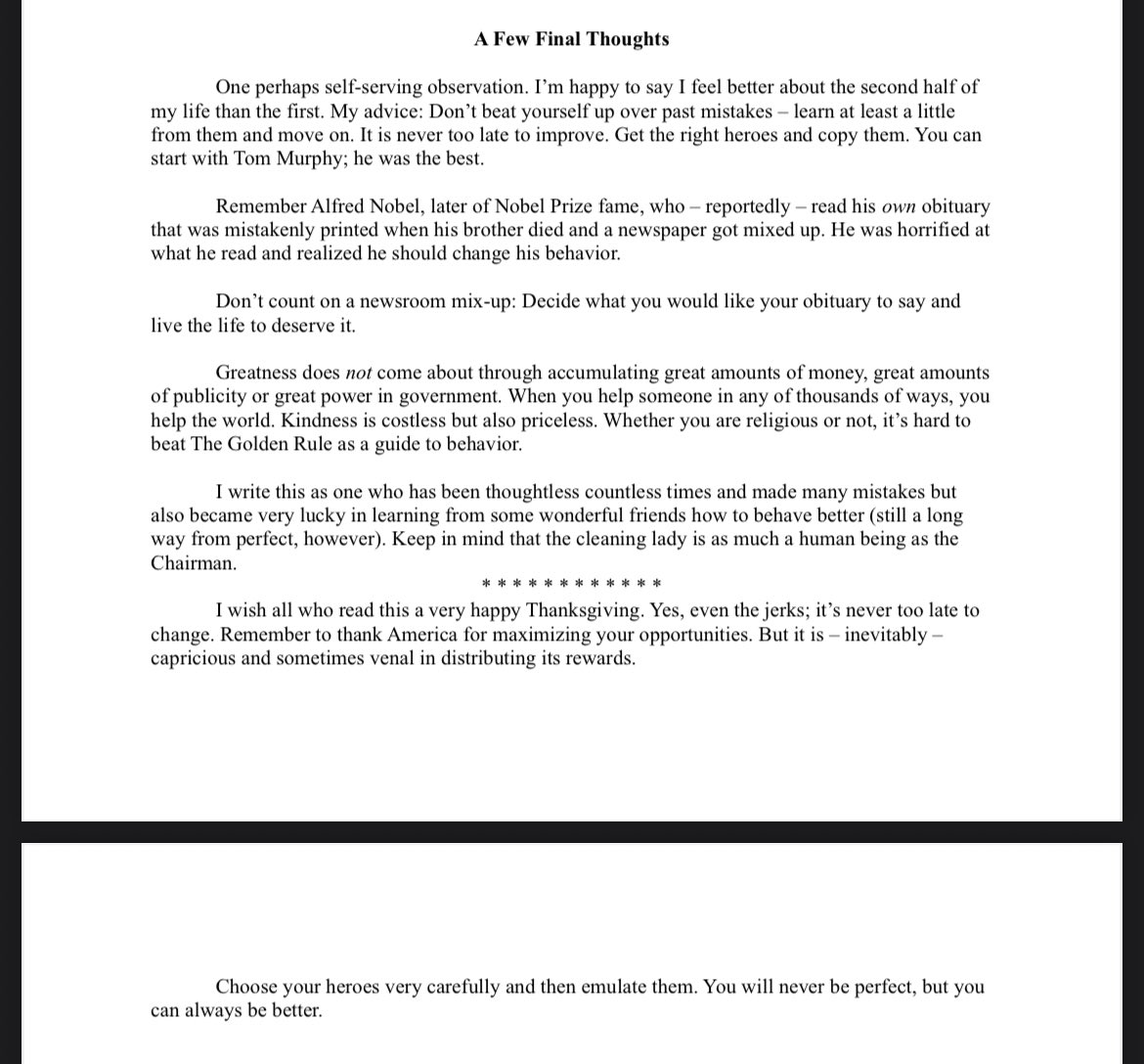
“You will never be perfect, but you can always be better.”
- Warren Buffet
Looking forward to his annual Thanksgiving message before “going quiet”
https://t.co/BzMx47r2JX
@APompliano Stumbled upon this excellent essay on theoretical physics, quantum time, and the formation of reality. The author does a great job building the topics slowly so most readers can follow along.
https://t.co/tqSAyP6PxG