PhD Candidate in the Gardner lab at CUNY Advanced Science Research Center in NYC. Studying the structure & function of some strange sensor histidine kinases!
NEW: 62-year-old Boeing whistleblower John Barnett found dead in his truck after he didn't show up for a legal interview linked to a case against Boeing.
Barnett worked for Boeing for 32 years and retired in 2017. After retiring, Barnett spoke out about how Boeing was cutting corners on their airplanes.
Just days before his death, Barnett gave evidence in a lawsuit against Boeing.
Barnett accused Boeing of "deliberately fitting sub-standard parts" on their aircraft.
He also accused Boeing of having faulty oxygen systems, saying one in four breathing masks would *not* work in an emergency situation.
Barnett said new plane builds were rushed. When he brought his concerns forward, they were allegedly ignored by the company.
When he died, Barnett was in Charleston for interviews linked to a case against Boeing.
He was supposed to come back for more questioning on Saturday but did not show up. Inquiries were made to his hotel where Barnett was found dead in his car in the parking lot.
Police are investigating Barnett's death but say he died from a "self-inflicted" wound.
The video below was a recent interview Barnett had with TMZ.
Totally normal.
Hi #AcademicTwitter,
Anyone at a non-UC research institution willing to have a cancer researcher as a volunteer for only 1 month? (would NOT need to sponsor his visa).
Please amplify; he and his family risk having to leave the US on Sunday. DM for more details.
.@SlimeSupreme, a member of Prof. Adam Braunschweig's lab at the ASRC's Nanoscience Initiative and a @GC_CUNY@GC_BiochemPhD student, discusses the effectiveness of using snail mucus extract in cosmetics with @NatGeo. https://t.co/9HFh0EKhKB
When it rains, it pours... Another '024 lab paper update! Our comparison of high temperature vs. high pressure for the same protein structure is now out in @CommsBio: https://t.co/nWnOAzDrMN
Hi! I’m a biochemistry PhD candidate at CUNY seeking a European-based postdoc position. I want to apply my structural bio skills (protein purification, NMR, MS, xtallography) to Origin of Life research. If you know of anything, please DM or email me: [email protected]
Unpopular opinion: I think the trend towards predoc before graduate school is really good. It opens up a lot of doors to prestigious PhD programs like MIT, Harvard, and Yale, for students from lesser-known schools like Yale, MIT, and Harvard.
@SeanFJ@oolen_org Hi! How can I get in touch?
I’m a PhD student looking for post doc opportunities in Europe. I’m a structural biologist/biophysicist wanting to apply my skills to OoL research— preferably in ancestral protein resurrection.
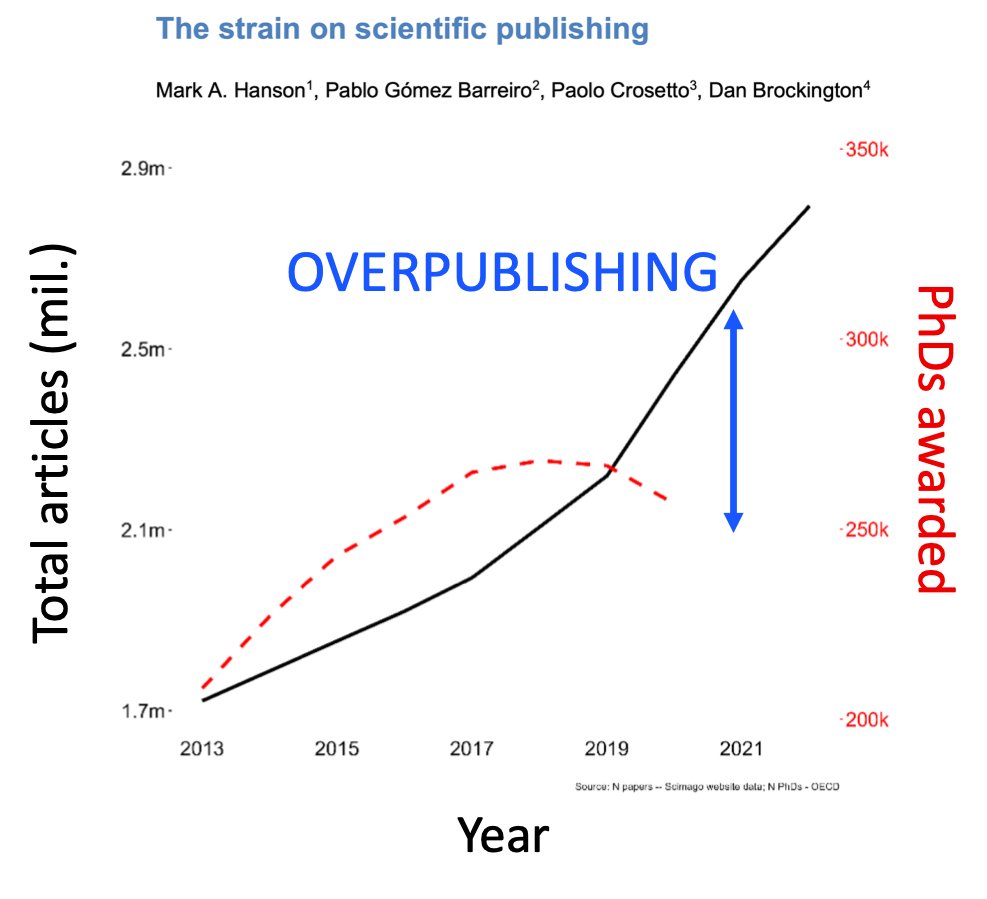
Overpublishing puts enormous stress on students and PIs.
And brings tons of money to publishers in STEM.
A new study shows that the number of papers is increasing FASTER than the number of #PhD graduates.
It’s an amazing work with very useful statistics. Huge kudos to the authors!
▫️
Main outcomes:
1️⃣ In 2022 the number of articles is 47% higher than in 2016. The amount of writing, reviewing and editing workload per scientist is increased enormously.
2️⃣ “Special issues” is a strategy for publishing lots of papers with reduced review time. This is possible due to the “publish or perish” pressure and clearly benefits the publishers.
3️⃣ The publishing time varies widely!
MDPI = 37 days. Frontiers = 72 days. Elsevier = 134 days. Springer = 157 days. Nature = 185 days.
4️⃣ The article rejection rates do not seem to correlate with publisher growth. However, rejection rates decline with increased use of special issue publishing.
5️⃣ Certain for-profit gold-open-access publishers create an increasing number of special issues, with uniquely reduced turnaround times, and in specific cases, high impact inflation and reduced rejection rates.
6️⃣ The authors suggest a new metric - Impact Inflation, which is reflected in self-citation within the same journal. For example, MDPI has a high impact inflation due to excessive self-citation compared to other publishers.
Conclusions and my opinion:
- Scientists have to spend a lot more time on reviewing and writing than before (on average).
- The more papers are published, the more the quality is compromised.
- Scientific progress has become partially bound to the business models of publishers and their revenue (a sad reality today).
- There is a huge lack of transparency. Much of these data had to be ‘web-scraped’ from numerous sources in order to get a full picture. We clearly need regulators to mandate open access to publisher’s statistics.
- Reduce the number of special issues! Those typically have low standards.
▫️
Science, publishing and funding make a trio that is very hard to disentangle.
However, research quality is controlled by the community.
This is why preprint + community review can make a big difference.
#AcademicTwitter #AcademicChatter
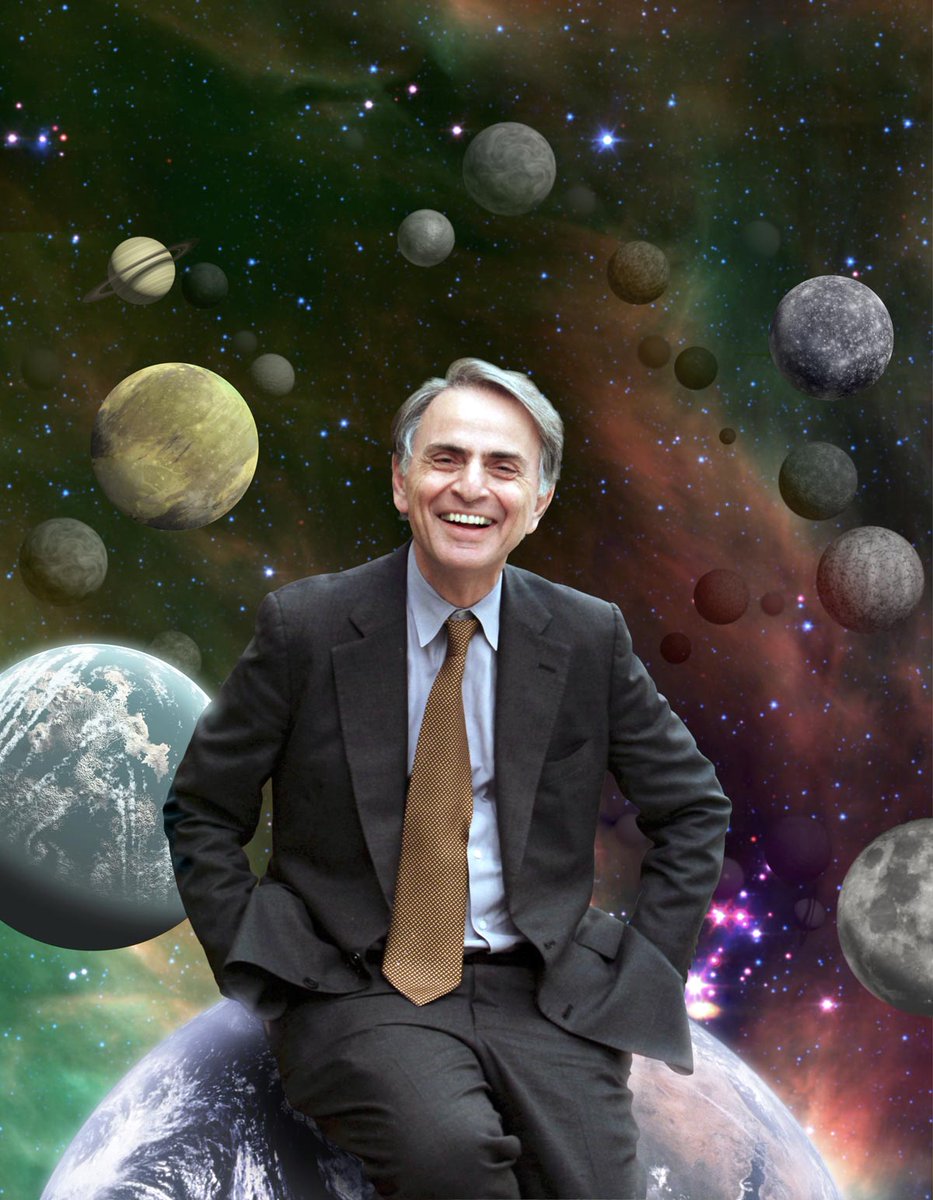
"The nature of life on Earth and the search for life elsewhere are two sides of the same question – the search for who we are."
Happy birthday to a champion of astrobiology, Dr. Carl Sagan! Celebrate with us and share your favorite Sagan quote or memory below.
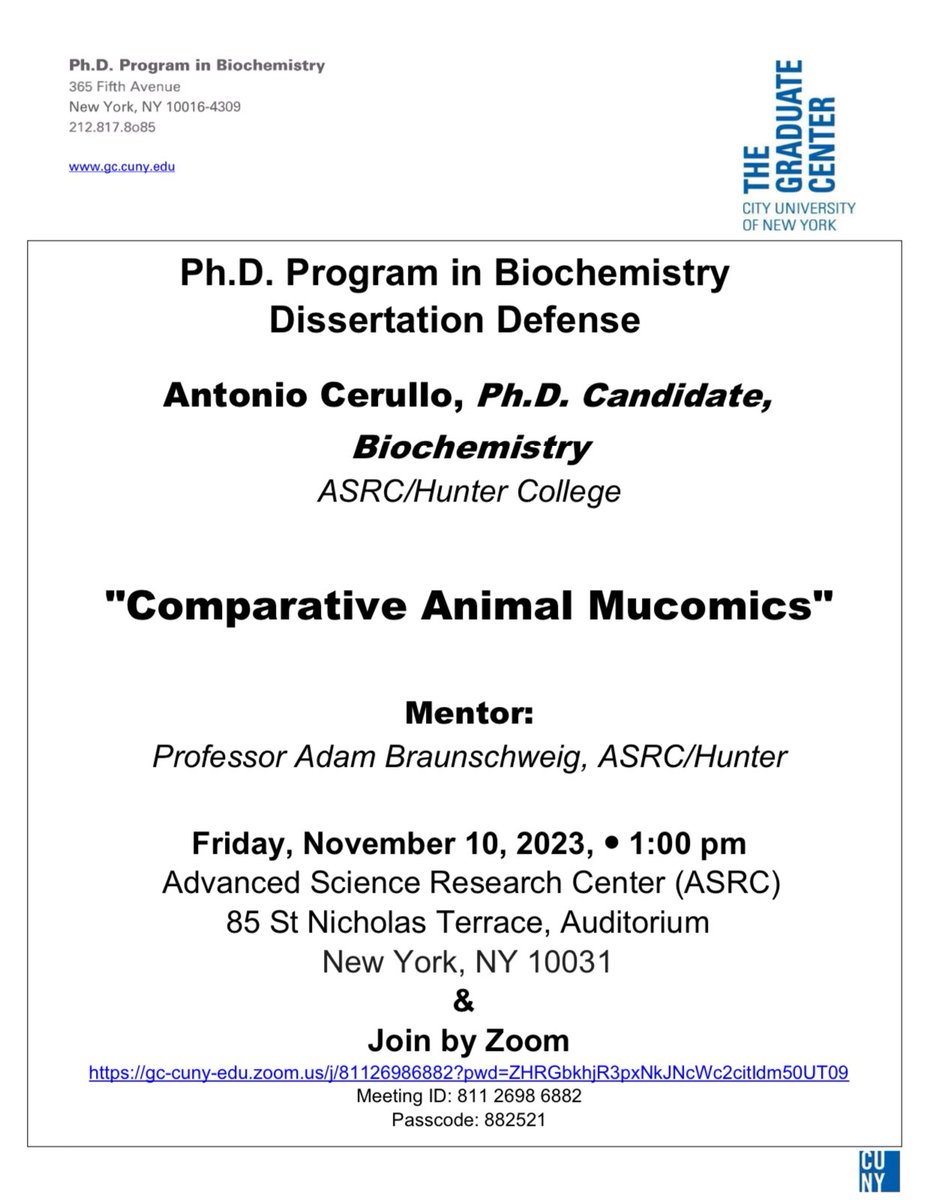
My dissertation defense is this Friday @ 1PM!
The session and livestream are open for anyone interested, so come hear me talk about slime! It’s gonna be a real spectacle
Livestream: https://t.co/gffSKhXFxF