@rationalhumanis@BlaketheTomCat One thing is ads you look at WHILE you watch sports (jerseys, helmets, side of the pitch, etc.), the American way is ads you look at INSTEAD of watching sports (“hydration breaks”, prolonged shows to allow for more ads, etc.). One of those is clearly better, no?
@rationalhumanis@BlaketheTomCat That’s the sponsor of the team, which is obviously connected to the owner, who yes, makes money. What is your point? My point is: American sports seem commercialised to the absolute extrem, and football (at least historically) has been somewhat successful in resisting that.
@rationalhumanis@BlaketheTomCat The first two are the (ridiculous) Americanisation of Football, the rest of the world hated/hates it and hopefully it’s a onetime thing.
Everytime I watch an NHL/NBA game I cannot believe you guys put up with the insane amount of ad breaks, but congrats on the revenue I guess
@andreas@ashnichrist That is not what that study says. It simply says that if your social media use is disrupted, you read and engage less with news on social media, telling us nothing. And the absolutely horrendous survey design makes one think this is a lobby report https://t.co/IjuOG89dT4
@blwiertz Tons of European founders are ambitious, they are just being ambitious outside of Europe. If Europe wants to keep European founders home, it needs to create an environment that doesn’t make it harder to succeed relative to other places.
Like many Europeans, I woke up to news the US has ordered Anthropic to block any "foreign national" from its top models, so it pulled them for everyone.
On the one hand, this is a wake up call of Greenland proportions for Europe. On the other, it is less dire than it looks.
🧵
This is, perversely, good news for Britain, Australia, Japan, Europe, and other countries being cut off that would once have seen themselves as close allies of the United States.
It shows us what the future may hold if AI is the strategically and economically decisive technology of the 21st century and is controlled by the US and China. It is good news because *it may be happening early enough to give us time to act.*
I think this will be rescinded pretty soon, but it’s a sign of things to come. In a future where frontier models cannot be used outside the US, our industries and economies will fall behind and American businesses may not be able to operate overseas. We won’t be able to defend ourselves militarily with defence systems built on obsolete software. Europe 2031 is a good scenario of what a future like this could mean: https://t.co/AMc5LrFJeS
Some of the things we need to do are ‘no regrets’ measures we should do anyway. But some are genuinely costly and risky.
We need cheap electricity – powered by gas, coal (this is costly, coal is very bad), deregulated nuclear fission – whatever can provide *cheap, reliable, 24/7* power. This almost certainly excludes wind power, which is enormously expensive and unreliable. We need projects to be able to connect to the grid in days rather than years by paying for fast-track connections.
We need to make it incredibly easy to build data centres, with the property taxes retained locally and hypothecated for local tax cuts so there is some direct benefit for locals. This doesn’t need to be nationwide.
We need to create new regulatory regimes for innovative businesses that give them the right to hire and fire staff with ease. The difficulty and cost of firing staff is one of the main reasons Europe has fallen behind so badly. We need to create a parallel employment regime that companies and workers can opt in to: https://t.co/YaNOXK1Po2
Even though I think it will probably fail, I think we should probably try to create a good, non-American frontier AI lab. I am quite pessimistic about this – even extremely well-resourced, innovative software companies are struggling to do this. But the stakes are so high that not trying seems foolish.
One thing that might work in our favour is the number of brilliant AI engineers who are not US citizens, who under the current export controls do not have access to Mythos/Fable even if they live and work in the US. What happens to Demis Hassabis, Ilya Sutskever, Andrej Karpathy, and the many other Europeans, Canadians, etc who are working on AI models in Britain and America who are affected by this?
I do not think we should force our own companies to use model, because this would exacerbate their economic weakness – this lab should have to compete on an even playing field. I am deeply sceptical that this can work, but we cannot rule it out. If we do it, it has to be able to pay US salaries, operate without political constraints. https://t.co/Um05rUF4Vq
It is cope to tell yourself that Trump is an aberration or that these export controls are a one-off. To repeat, I think these specific controls will be lifted quickly and it will be easy to move on and forget it happened. But this is a look into a potential future. Every one of us that is not a US citizen is at risk. The standard political divides do not apply here; the question is whether you grasp the enormity of AI as a technology. We have to act!
I just visited a company in Finland that can turn any transparent surface — windows, glasses, plastic, anything — into a 3D display that perfectly augments what you see behind it.
Welcome to Distance . One of the most exciting companies in Europe right now. And they're only two years old.
We're not talking about a tiny rectangle in the corner of your windshield. The entire glass becomes your screen.
They showed this to Kia's design team. It led to a concept car with a full edge-to-edge 3D windshield that paints navigation onto the actual road, shows you what the car sees, highlights threats, and yes, could theoretically replace every Pepsi billboard with a Coke one.
But the defense side is where it gets serious.
As a neighbor to Russia, Finland feels the pain of Ukraine very directly. The Distance team wanted to be part of the solution.
Their field operator headset gives soldiers jet fighter-grade situational awareness.
Any sensor (thermal, infrared, multispectral) overlaid onto what you actually see. Tested in over a dozen field trials with the Finnish army. Driving armored vehicles in arctic conditions in the middle of the night with full 3D perception.
The field operator headset effectively allows soldiers to see through smoke, and with extra cameras even behind walls.
Some of what they showed us had never been shown publicly before. And there's more cooking under the hood they couldn't share yet.
Two years in. Moving at the speed of light. Welcome to Europe!
@WorksInProgMag@bswud I’d love to subscribe (and know others here who feel the same), is there a reason why you are not shipping to Norway? (Often it’s postal zones, but I see you allow Malte, which I think is the same)
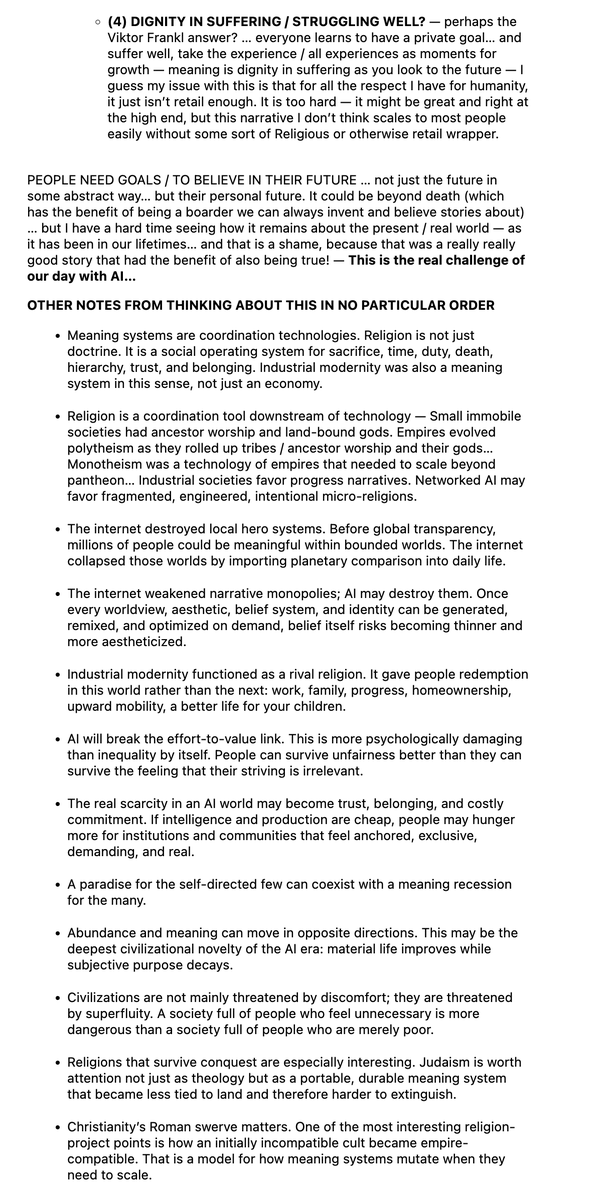
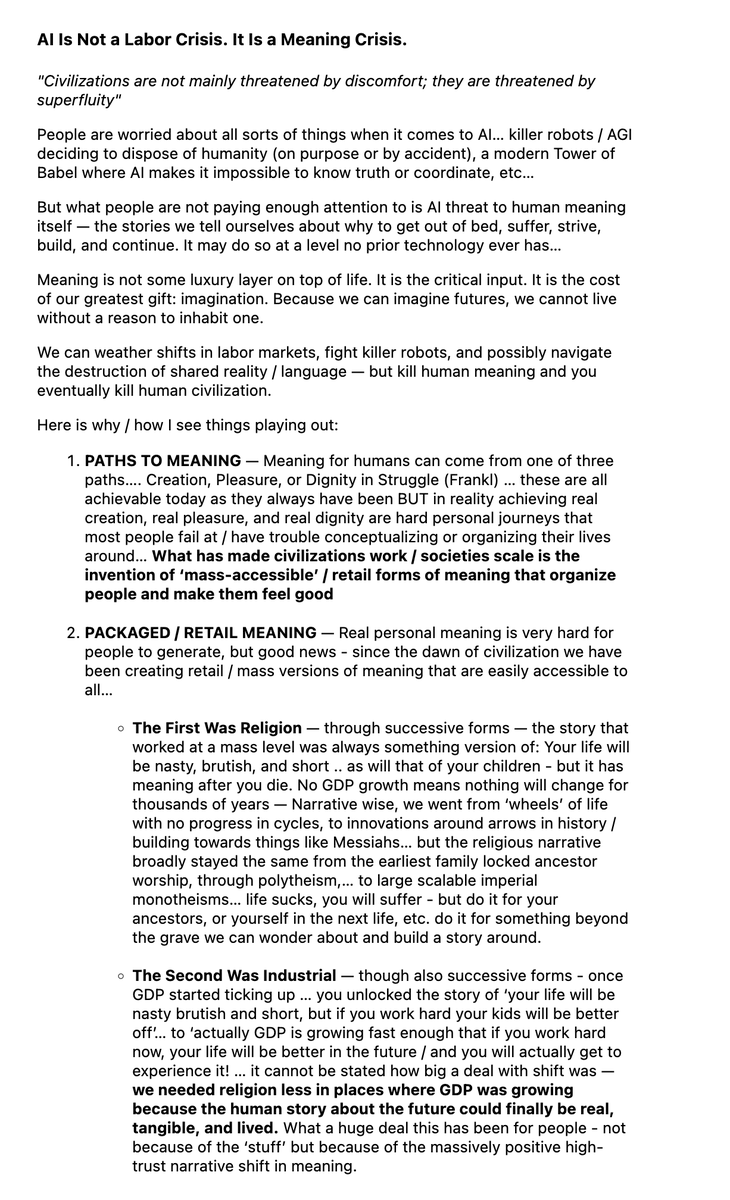
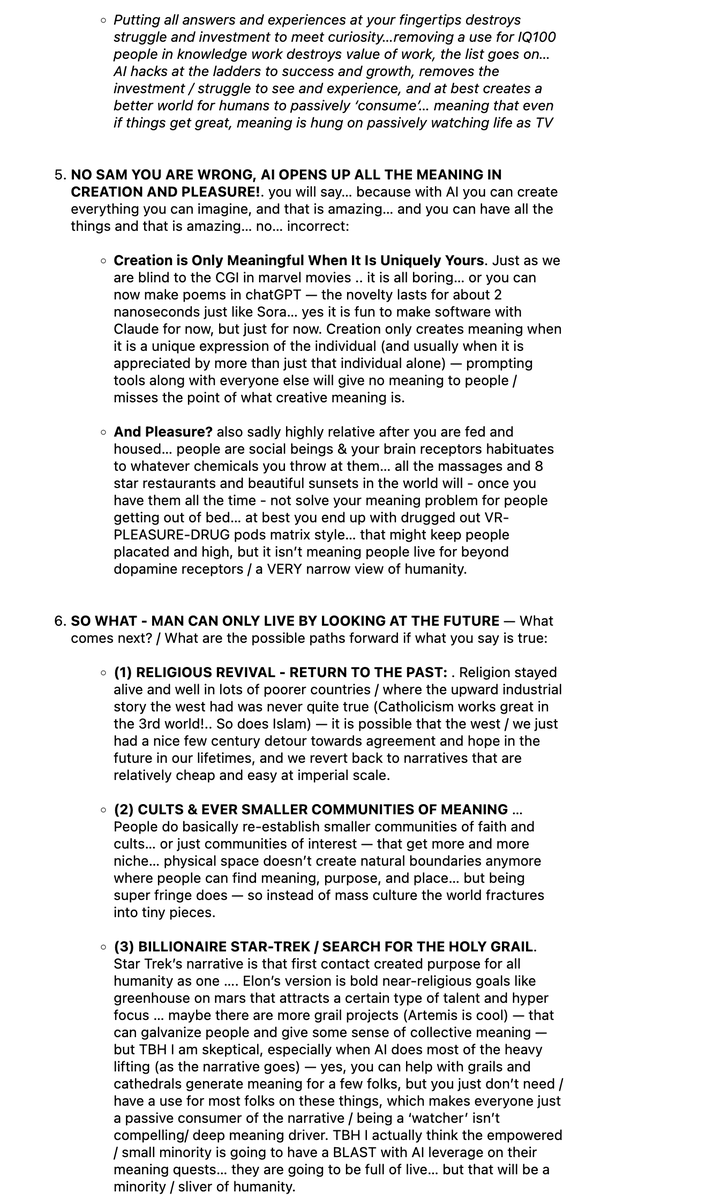
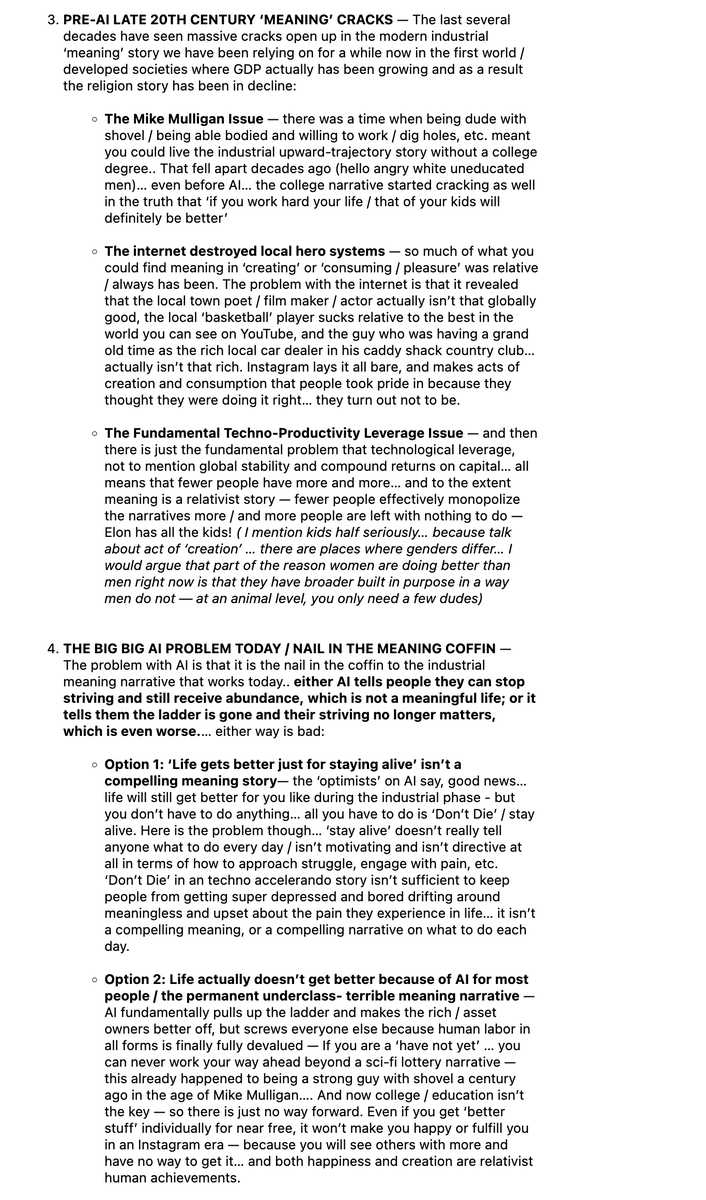
A bunch of people have written me back saying this was the best newsletter I have ever sent (flattering) ... so here it is for those who don't subscribe: AI Is Not a Labor Crisis. It Is a Meaning Crisis.
@faktenbasis@christianmiele Ich sehe im AfD Parteiprogramm keine einzige Maßnahme die kurzfristig Aufschwung verschafft UND nicht langfristig ein absolutes Desaster ist. Hast du Beispiele was du meinst?
AI agents will soon graduate to fully-fledged economic actors that buy services, compute, and even data in the course of accomplishing high-level goals. 1-2 years before we start seeing this at scale.
Love how Claude Code still says stuff like "This is a complex 2-3 day refactor" and everyone's like "Yeah do it, I'm back when it's done in 5min" and it just goes and does it without protesting