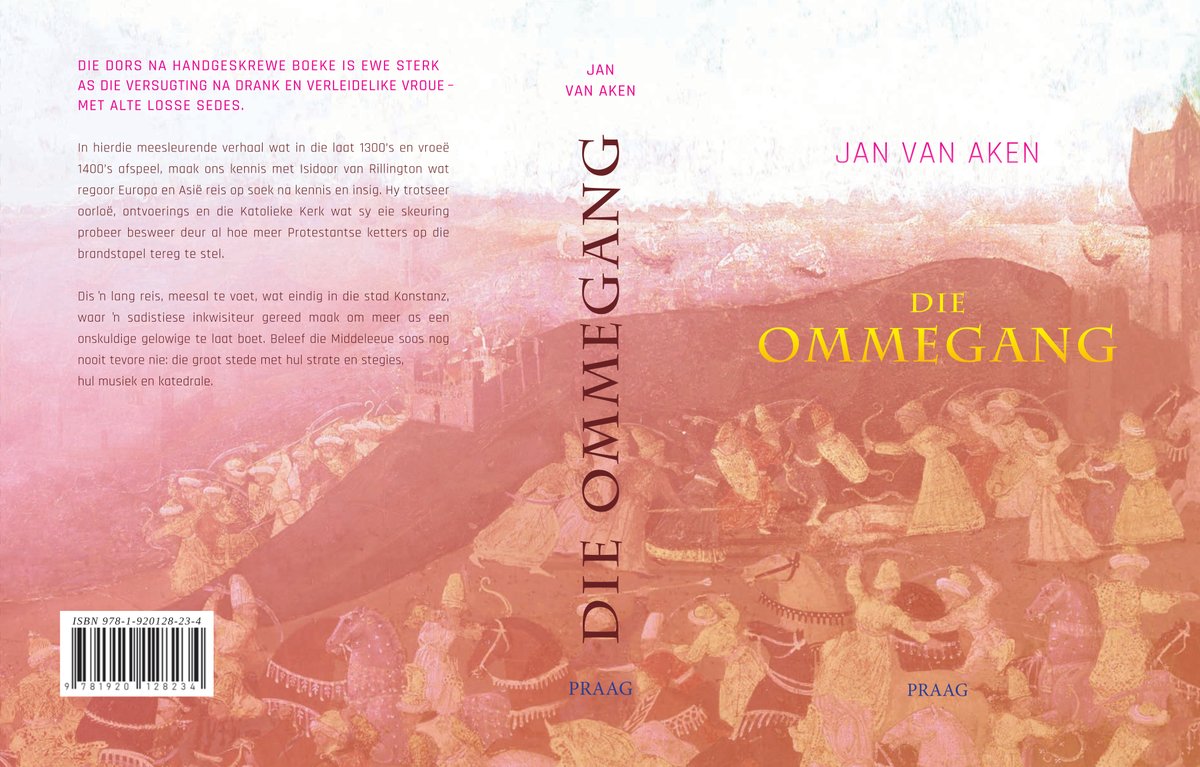
Nou beskikbaar! 'n Meesleurende Europese reisverhaal wat in die Middeleeue afspeel. 748 bladsye. Publikasiedatum: 30 September 2025. Slegs R340 + R60 koerieraflewering oral in SA. Klik op dié skakel: https://t.co/nIrmdbfAeV
The West has created an utterly evil state religion where an accusation of “racism” is the gravest offense that can be committed, even worse than rape or murder!
So if police show up at a crime scene and a British boy is bleeding out and an immigrant says the British boy is racist the cops will cuff the dying British boy.
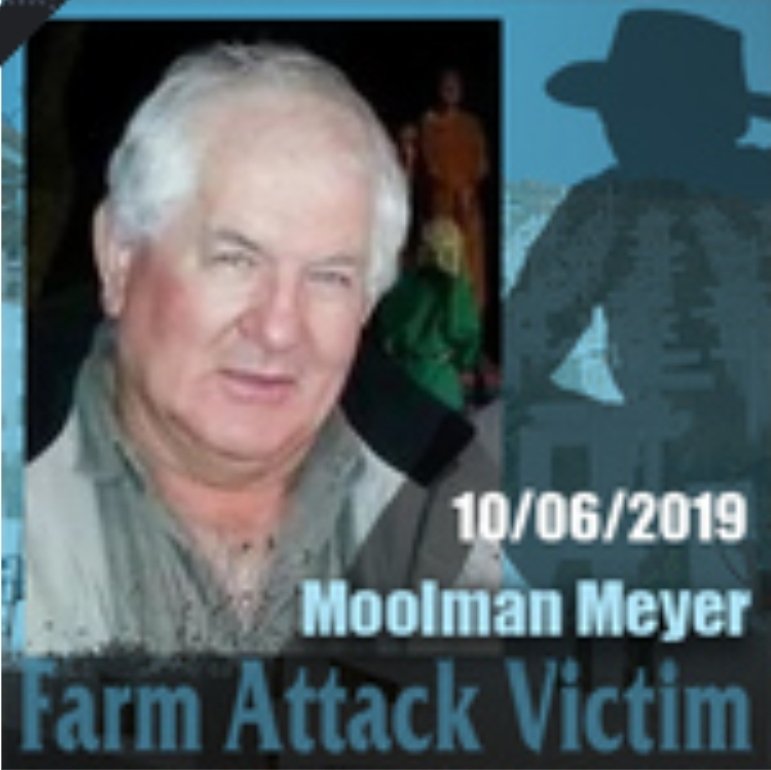
On his farm Waaihoek in the Sheepmoor area of Mpumalanga, around 10 June 2019, 67-year-old Moolman, who had worked that same land for over 50 years, was hacked to death with a panga (machete).
The attack was savage. He suffered deep hack wounds all over his head, body, and arms as he desperately tried to defend himself. There were severe defensive injuries between his fingers where he raised his hands to protect his face and head. His body was also struck with a large rock. He was found near a tractor on the farm, with his blood spattered across the vehicle.
These personal, up-close attacks leave families and communities in unimaginable pain. Moolman was a hardworking man who simply wanted to farm the land he loved.
South Africa could have been paradise on earth. Governed by the: the English, Dutch, and French Huguenots. The English provide the industrial power and cosmopolitanism. The Dutch and French Huguenots ground the country in a strong Calvinist faith and rural robustness.
Prosecutor found in contempt, with a warrant issued for his arrest. Matter struck off the roll. It doesn’t get more embarrassing for the NPA in one of its “Big 5 Cartel” cases. The prosecutor failed to appear, and the control prosecutor chose lunch over court.
As Trump nie binnekort 'n haas uit sy hoed pluk en vrede sluit of ruolie weer aan die vloei kry nie, is ek bevrees daar kom globale inflasie en brandstoftekorte. Die tekorte gaan sommer aanstaande maand in Junie begin. Die globale staatseffektemark is ook in vryval, wat méér staatskuld en selfs hoër belastings gaan veroorsaak.
I saw this on FB and it made me very sad. Is their absolutely NOTHING that this criminal government can do properly.
Written by James Deacon.
I am about to write what has to be one of the most difficult and painful posts for me to write on Facebook.
On Friday I was given news which unfortunately I cannot disclose yet that has forced me to turn my back on something I truly love with all my heart: Kirstenbosch Garden.
I have been involved there for 19 years due to my love and passion for the garden. However Kirstenbosch is no longer a place that brings me joy and happiness but rather pain and sadness.
When I walk through nursery now I see neglect, decay and death. The amazing plant collections that have taken decades and more to establish sit neglected slowly dying.
The Protea collection is less than a third of what it was and only a fraction of the Ericas remain. One plant has gone from extinct in the wild to completely extinct purely due to lack effort to keep it going. Places once full of plants sit empty and in some cases full of weeds because the production of plants is so diminished.
Great plantsmen and women like Ernst van Jaarsveld, Monique McQuillan , Louise Nurrish , Cherise Viljoen , Anthony Hitchcock who I admired and looked up to all left way before they should have because working there had become so unpleasant and because things like procurement made it impossible for them to do their jobs.
One told me when they tried to order pots the response they got from the management of SANBI the SOE that runs many of the country's botanical gardens was what were they cooking. Another ordered pots and three years later they yet to arrive.
Poor financial management has resulted in the organisation having to use funds donated for educational purpose to pay staff salaries.
Kirstenbosch no longer has a Protea or an Erica expert and hasn't had either for years.
Staff morale is at an all time low and respect for the leadership of the garden has broken down.
The garden cannot produce metal labels to tell visitor what the names of the plants are.
I say all these things not out of animosity to anyone or with the desire to see people in trouble. I say these things because I love the garden and what I am seeing is breaking my heart. I am also saying these things because after all the friends, experiences, knowledge and memories the garden has given me I feel I have a duty to speak out for the garden in difficult times such as these.
I don't know what will happen to me for saying all this. Maybe I will be banned from the garden or get into trouble. However I refuse to stay silent and standby while the things and people that I care about suffer. I also feel that we the current custodians of the garden have a duty to preserve and protect the work of those custodians of the past for the custodians of the future.
We have two choices to be remembered as those who fought for Kirstenbosch during its most difficult and challenging times or as those who sat idly by and allowed it break down and be ruined.
I don't know if anyone will read this or if it will achieve anything but I will not keep silent while the place I love suffers and will continue to speak out against what is happening.
I appreciate that. I have read some interesting accounts of the Pro-Boer movement in Britain, elements of which have been suppressed in the historical record. There was a woman, Maude Gonne, born English but very pro-Irish and with connections to France who also took up the Boer cause. She was quite revolutionary in many ways and famous for jilting the poet Yeats. We need a more nuanced view of history, then and now, beyond the "idées reçues" and the clichés. The uitlanders were never dissatisfied with Kruger, as SA blacks did not dream of communism. But yesterday's propaganda becomes the history of today. Afrikaans literature could become the vehicle of such a renewal, re-imagining a South Africa freed from its dystopian present but also recreating our past without the many lies.
But what role did Britain (and other countries) play in pressuring those weak-kneed Afrikaners into submission? I once saw an intriguing interview by Peter Bruce with the former British ambassador Robin Renwick in which he bluntly said that "De Klerk was a man we could do business with" and how he proudly cooperated with the communist cadres on Robben Island in engineering the takeover of South Africa. It was such an achievement that he was made UK ambassador in Washington, the most sought-after posting of all. He was also the father of the Lancaster Agreement that sounded the death-knell of Rhodesia. If you look at all the countries that supported and funded terror against the old South Africa, they were all very much under British influence: the Scandinavians, the Netherlands, Canada, etc. Countries where English is spoken as a second language, for international communication. So they read British media. Germanic Europe (the FRG, Austria, Switzerland) never had any sanctions against us. On the other hand, the Soviet Union and the Warsaw states had the strategic aim of installing a communist regime in SA. Strange bedfellows indeed. Both my wife and I have experienced the contempt that especially left-wing Britons harbour towards Afrikaners first-hand in international settings. And the local English elite are so in awe of everything British that they slavishly agree with every stereotype about us conjured up in the British isles. Just read the first page of Ian Fleming's novel, "Diamonds Are Forever" where the narrator states: "He didn't like these Afrikaners." Apart from the Russians, ironically, I think we are the nation most despised by the entire Empire or Anglosphere. Trump and his MAGA people are an aberration. It is a wonder they still play their British sports against us. But perhaps now that we have been subjugated by the current "lords" in their baggy suits they find us more acceptable.
Afrikaners produce almost no anti-English tracts, books, articles, TV programmes, etc. Yet the converse happens all the time! Now more than ever. And the local English are in cahoots with the Motherland. The eradication of Afrikaner influence and thinking from South Africa has not only been a disaster for Afrikaners, but for the country itself. Forty-percent unemployment, crime and mayhem. And it's all our fault, right? For the next three centuries we will be blamed for the stupid assumptions of the booze-greed-and-status elites in London and Johannesburg and their dire consequences.
DIE AFRIKANER SE ENGELSE PROBLEEM
Ek moet bieg: tot my skande, was my ma op 'n Engelse skool. Jeppe Girls High, in die ooste van Johannesburg. Dieselfde onderwysinstelling wat Ruth First, die aartskommunis en vrou van Joe Slovo, bygewoon het. Blykbaar het die skool haar sedertdien postuum vereer. Dis nou Ruth First, nie my ma nie.
Die Amerikaanse digteres Sylvia Plath het in een van haar gedigte geskryf: "Every woman loves a fascist." Sy moes eerder gesê het: "Every Englishman or -woman loves a communist." Ten minste in Suid-Afrika.
My ma se moedertaal was egter Afrikaans en my ouma was 'n nooi Botha. Haar pa was 'n bittereinder in die Tweede Vryheidsoorlog wat op 12 April 1902 by Rooiwal teen 'n Engelse oormag gewond is. Hy het 'n boek oor sy oorlogsherinneringe geskryf met die titel, "Met ryperd en Mauser".
Daarom het ek nooit 'n woord Engels met my Engels opgevoede moeder gepraat nie. My pa was 'n stoere Afrikaner en hy het toe ek op laerskool was, vir my gedigte van A.G. Visser voorgelees en op die klavier "O Boereplaas, geboortegrond" gespeel en gesing dat die dak daarvan gedreun het. Ek onthou dit soos gister.
'n Ier wie se naam ek nou vergeet, het 'n boek geskryf met die titel, "The Afrikaner's English problem" en as Ier sou hy seker goeie insig daarin hê. Iere is deur Engelse uitgemoor en onderdruk, nes Afrikaners.
Dis 'n baie groot onderwerp. Maar kom ons hou dit by die persoonlike en familieaangeleenthede. Destyds in die ooste van Johannesburg was daar geen Afrikaanse skole nie; vandaar my ma se plasing by Jeppe Girls High. My ooms was ingelyks by Engelse skole, daarna Wits en het agterna met Engelse vrouens getrou. Daarom is my familie aan moederskant geheel en al Engels. My een tante - Shirley was haar naam - het so 'n sproeterige Engelse gesig gehad en het gerook, jenewer gedrink, brug gespeel en eenkeer op TV 'n vasvrawedstryd oor die romans van Charles Dickens gewen.
My een Engelse oom se voorname was Johannes Petrus, wat sy Afrikaanse afkoms weerspieël. Almal het hom "Johan" genoem, maar hy was 'n Engelse Johan. Hoewel ek en my Engelse neefs en niggies kleintyd lekker saamgespeel het, sien ons mekaar deesdae hoofsaaklik by familiebegrafnisse.
My een neef woon in Kalifornië. Sy jonger suster, dus my niggie, is glo baie ryk. 'n Wildvreemde persoon het eenkaar teenoor my genoem dat sy "die helfte van Bedfordview" besit. Bedfordview is 'n redelik gegoede voorstad in die ooste van Johannesburg. Toe ek 'n paar jaar gelede whatsappboodskappe aan haar gestuur het, het ek net blou regmerkies gekry, asof ek 'n vreemdeling was. Deur die riemtelegram het ek ook gehoor dat van my Engelse familie nie daarvan hou dat ek vriende met Steve Hofmeyr is nie. Dalk is dit Steve, dalk het ek nie genoeg geld nie. Ek weet nie.
Ewenwel, ek en my jongste niggie kom nogal goed oor die weg. Sy stel in ons familiegeskiedenis belang en stuur gereeld vir my allerlei brokkies oor wat ons gemeenskaplike oupas en oupagrootjies gedoen het. Onder andere het my oupagrootjie aan moederskant, wat blykbaar die rykste man in Standerton was, sy vrou en kinders na Dresden in Duitsland gestuur toe die Britse konsentrasiekampe in 1900 verrys.
Binnekort gaan ek dalk 'n draai in Dresden maak en dié stad bewandel terwyl ek dink dat my oupa as klein kind hierheen gevlug het om aan die Britse konsentrasiekampe te ontkom. Later sou die Britte en Amerikaners natuurlik 300 000 Duitse burgerlikes in Dresden met brandbomme uitmoor. Sulke "goeie mense", die Engelse. Aan sedelesse teenoor ander volkere, ontbreek dit hulle natuurlik nooit.
Eergister het ek en my Engelse niggie saam gaan koffie drink. Sy woon nou juis in die ooste van Johannesburg en ons het verby my ma se ou skool gery. Sy het ook die huis in Kitchenerstraat, Kensington, waar my ma-hulle gewoon het, aan my uitgewys. Die hele voorstad Kensington wemel van die Engelse name wat Kitchener, Roberts, Milner en Rhodes verheerlik. Daar is ook 'n "Queenslaan".
Ek en my niggie praat Afrikaans. As sy 'n sekere Afrikaanse woord nie verstaan nie, vra sy my om dit te vertaal. Maar vir 'n tweedetaalspreker praat sy eintlik goed. Sy vra so half om verskoning vir al die verskriklike imperiale straatname in Kensington. Daar is glo sprake dat van die name verander gaan word, maar die nuwe name sal ANC-name wees, dus die name van swart Britte.
Ná die warm drankies, eet ons 'n ligte middagete in 'n plek wat sy 'n "bistrot" noem, steeds in Kensington. Ons praat oor familie, maar ook 'n hele verskeidenheid ander onderwerpe. Ek ontvang geraamde foto's van ons stamvaders en -moeders van haar, Bothas en Venters. Na die einde van die gesprek toe, vertel sy my heel ernstig dat haar ma "Afrikaners nie kon verdra nie". Ook haar een ouer suster haat dit steeds om vir sake platteland toe te moet gaan, want "almal daar is só Afrikaans".
Teenoor haar merk ek skertsend op dat Engeland se enigste bydrae tot die wêreld 'n paar verengelste Ierse skrywers was, asook enkele fabrieke vir manskoene in Northamptonshire. Vergeleke met Frankryk of Italië, is Engeland 'n afskuwelik lelike plek vol mense wat baie drink en oneetbare kos verorber.
Wat is Engelse kultuur? Drank, hebsug en status. Op Engels klink dit amper nog beter: "Booze, greed and status."
Ongelukkig het baie Afrikaners die Engelse etos hulle s'n gemaak. Maar gelukkig is "ons nie almal so nie". Om nou Jeanne Goosen, een van die mees oorskatte en waarskynlik anglofiele skryfsters in Afrikaans, aan te haal. My hele lewe lank probeer ek myself verontengels. Ek vlug weg van die Britse Ryk soos my oupa van die Britse kampe.
Hier in die verre noordelike voorstede van Johannesburg, is ek omring daardeur: drank, hebsug en status. Ek is bevrees die swart elite het dié moraal hul eie gemaak. Wit of swart, die Brit kom net in een model. Hy ry 'n Land Rover en koop drank by die kratte vol. Hul huise is so groot soos hul ego's. Hulle sien neer op Afrikaners, want sedert 1806 werk dit mos só. En al regeer die ANC, die Engelsman bly baas. Of ten minste, hy of sy dink so. Kyk maar vir Zille, wat Johannesburg gaan "herower".
Mense hier rond behandel my soos 'n vreemdeling, as iets wat die kat ingedra het. Al het ek beter maniere, al trek ek soveel beter as hulle aan... Maar in hul Engelse wêreld is ek nie belangrik nie, net nog 'n "hardkoppige Afrikaner wat weier om te verdwyn". Jare gelede het ek by 'n sosiale geleentheid in 'n argument oor Afrikaans betrokke geraak met 'n Engelsman wat hom verbeel het dat hy 'n groot finansiële kenner was. Hy was ook 'n vurige ondersteuner van die ANC. Oplaas het hy teenoor my uitgeroep: "You're just a fucking tenacious Boer!"
Hy het dit as 'n belediging bedoel. Maar ek sien dit as iets van 'n kompliment. Dit herinner my aan daardie onsterflike reël aan die einde van "Bart Nel": “My kry hulle nooit. Ja, ek is Bart Nel van toe af, en ek is nog hy.”