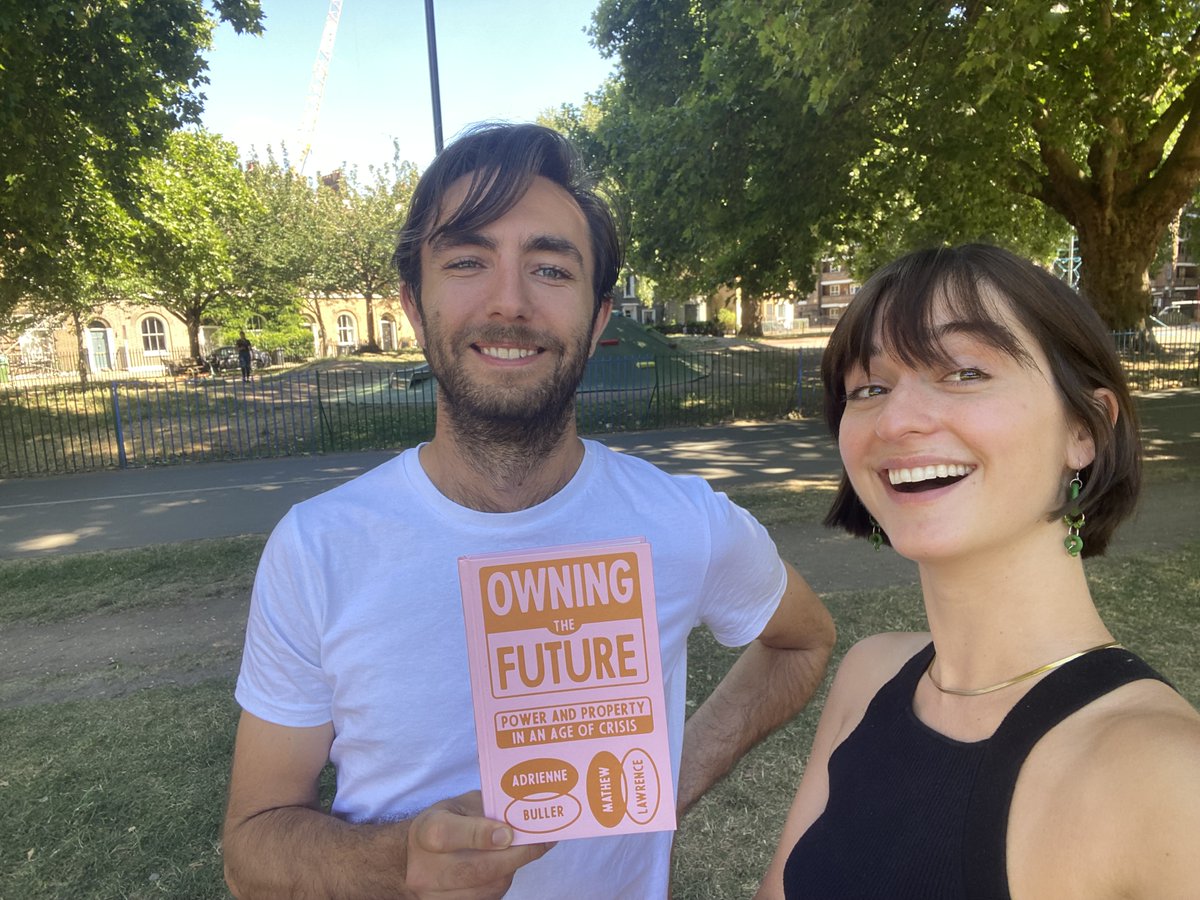
Lucky to call @adribuller a friend, colleague & now, co-author🎉
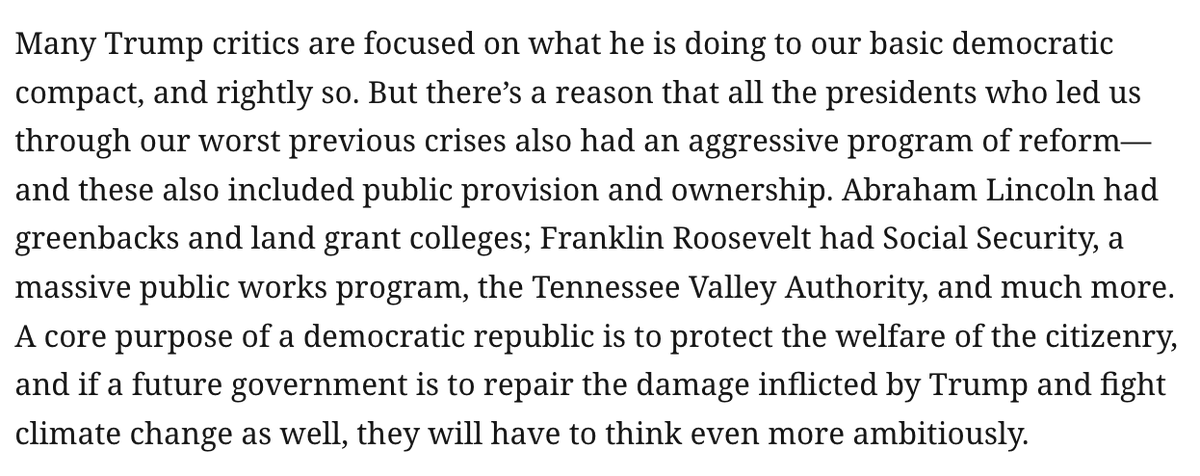
"Owning the Future" is out today from @VersoBooks
It traces how extractive ownership models connect & drive our age of crisis & how reimagining property relations can secure abundance.
https://t.co/o8fTgOcjRj
"Our diagnosis is the same. Britain pays too much for the basics because the state has lost control of the foundations ordinary life and enterprise depend on."
Great to have this clear-sighted piece from the Labour Growth Group's @MarkMcvitie and Common Wealth's @DantonsHead on the @newstatesman website today.
Read it!
https://t.co/mO5ghwOKkd
The retreat of public control of essentials has created an economy that extracts when it should investment, fragments when it coordinates, and prices for profit when should provide for need.
The case for change in @NewStatesman
https://t.co/JEOBP3Bu4W
The retreat of public control of essentials has created an economy that extracts when it should investment, fragments when it coordinates, and prices for profit when should provide for need.
The case for change in @NewStatesman
https://t.co/JEOBP3Bu4W
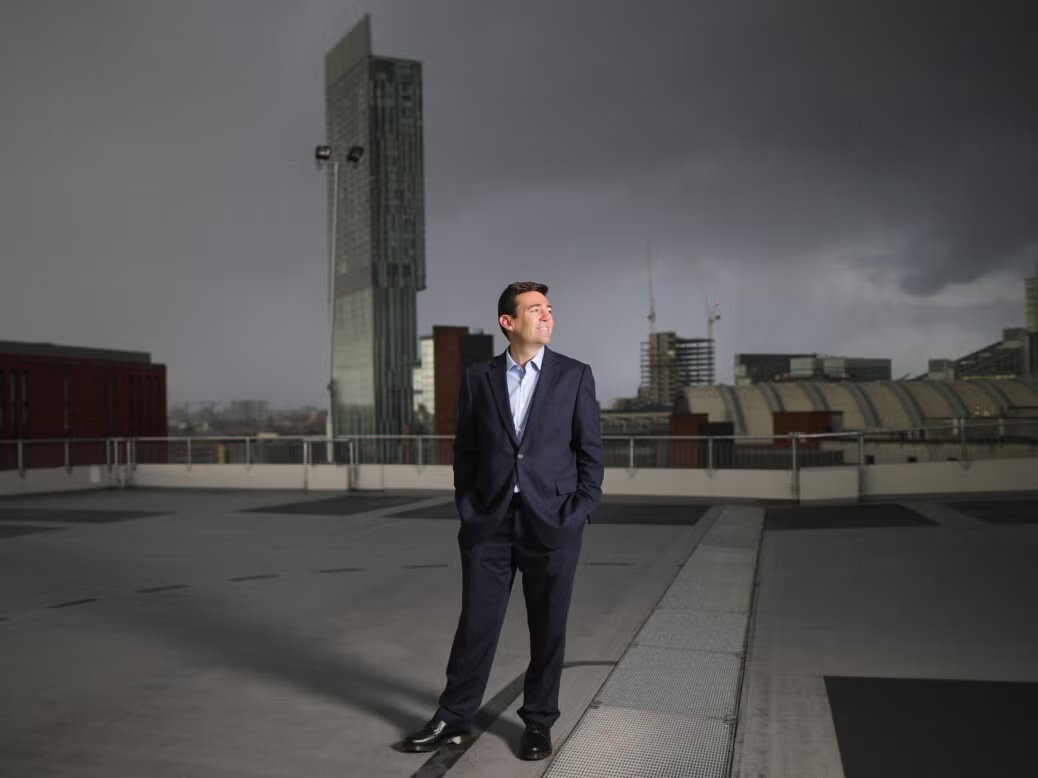
Greater Manchester Mayor Andy Burnham has set out his views on Labour's path forward and the policy challenges facing the country.
Speaking to Channel 4 News' Andrew Misra, Burnham said he wanted Labour to become “a party that they can believe in again, a party solidly on the side of working class people.”
THE CASE FOR MANCHESTERISM by @DantonsHead
Ask someone in Wythenshawe or Rochdale whether the buses are better than they were three years ago and they will say yes. Greater Manchester’s Bee Network is the most instructive public transport experiment in Britain not because it is radical in design but because it works. Since franchising began under Andy Burnham’s leadership, passenger numbers have risen for the first time in a generation. Routes have expanded into communities that private operators had abandoned as insufficiently profitable. Fares are capped at levels the deregulated system could not deliver.
The model is now spreading. A public operator optimising for coverage and frequency rather than fare recovery serves a social need that private calculation screens out, while reducing system costs through public coordination.
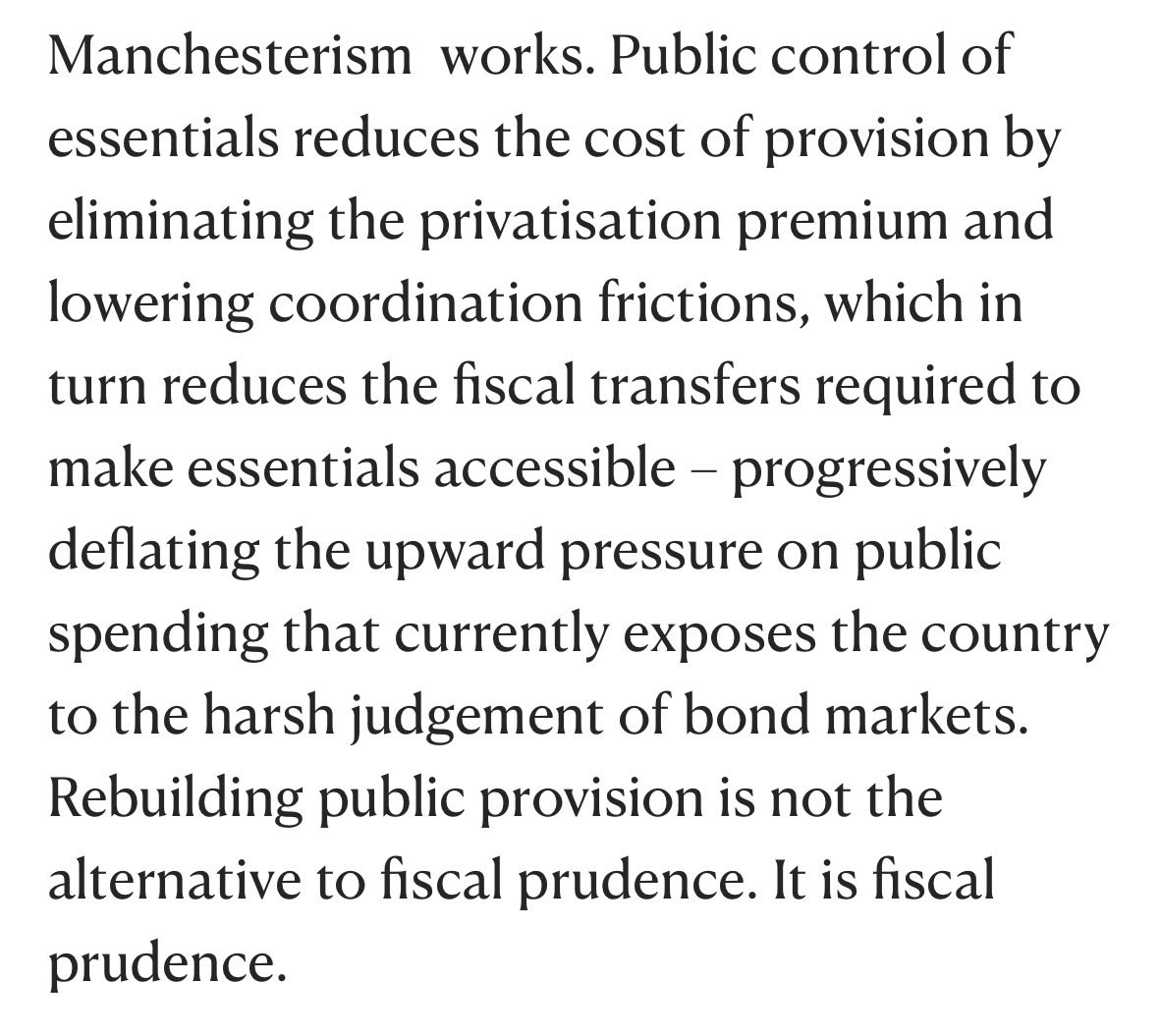
Manchesterism works. Public control of essentials reduces the cost of provision by eliminating the privatisation premium and lowering coordination frictions, which in turn reduces the fiscal transfers required to make essentials accessible – progressively deflating the upward pressure on public spending that currently exposes the country to the harsh judgement of bond markets. Rebuilding public provision is not the alternative to fiscal prudence. It is fiscal prudence.
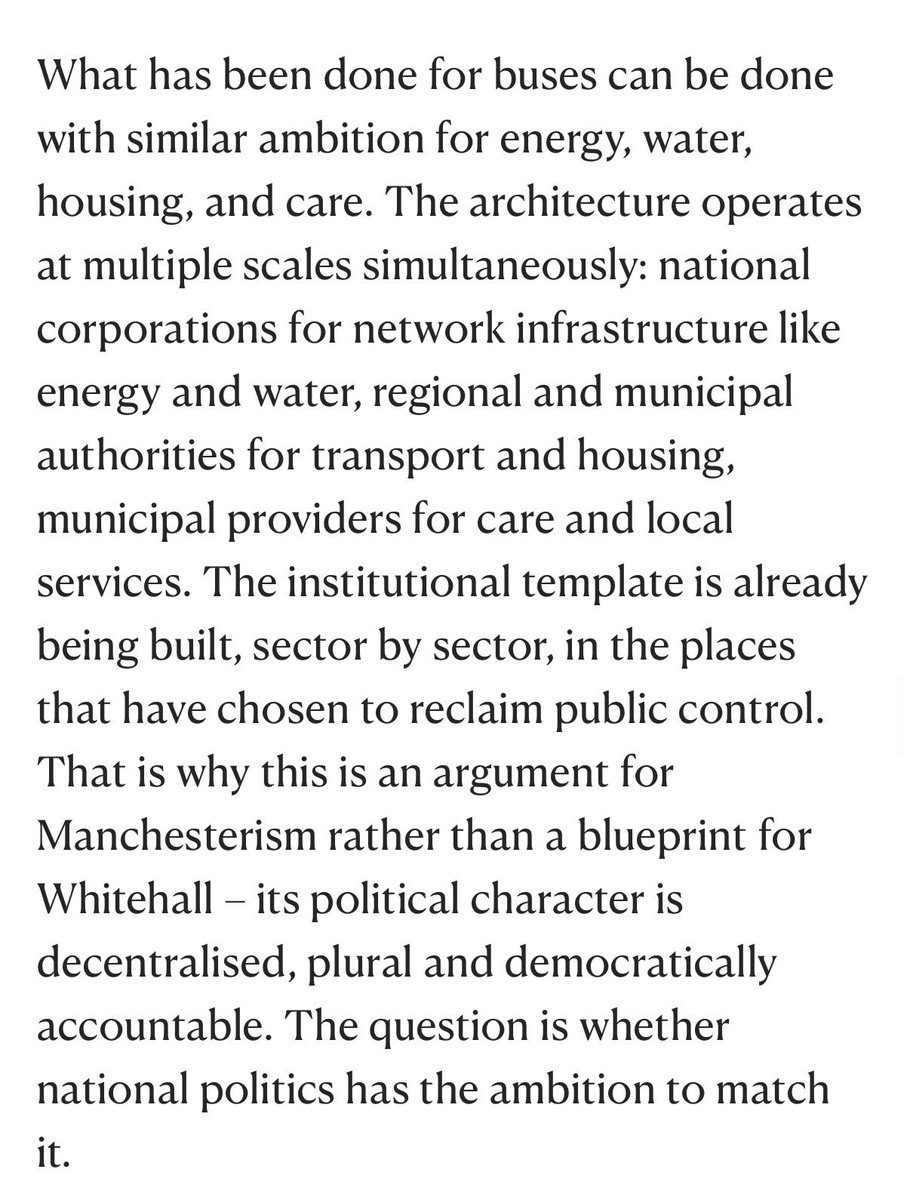
What has been done for buses can be done with similar ambition for energy, water, housing, and care. The architecture operates at multiple scales simultaneously: national corporations for network infrastructure like energy and water, regional and municipal authorities for transport and housing, municipal providers for care and local services. The institutional template is already being built, sector by sector, in the places that have chosen to reclaim public control.
That is why this is an argument for Manchesterism rather than a blueprint for Whitehall – its political character is decentralised, plural and democratically accountable. The question is whether national politics has the ambition to match it.
“The price of electricity turns not just on what technology powers the grid, but on the architecture of the energy system itself”.
Our Director @dantonshead on the Iran crisis and how a public energy system can best deliver affordability.
https://t.co/UaCM8Dn0OA
Ryan Cooper profiles Common Wealth, a new lefty think tank focused on public ownership, public provision, and state capacity. Says one of its leaders: “In the long run, fixing these problems makes everything that everyone wants to do cheaper.”
https://t.co/qwIH4zuWD3
So thrilled to be a part of the Green Planning Commission with so many smart progressive thinkers! I can't wait to support @Cmmonwealth in coordinating the future of climate policy.
Excited to bring progressive public finance to bear on our energy and affordability crises😎☀️
🚨 Today, Common Wealth launches the Green Planning Commission.
A major new initiative to tackle the twin crises of our era: climate breakdown & the affordability crisis.
To meet these challenges, we need a new era of democratic planning.
🧵 Here’s why.
https://t.co/l2WMbycXDZ
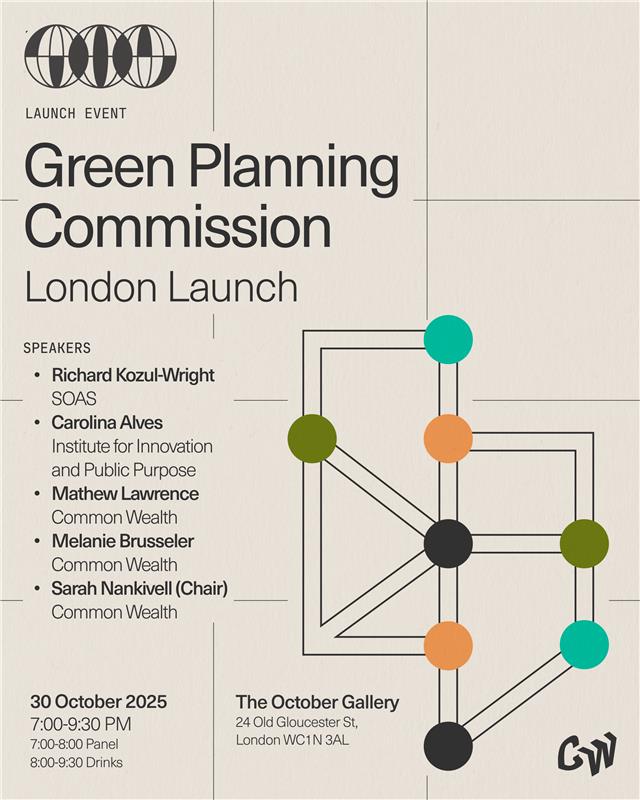
🎉 Join us in London to launch the Green Planning Commission — rethinking the politics and practice of planning for a democratic and decarbonised future.
🎙️ Carolina Alves, @BrusselerMel, Richard Kozul-Wright & @DantonsHead
🪑 @sarahnanks
🔗 https://t.co/XnU3J5Y3jD
Read Adam Hanieh's urgent piece on Middle East oil, militarism and the transformation of world order
“For the US, this deepening fossil fuel expansion — tied to its strategic alliance with the Gulf monarchies and their normalisation with Israel — is a crucial source of power.”
"In almost every field, when you look at what the Marxist or Marxisant or “radical” historians have done, what they have been or are debating, it’s often incomparably richer and more commanding than the liberal historiography."
https://t.co/wNI7PDLZZ9
Later today, we launch @TransitionSec to investigate military industrial complexes as economic, climate and geopolitical threats.
For the launch, Patrick Bigger and I wrote for @jacobin about militarisation on a burning planet.
https://t.co/CVe6WbyP3Q
Super excited to be associated with this new transatlantic project on demilitarization and decarbonization. Please sign up for the online panel featuring the best: @LalehKhalili @triofrancos@stephensemler and @IliasAlami.
"Everyone should be able to afford a decent and dignified life. Confronting the cost of living crisis will require addressing the business models that have hollowed out Britain’s foundations and left the public to pick up the tab." @DantonsHead https://t.co/51PB6XhQmr