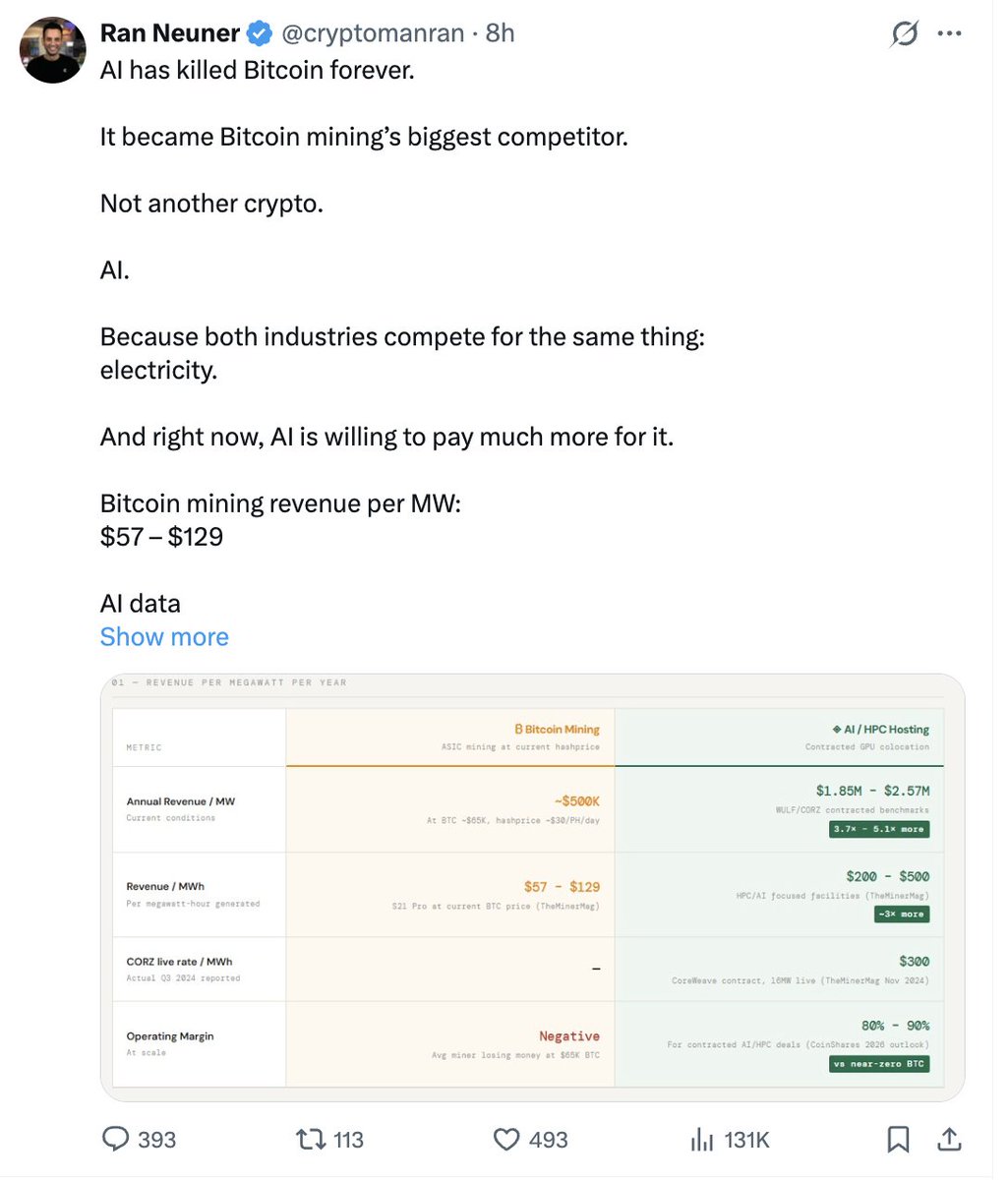
Be very skeptical of any claims such as "Bitcoin mining is unprofitable beyond this threshold" or "AI is killing Bitcoin".
Not only is it more nuanced than that, but the research tells us that AI datacenters increasingly need Bitcoin mining (see 7. below)
For example
1. In places such as Europe, where electricity prices are high, mining still exists because often miners view heat recycling as the primary revenue, SATS as the byproduct
2. Bitcoin mining companies increasingly buy generation assets, allowing them to mine for zero marginal cost
3. Bitcoin mining companies can use older mining rigs on intermittent power sources, getting a very cheap rate.
4. Stranded energy such as O&G and landfills provides the chance to mine at ~1c/kWh in return for higher upfront CAPEX
5. Demand response, FCAS, RECS, carbon credits all provide ancillary revenue sources that aren't factored into general "mining is unprofitable below level-x" pronouncements
6. Prices can and often do go negative where there are renewable electricity surpluses, despite the general wholesale price of electricity (Again, a suitable source for older mining rigs)
7. Mining can be used alongside AI for strategic advantages including
- monetizing energy during AI datacenter construction
- using forward-purchased energy that would otherwise be wasted
- smoothing demand patterns of AI load and recategorizing AI datacenters as FLC (flexible load consumers) source: https://t.co/8JEtZuLwiu. As FLC, AI datacenters become far more likely to win contracts with grid operators, and help grid operators delay infrastructure investment costs that AI would otherwise necessitate (source: https://t.co/7pkhgwgDqK)
When assessing claims about Bitcoin mining profitability, two good questions to ask are
"does this person have domain knowledge at the intersection of AI, Bitcoin mining and energy grids?"
and
"Does the claim sound hyperbolic or absolutist?"
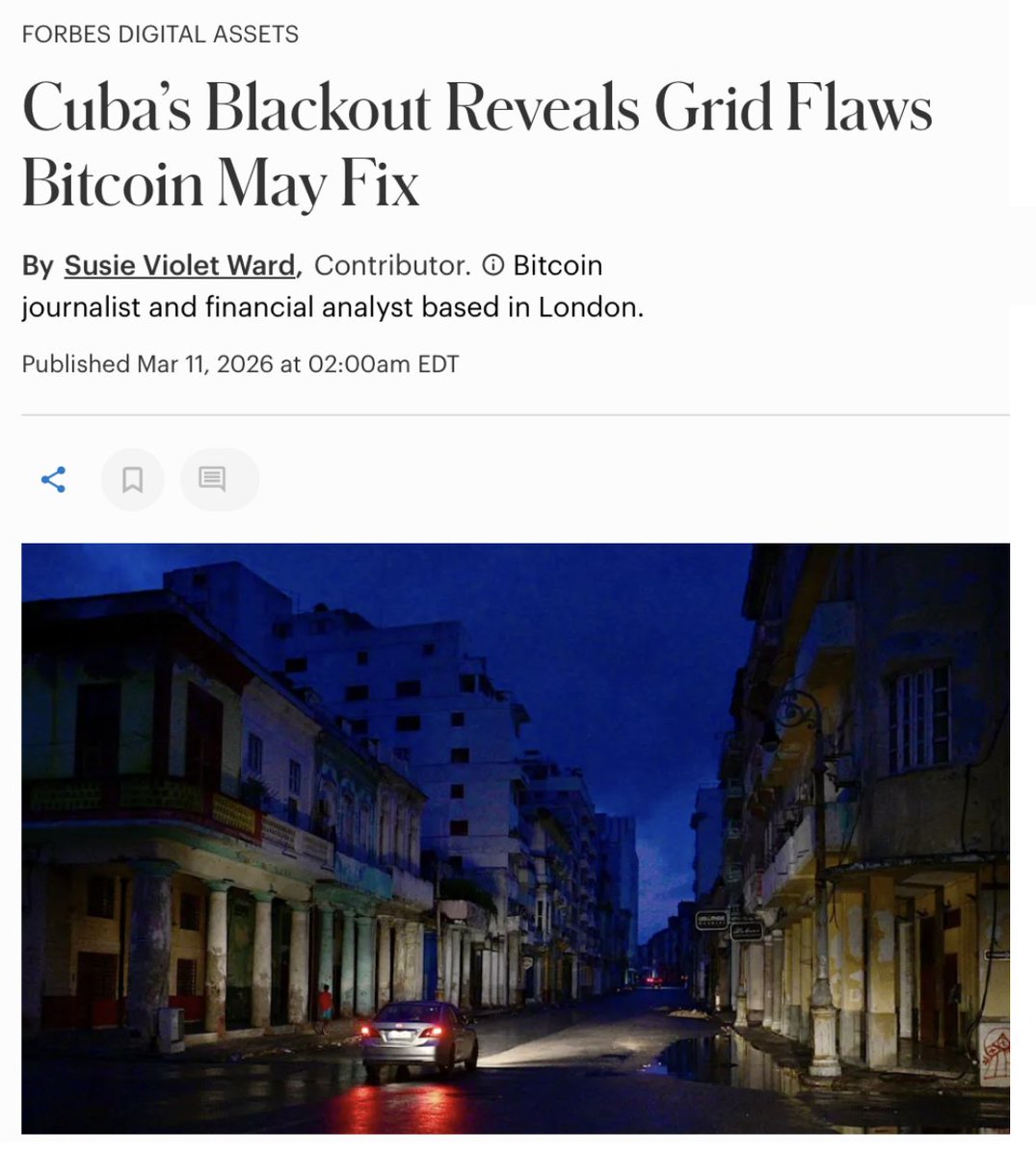
Cuba’s recent blackout exposed a structural weakness in centralized power grids. When a single plant fails, entire systems can collapse.
Distributed energy and flexible demand could help change that. Bitcoin mining plays an unexpected role by acting as a flexible load that stabilizes renewable grids.
The same decentralised logic strengthens money and disperses power too.
Read my latest @Forbes article featuring @nduku_jay@GridlessCompute@geyer_rachel@EBEA_eu
https://t.co/cr3GWIZGNF
The end of Bitcoin mining gaslighting in mainstream media
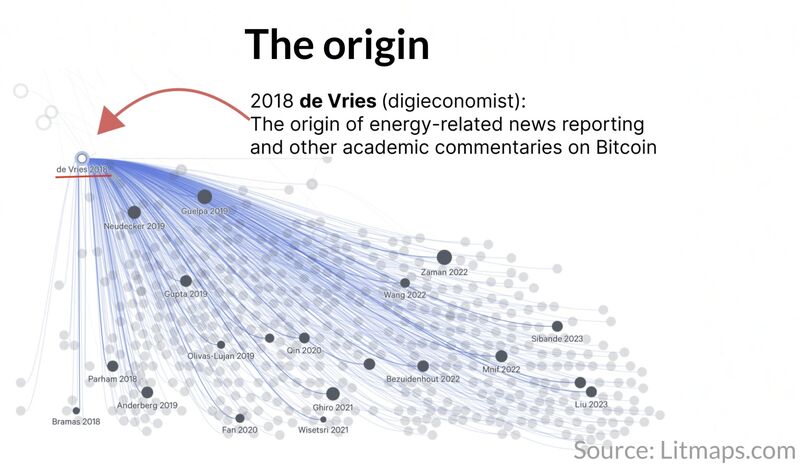
Litmaps, a powerful research tracking tool, reveals that patient zero for all junk science on Bitcoin's environmental impact was a single 6 page "commentary" by Alex de Vries. (A commentary in the context of an academic journal means a short opinion piece that does not to go through a full peer-review process and which does not use novel empirical data).
The method he used to claim that Bitcoin's environmental damage was a growing concern was his fundamentally flawed "energy use per transactions" method (Bitcoin energy use does not come from its transactions, therefore it can scale transaction volume exponentially without increasing emissions).
de Vries' metric was later debunked in no fewer than 4 separate academic journals as part of full length academic papers.
*Masanet et al 2019
https://t.co/6Kk4EmypRm
*Dittmar et al. 2019
https://t.co/948te7h6Y7
*Sedlmeir et al, 2020
https://t.co/7AU2k67OL2
*Sai and Vraken 2023
https://t.co/0wQFRaT3ZQ
The entire body of de Vries' work was systematically debunked by Sai and Vranken in late 2023
source: https://t.co/0wQFRaT3ZQ
Immediately after Sai & Vranken's study, all mainstream media outlets stopped covering de Vries' Bitcoin "research"
In fact, 22 mainstream media outlets have now flipped to covering Bitcoin's environmental benefits (source: https://t.co/m7TgyYf36w) which have been well established in 24 peer reviewed full length academic studies. (source: https://t.co/n6UsVuXtc7)
A further 15 sustainability media outlets are now also covering Bitcoin mining's environmental benefits:
source: https://t.co/n6UsVuXtc7
But just as years after the myth "all fats cause cholesterol" was debunked, many people are still unaware of the science, the same is true of Bitcoin mining
In both cases, the population was misinformed over many years. As a result, many people are still unaware that the contemporary academic literature, case studies and grid operators themselves all overwhelmingly support Bitcoin mining's environmental benefits
source: https://t.co/TgsH8m4fAj
It is only a matter of time before policymakers, regulators, political leaders and investment committees catch up.
Once they do we will see mainstream adoption of Bitcoin, and mainstream adoption of Bitcoin mining as part of climate action (aka: what the peer reviewed research tells us it is)
source: https://t.co/ORlWeHfE6X
While many media outlets are now objectively commenting on Bitcoin, others (Financial Times, The Economist, Verge, Wired, New Scientist) have simply pivoted to changing the type of Bitcoin misinformation they publish.
Loved putting down this episode with Bram, which highlighted the amazing new adoption research that @river and @bitcoinpolicy just put out and what it means, but also what @dari_org are doing, supported by @hrf, to quantify how many outside the West are benefitting from Bitcoin
* New podcast *
@timevalueofbtc and I discussed new research from @dari_org and @simonocollins, supported by @HRF showing >329,000 refugees have traveled across borders carrying Bitcoin.
We discuss how the report is helping change the way policymakers & regulators see Bitcoin
Link to video in comments
New paper by myself and @DrMurrayRudd : A Taxonomy of Bitcoin Adoption.
We break down Bitcoin adoption across its roles as tech & currency by individuals, firms, cities & nations and more.
A fresh framework for researchers & policymakers.
https://t.co/O1uKvPThyW
#Bitcoin
Very grateful to @HRF. It's because of their support that this year I've been able to do more work researching and quantifying some of the humanitarian benefits of Bitcoin.
Thanks to them, this year I've been able to
- work alongside @dari_org to put together a first ever quantification of the number of refugees helped by Bitcoin (329,000 of the world's most vulnerable).
https://t.co/TVWElc9lYh
- Interview John Perkins about how Bitcoin can overcome monetary colonialism. John and I have become good friends, and last time we chatted we talked about the best exchanges to buy bitcoin on!
https://t.co/ZuIPp25l3g
- appear on a couple of podcasts talking about how fiat currency is the natural synergistic partner with dictatorship, whereas Bitcoin naturally harmonizes with democracies
https://t.co/LroH3z5Uo1
- put together a report on why bitcoin solves problems in authoritarian regimes that stablecoins can't
https://t.co/HBQrY4wSCP
Again, none of these actions would have been possible without @HRF's support.
And there's more to come!
The Bitcoin Blockchain: the ultimate truth machine?
Yes and no.
We can observe the amount of BTC held on specific addresses and the movements thereof.
It can provide us insights into the behaviour of entities, but may also be misleading.
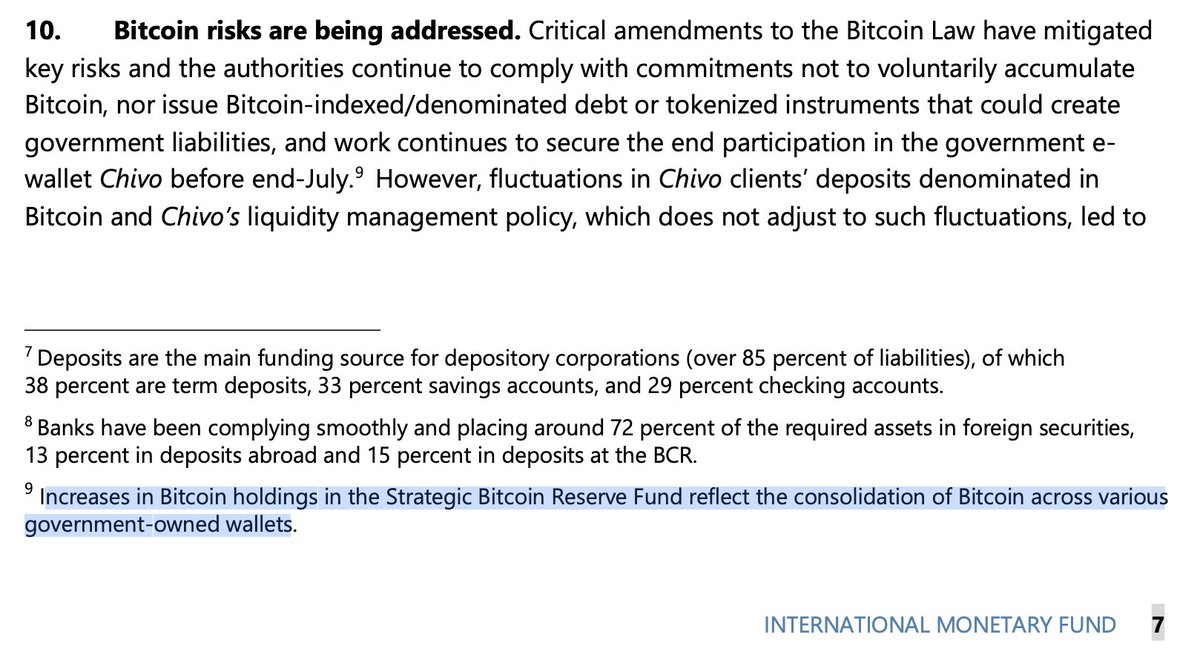
The BTC holdings of El Salvador are the most recent example of that.
Looking at the below graph, they have been clearly buying 1 BTC every day, right? Even despite the IMF telling them not to do so, or at least that's what @nayibbukele has claimed.
However, the latest report by the IMF from July 15 contradicts these claims, stating that the increases are merely consolidations of BTC from various government wallets.
If this is true, Bukele has been purposely misleading the public.
Whether you believe one side or the other, I leave it to you to be the judge, but if there is one thing to take away from this, it is to be sceptical when interpreting data, even if it is on the blockchain.
Just because it is on the blockchain, the narrative derived from it may not reflect the truth.
Our latest report: Bring Only What You Can Carry explores the impact, past and future of Bitcoin on refugees and wealth preservation.
You can read the report here: https://t.co/RT1b6dEzRk
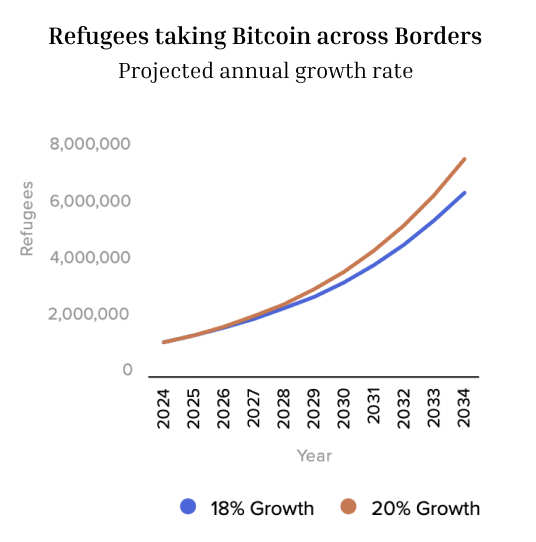
Bitcoin adoption grows at an average of 18-20% per year. Meaning that by 2035 up to 7.5m people may have fled with bitcoin in their pockets, packs or even memorised. This is an incredible way that this technology, alongside others can benefit those who are displaced.
@dari_org Great chart. This tells us why we've never had a study on bitcoin mining that used actual post-2022 data that concluded it was environmentally harmful.
This chart shows the issues with using outdated data to calculate energy mix, emissions intensity, or water use for #Bitcoin mining.
The landscape changes significantly over time. Even data from just 3 years ago differs from today.
Read more: https://t.co/wAlrsEJVhz
In a paper by Bashari et al., the authors claim #Bitcoin has an outsized carbon footprint with overwhelmingly negative outcomes. But their analysis specifically excludes any potential benefits. Read @simonocollins discussion here: https://t.co/wAlrsEJVhz
The Digital Asset Research Institute has published a discussion outlining key flaws in a recent paper on Bitcoin mining and sustainability. Read the rebuttal here:
https://t.co/khTiTASPEc
If you hear anyone talking about a recent Harvard-led study on Bitcoin mining, this excellent article from @humanjets at @TheBlock__ lays out why policymakers and regulators should not take their study seriously
H/T to @dari_org for their rebuttal too
https://t.co/KqJG3T9cQw