GPT-6 Astra is here.
We hope it will begin to enable a new generation of entrepreneurship, scientific discovery, and building.
We believe it is the best model in the world for computer use, professional work, science, coding, cybersecurity, and more.
It took us some extra time to ensure that we could meet the safety and alignment standards required for this capability level, but we think you’ll find it worth the wait.
It scores 98% on FrontierMath Tier 4, 99.9% on ARC-AGI 3, and 100% on ExploitBench.
"AI will either be the greatest equalizer ever invented, or the worst source of injustice."
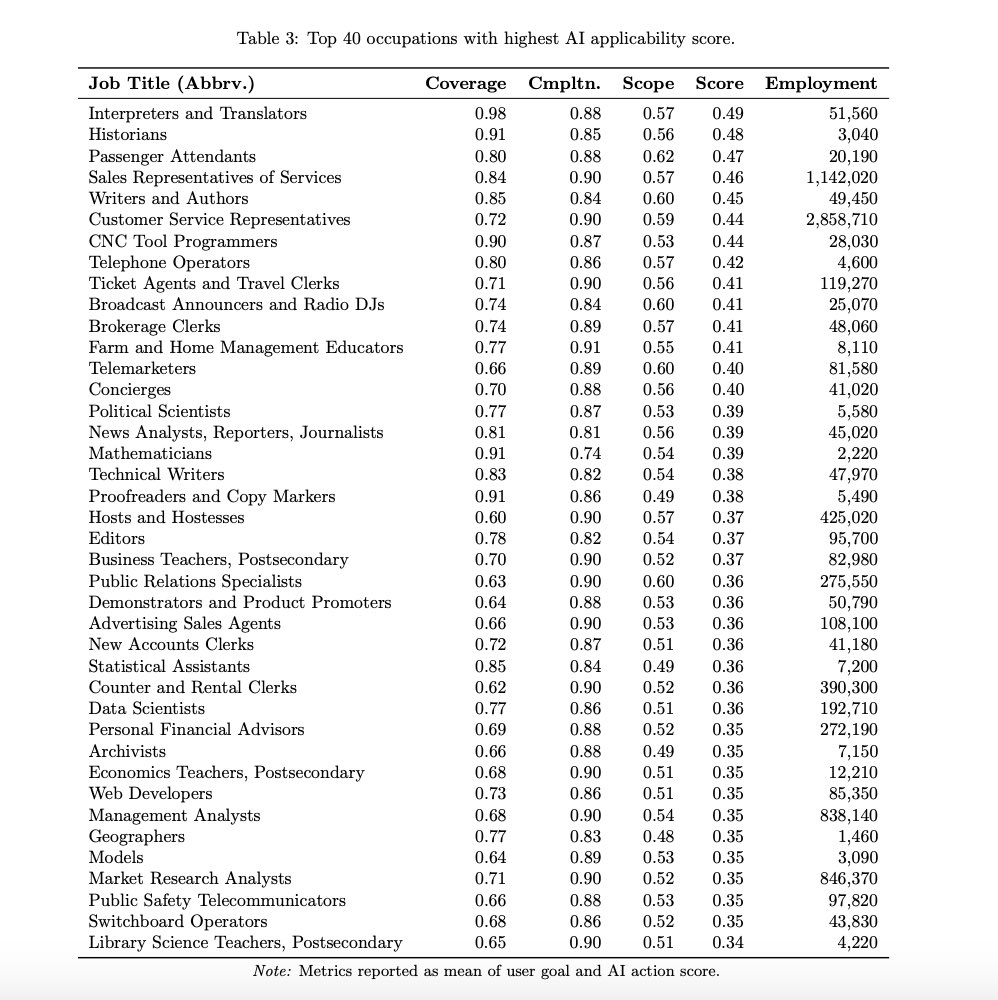
This transition is unlike any past disruption, substituting human cognition at record speed. Preparing for major job and equity shifts cannot wait.
🔗 https://t.co/SPZVc8Atej
Anthropic engineer:
"You're not supposed to prompt Claude. You're supposed to build a system that prompts itself."
In 45 minutes she breaks down how Anthropic builds agents that remember, learn from their mistakes, and get smarter with every run.
Worth more than any paid course you'll find on building agents.
Watch the session, then read the guide on building loops below.
The future of AI isn't just about capability, it's about accountability. Trustworthy AI requires transparent governance architectures with input validation, output filtering, and human oversight. Building systems humans can verify is building systems we can deploy responsibly. #AI #Ethics
Language models are transforming clinical work: documentation, diagnostics, research support. But we need rigorous evaluation frameworks to validate safety and efficacy in real patient interactions. Innovation without validation is just hope. #MedAI#HealthInnovation
The gap between AI capabilities and AI wisdom continues to widen. Trustworthiness isn't about speed or scale... it's about building systems that understand context, including the human element. #TrustworthyAI
@ayesha_fatiima Because building software isn't about writing code, it's about making decisions under uncertainty, owning failure, and knowing what corners NOT to cut.
@shub0414 The irony is that people are abandoning books right when we actually need more critical readers. AI will tell you what to think faster than ever before. Books teach you how to think. Completely different skill. One never becomes useless.
Most AI discussions ignore the role of user emotional state in system reliability. Emotional context changes decision quality. User frustration, Cognitive load, or confusion actively degrades how people interact with AI systems, and this cascades into worse outcomes.
Gemma 4 12B.
The encoder-free multimodal design is what caught my attention. Simpler architectures can make a big difference in real-world deployment.
Interested to see how it performs in practice. https://t.co/KPdPhV2m7z
Yann LeCun says we're fooled by LLMs because they manipulate language well, and we associate that with intelligence
But language fluency doesn't mean underlying intelligence
Every generation since the 1950s claimed its technique was the ticket to human-level AI
All were wrong.
"this generation with LLMs is also wrong"
@fidexcode Simple! do git status twice just to see the red text turning green after git add 😂
1. git status,
2. git add ,
3. git commit ,
4. git status,
5. git push 😂
@Ronald_vanLoon Completely agree, trust in AI starts with system design, not slogans. Resilience, transparency, and compliance frameworks are the backbone of trustworthy AI. Without them, we’re just building uncertainty.
$MSFT's Satya is saying that compute is not the bottleneck, but energy and data center space is. In fact the problem he has is that he has a surplus of GPUs right now sitting which he can't use (glut?).
He is also saying he doesn't want to over buy one generation of $NVDA GPUs. (as each year a new much more capable GPU is coming out). Hint: usefulness of life of GPUs.
I have been saying this for some time now.