Φόρος τιμής στον
διακεκριμένο Σύρο
αρχαιολόγο Χαλέντ Αλ Άσαντ
που αποκεφαλίστηκε δημόσια
απ το Ισλαμικό Κράτος,
ως «αποστάτης» του Ισλάμ,
όταν αρνήθηκε να υποδείξει, όπως του ζητήθηκε,
τους αρχαιολογικούς θησαυρούς που
ο ίδιος είχε κρύψει για να τους γλυτώσει.
Σαν σήμερα, το 2015
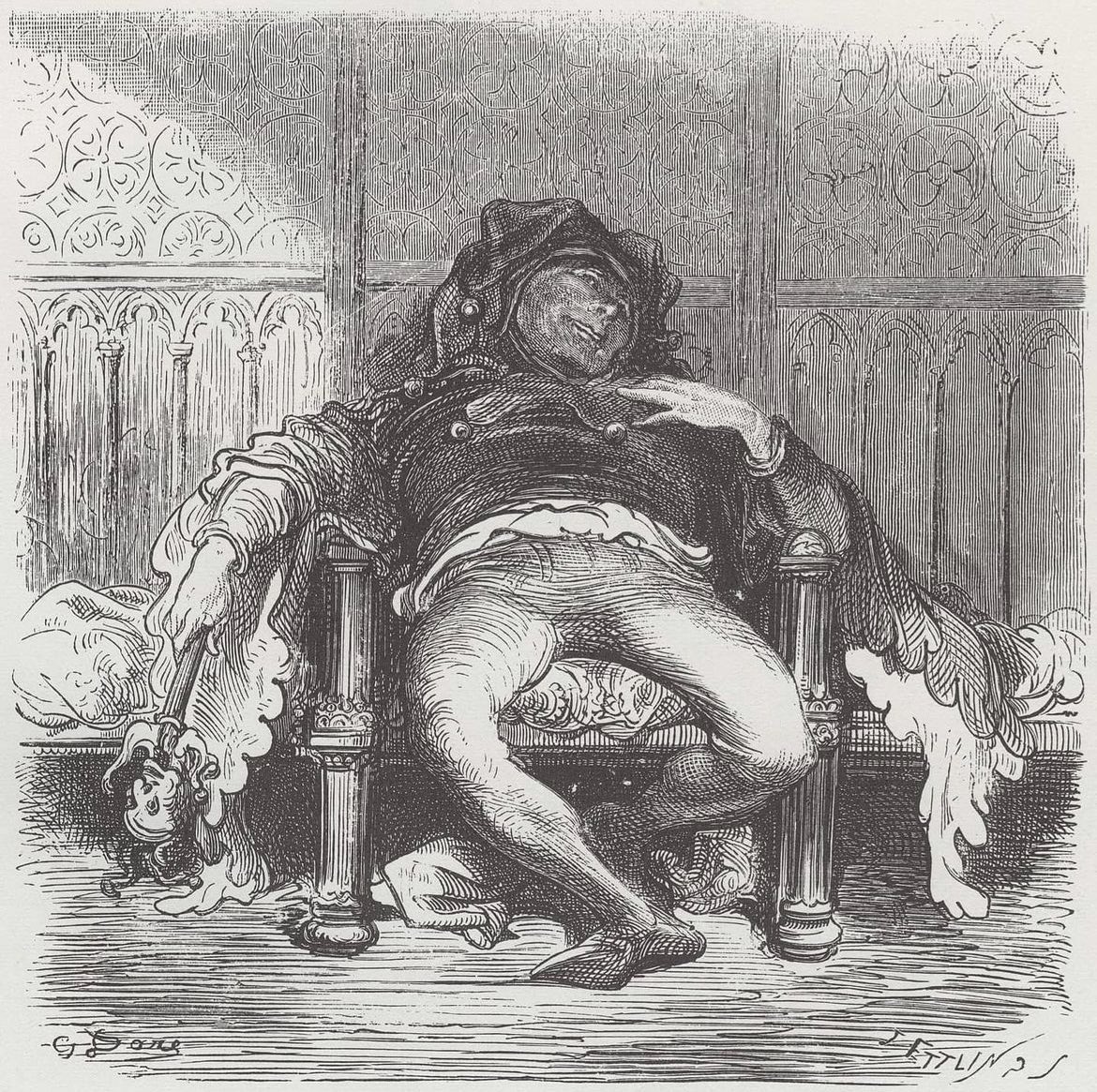
Triboulet was a jester for Louis XII, the King of France from 1498 to 1515. He is perhaps most famous for slapping the king on the butt. This act greatly angered the king, and he threatened to have Triboulet executed. After taking a moment to calm down, the king decided to spare Triboulet's life if he could think of an apology that was more offensive than what he had just done to the king.
Triboulet went on to say, "I'm so sorry, your majesty, that I didn't recognize you! I mistook you for the Queen!" While Triboulet's response was clever and indeed more offensive, it broke an order that prohibited anyone from making fun of the queen. The king decided to proceed with the execution but allowed Triboulet to choose how he would die. With his life on the line, Triboulet replied, "Good sire, for Saint Nitouche's and Saint Pansard's sake, patrons of insanity, I choose to die from old age."
The speechless king could do nothing but laugh. He canceled the execution and decided to banish Triboulet.
J.M. Barrie, the creator of Peter Pan, displayed his generosity by donating the rights to the play to Great Ormond Street Hospital for Children in London during his lifetime in 1929. This remarkable gesture ensured that the hospital would receive a perpetual royalty from any production of Peter Pan, providing a consistent source of funding.
As a result, the hospital has benefited from royalties generated by various adaptations, such as stage productions, films, and merchandise. These funds have been utilized for research, infrastructure improvements, and the overall care of the children under their treatment.
Over time, the arrangement's specifics have evolved due to changes in copyright law, but the hospital continues to benefit from the ongoing legacy of Peter Pan.
The Bohr brothers: Niels and Harald Bohr ⚛️
Harald Bohr was a talented student who excelled in mathematics and sports. He studied mathematics at the University of Copenhagen and received his doctorate in 1910. He became a professor of mathematics at the same university in 1915.
He made important contributions to the field of almost periodic functions, which are functions that have a regular but not periodic behavior. He also worked on number theory, complex analysis, and differential equations. He collaborated with other eminent mathematicians such as Edmund Landau, George Pólya, and John von Neumann.
Harald Bohr was also a skilled footballer who played as a defender for the Copenhagen-based club Akademisk Boldklub (AB). He played for the Danish national team at the 1908 Summer Olympics in London, where he helped Denmark win the silver medal. He scored two goals in the tournament, one against France and one against Great Britain. He played 18 matches for Denmark between 1908 and 1915, scoring five goals in total. He retired from football in 1917 due to a knee injury.
Harald was close to his brother Niels and shared his interest in physics and philosophy. They often discussed scientific and philosophical topics and exchanged letters when they were apart. Harald Bohr died in 1951 at the age of 63 from a heart attack. He was buried at Assistens Cemetery in Copenhagen, next to his brother Niels.
[Niels Bohr Archive Image]
Σαν σήμερα πριν από έναν χρόνο
έφυγε από τη ζωή ο κορυφαίος δάσκαλος και εκλαϊκευτής της Αστρονομίας, Διονύσης Σιμόπουλος...
Θα τον θυμόμαστε πάντα με αγάπη και ευγνωμοσύνη για όλα όσα μας προσέφερε!
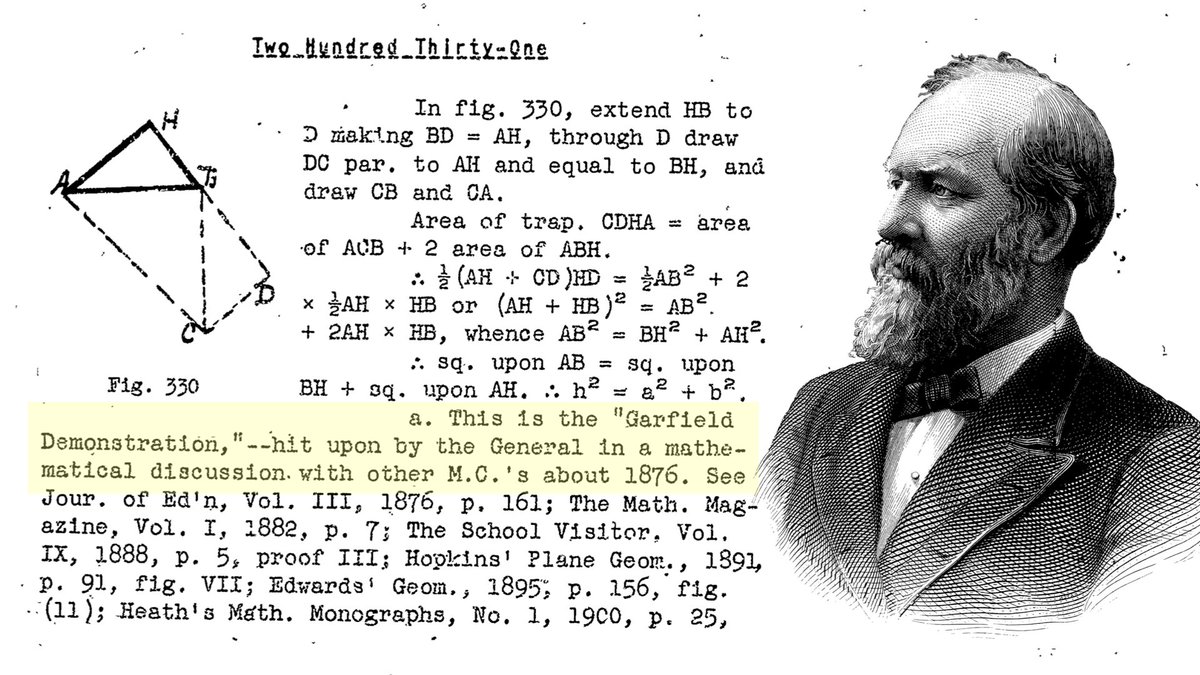
The Pythagorean theorem is the most-proved theorem in history.
The book 'The Pythagorean Proposition,' published by E. S. Loomis in 1928, includes 370 different proofs, one of which by James Garfield - former president of the United States.
85-year-old Reuben Palmer, a man who has consumed 324,000 pints of beer in his life (averaging 9 every day), poses in front of the Black Horse Pub in Brierly Hill, Birmingham, where he has been coming daily since 1904.












![PhysInHistory's tweet photo. The Bohr brothers: Niels and Harald Bohr ⚛️
Harald Bohr was a talented student who excelled in mathematics and sports. He studied mathematics at the University of Copenhagen and received his doctorate in 1910. He became a professor of mathematics at the same university in 1915.
He made important contributions to the field of almost periodic functions, which are functions that have a regular but not periodic behavior. He also worked on number theory, complex analysis, and differential equations. He collaborated with other eminent mathematicians such as Edmund Landau, George Pólya, and John von Neumann.
Harald Bohr was also a skilled footballer who played as a defender for the Copenhagen-based club Akademisk Boldklub (AB). He played for the Danish national team at the 1908 Summer Olympics in London, where he helped Denmark win the silver medal. He scored two goals in the tournament, one against France and one against Great Britain. He played 18 matches for Denmark between 1908 and 1915, scoring five goals in total. He retired from football in 1917 due to a knee injury.
Harald was close to his brother Niels and shared his interest in physics and philosophy. They often discussed scientific and philosophical topics and exchanged letters when they were apart. Harald Bohr died in 1951 at the age of 63 from a heart attack. He was buried at Assistens Cemetery in Copenhagen, next to his brother Niels.
[Niels Bohr Archive Image]](https://pbs.twimg.com/media/F27y1zrXUAIawq7.jpg)