A new blog post! Are you tired of always seeing the same figures? Here are some examples and thoughts of @Maria_Scheel_ on visual appeals and accessibility and what it means to your science! #SciComm#SciVis#joydivisionplot https://t.co/Y4Y79IhDnh
Deep TDA is a new algorithm that uses self-supervised learning to overcome the limitations of traditional dimensionality reduction algorithms.
t-SNE and UMAP have long been the favorites. Deep TDA has many advantages over them.
Here is a use case about Intel and semiconductors:
Manufacturing semiconductors is a complex process that generates a lot of data. One of the biggest challenges is finding out the root cause of any failure.
This data is imbalanced and sparse, and classical AI/ML approaches are ineffective.
That's where Deep TDA comes in. Here is an excellent article showing how Intel is using Deep TDA to solve this problem:
https://t.co/cKkooHaquy
The key advantages of Deep TDA:
1. More robust to noise and outliers in the data
2. It can scale to complex and high-dimensional datasets
3. It doesn't require as much tuning or knowledge about the data
4. It can capture and represent the bigger picture of the dataset
Thanks to @datarefiner for partnering with me on this post! They published an article about Deep TDA: "Why you should use Topological Data Analysis over t-SNE or UMAP?"
https://t.co/Lx7hDPndEt
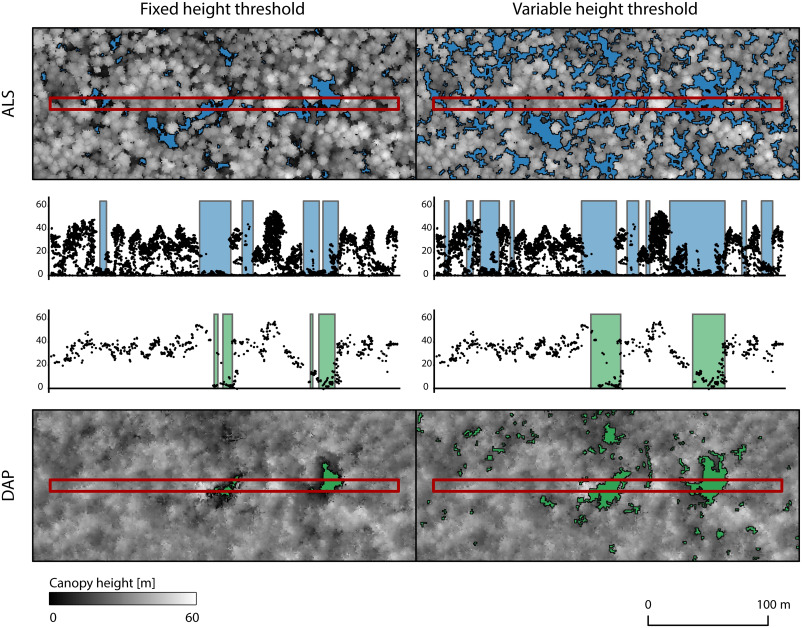
#Lidar outperforms digital aerial photogrammetry (#DAP) for mapping forest canopy gaps. 🌲📏
@Joanne_C_White et al. Comparison of airborne laser scanning and digital stereo imagery for characterizing forest canopy gaps in coastal temperate rainforests.
🔗https://t.co/01adCOSwzd
Automated machine learning model for prediction of groundwater level published in Engineering Applications of Artificial Intelligence
https://t.co/93HAkMsskW
Research work by Abhilash Singh,Sharad Patel, Vipul Bhadani,Dr Kumar Gaurav & Dr Vaibhav Kumar
@EduMinOfIndia@IndiaDST
Publication alert!
Our paper on 𝐀𝐮𝐭𝐨𝐌𝐋-𝐆𝐖𝐋, an automated ML model for predicting groundwater levels, has been published in 𝐄𝐧𝐠𝐢𝐧𝐞𝐞𝐫𝐢𝐧𝐠 𝐀𝐩𝐩𝐥𝐢𝐜𝐚𝐭𝐢𝐨𝐧𝐬 𝐨𝐟 𝐀𝐫𝐭𝐢𝐟𝐢𝐜𝐢𝐚𝐥 𝐈𝐧𝐭𝐞𝐥𝐥𝐢𝐠𝐞𝐧𝐜𝐞.
https://t.co/lrZ8ZDEjBq
#AutoML#Groundwater
Strategies to Measure Soil Moisture Using Traditional Methods, Automated Sensors, Remote Sensing, and Machine Learning Techniques: Review, Bibliometric Analysis, Applications, Research Findings, and Future Directions
https://t.co/whTpxkDFGb
#soilmoisture#machinelearning
Incorporation of machine learning and deep neural network approaches into a remote sensing-integrated crop model for the simulation of rice growth
https://t.co/3ZiQ0Vlyx9
#MachineLearning#NeuralNetworks#crop
🎉Happy 1st #Anniversary to us!🥳 Exactly one year ago, we launched this Twitter group with the aim of creating a common platform for researchers in ML and AI within Earth and Environmental Sciences. Today, we've connected with 1.6k like-minded individuals. #ML#AI#EarthScience
🌍Join us on our YouTube channel as we explore "Empowering Earth: How Machine Learning Transforms Nature-Based Solutions."
From tracking deforestation to predicting climate change impacts, witness the powerful synergy of machine learning & conservation.
https://t.co/tTZCbLEcB7
New: Blue carbon ecosystems, like mangroves, seagrasses, & saltmarshes, are crucial for fighting climate change & preserving coastal habitats!
🌏 However, quantifying blue carbon stocks via remote sensing remains challenging. Exciting advances in ML.
https://t.co/CC3azTfiv1
Discover the future of streamflow forecasts!
Join us in this exciting video as we explore an attention-based domain adaptation forecaster, revolutionizing water resource management in data-sparse regions.
Don't miss out on this. @OrucheRoland
https://t.co/liVTL9ASev
Published today in Nature Review Earth and Environment!
🌍 Earth system modelling is crucial for understanding our planet's processes.
💡 Combining deep learning with ESM can revolutionize our understanding.
Download 👇
https://t.co/JRZqIsXxGQ
#MachineLearning#earthsciences
📢 Calling all researchers!
🔍 Join us for an exciting YouTube video where we show you the ropes on "How to Find Relevant Researchers in Your Field with Scopus Researcher Discovery." Discover the power of Scopus and unlock new collaborations and insights.
https://t.co/k5p8875Ip5
🌍 Join us on a fascinating journey as we explore the impact of #MachineLearning in #Geology! Discover how AI is revolutionizing geological mapping, mineral exploration, seismic data analysis, and more. Don't miss this 📸
#goldschmidt2023
https://t.co/ZdTk5lO6DC
📢 Curious about the latest advancements in hazard modeling and mapping using machine learning?
Check out the video abstract of Yousefi et al.'s study on "A machine learning framework for multi-hazards modeling and mapping in a mountainous area."
https://t.co/Jq1d9li3CD