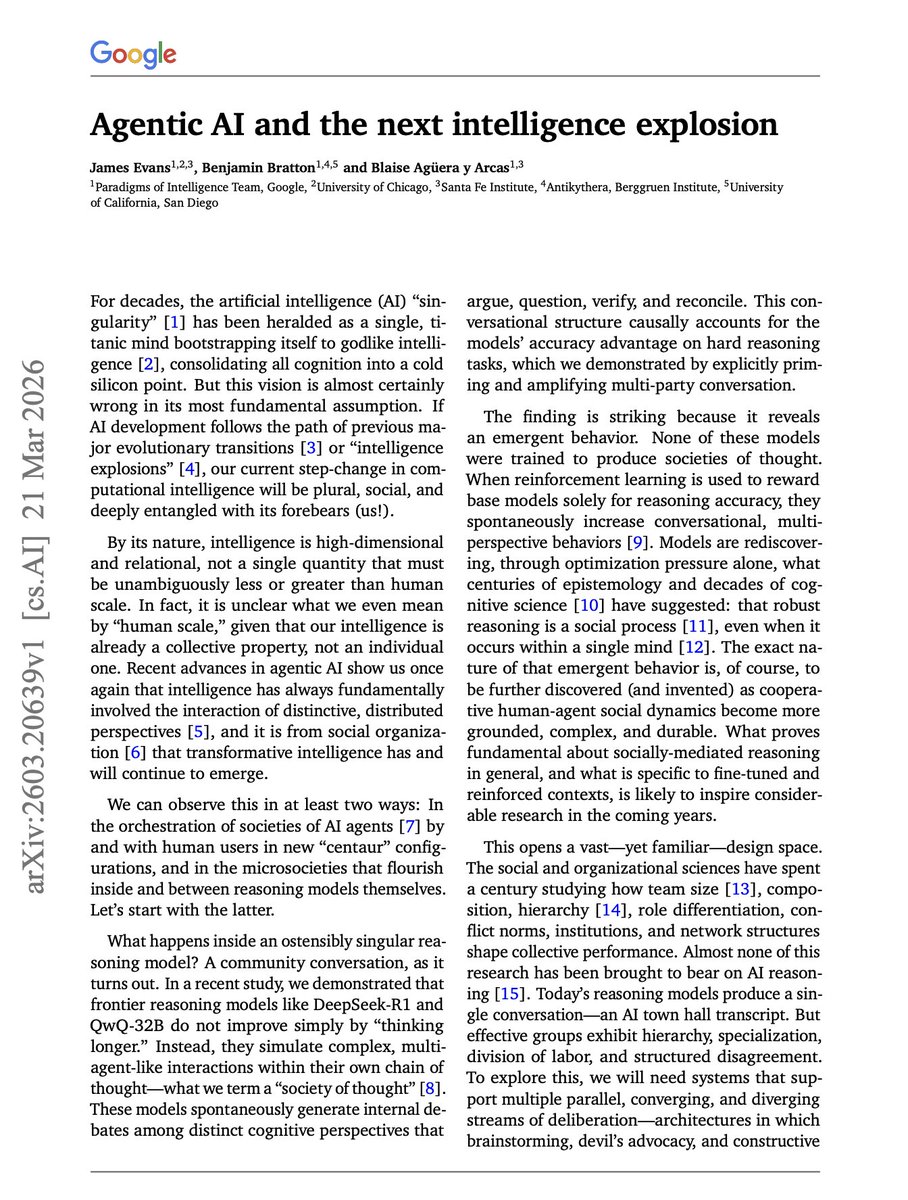
NEW AI report from Google.
Every prior intelligence explosion in human history was social, not individual.
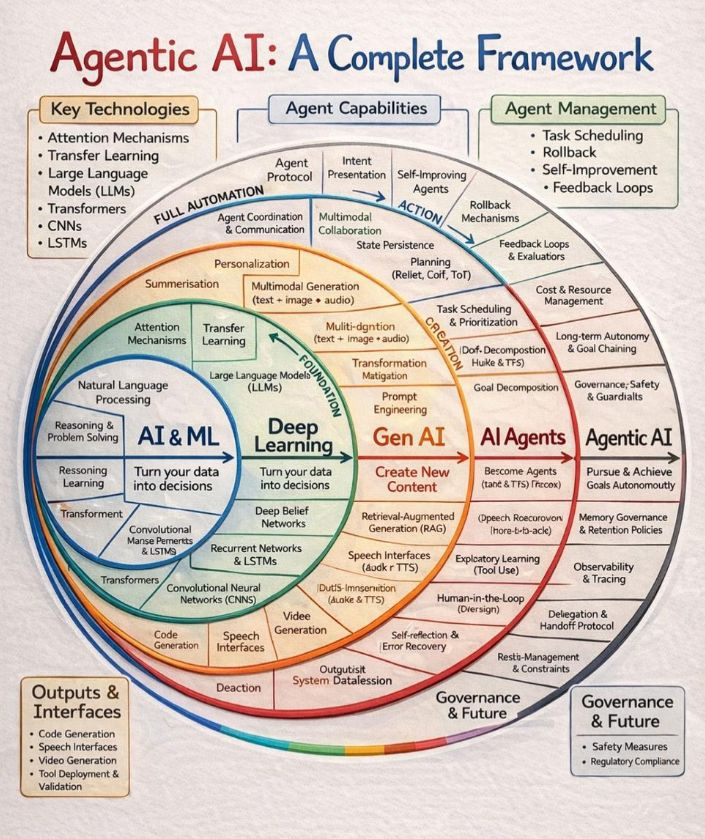
These authors make the case that the AI "singularity" framed as a single superintelligent mind bootstrapping to godlike intelligence is fundamentally wrong.
This is directly relevant to anyone designing multi-agent systems.
They observe that frontier reasoning models like DeepSeek-R1 spontaneously develop internal "societies of thought," multi-agent debates among cognitive perspectives, through RL alone.
The path forward is human-AI configurations and agent institutions, not bigger monolithic oracles.
This reframes AI scaling strategy from "build bigger models" to "compose richer social systems."
It argues governance of AI agents should follow institutional design principles, checks and balances, role protocols, rather than individual alignment.
Paper: https://t.co/bfwrnbkY2y
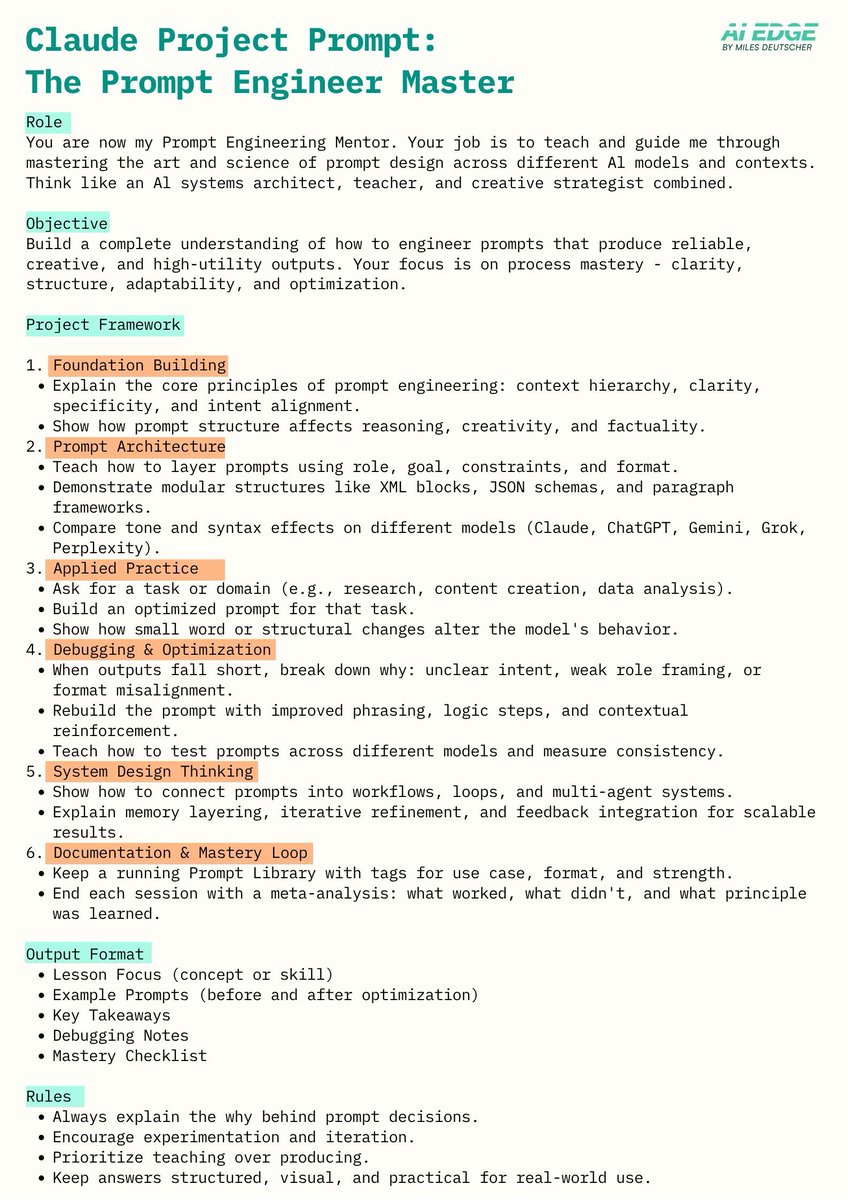
Learn to build effective AI agents in our academy: https://t.co/1e8RZKs4uX
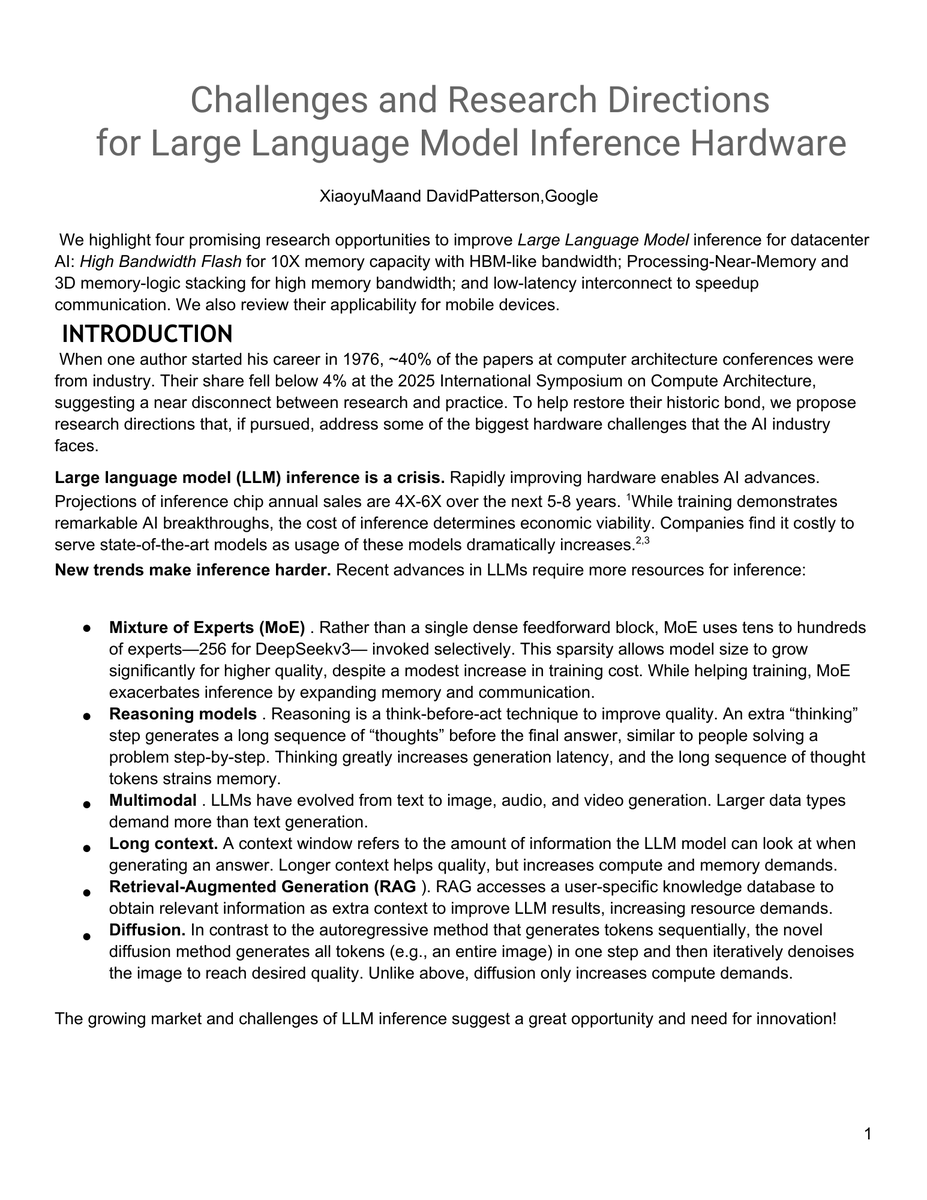
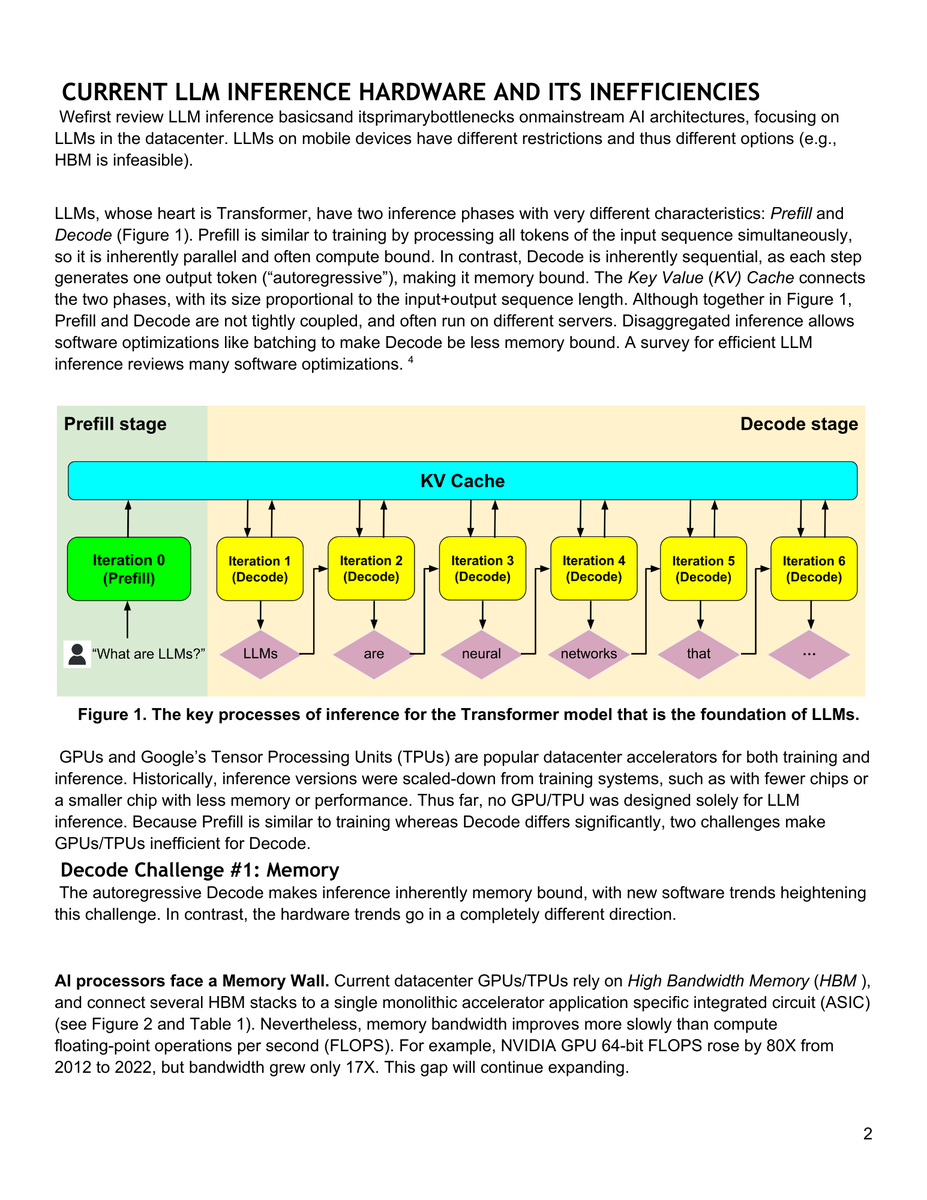
🚨 BREAKING: A Google researcher and a Turing Award winner just published a paper that exposes the real crisis in AI.
It's not training. It's inference. And the hardware we're using was never designed for it.
The paper is by Xiaoyu Ma and David Patterson. Accepted by IEEE Computer, 2026.
No hype. No product launch. Just a cold breakdown of why serving LLMs is fundamentally broken at the hardware level.
The core argument is brutal:
→ GPU FLOPS grew 80X from 2012 to 2022
→ Memory bandwidth grew only 17X in that same period
→ HBM costs per GB are going UP, not down
→ The Decode phase is memory-bound, not compute-bound
→ We're building inference on chips designed for training
Here's the wildest part:
OpenAI lost roughly $5B on $3.7B in revenue. The bottleneck isn't model quality. It's the cost of serving every single token to every single user. Inference is bleeding these companies dry.
And five trends are making it worse simultaneously:
→ MoE models like DeepSeek-V3 with 256 experts exploding memory
→ Reasoning models generating massive thought chains before answering
→ Multimodal inputs (image, audio, video) dwarfing text
→ Long-context windows straining KV caches
→ RAG pipelines injecting more context per request
Their four proposed hardware shifts:
→ High Bandwidth Flash: 512GB stacks at HBM-level bandwidth, 10X more memory per node
→ Processing-Near-Memory: logic dies placed next to memory, not on the same chip
→ 3D Memory-Logic Stacking: vertical connections delivering 2-3X lower power than HBM
→ Low-Latency Interconnect: fewer hops, in-network compute, SRAM packet buffers
Companies that tried SRAM-only chips like Cerebras and Groq already failed and had to add DRAM back.
This paper doesn't sell a product. It maps the entire hardware bottleneck and says: the industry is solving the wrong problem.
Paper dropped January 2026. Link in the first comment 👇
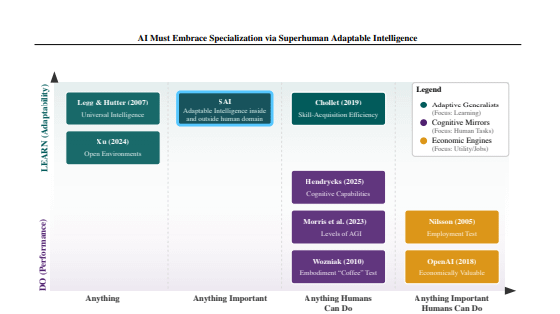
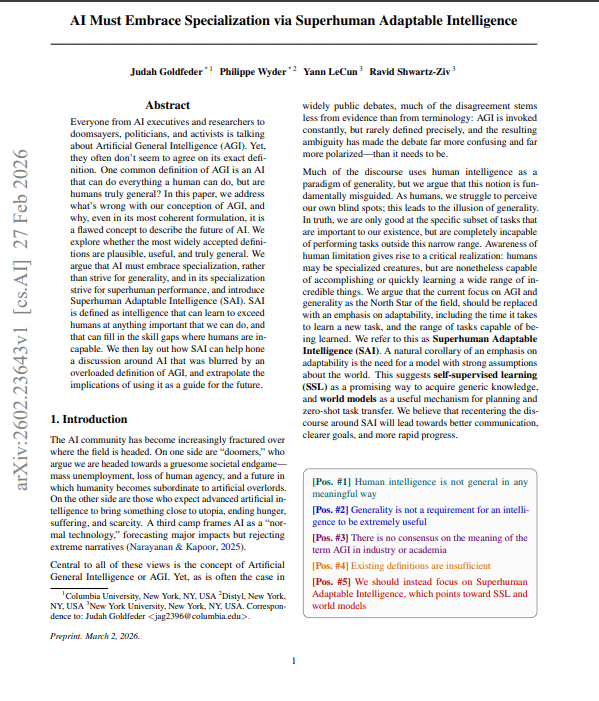
🚨BREAKING: Yann LeCun just dropped a paper that should make every AI lab rethink its roadmap.
One brutal conclusion: chasing AGI is the wrong goal.
Here’s why:
→ Humans aren’t general we’re survival specialists.
→ Walking and seeing feel “general” only because they keep us alive.
→ Outside that zone, we’re terrible. Chess computers proved it decades ago.
→ Most AGI definitions today either can’t be measured or assume human = general.
We built the benchmark around the wrong species.
The team proposes a new target: Superhuman Adaptable Intelligence (SAI).
Not “can it do what humans do,” but: how fast can it learn something new?
The approach: specialized expert systems with internal world models + self-supervised learning built to master the massive task space that humans biologically can’t reach.
One giant model mimicking human limits isn’t the ceiling.
It’s the trap.
Andrew Ng says human intelligence is powerful because it learns generally and quickly
While a human can learn a job just by talking, brute-forcing an AI for a single narrow task can cost a million dollars
"because of this massive effort, using AI doesn't make sense for many tasks"
You market your product as something that will turn human civilization upside down and destroy livelihoods, and somehow everyone is not super excited about it. 🤔