Very excited to share our latest work:
"Running Fast and Slow: The Dorsal Striatum Sets the Cost of Movement During Foraging"
4.5 years of hard work (behavior, theory, lesions) by Thomas Morvan, in collaboration with @EloyChristophe.
https://t.co/zMIuNRQ8q1
A 🧵 1/n
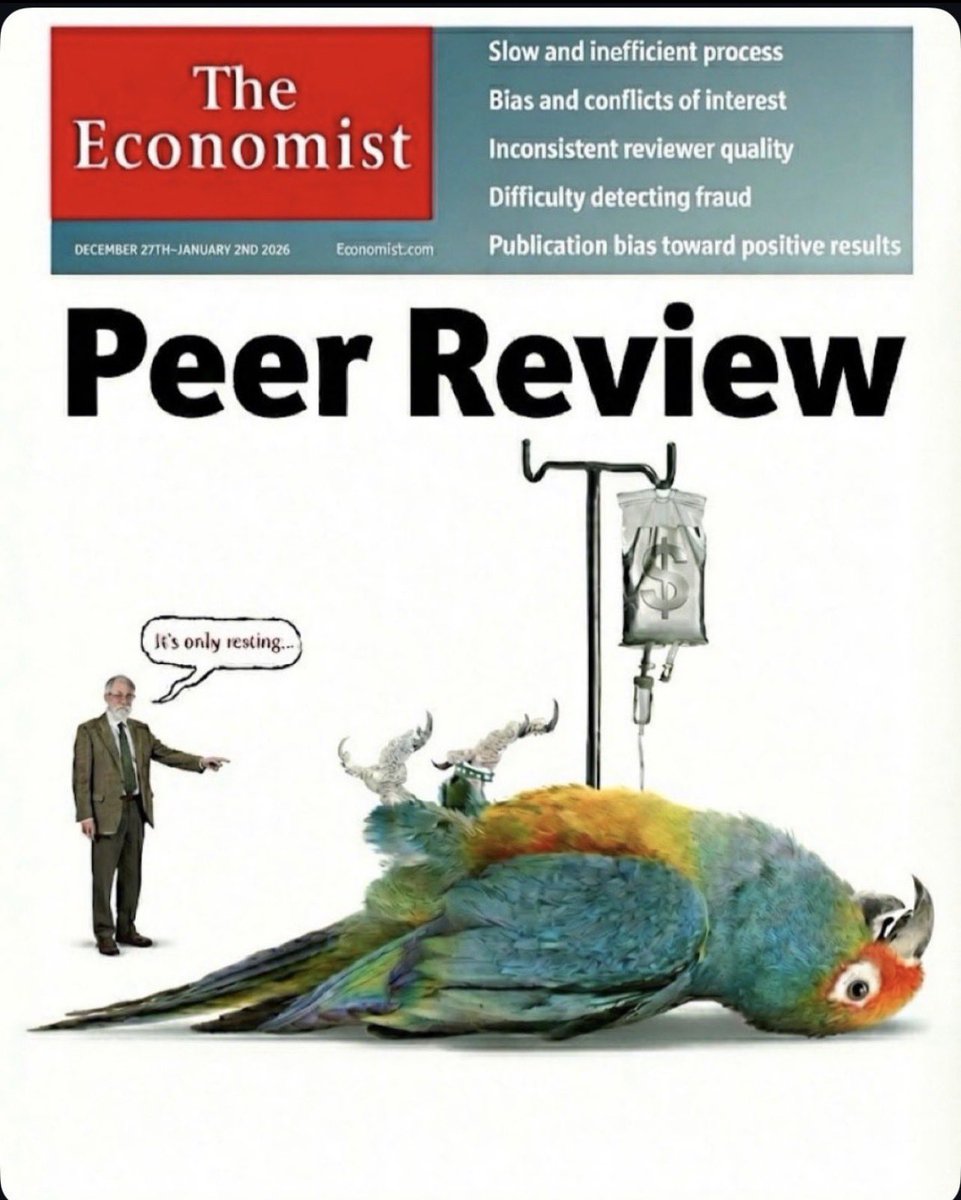
Peer review was supposed to be science’s quality filter, but somewhere along the way it started acting more like a bouncer who only lets in the regulars. It’s slow, it tends to favor established labs and familiar names, and it gets uncomfortable around anything too unconventional. Papers loaded with mountains of data tend to cruise through, while bold ideas that actually challenge the consensus get stuck in limbo or turned away at the door.
The irony is that where a paper gets published almost never determines its real worth. What actually matters is what the scientific community does with it afterward, whether people cite it, argue with it, build on it, or use it to blow up a long-held assumption. That’s where the value lives, not in the journal’s logo.
A major survey a few years back found that roughly 70% of researchers think the current system is fundamentally broken, and it’s not hard to see why. Publicly funded research hides behind paywalls, editors chase whatever topic is hot that month, and the whole incentive structure pushes toward safe bets over genuinely risky and potentially important work.
Science has always been complicated and deeply human and full of ego and inertia, but the conversation is shifting.
Very glad to see our Review article out! It was a pleasure to collaborate with David Thura, Adrian Haith, and Julie Duque.
Link: https://t.co/35FWg9hjak
@MillerLabMIT@jianing1962@andrewtanyongyi If you make a substantial lesion of a brain region and that you see no effect, it is a good indication that this brain region is not as important for this given behavior/context. Saying: "oh you left a tiny piece of tissue that now does all the job sounds funny to me"
David @dav_robbe is done looking for clocks in brains.
Henri Bergson had it right, he says. We measure time by our actions and the flow of the world around us, and David has a treadmill and rodents to prove it! (Well, not prove prove, but, you know...)
https://t.co/UThLZOH5gt
If you are interested in motor control and learning and enjoy learning about science in beautiful locations, then see you in #NCMPan25
Abstract submission deadline still open!
More deets on the link
@_TheTransmitter@pgmid Thanks, @_TheTransmitter, for the shout-out and the perfect summary of my thoughts on the difficult question of the perception of time. Paul did an amazing job at helping me convey the ideas....
In this episode of “Brain Inspired,” Paul Middlebrooks @pgmid and David Robbe @dav_robbe discuss time, memory and the role of the basal ganglia.
https://t.co/3U30BIjD3v
Cutting it fine, but here’s my review of the year in neuroscience for 2024
The 8th of these, would you believe? We’ve got dark neurons, tiny monkeys, the most complete brain wiring diagram ever constructed, and much more…
Published on The Spike
Enjoy! https://t.co/EDZQnVVH5U
"I think there is only one way to science:
to meet a problem,
to see its beauty and fall in love with it,
to get married to it and to live with it happily,
till death do ye part."
--Karl Popper
Realism and the Aim of Science, 1983
Great talk related to time perception by @dav_robbe!
We should think about subjective time (lived time) in a dynamical system for modeling animal behavior
https://t.co/yqG9VQQ0px
@alecia_carter and I are launching a new seminar series. The first (introductory) session is tomorrow !!
Please join us if you wanna talk about animal agency, and participate in this cross disciplinary discussion !!
Could understanding motivation in the brain provide new insights into Parkinson’s? Dr David Robbe (@dav_robbe, @inmed_u1249) is uncovering the role of the dorsal striatum in effort, reward, and movement.
Read the Q&A: https://t.co/ww1J7lLbpG
#neuroscience
Foraging is my big passion and step by step I hope to develop a general theory of foraging , predicting decision strategies from the individual to the social. This time we are extending our foraging models to the social domain. Along with a very talented postdoc in my @IntBioPhysics group Lisa Blum Moyse , we developed an analytically tractable model to predict social foraging strategies in an egalitarian group . We assumed that agents would couple through different social information sharing mechanisms as shown in this figure and derived the strategies analytically , we got some exciting results:
@BirnbaumJackie1@bsauerbrei1@MikeEconomo@MunibHasnain 😎. This is because time is a force (I am quoting Bergson). Me too I need to read your paper. Congrats because it looks great and it touches on an important issue in neuroscience!
@BirnbaumJackie1@bsauerbrei1@MikeEconomo@MunibHasnain Ah, great, Jackie! I need to read the paper! My question comes from a conceptual piece where I discuss the experimental/conceptual challenges that arise when limiting cognition to the brain. I use time perception research to illustrate my point.
https://t.co/RzsBVaDzlV
A really excellent paper from @MikeEconomo, @MunibHasnain, @BirnbaumJackie1 et al. It carefully addresses an issue of broad significance in systems neuroscience, and provides solid data, analysis, and answers.
https://t.co/SsLILmwuYt
The flyer 👇below filled me with joy for so many reasons.
But in short, I’ll give a talk in Tokyo on December 6th, showing how Bergson’s concept of durée helps explain why rats struggle with time estimation tasks and tend to develop motor rituals to solve them.