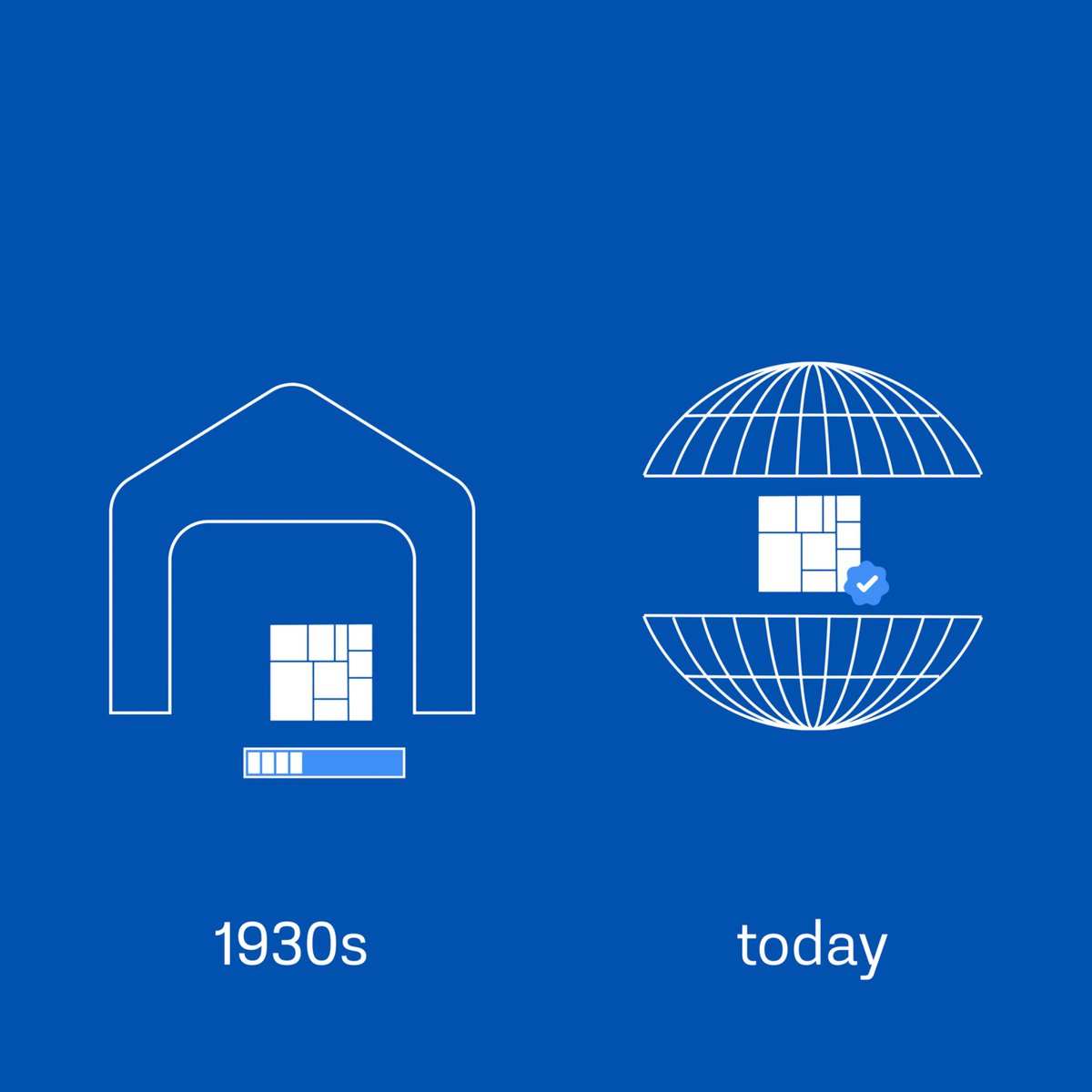
The core idea behind Reserve is almost 100 years old.
It failed back then for one reason: you needed a physical warehouse.
A digital warehouse is built different.
🗣️ Lawrence H. White at Monetarium 2:
“Going back to the late 19th century, people were worried about instability in the purchasing power of gold under a gold standard.
Even though the long term trend was good, there were short periods of volatility.
An economist named Alfred Marshall said, if the relative price of gold is changing as a result of supply discoveries or demand shocks – and in his day the biggest demand shock was Germany decides to leave the silver standard and join the gold standard – we can diminish the impact of that on the purchasing power of gold by redefining our monetary unit.
The pound would not be defined just in terms of gold, but so much gold plus so much silver. (…)
So you've got two metals defining your unit of account.
That’s a kind of gateway into having a whole bundle of commodities define the unit of account.”
“A commodity reserve currency is an idea that became popular in the Great Depression, but was kind of rediscovered when the problem was not collapsing demand, but rather the need for a way to get the money supply to grow.
That's what the original idea of the commodity reserve currency was.
But the reverse problem of excessive inflation – and so linking the dollar or whatever the unit of account is called to a basket of commodities – would be a way of preventing excessive inflation.
Our friend Hayek from 30 years before denationalization of money saw some merits in this kind of proposal.
It had the benefits of a gold standard in taking the regulation of the quantity of money out of the hands of a committee of central bankers.
It is, in a sense, putting it into the market because anybody could bring commodities to the warehouse and get money. Anybody could bring money to the warehouse and get commodities.
But the proposals in the 30s and 40s were for physical warehouses filled with physical commodities.”
“We don’t need to do that today. We could accomplish pretty much the same thing with a portfolio of tokenized commodities.”
Most currency collapses in history follow a predictable four-step cycle:
Debt • Monetization • Inflation • Loss of faith.
Only the timeline changes.
And for the world’s reserve currency, the runway is always longer…
🗣️ Mark Dinner at Monetarium 2:
“Germany suffered hyperinflation during the Weimar Republic of the 1920s.
France also went through hyperinflation in the 1920s following World War I.
Japan suffered the same fate as they successfully initially operated quantitative easing in the 30s, then as they became more aggressive doing that with their war efforts in the late 30s and abused the printing press, they had a hyperinflation as well.
If managed poorly, the US faces a more accelerated and persistent decline in the dollar that could produce an inflationary spiral in the last decade.
By the way, that occurred with the UK in the 1970s, but not to the degree of the Weimar Republic; it’s a pretty classic way for how currency regime shifts occur.”
“Typically, inflation spirals occur when the government has too much debt in a currency it can’t print, big budget deficits, which it funds by abusing the printing press and monetizing government deficits and debts. Both internal and external geopolitical conflict and wars often undermine the incumbent superpower and its currency as a global reserve.
The US is at risk across these factors, save for the fact that the US government debts - this is important - are in a country that the Fed can print, and the currency is the world’s reserve currency.
This is what makes the current case both fascinating, and it's why the reserve currency shift of the US is intertwined with its position as a global superpower.
Another scenario is basically more of the same and perhaps a more glacial shift.
While the US has debt to GDP of 120 percent and the largest budget deficit outside of a recession since World War II, the dynamics that produce a regime shift are playing out, and it’s a fair point that these dynamics are quite slow.
Sophisticated investors have been discussing a regime shift in the currency for decades. […]”
“The way the current administration is forcing the issues across both internal and external imbalances and conflicts.
For example, through tariffs, which amount to a trade war;
or clauses like 899 in the current bill that threaten taxes on the income on foreign asset holders, which threatens a de facto debt default on US assets;
or a stated preference for a weaker dollar and an easier Fed;
or expanding the budget deficit while looking to cut longer-term spending, and slash regulations to produce a growth miracle.
All of these policies are being shifted so fast it feels like we’re operating at policy warp speed. […]
The tectonic plates underlying the system are now moving faster than we may even fully appreciate.
The path of US debt and faith in the dollar system are set to be tested in a big way in the coming 12, 24, 36 months.” [from June 2025]
“I believe that the reason people typically miss the big moments of evolution coming at them in life is that we each experience only tiny pieces of what’s happening.
We are like ants preoccupied with our jobs of carrying crumbs in our short lifetimes instead of having a broader perspective of the big-picture patterns and cycles, the important interrelated things driving them, and where we are within the cycles and what’s likely to transpire.”
• Ray Dalio
Trading Apple stock against Bitcoin on the same platform, under the same license.
Chairman Paul Atkins wants to make it possible.
🗣️ Michael Selig, Chief Counsel of the SEC Crypto Task Force, at Monetarium 2:
“Many folks within the markets want to offer something of a super-app, where you can trade Apple stock against Bitcoin, or Tesla against Ether. Trade securities versus non-securities, whether they’re crypto assets or not.
And so we want to be able to provide that type of in-kind platform where people can trade and innovate with financial technologies.
People might also want to offer lending and other types of services all under one roof - under a single broker-dealer license, for example - and [avoid] the red tape of going out and getting different state licenses, a commodity broker license, et cetera.
We’re working expeditiously to try to provide clarity around what can be done through a broker-dealer or a national securities exchange.”
“We want to do things with public notice-and-comment.
We want each commissioner to have their vote on things and be able to be heard, have their concerns weighed by the others. And that dynamic's a good one to get to the right policy.
So rulemaking’s ultimately the goal. (…)
But in the interim, there’s a lot of damage that was done by the prior administration. So staking's a good example. Many staking-as-a-service providers were sued by the prior administration.
There are many that want to come to market with new products quickly.
There are many that aren’t sure if their existing model is now allowed under the securities laws.
And so the staff has taken it upon themselves to issue some of these staff statements that are not notice-and-comment, public process rulemakings.
But the staff has authority to issue its own views on certain matters.
Another area where the staff is open to considering a request is no-action letters. Folks can come in, meet with the staff, submit a request for no-action relief on a matter that maybe the securities laws or regulations today are incompatible with; or [where] it's not clear whether the enforcement division - that sued many crypto participants in the prior administration - would bring a lawsuit again.”
“We should have the minimum amount of disclosure as necessary.
You shouldn’t be imposing additional burdens where it’s not needed.
So we're certainly taking a hard look in line with the president's directive to make sure that all of our regulations are what's necessary, no more than what's necessary.
I think that's really the idea. (…)
The goal is definitely not to add new regulatory requirements.
And that’s why, in particular around crypto, we are very cognizant around making sure that there’s not duplicative regulation.
We want purpose-fit rules that allow people to operate their business, we get the information we need to regulate them, and we can have regulations that are going to protect investors.
That’s our mission, of course. But nothing more than that.”
The core idea behind Reserve is almost 100 years old.
It failed back then for one reason: you needed a physical warehouse.
A digital warehouse is built different.
🗣️ Lawrence H. White at Monetarium 2:
“Going back to the late 19th century, people were worried about instability in the purchasing power of gold under a gold standard.
Even though the long term trend was good, there were short periods of volatility.
An economist named Alfred Marshall said, if the relative price of gold is changing as a result of supply discoveries or demand shocks – and in his day the biggest demand shock was Germany decides to leave the silver standard and join the gold standard – we can diminish the impact of that on the purchasing power of gold by redefining our monetary unit.
The pound would not be defined just in terms of gold, but so much gold plus so much silver. (…)
So you've got two metals defining your unit of account.
That’s a kind of gateway into having a whole bundle of commodities define the unit of account.”
“A commodity reserve currency is an idea that became popular in the Great Depression, but was kind of rediscovered when the problem was not collapsing demand, but rather the need for a way to get the money supply to grow.
That's what the original idea of the commodity reserve currency was.
But the reverse problem of excessive inflation – and so linking the dollar or whatever the unit of account is called to a basket of commodities – would be a way of preventing excessive inflation.
Our friend Hayek from 30 years before denationalization of money saw some merits in this kind of proposal.
It had the benefits of a gold standard in taking the regulation of the quantity of money out of the hands of a committee of central bankers.
It is, in a sense, putting it into the market because anybody could bring commodities to the warehouse and get money. Anybody could bring money to the warehouse and get commodities.
But the proposals in the 30s and 40s were for physical warehouses filled with physical commodities.”
“We don’t need to do that today. We could accomplish pretty much the same thing with a portfolio of tokenized commodities.”
The core idea behind Reserve is almost 100 years old.
It failed back then for one reason: you needed a physical warehouse.
A digital warehouse is built different.
🗣️ Lawrence H. White at Monetarium 2:
“Going back to the late 19th century, people were worried about instability in the purchasing power of gold under a gold standard.
Even though the long term trend was good, there were short periods of volatility.
An economist named Alfred Marshall said, if the relative price of gold is changing as a result of supply discoveries or demand shocks – and in his day the biggest demand shock was Germany decides to leave the silver standard and join the gold standard – we can diminish the impact of that on the purchasing power of gold by redefining our monetary unit.
The pound would not be defined just in terms of gold, but so much gold plus so much silver. (…)
So you've got two metals defining your unit of account.
That’s a kind of gateway into having a whole bundle of commodities define the unit of account.”
“A commodity reserve currency is an idea that became popular in the Great Depression, but was kind of rediscovered when the problem was not collapsing demand, but rather the need for a way to get the money supply to grow.
That's what the original idea of the commodity reserve currency was.
But the reverse problem of excessive inflation – and so linking the dollar or whatever the unit of account is called to a basket of commodities – would be a way of preventing excessive inflation.
Our friend Hayek from 30 years before denationalization of money saw some merits in this kind of proposal.
It had the benefits of a gold standard in taking the regulation of the quantity of money out of the hands of a committee of central bankers.
It is, in a sense, putting it into the market because anybody could bring commodities to the warehouse and get money. Anybody could bring money to the warehouse and get commodities.
But the proposals in the 30s and 40s were for physical warehouses filled with physical commodities.”
“We don’t need to do that today. We could accomplish pretty much the same thing with a portfolio of tokenized commodities.”
The core idea behind Reserve is almost 100 years old.
It failed back then for one reason: you needed a physical warehouse.
A digital warehouse is built different.
🗣️ Lawrence H. White at Monetarium 2:
“Going back to the late 19th century, people were worried about instability in the purchasing power of gold under a gold standard.
Even though the long term trend was good, there were short periods of volatility.
An economist named Alfred Marshall said, if the relative price of gold is changing as a result of supply discoveries or demand shocks – and in his day the biggest demand shock was Germany decides to leave the silver standard and join the gold standard – we can diminish the impact of that on the purchasing power of gold by redefining our monetary unit.
The pound would not be defined just in terms of gold, but so much gold plus so much silver. (…)
So you've got two metals defining your unit of account.
That’s a kind of gateway into having a whole bundle of commodities define the unit of account.”
“A commodity reserve currency is an idea that became popular in the Great Depression, but was kind of rediscovered when the problem was not collapsing demand, but rather the need for a way to get the money supply to grow.
That's what the original idea of the commodity reserve currency was.
But the reverse problem of excessive inflation – and so linking the dollar or whatever the unit of account is called to a basket of commodities – would be a way of preventing excessive inflation.
Our friend Hayek from 30 years before denationalization of money saw some merits in this kind of proposal.
It had the benefits of a gold standard in taking the regulation of the quantity of money out of the hands of a committee of central bankers.
It is, in a sense, putting it into the market because anybody could bring commodities to the warehouse and get money. Anybody could bring money to the warehouse and get commodities.
But the proposals in the 30s and 40s were for physical warehouses filled with physical commodities.”
“We don’t need to do that today. We could accomplish pretty much the same thing with a portfolio of tokenized commodities.”
“Central banks and governments are not paying enough attention to how tokenization will change the plumbing of financial world, and will change it swiftly.”
• Larry Fink
The core idea behind Reserve is almost 100 years old.
It failed back then for one reason: you needed a physical warehouse.
A digital warehouse is built different.
🗣️ Lawrence H. White at Monetarium 2:
“Going back to the late 19th century, people were worried about instability in the purchasing power of gold under a gold standard.
Even though the long term trend was good, there were short periods of volatility.
An economist named Alfred Marshall said, if the relative price of gold is changing as a result of supply discoveries or demand shocks – and in his day the biggest demand shock was Germany decides to leave the silver standard and join the gold standard – we can diminish the impact of that on the purchasing power of gold by redefining our monetary unit.
The pound would not be defined just in terms of gold, but so much gold plus so much silver. (…)
So you've got two metals defining your unit of account.
That’s a kind of gateway into having a whole bundle of commodities define the unit of account.”
“A commodity reserve currency is an idea that became popular in the Great Depression, but was kind of rediscovered when the problem was not collapsing demand, but rather the need for a way to get the money supply to grow.
That's what the original idea of the commodity reserve currency was.
But the reverse problem of excessive inflation – and so linking the dollar or whatever the unit of account is called to a basket of commodities – would be a way of preventing excessive inflation.
Our friend Hayek from 30 years before denationalization of money saw some merits in this kind of proposal.
It had the benefits of a gold standard in taking the regulation of the quantity of money out of the hands of a committee of central bankers.
It is, in a sense, putting it into the market because anybody could bring commodities to the warehouse and get money. Anybody could bring money to the warehouse and get commodities.
But the proposals in the 30s and 40s were for physical warehouses filled with physical commodities.”
“We don’t need to do that today. We could accomplish pretty much the same thing with a portfolio of tokenized commodities.”
The core idea behind Reserve is almost 100 years old.
It failed back then for one reason: you needed a physical warehouse.
A digital warehouse is built different.
🗣️ Lawrence H. White at Monetarium 2:
“Going back to the late 19th century, people were worried about instability in the purchasing power of gold under a gold standard.
Even though the long term trend was good, there were short periods of volatility.
An economist named Alfred Marshall said, if the relative price of gold is changing as a result of supply discoveries or demand shocks – and in his day the biggest demand shock was Germany decides to leave the silver standard and join the gold standard – we can diminish the impact of that on the purchasing power of gold by redefining our monetary unit.
The pound would not be defined just in terms of gold, but so much gold plus so much silver. (…)
So you've got two metals defining your unit of account.
That’s a kind of gateway into having a whole bundle of commodities define the unit of account.”
“A commodity reserve currency is an idea that became popular in the Great Depression, but was kind of rediscovered when the problem was not collapsing demand, but rather the need for a way to get the money supply to grow.
That's what the original idea of the commodity reserve currency was.
But the reverse problem of excessive inflation – and so linking the dollar or whatever the unit of account is called to a basket of commodities – would be a way of preventing excessive inflation.
Our friend Hayek from 30 years before denationalization of money saw some merits in this kind of proposal.
It had the benefits of a gold standard in taking the regulation of the quantity of money out of the hands of a committee of central bankers.
It is, in a sense, putting it into the market because anybody could bring commodities to the warehouse and get money. Anybody could bring money to the warehouse and get commodities.
But the proposals in the 30s and 40s were for physical warehouses filled with physical commodities.”
“We don’t need to do that today. We could accomplish pretty much the same thing with a portfolio of tokenized commodities.”
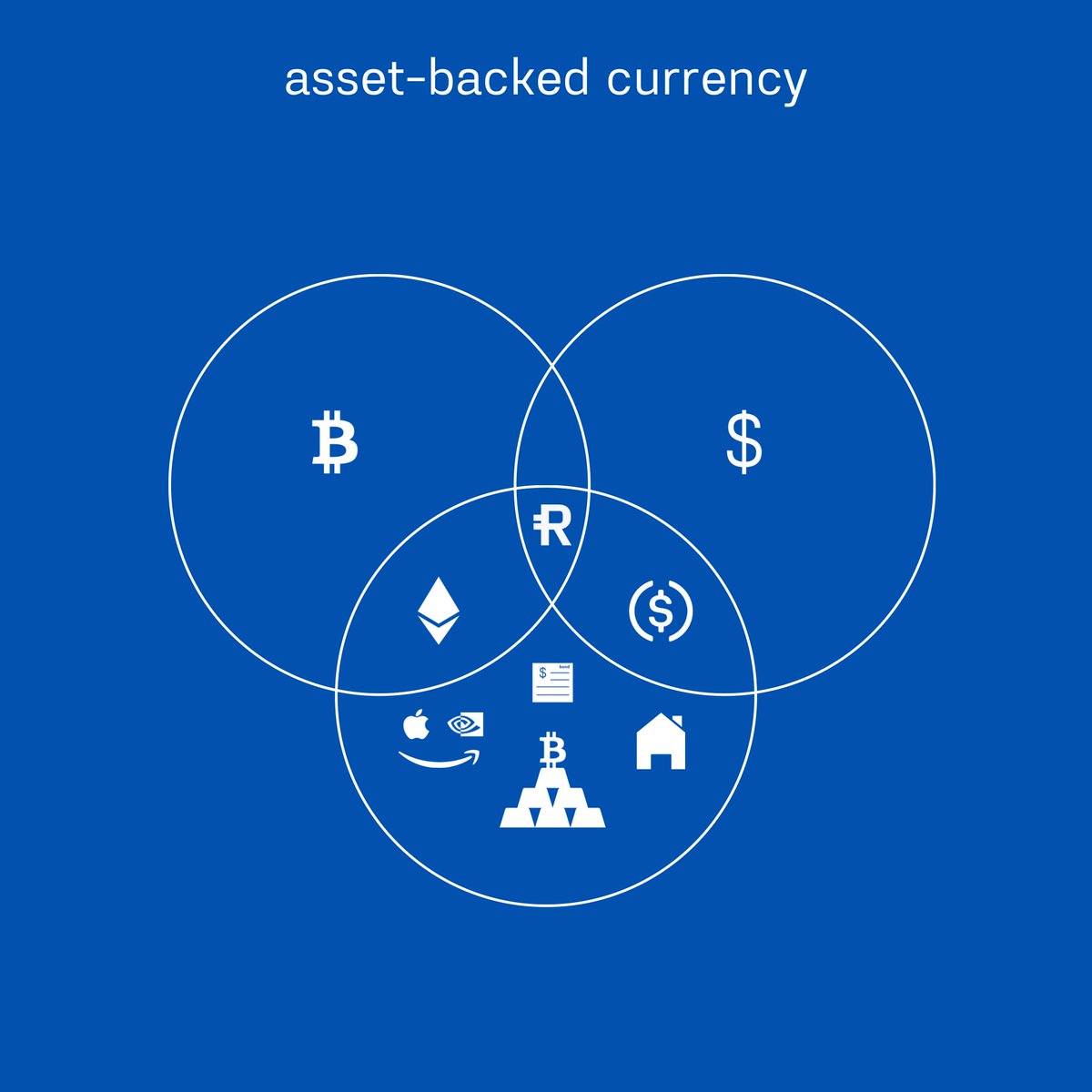
Today Reserve powers baskets of crypto assets.
But as real-world assets get tokenized at scale, what can go into a basket becomes effectively unlimited.
🗣️ Nevin Freeman, co-founder @reserveprotocol, at Monetarium 2:
“Reserve’s technology is used in crypto, in DeFi, to make baskets of different crypto assets. And we do think that is an excellent first use case.
We think that’s what any DTF company should be focused on right now.
But as all of the world’s assets end up tokenized, the universe just gets that much bigger. (…)
This gets even much more exciting than it is today.”
“If you just have these as products that exist on the blockchain with no easy way to use them or spend them as money, then adoption becomes that much harder.
This is part of the original thinking many years ago that led us to decide there should be an arm of the project that builds a convenient user platform to make it possible, to spend this stuff on a card, to make it really easy to handle these assets without having to be a DeFi-native person. (…)
Offering USD stablecoins and diversified stores of value to consumers around the world via our technology platforms (…) is kind of equivalent to delivering satellites into orbit and offering satellite internet around the world.
It's a practical step along the way to our insanely big mission, and it can be profitable and valuable to humanity as we build.”
“With the Digital Securities Initiative, I think you can now see how these pieces come together, where if it is made possible to get all financial assets onchain, to do it in a way that is internationally compatible. (…)
If we can make it as easy to create a fintech app that allows handling of tokenized securities as it is to create a fintech app that allows handling of dollars or ordinary crypto, then that makes it so DTFs that contain securities - and are themselves securities - could be used in many, many different convenient financial applications around the world.”



![davide_will's tweet photo. Most currency collapses in history follow a predictable four-step cycle:
Debt • Monetization • Inflation • Loss of faith.
Only the timeline changes.
And for the world’s reserve currency, the runway is always longer…
🗣️ Mark Dinner at Monetarium 2:
“Germany suffered hyperinflation during the Weimar Republic of the 1920s.
France also went through hyperinflation in the 1920s following World War I.
Japan suffered the same fate as they successfully initially operated quantitative easing in the 30s, then as they became more aggressive doing that with their war efforts in the late 30s and abused the printing press, they had a hyperinflation as well.
If managed poorly, the US faces a more accelerated and persistent decline in the dollar that could produce an inflationary spiral in the last decade.
By the way, that occurred with the UK in the 1970s, but not to the degree of the Weimar Republic; it’s a pretty classic way for how currency regime shifts occur.”
“Typically, inflation spirals occur when the government has too much debt in a currency it can’t print, big budget deficits, which it funds by abusing the printing press and monetizing government deficits and debts. Both internal and external geopolitical conflict and wars often undermine the incumbent superpower and its currency as a global reserve.
The US is at risk across these factors, save for the fact that the US government debts - this is important - are in a country that the Fed can print, and the currency is the world’s reserve currency.
This is what makes the current case both fascinating, and it's why the reserve currency shift of the US is intertwined with its position as a global superpower.
Another scenario is basically more of the same and perhaps a more glacial shift.
While the US has debt to GDP of 120 percent and the largest budget deficit outside of a recession since World War II, the dynamics that produce a regime shift are playing out, and it’s a fair point that these dynamics are quite slow.
Sophisticated investors have been discussing a regime shift in the currency for decades. […]”
“The way the current administration is forcing the issues across both internal and external imbalances and conflicts.
For example, through tariffs, which amount to a trade war;
or clauses like 899 in the current bill that threaten taxes on the income on foreign asset holders, which threatens a de facto debt default on US assets;
or a stated preference for a weaker dollar and an easier Fed;
or expanding the budget deficit while looking to cut longer-term spending, and slash regulations to produce a growth miracle.
All of these policies are being shifted so fast it feels like we’re operating at policy warp speed. […]
The tectonic plates underlying the system are now moving faster than we may even fully appreciate.
The path of US debt and faith in the dollar system are set to be tested in a big way in the coming 12, 24, 36 months.” [from June 2025]](https://pbs.twimg.com/media/HJ0_9muWgAAmLdc.jpg)





![davide_will's tweet photo. Trading Apple stock against Bitcoin on the same platform, under the same license.
Chairman Paul Atkins wants to make it possible.
🗣️ Michael Selig, Chief Counsel of the SEC Crypto Task Force, at Monetarium 2:
“Many folks within the markets want to offer something of a super-app, where you can trade Apple stock against Bitcoin, or Tesla against Ether. Trade securities versus non-securities, whether they’re crypto assets or not.
And so we want to be able to provide that type of in-kind platform where people can trade and innovate with financial technologies.
People might also want to offer lending and other types of services all under one roof - under a single broker-dealer license, for example - and [avoid] the red tape of going out and getting different state licenses, a commodity broker license, et cetera.
We’re working expeditiously to try to provide clarity around what can be done through a broker-dealer or a national securities exchange.”
“We want to do things with public notice-and-comment.
We want each commissioner to have their vote on things and be able to be heard, have their concerns weighed by the others. And that dynamic's a good one to get to the right policy.
So rulemaking’s ultimately the goal. (…)
But in the interim, there’s a lot of damage that was done by the prior administration. So staking's a good example. Many staking-as-a-service providers were sued by the prior administration.
There are many that want to come to market with new products quickly.
There are many that aren’t sure if their existing model is now allowed under the securities laws.
And so the staff has taken it upon themselves to issue some of these staff statements that are not notice-and-comment, public process rulemakings.
But the staff has authority to issue its own views on certain matters.
Another area where the staff is open to considering a request is no-action letters. Folks can come in, meet with the staff, submit a request for no-action relief on a matter that maybe the securities laws or regulations today are incompatible with; or [where] it's not clear whether the enforcement division - that sued many crypto participants in the prior administration - would bring a lawsuit again.”
“We should have the minimum amount of disclosure as necessary.
You shouldn’t be imposing additional burdens where it’s not needed.
So we're certainly taking a hard look in line with the president's directive to make sure that all of our regulations are what's necessary, no more than what's necessary.
I think that's really the idea. (…)
The goal is definitely not to add new regulatory requirements.
And that’s why, in particular around crypto, we are very cognizant around making sure that there’s not duplicative regulation.
We want purpose-fit rules that allow people to operate their business, we get the information we need to regulate them, and we can have regulations that are going to protect investors.
That’s our mission, of course. But nothing more than that.”](https://pbs.twimg.com/media/HJQ1ojfWwAAwy2J.jpg)