🛗Hoy en @elDiarioes proponemos un juego para ver cómo funciona el ascensor educativo en España
Justo debajo pueden ver una simulación de las trayectorias educativas de 5.000 adultos según los estudios de los padres
https://t.co/d2d1z6gAfl
🔍 Excited for the grand finale at #RIPE87? Join us on Friday at 11:00 for a talk by Daniel Wagner, @DECIX. 🌐 The talk explores unsolicited background radiation across 350k+ /24 blocks in 7k+ ASes. 📷 #Networking#Cybersecurity
No es por darme el pisto. Pero ese añadido no es de Machado. Es de un servidor. Forma parte de la presentación que hice de la canción “Ahora” en la grabación de un concierto en vivo (Principio de Incertidumbre). 🤷🏻♂️
https://t.co/Q5jClGd7bk
Explaining 8 Popular Network Protocols in 1 Diagram. The method to download the high-resolution PDF is available at the end.
Network protocols are standard methods of transferring data between two computers in a network.
1. HTTP (HyperText Transfer Protocol)
HTTP is a protocol for fetching resources such as HTML documents. It is the foundation of any data exchange on the Web and it is a client-server protocol.
2. HTTP/3
HTTP/3 is the next major revision of the HTTP. It runs on QUIC, a new transport protocol designed for mobile-heavy internet usage. It relies on UDP instead of TCP, which enables faster web page responsiveness. VR applications demand more bandwidth to render intricate details of a virtual scene and will likely benefit from migrating to HTTP/3 powered by QUIC.
3. HTTPS (HyperText Transfer Protocol Secure)
HTTPS extends HTTP and uses encryption for secure communications.
4. WebSocket
WebSocket is a protocol that provides full-duplex communications over TCP. Clients establish WebSockets to receive real-time updates from the back-end services. Unlike REST, which always “pulls” data, WebSocket enables data to be “pushed”. Applications, like online gaming, stock trading, and messaging apps leverage WebSocket for real-time communication.
5. TCP (Transmission Control Protocol)
TCP is is designed to send packets across the internet and ensure the successful delivery of data and messages over networks. Many application-layer protocols build on top of TCP.
6. UDP (User Datagram Protocol)
UDP sends packets directly to a target computer, without establishing a connection first. UDP is commonly used in time-sensitive communications where occasionally dropping packets is better than waiting. Voice and video traffic are often sent using this protocol.
7. SMTP (Simple Mail Transfer Protocol)
SMTP is a standard protocol to transfer electronic mail from one user to another.
8. FTP (File Transfer Protocol)
FTP is used to transfer computer files between client and server. It has separate connections for the control channel and data channel.
–
Subscribe to our newsletter to download the high-resolution PDF. After signing up, find the download link on the success page: https://t.co/keu1P0hhKI
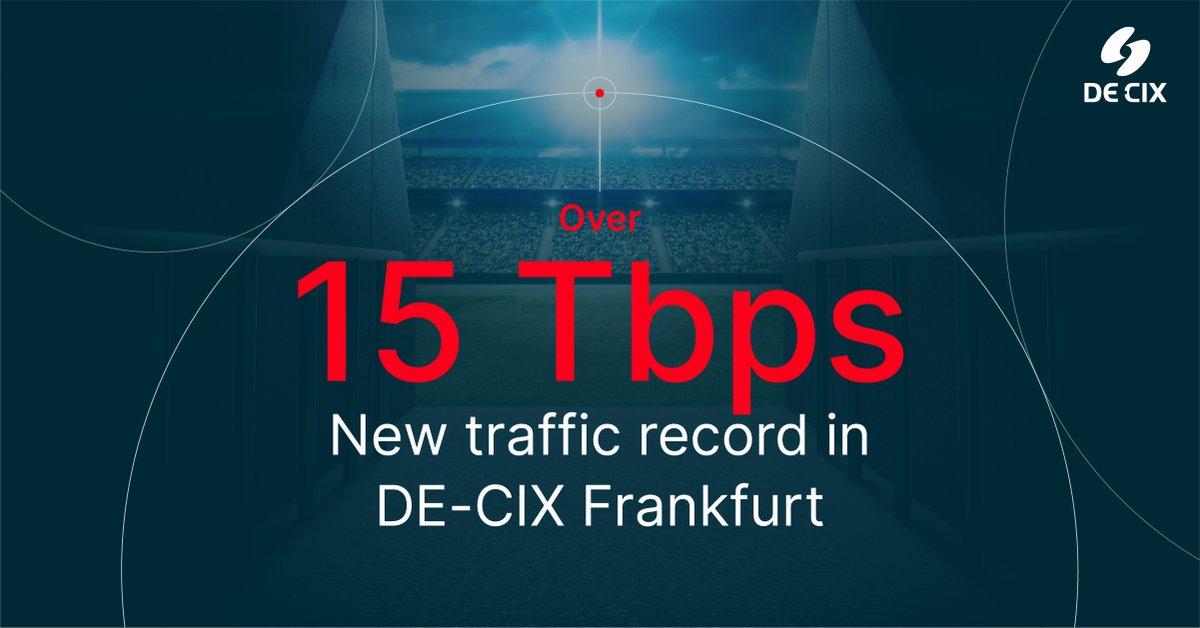
We set a new traffic record at #DECIX Frankfurt 👉over 15 Tbps! This peak was achieved on 19. September & coincided with the start of the #UEFA#ChampionsLeague & a major software release of a smartphone manufacturer. Read more about this achievement here: https://t.co/y8IY9ZkxwN
Check out how DISCOVER-EEG works in our latest publication at @ScientificData! An open, fully automated #EEG pipeline for biomarker discovery in clinical neuroscience🧠. Proud of this work and team @markus_ploner @Joachim__Gross #PainLabMunich https://t.co/GeEPMI7xLz
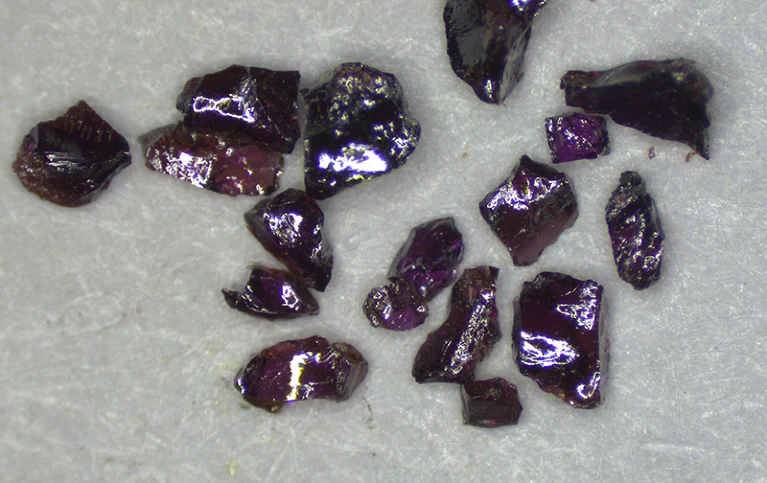
😍Very impressive work! This is the final nail in the coffin for #LK99 - no point wasting any more time trying to replicate the Korean paper at this point!
"Pure crystals of LK-99, synthesized by a team at the Max Planck Institute for Solid State Research in Stuttgart, Germany"
"Unlike previous synthesis attempts that relied on crucibles, the researchers used a technique called floating zone crystal growth that allowed them to avoid introducing sulfur into the reaction.
The result was a transparent purple crystal. Separated from impurities, LK-99 is not a superconductor, but an insulator with a resistance in the millions of ohms — too high to run a standard conductivity test."
https://t.co/lB0jnavFA2
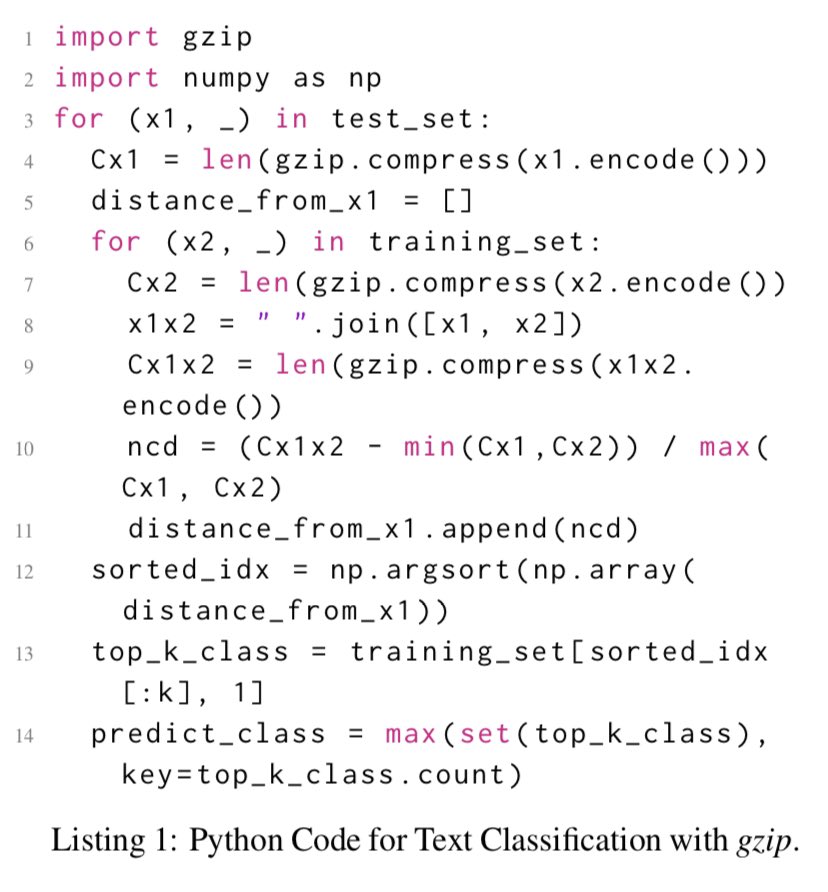
this is wild — kNN using a gzip-based distance metric outperforms BERT and other neural methods for OOD sentence classification
intuition: 2 texts similar if cat-ing one to the other barely increases gzip size
no training, no tuning, no params — this is the entire algorithm:
Hilo en el que desmonto una a una las mentiras sobre economía de Feijóo y Sánchez que se dijeron en el cara a cara (y que desgraciadamente nadie cuestionó o verificó en directo): 👇
¿Cómo puede alguien pretender ser presidente del Gobierno diciendo que el kilo de naranjas en España cuesta 0,12€?
El señor Feijóo no sabe en qué país vive, ni cuánto cobra
URL, URI, URN - What are the differences?
The diagram below shows a comparison of URL, URI, and URN.
🔹 URI
URI stands for Uniform Resource Identifier. It identifies a logical or physical resource on the web. URL and URN are subtypes of URI. URL locates a resource, while URN names a resource.
A URI is composed of the following parts:
scheme:[//authority]path[?query][#fragment]
🔹 URL
URL stands for Uniform Resource Locator, the key concept of HTTP. It is the address of a unique resource on the web. It can be used with other protocols like FTP and JDBC.
🔹 URN
URN stands for Uniform Resource Name. It uses the urn scheme. URNs cannot be used to locate a resource. A simple example given in the diagram is composed of a namespace and a namespace-specific string.
If you would like to learn more detail on the subject, I would recommend W3C’s clarification.
–
Subscribe to our weekly newsletter to get a Free System Design PDF (158 pages): https://t.co/4QcX8btXGL
Feijóo: "España tiene que superar los 22 millones de afiliados a la Seguridad Social al finalizar la próxima legislatura. Esta regla del dos, pues bueno en vez de dos es 22, pero es dos, es dos por diez"






![Mathinity_'s tweet photo. Even though I'm certain that this identity is true (3 proofs in this 🧵), I still can't believe it's true!
[1/4] https://t.co/7XZP1pJ5O8](https://pbs.twimg.com/media/F06bm1rWAAANj0X.jpg)
![alexxubyte's tweet photo. URL, URI, URN - What are the differences?
The diagram below shows a comparison of URL, URI, and URN.
🔹 URI
URI stands for Uniform Resource Identifier. It identifies a logical or physical resource on the web. URL and URN are subtypes of URI. URL locates a resource, while URN names a resource.
A URI is composed of the following parts:
scheme:[//authority]path[?query][#fragment]
🔹 URL
URL stands for Uniform Resource Locator, the key concept of HTTP. It is the address of a unique resource on the web. It can be used with other protocols like FTP and JDBC.
🔹 URN
URN stands for Uniform Resource Name. It uses the urn scheme. URNs cannot be used to locate a resource. A simple example given in the diagram is composed of a namespace and a namespace-specific string.
If you would like to learn more detail on the subject, I would recommend W3C’s clarification.
–
Subscribe to our weekly newsletter to get a Free System Design PDF (158 pages): https://t.co/4QcX8btXGL](https://pbs.twimg.com/media/Fzjy1TGaAAEy_mT.jpg)


