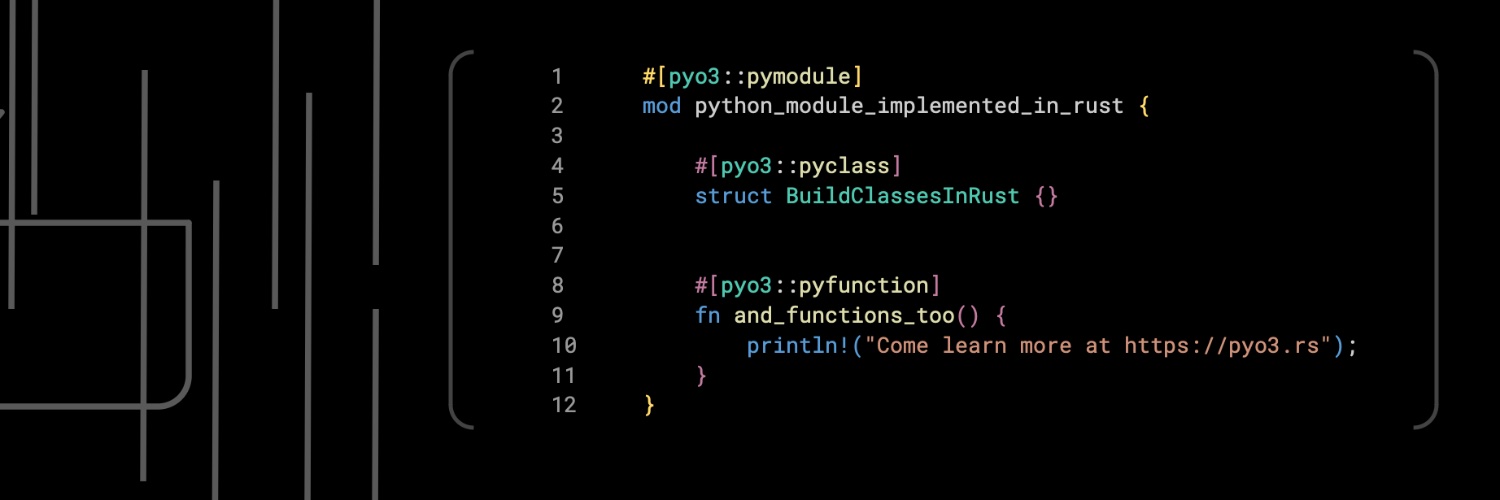
I'm really looking forward to speaking at @RustNationUK 2025! I have a ton of crazy Rust stuff we've done in PyO3 which I can't wait to get your take on 😁
Speaker Announcement 🚨
For the past five years, David Hewitt (@davidhewittdev) has been on a journey exploring the evolving relationship between Rust and Python.
Join David's talk "Techniques learned from five years finding the way for Rust in Python" at #rustnationuk25, where he’ll share hard-earned insights from contributing to PyO3, revealing the Rust techniques and "proc-macro magic" behind building powerful, user-friendly APIs—all without compromising performance.
Get your early bird ticket now 🎟️ https://t.co/toAGPOwM2V
Wrapping in PyO3 would be easy but it makes distribution harder; does ruff executable then also link against some shared library which the Python API also use (at slight overhead to ruff startup), or do you keep the ruff executable standalone and double the download size? 🤔
Calling the ruff binary as a subprocess seems good enough for all but the most heavy of uses.
Today, we're shipping a series of features that move uv beyond a pip alternative, and into an end-to-end solution for managing Python projects, command-line tools, single-file scripts, and even Python itself.
A single, unified tool. Like Cargo, for Python.
It's very fast.
"When you're working with superconductors, copper is an insulator"
#rustlang tools like cargo-semver-checks, release-plz, PyO3, and maturin are helping make fusion power a reality at @CFS_energy!
@algo_luca Love to hear this, can't wait to see what you're cooking up!
There's still so much left to polish on PyO3 yet, not to mention a lot of fun to be had with Python 3.13 freethreading 😁
@PredragGruevski@llogiq@jessfraz This exactly why I care so much about making PyO3 effective to use; the Python developer ecosystem is huge and bringing solid interoperability with Rust is a win for both languages.
We're having a lot of fun scaling up greenfield Rust services to power the backend of @pydantic Logfire!
To do that faster we'd love some additional firepower; interested in Rust & distributed database engineering? Read below 👇
@elephantum@samuelcolvin@WilliamBakst@pydantic I think this assessment sounds correct; at the moment `pydantic-core` isn't built to re-use schema validators of models so if you nest models to re-use you get duplication at the schema level. Unsurprising this blows up as you have multiple levels so this needs to change!
In my quest to produce a shorter video, I’ve produced my longest so far:
tox vs Nox: What are they for & How do you choose?: https://t.co/J3OYSB7udi
In which I introduce those two indispensable tools and reflect my own usage of BOTH. Enjoy!
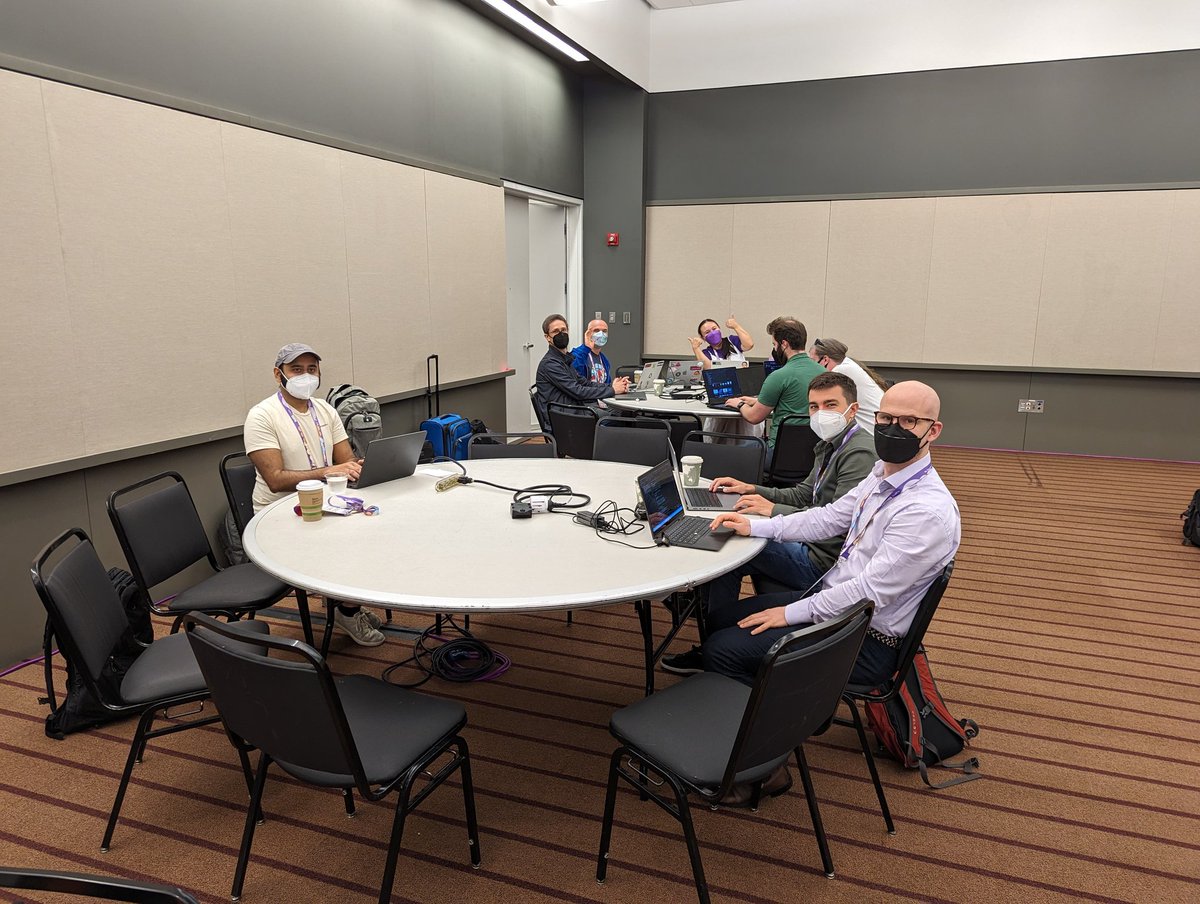
Had a great time at the @pycon sprints yesterday leading a group working on PyO3! I'll be back in room 321 again today before I head back to the UK tonight. Come say hi!
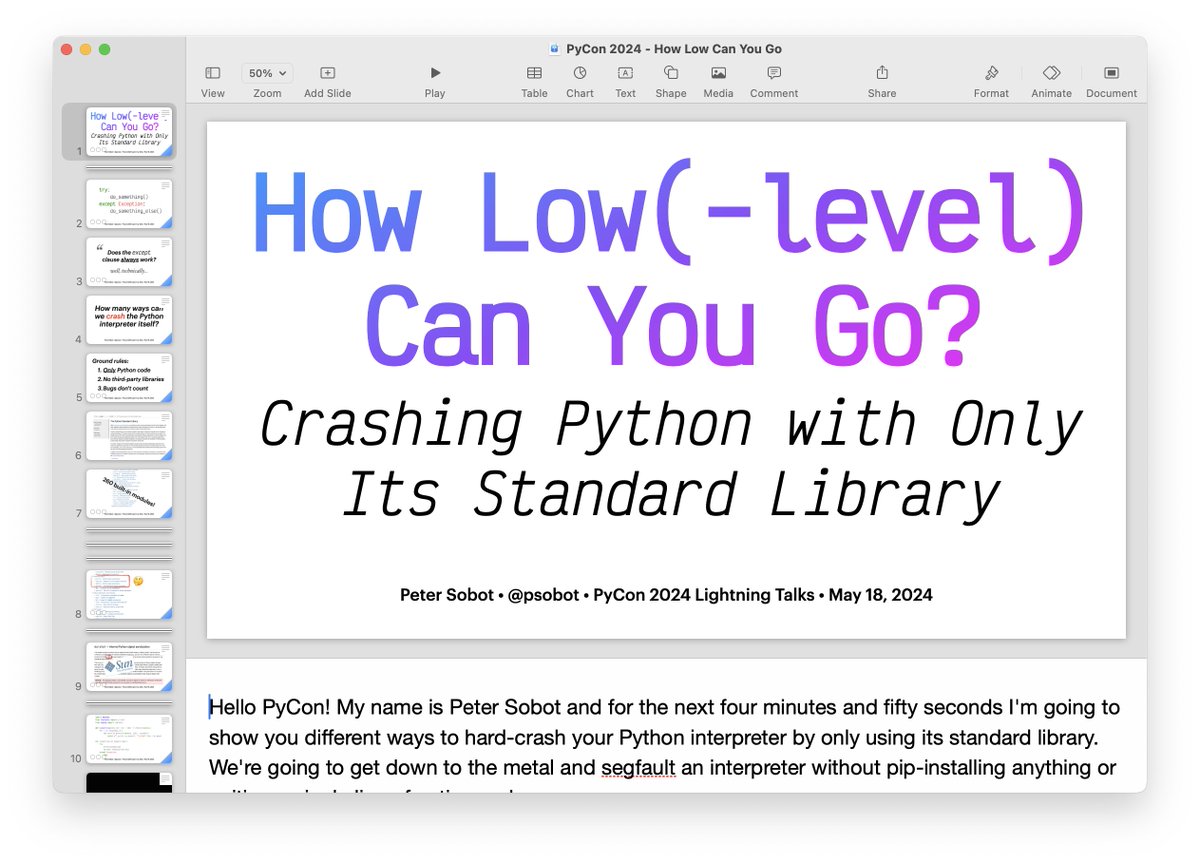
@psobot Thanks! Yes I went back and forth a bit on how deep to go but in the end I wanted to try to just give an honest idea of how it all works, warts and all!
We're live!
@pydantic Logfire is in open beta.
Since I started writing Python in 2010, I've wanted a better way to do logging.
Off the back of Pydantic's unbelievable growth, last year I started a company backed by @sequoia, and lucky enough to hire the brightest people I know.
Now we've gone and built the logging thing I always wanted.
https://t.co/jWcr2Smlc5
PyO3 0.21.2 just released! A few compile-time fixups, nothing particular to highlight.
https://t.co/GtNSIKxg2c
Also, for anyone wondering where the PyO3 development streams have gone - family responsibilities have filled my April slots, I'm hoping in May we can resume!