Why does the appraiser always ask for the purchase price? Can't they determine the value without it? Why does the appraised value always equal the purchase price?
That whole part of the industry is a bit silly, and everyone knows it.
Being a commercial real estate agent is not easy career choice. Less than 20% of agents make it past year 2.
Here are the top 10 traits I see in agents that don't make it past year 2 in the business:
1. They don't specialize in anything. They're real estate generalists, masters of none.
2. They work 9-5 hours.
3. They talk smack on other agents that have found early success.
4. They speak with low energy and in monotone.
5. They leave the office early on Fridays.
6. They don't work Saturdays.
7. They take too many vacations.
8. They live in a house with friends that aren't pursuing similar hard working career paths.
9. They don't extensively research their market.
10. Their expectations on how quickly they'll close a deal are wrong.
Quick reminder:
Commercial real estate has absolutely nothing in common with residential real estate.
One is about math, the other one is about emotion.
In brokerage, it’s not about chasing every lead. Like a lion, you need to hunt strategically—focus on high-value targets, strike with precision, and make every move count. Grazing all day like a cow won’t land big deals. Aim with purpose.
If the first question a potential client asks you is, “What’s your fee?”, move on. You have been commoditized. (You can ask them if they think every single human being on earth is identical, but why waste the breath?)
Per @WSJ:
"The amount of industrial real estate under construction in the third quarter fell to 309 million square feet, down 43% from the previous year and the steepest drop since 2008."
Just got off the phone with an executive at JLL, and they are absolutely all in on AI.
They're one of the largest brokerages in the world, with 110,000 people and a $12.5B market cap.
They're investing in it big time, training their employees on how to use it, and making it part of their platform.
This is a huge signal to the industry -- really is time to get on board to those on the fence or turning a blind eye.
(Thank you for your time, Mr. Daniel Fenton, Head of AI Platform)
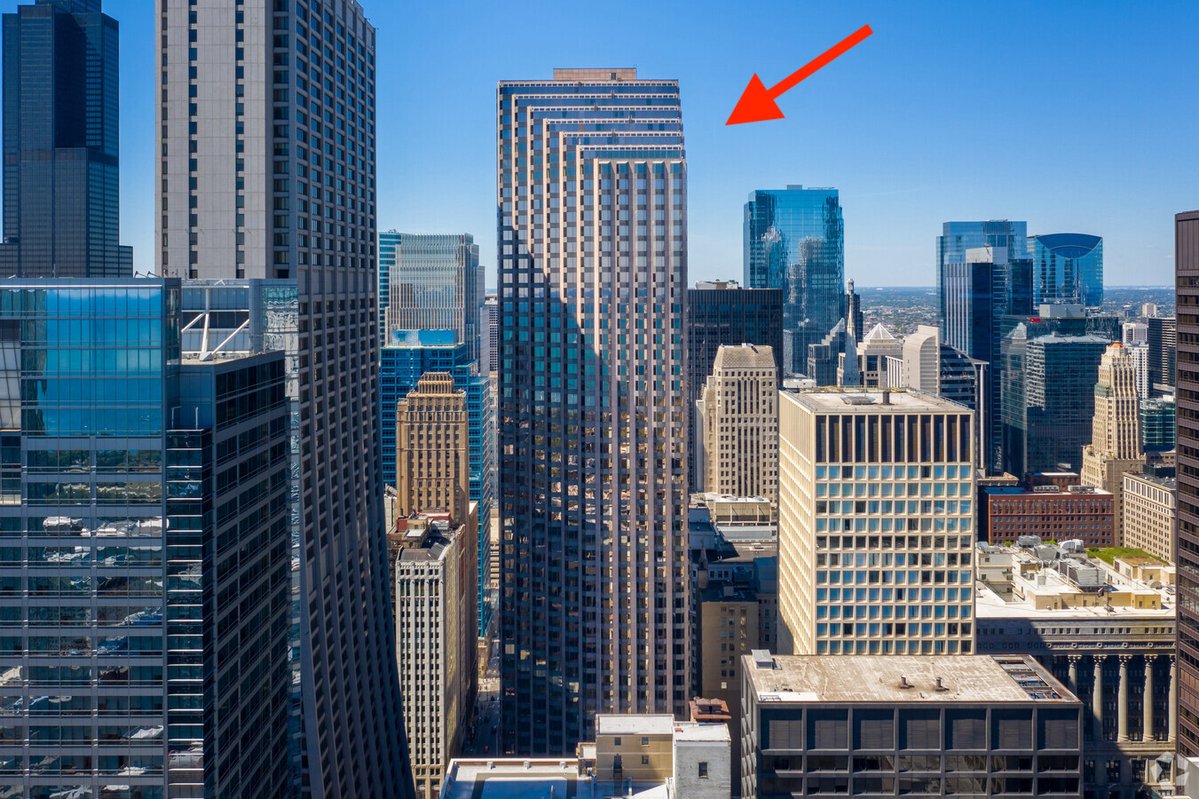
An prime office tower in downtown Chicago is set to be sold at a stunning $275M 'haircut'
The Buyer has a deal to acquire the 57-story tower for $100M
What did the Seller acquire it for in 2014?
$375M
The meltdown in class B/C office properties across the US continues with Chicago being among the hardest hit cities
Address: 70 W Madison St
Latest cap rates for unanchored strips, lower end of range:
Northeast: 6.75%
Mid Atlantic: 6.50%
Southeast: 6.25%
Midwest: 6.25%
Rockies: 6.00%
West: 6.00%
Yup, California real estate's the worst😜
(h/t to Daniel Taub)
As I'm having more conversations with real estate folks embracing AI, something's really standing out:
Companies are commonly working on developing their own AI products in-house rather than buying them.
Example:
A large real estate owner is uploading its countless lease redlines from over the years in order to teach the AI how it negotiates leases.
Now when they get a lease from a national tenant, for example, the AI will automatically redline it and get it turned around instantly.
When Microsoft Word came out, no company decided to create their own word processing tool; they just bought Word and moved on.
Same thing with CRM Software. You'd buy Salesforce, etc.
Feels like folks inside organizations who really get AI are trying to build it themselves.
The SBA 7(a) loan is a game-changer for the U.S. economy, allowing mainstream businesses to be bought and creating a (more) liquid market for small businesses—something you don’t see in other countries.
In places like Canada, without a similar program, it’s much harder to build and sell a business.
Buyers can’t get the same financing, so sellers often end up with large salary financing instead of a cash payout.
This is absolutely stunning...
Office buildings totaling 633k sq ft in downtown Minneapolis just sold for $6M or a shocking $10 per sq ft
The price represents a 91% 'discount' to what the seller bought the towers for - $74M in 2019!
The meltdown in class B/C office properties across the US is beyond wild so stay tuned for more updates just like this...
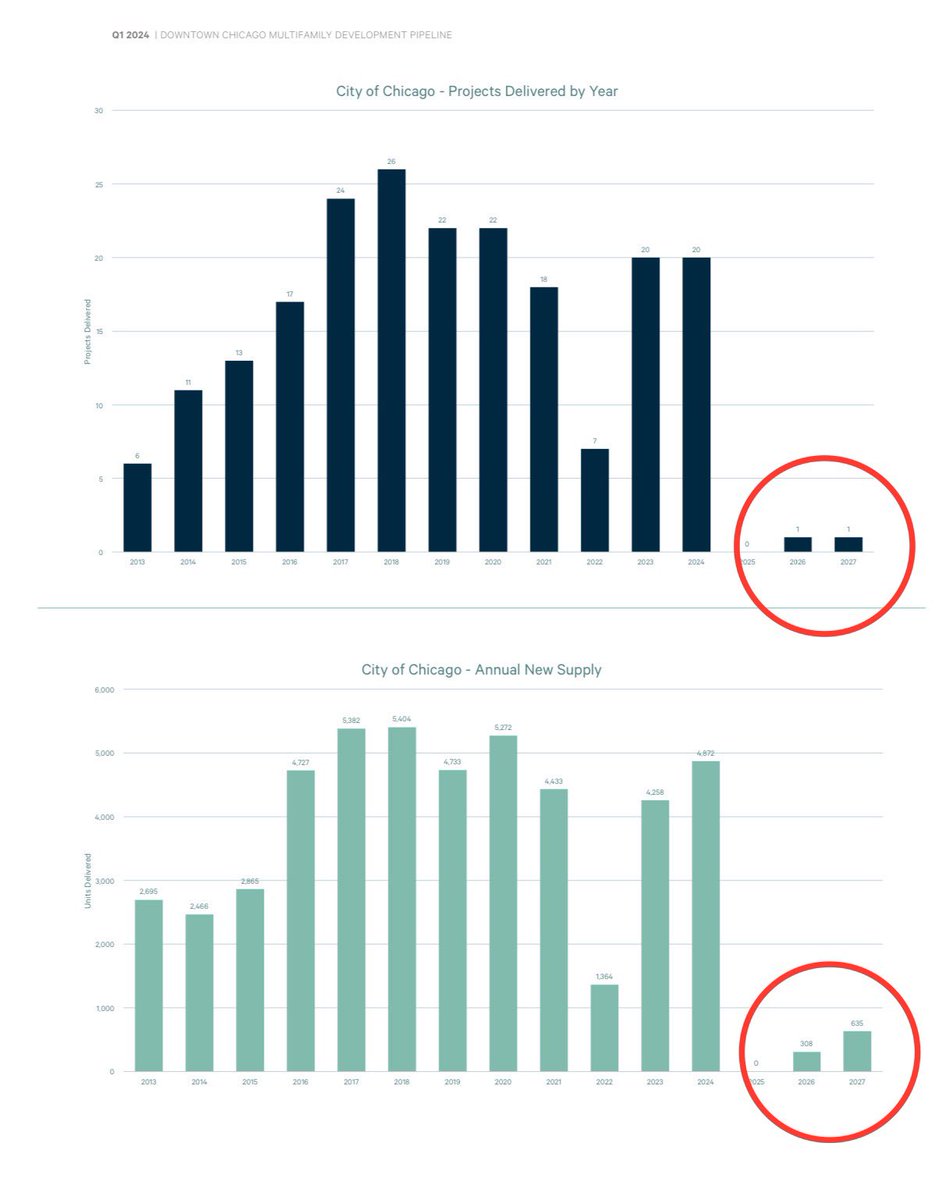
Pretty wild that Chicago, as the nation’s 3rd largest MSA, is not even in the top 20 for apartment construction in 2024.
Even wilder that 2025 will see *zero* new deliveries, and 2026 & 2027 will see one project delivered in each year.
It is my belief that the days of Chicago being bizarrely affordable compared to our peer cities is ending and that we will see dramatic rent increases in the future.
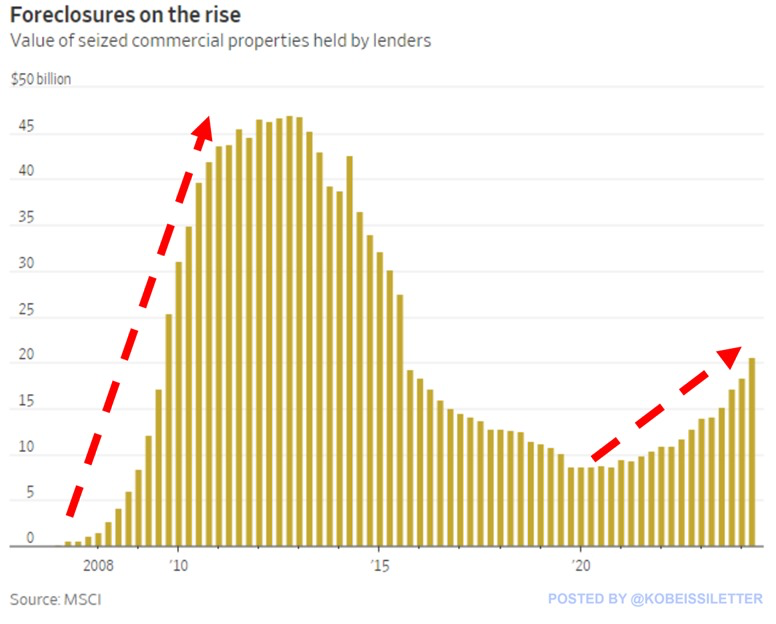
BREAKING: Commercial property foreclosures hit $20.6 billion in Q2 2024, the highest since Q3 2015.
Lender portfolios of foreclosed commercial properties increased by 13% last quarter, according to MSCI data.
Since 2020, foreclosures have more than DOUBLED rising at their fastest pace since the 2008 Financial Crisis.
Many lenders hoped that the commercial real estate (CRE) sector would recover and were reluctant to foreclose properties until recently.
Meanwhile, there is still over $6 TRILLION in CRE debt in the US with 50% of this debt held by banks.
Small banks, the same banks that almost collapsed in the regional bank crisis, hold 70% of these loans.
Is another bank crisis brewing?
In industrial real estate, it's essential to think outside the box and leverage low-hanging fruit for quick wins.
At the end of the day, being on the same page and moving the needle forward requires taking a deep dive into market trends.
It's about synergizing efforts and ensuring win-win situations in every deal.
By focusing on value-added solutions, we can optimize deliverables, maximize ROI, and hit the ground running.
It's important to maintain momentum and aim for blue-sky thinking as we push the envelope.