Water usage has been a hot topic in the AI data center world, but the numbers may surprise you.
According to the Manhattan Institute, data centers use 0.2 percent of daily water usage in the U.S. and that number has dramatically decreased in the past few years due to a new method: liquid cooling.
By moving to 45°C liquid cooling, AI factories in favorable climates can use dry coolers instead of conventional cooling-tower-based systems, cutting facility cooling water use from roughly 2.6M gallons per MW per year to near zero.
Liquid cooling enables AI factories to be both water and energy efficient, while creating opportunities for heat reuse and dispersal to local communities, allowing these factories to become energy grid assets.
Learn more below ⬇️
https://t.co/7WanoPNKTR
SBTi just changed the rules around corporate net-zero electricity claims ⚡
The updated guidance adds more flexibility for companies pursuing renewable energy targets and is already sparking debate across sustainability circles.
More from Trellis: https://t.co/F7za3sCqeo
@emilypont Likely because they support compensated fuel/products, help manage net-carbon-intensity claims, and keep Shell active in carbon-market development
When people say data centers use millions of gallons of water, they're describing an old technology. Before, water went into evaporative cooling towers. Warm water pulled heat off the AI chips, then evaporated into the air to shed it. It was effective, but it burned through fresh water continuously, which is where the headline numbers come from today around "data centers use a massive amount of water."
The data centers we revealed at Build today don't work that way. The cooling loop is closed. Water is added once during construction and recirculates indefinitely between the servers and the chillers. No evaporation, no fresh-water resupply!
Satya put the scale in plain terms: a full year of water use is roughly what a single restaurant uses.
Keep in mind that for us, every liter and every watt is an optimization target. The economics and the environment push in the same direction!
Pankaj Sharma of Schneider Electric explains why energy is the foundation of scalable AI and how Schneider and #NVIDIA are using validated blueprints and digital twins to power efficient, gigawatt‑scale AI data centers.
Explore more in the full GTC Studio episode: https://t.co/zUNH1AScr8
Interesting article from @JigarShahDC via @trellisgroup_. Voluntary corporate procurement accounts for ~40% of new clean energy capacity in the U.S. If the @GHGProtocol’s hourly matching proposal makes that harder, who fills the gap? Timely read as AI load growth reshapes the grid. https://t.co/40J7Ppf1FI
THREAD: The IEA global energy review 2026
* CO2 record high, but growth nearly ground to halt
* Clean energy shaved 3bn tonnes off CO2
* Fossil-fuel power pushed into reverse
* Age of Electricity "confirmed"
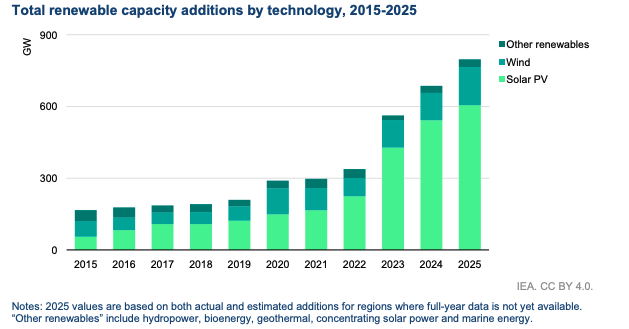
* "Extraordinary" solar growth
* Batteries up 40%
* EVs up 20%
1/10
@dieworkwear I think they had this last season. It’s similar to your summer tweed. Fintex also had something similar but they seem to have gone out of business. The Anthology also has a similar cloth.