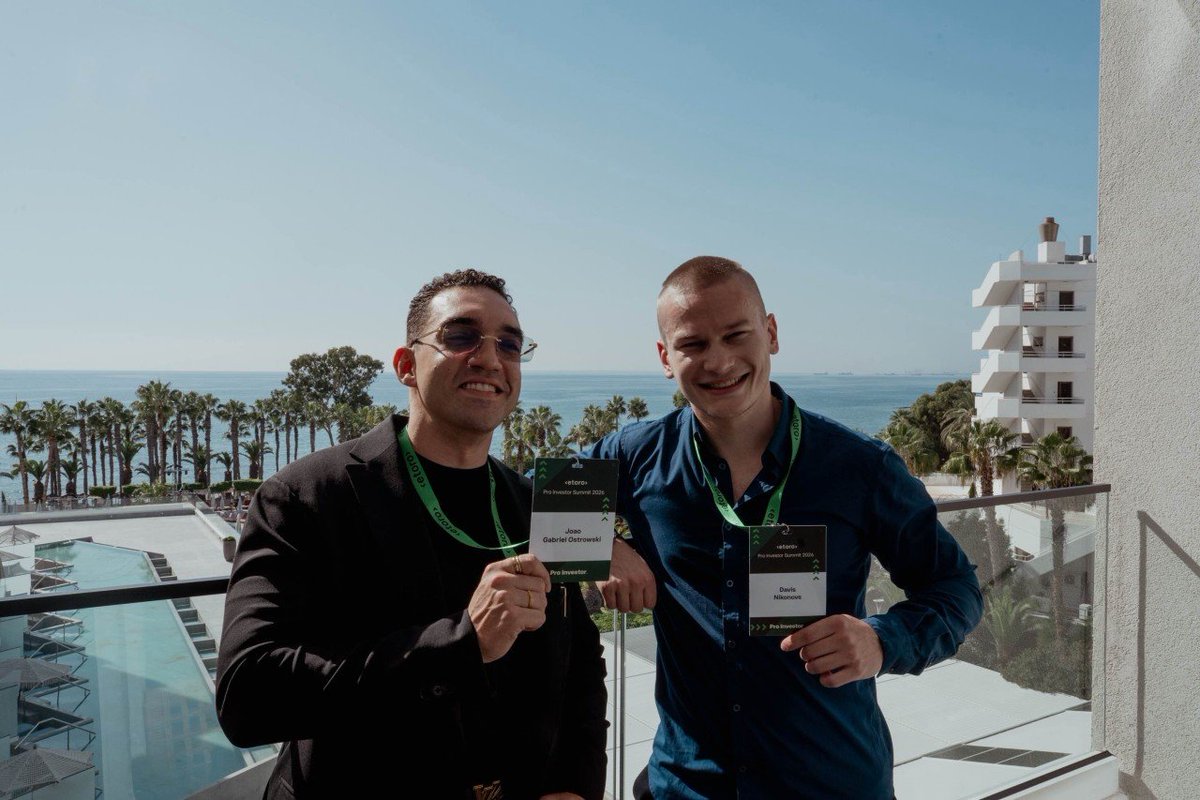
"The opportunity to connect with some of the smartest people from all around the world, exchange ideas, also challenge your own thinking." Exactly, @davisnikonovs. The investor summit, diamond events, people managing from a few thousand to hundreds of millions, approachable, open to talking and sharing. Of course, Cyprus 22°C in November, is real charm.
@fogi70@etoro@John0strowski I’m looking to exchange ideas with fellow investors, learn from their experiences, and gain new perspectives to improve my investment strategy.
Weekly report for 07.09.–13.09.2026
solana:5LS3ips7jWxfuVHzoMzKzp3cCwjH9zmrtYXmYBVGpump near $100 and a firmer inflation print did more to set this week’s tone than any single earnings headline.
It was a shortened U.S. session after Labor Day. From Tuesday through Friday the tape was driven by two facts: crude’s surge on renewed U.S.–Iran hostilities, and August CPI that kept the Federal Reserve’s 16 September meeting in play. Headline CPI rose 0.4% month-on-month and 3.4% year-on-year. Core CPI rose 0.3% and 2.4% respectively. Energy accounted for a large share of the monthly move. Rate futures moved toward roughly a 90% chance of a 25 bp hike next week. The 10-year yield closed the week near 4.98%.
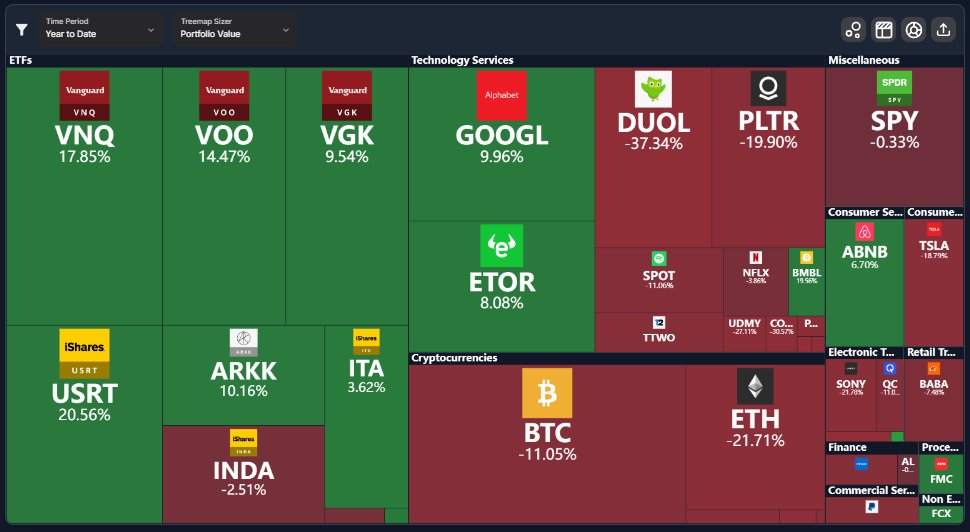
Equities absorbed that mix and finished lower, then bounced on Friday as oil eased off the highs. $SPY and $VOO were both down about 0.8% on the week. $IXIC fell about 0.7%. The Dow lost more, around 1.6%. Small caps were weaker still. Energy was the only S&P 500 sector in clear green; healthcare led the declines. Europe via $VGK slipped about 1.9%. India via $INDA was down about 2.7%. Rate-sensitive real estate — $VNQ and $USRT — each lost a little over 1%.
Corporate news did not change the macro story, but it did confirm that AI infrastructure demand is still real. $ORCL reported cloud infrastructure revenue up 121% to $7.4 billion and booked more than $30 billion of new AI cloud contracts, lifting remaining performance obligations to $664 billion. The stock still finished the week lower as investors weighed margins and cash burn. $DELL jumped after the print and closed the week higher on AI server demand. Inside the portfolio, $GOOGL was essentially flat, $TSLA rose about 3%, while $PLTR $DUOL $ABNB $SPOT $ARKK $COIN and $ETOR all gave back ground. $ITA also declined as the broader defense tape digested higher yields.
Crypto was quieter than equities. $BTC finished the week little changed near $77,300. $ETH was slightly firmer. Spot Bitcoin ETF flows were negative; Ethereum ETFs saw inflows. That rotation is worth noting, not chasing. Gold eased as real yields stayed elevated.
None of this alters the plan. Higher energy prices and a possible rate hike are short-term constraints on multiples and on rate-sensitive sleeves. They are not a reason to abandon a diversified, unlevered book built around broad equity exposure, selected growth names, listed real estate, and a measured crypto allocation. The average holding period is measured in years, not sessions. A 10-year horizon is designed for weeks like this: oil spikes, a CPI print, a Friday bounce, and then the next data point.
I made no reactionary changes. Cash remains available. Positions stay long-only and unlevered. The work this week was the same as last week — sit with the positions, watch the Fed meeting, and let compounding do the heavy lifting.
If this time horizon and this mix of ETFs, quality growth and crypto fit how you invest, the portfolio can be copied from $1,000 recommended amount.
Disclaimer: This update reflects my personal market views and portfolio positioning. It is shared for information and transparency purposes only and should not be considered investment advice or a recommendation to buy or sell any financial instrument. Markets involve risk, and past performance does not guarantee future results. Always assess your own financial situation and risk tolerance before making investment decisions.
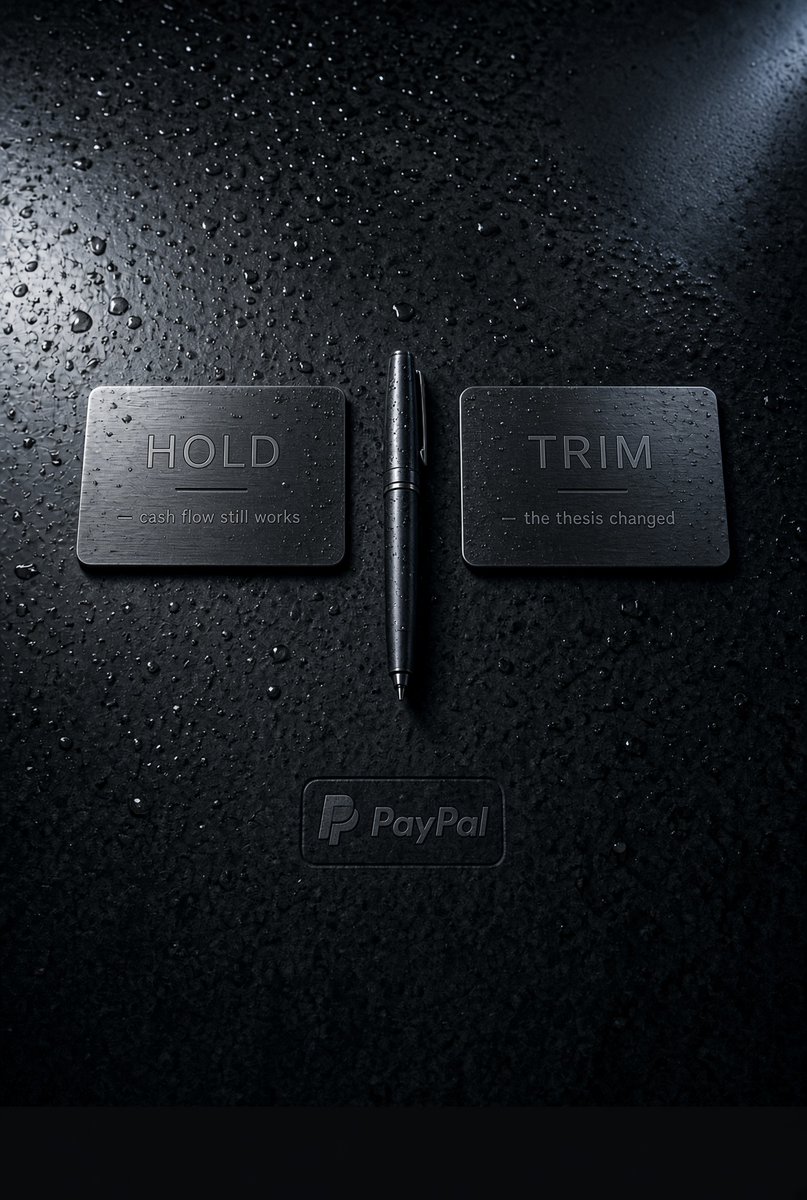
$PYPL dropped after the buyout talk died.
The stock fell sharply after reports that a take-private effort — linked to Stripe and Advent, around $60.50 a share — was abandoned. The two sides could not agree on price. That is a loud headline on a small line in my book.
This is the distinction.
A rumor can move $PYPL in a day. It does not tell me whether the business is generating cash, keeping users, or earning its place in a 10-year portfolio. When a story ends, I look at cash flow — not the leftover premium.
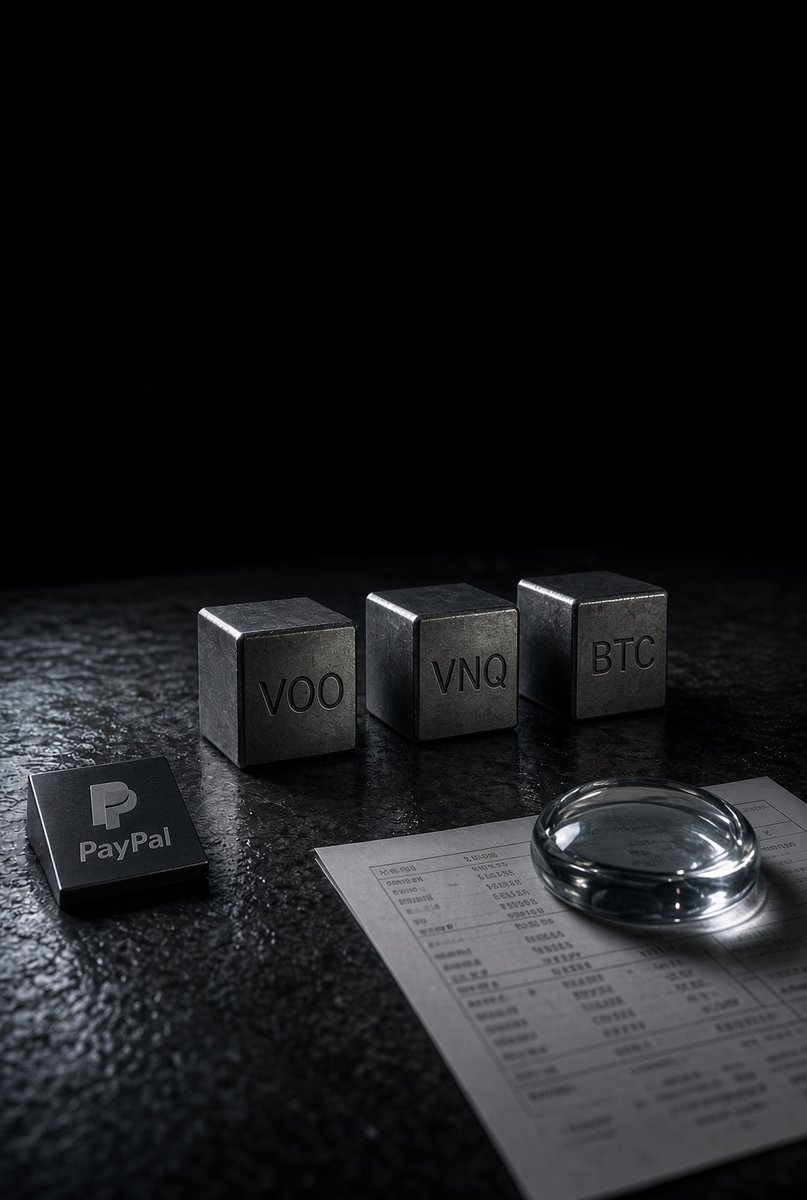
$PYPL is a small holding for me. It is not a core position like $VOO, $VNQ or $BTC. I do not need to defend a failed deal. I need to decide whether the company still has a clear fundamental case without a buyer attached to it.
If the answer is yes, I hold.
If the business has changed, I trim.
I do not chase the rumor on the way up, and I do not panic-sell the rumor on the way down.
Volatility in a satellite name is normal. Process is the edge.
If this approach fits your time horizon, you can follow or copy the portfolio directly.
Disclaimer: This update reflects my personal market views and portfolio positioning. It is shared for information and transparency purposes only and should not be considered investment advice or a recommendation to buy or sell any financial instrument. Markets involve risk, and past performance does not guarantee future results. Always assess your own financial situation and risk tolerance before making investment decisions.
Weekly update | 24.08–30.08.2026
Equities finished the week higher, then cooled on Friday.
$SPX500 rose about 0.5% to 7,711.76. $DJ30 gained about 0.5% to 53,559.99. $IXIC led with a gain of about 0.8% to 26,402.42. The advance was narrow. Technology did the heavy lifting; most other sectors lagged.
The week had three drivers.
First, $NVDA Revenue came in at $96.2 billion, up 106% year on year. Data-center sales were $89 billion. Management pointed to roughly 70% revenue growth in fiscal 2028. $CRM and $CRWD also reported strong AI-linked results. That combination lifted $IXIC on Thursday. On Friday, parts of that move were given back. The lesson is unchanged: one earnings week is useful information, not a reason to change a 10-year plan.
Second, inflation. July PCE held at 3.7% year on year. Core PCE was 3.3%. The economy is still growing — Q2 GDP was confirmed at 1.5% — but prices have not returned to the Fed’s 2% target.
Third, Jackson Hole. Fed Chair Kevin Warsh said inflation remains the priority and that the Fed has “work to do” if underlying inflation is not moving toward 2% with sufficient speed. He avoided forward guidance. Markets treated the tone as firmer. The 10-year yield closed near 4.72%.
$OIL was volatile. Hopes of a faster Hormuz reopening faded mid-week, then prices eased again into Friday. $WTI finished the week lower, around the low $80s. Energy can reverse quickly.
bitcoin:native tagged $80,000 during the week, then faded into the weekend. The structural case does not change with a two-day swing.
My process stays the same. I buy assets with clear fundamentals, spread risk across ETFs, REITs, stocks, and bitcoin:native, and hold through noise. I trim only when a business changes or a better opportunity appears. Average holding period remains long. The horizon is 10 years.
If this approach fits your time horizon, you can follow or copy the portfolio directly.
Disclaimer: This update reflects my personal market views and portfolio positioning. It is shared for information and transparency purposes only and should not be considered investment advice or a recommendation to buy or sell any financial instrument. Markets involve risk, and past performance does not guarantee future results. Always assess your own financial situation and risk tolerance before making investment decisions.
$OIL bounced after diplomacy hopes faded.
Crude rose on Thursday as expectations of a near-term reopening of the Strait of Hormuz weakened. $BRENT moved back toward $90. $WTI followed. That is the opposite of the move earlier this week, when talks briefly pushed prices lower.
This is the point.
Energy prices can reverse in days when geopolitics shifts. That is not a reason to chase the bounce in $OIL or $XLE, or to panic on the drop. It is a reason to size energy exposure carefully and keep extra cash during uncertain periods.
I look at energy the same way I look at the rest of the portfolio: cash flow, balance-sheet strength, and whether the position still fits a long-term plan. I do not need to predict the next headline. I need room to act if prices become attractive or if the fundamentals change.
Volatility in $OIL is normal. Discipline is the edge.
If this approach fits your time horizon, you can follow or copy the portfolio directly.
Disclaimer: This update reflects my personal market views and portfolio positioning. It is shared for information and transparency purposes only and should not be considered investment advice or a recommendation to buy or sell any financial instrument. Markets involve risk, and past performance does not guarantee future results. Always assess your own financial situation and risk tolerance before making investment decisions.
$NVDA just reported $96.2 billion in quarterly revenue.
That is up 106% from a year ago. Data-center revenue reached $89 billion. Guidance for the next quarter is $108 billion. Management also pointed to roughly 70% revenue growth in fiscal 2028 — well above what the market had been modeling.
The short-term stock move is not the point.
The question that matters is whether AI infrastructure demand is still compounding. These numbers suggest customers are still spending because the work is becoming productive, not only experimental. That is a fundamentals story: revenue, margins, and multi-year visibility.
I do not treat one earnings print as a reason to chase or abandon a thesis. I look at cash generation, the durability of demand, and whether the business still fits a 10-year horizon. If those remain intact, I hold. If the economics change, I reassess.
Markets will debate valuations and capex for months. That noise is expected. The process stays the same: buy quality, size it properly, and give compounding time.
If this long-term approach fits your horizon, you can follow or copy the portfolio directly.
Disclaimer: This update reflects my personal market views and portfolio positioning. It is shared for information and transparency purposes only and should not be considered investment advice or a recommendation to buy or sell any financial instrument. Markets involve risk, and past performance does not guarantee future results. Always assess your own financial situation and risk tolerance before making investment decisions.
Bitcoin just cleared $80,000.
The move comes as markets debate “dollar debasement” after recent Treasury actions aimed at longer-term yields. Short-term narratives shift quickly. The structural case for $BTC does not.
Bitcoin remains a scarce, decentralized, fixed-supply asset with a clear long-term monetary thesis. Its value proposition rests on limited supply, growing institutional and sovereign interest, and its role as an alternative store of value over multi-year horizons — not on any single week’s catalyst.
I treat $BTC the same way I treat any high-conviction position: as a long-term holding within a diversified portfolio of ETFs, REITs, stocks, and crypto. I do not trade the daily swings. I size it carefully, hold through volatility, and only adjust when the underlying fundamentals change or a clearly better opportunity appears.
Price can move sharply in either direction. That is the nature of the asset. The process stays the same — patience, risk management, and a 10-year view.
If this long-term approach fits your horizon, you can follow or copy the portfolio directly.
Disclaimer: This update reflects my personal market views and portfolio positioning. It is shared for information and transparency purposes only and should not be considered investment advice or a recommendation to buy or sell any financial instrument. Markets involve risk, and past performance does not guarantee future results. Always assess your own financial situation and risk tolerance before making investment decisions.
Weekly report for 17.08.–23.08.2026
Markets spent the week under pressure from rising long-term Treasury yields and higher $OIL prices linked to ongoing Middle East tensions. The S&P 500 ( $SPX500 ) finished down 1.43% at 7,674.37, the Nasdaq Composite ( $NSDQ100 ) declined 2.05% to 26,180.46, and the Dow ( $DJ30 ) slipped 0.85% to 53,277.01. All three major indexes posted weekly losses, with the S&P and Nasdaq ending three-week winning streaks. A late-week rebound on Friday limited the damage after strong business activity data and some stabilization in yields.
The dominant drivers were a sharp move higher in longer-dated yields — the 30-year Treasury briefly reached levels not seen since 2007 — and continued geopolitical risk around the Strait of Hormuz. Oil rose roughly 5–7% on the week, with WTI near $87 and Brent near $94, supporting $XLE while feeding residual inflation concerns. Treasury’s announcement of expanded bond buybacks provided some relief later in the week. Flash PMI readings showed solid business activity, which helped the Friday bounce.
$BTC stood out with a strong advance, rising from the low $60,000s early in the week to the high $70,000s by Friday. Crypto-related names followed higher. Selective retail results, including strength from $ROST , offered isolated bright spots amid the broader pressure on growth and rate-sensitive areas.
Short-term volatility driven by yields, oil, and geopolitics does not change the multi-year framework. Quality assets with clear fundamentals continue to compound through these periods. The approach remains consistent: diversified exposure across ETFs, REITs, individual stocks and $BTC, cash held for more attractive entry points when prices become compelling, and positions adjusted only when the underlying story changes or superior opportunities appear. Holding periods stay measured in years.
⚠️ If this patient, fundamentals-driven approach fits your time horizon, you can follow or copy the portfolio directly.⚠️
Disclaimer: This update reflects my personal market views and portfolio positioning. It is shared for information and transparency purposes only and should not be considered investment advice or a recommendation to buy or sell any financial instrument. Markets involve risk, and past performance does not guarantee future results. Always assess your own financial situation and risk tolerance before making investment decisions.
Weekly report for 10.08.–16.08.2026
Markets spent the week digesting cooler inflation, softer consumer data, and ongoing geopolitical noise around oil supply. The S&P 500 ( $SPX500 ) finished up roughly 0.4% near record territory, the Nasdaq Composite ( $IXIC ) edged higher by about 0.1%, while the Dow ( $DJ30 ) slipped 0.6%. Smaller stocks held up better, with the Russell 2000 advancing around 1.1%. Energy led on the sector side as crude prices rose on continued uncertainty over the Strait of Hormuz and related shipping risks.
July CPI came in benign: headline prices rose just 0.1% month-over-month and the annual rate eased to 3.4%. Core CPI rose 0.2% and slowed to 2.5% year-over-year. That helped keep rate-hike odds in check after the weak July jobs report from the prior week. Retail sales, however, fell 0.6% in July — the softest reading in some time and a clear miss versus expectations. Consumer sentiment also cooled. The combination paints a picture of moderating price pressures alongside some pullback in spending, leaving the Federal Reserve with little urgency to tighten further in the near term. The 10-year Treasury yield hovered near 4.69%.
Oil remained the main source of volatility. WTI and Brent moved higher on stalled talks and shipping concerns, supporting $XLE and related names while adding a residual inflation watchpoint. Technology was mixed: residual strength from the AI complex was offset by profit-taking in names such as $AVGO and $AMAT after strong runs. $BTC traded softer on the week, finishing near the low $63,000 area amid thinner liquidity and the same macro cross-currents that affected broader risk assets.
None of this changes the longer-term picture. Short-term data swings, geopolitical headlines, and day-to-day index moves are noise relative to the multi-year compounding horizon. Quality businesses and assets with clear fundamentals continue to compound through these periods. I stay focused on that: diversified exposure across ETFs, REITs, individual stocks, and $BTC, with cash held for better entry points when prices become more attractive, and positions trimmed only when the underlying story changes or superior opportunities appear. Average holding periods measured in years, not weeks.
If this patient, fundamentals-driven approach fits your time horizon, you can follow or copy the portfolio directly.
Disclaimer: This update reflects my personal market views and portfolio positioning. It is shared for information and transparency purposes only and should not be considered investment advice or a recommendation to buy or sell any financial instrument. Markets involve risk, and past performance does not guarantee future results. Always assess your own financial situation and risk tolerance before making investment decisions.
Added a 1% position in $SOFI
$SOFI has evolved from a student-loan specialist into a full-service digital bank with its own national charter. The “everything app” model is driving strong member growth (14.7 million members, +35% YoY) and product adoption (22.2 million products, +39% YoY). Deposits reached $40.2 billion, funding nearly all lending at attractive margins.
Q1 2026 showed continued execution: adjusted net revenue up 41%, GAAP net income $167 million (+134%), and the Rule of 40 score hit 72%. The company is scaling profitably while sitting in a multi-trillion-dollar addressable market in consumer finance, deposits, and embedded services.
What matters most to me is the durable moat: high cross-buy rates, lower cost of funds than pure fintechs, and a clear path to higher fee-based revenue over time. Valuation sits at roughly 10× 2026 EPS with tangible book value providing a margin of safety.
This is a selective, high-conviction addition - kept small at 1% to respect portfolio discipline and diversification.
Disclaimer: This update reflects my personal market views and portfolio positioning. It is shared for information and transparency purposes only and should not be considered investment advice or a recommendation to buy or sell any financial instrument. Markets involve risk, and past performance does not guarantee future results. Always assess your own financial situation and risk tolerance before making investment decisions.
A Timeless Mental Model for Serious Investors: “The Science of Getting Rich” (Wallace D. Wattles, 1910)
I recently revisited this short but powerful book. While written over a century ago, its core frameworks remain highly relevant for anyone committed to long-term wealth building - especially through disciplined investing.
The Central Thesis
Getting rich is an exact science, like arithmetic. There are definite laws. Learn them, obey them, and the result is as certain as 2+2=4. Talent, starting capital, or environment are secondary. The deciding factor is thinking and acting in a Certain Way.
Key Mental Models I Extract for Investors
1. Creative vs Competitive Mindset
Most people operate competitively (trying to take slices from a limited pie). The effective approach is creative: focus on increasing value and abundance. In investing terms - seek companies that create real long-term value rather than chasing zero-sum trades.
2. Clear Mental Picture + Faith
Form a definite vision of the outcome you want (financial independence, portfolio size, lifestyle funded by compounding) and hold it steadily with calm confidence. Do not waver with every market fluctuation. This mirrors my own discipline of sticking to a 10-year horizon and 34-month average hold period.
3. Gratitude as a Practical Tool
A grateful mind stays in creative mode and expects positive outcomes. It reduces emotional reactivity during drawdowns and keeps you focused on fundamentals instead of noise.
4. Impression of Increase
In every interaction (and every investment decision), aim to convey advancement. For investors, this translates to backing businesses that genuinely increase value for customers, employees, and shareholders.
5. Thought + Efficient Action
Vision alone is not enough. You must act efficiently in the present - do your current “job” (research, portfolio management, patience) perfectly while advancing toward the bigger picture. This is why I recommend recurring buys and only trimming when fundamentals actually change.
Practical Applications for Copiers
- Decide exactly what “rich” means for you and visualise it clearly.
- Practice daily gratitude for existing holdings and opportunities.
- Focus energy on high-quality assets with strong fundamentals instead of chasing hot trends.
- Give more “use value” through your process - transparent communication, disciplined risk management, long-term thinking.
- Start exactly where you are. No need to wait for perfect conditions.
The book reinforces a truth I’ve seen in practice: long-term wealth is built by aligning mindset, process, and consistent action - not by genius or luck.
Disclaimer: This is shared for reflection and transparency. Not investment advice. Markets involve risk. Always do your own due diligence. (If this structured long-term approach resonates, you can copy the portfolio directly.)
⚠️Weekly Market Update - 27.04.-03.05.2026⚠️
This week markets demonstrated resilience amid a mix of macroeconomic signals and lingering geopolitical undercurrents. US equities continued their upward bias, with the $SPX500 and $NSDQ100 testing new record levels. Technology and AI-related names led the way, supported by ongoing earnings strength in key sectors. The broader market environment remains constructive for long-term investors, though not without the usual short-term fluctuations.
The Federal Reserve concluded its April meeting by holding the federal funds rate steady in the 3.50–3.75% range. The decision was widely anticipated, but the accompanying statement and press conference highlighted a committee with notable internal debate - the highest level of dissent in years. Inflation remains above target, partly reflecting energy price dynamics tied to earlier global tensions. At the same time, the US consumer continues to show strength, as evidenced by solid retail sales data. This balance between persistent inflation risks and economic resilience keeps the Fed in a patient stance, which aligns well with my approach of not overreacting to near-term policy noise.
$DXY traded in a relatively narrow band around 98.2. While the $USDOLLAR retains its reserve currency advantages and deep liquidity, longer-term questions around fiscal trajectories and gradual diversification efforts by some global players remain part of the backdrop. I continue to view currency movements as one variable among many rather than a reason to overhaul portfolio construction.
In crypto, $BTC traded in the $76,000-$78,000 range. The asset class showed modest recovery characteristics but stayed within a consolidation phase.
Commodity and rate dynamics were also noteworthy. $OIL prices stayed elevated but showed some stabilisation, while bond yields reflected ongoing caution around the inflation path. None of these developments change the core investment thesis. Quality businesses with strong balance sheets, clear competitive advantages, and realistic growth runways continue to offer attractive upside over multi-year periods.
This environment reinforces the rules I follow consistently:
- Buy and hold high-quality assets across stocks, ETFs, REITs, and selective crypto.
- Trim only when the underlying business fundamentals materially change or when significantly better opportunities appear.
- Maintain diversification across sectors and asset classes to spread risk intelligently.
- Keep additional cash during periods of heightened uncertainty so I can deploy capital when prices become more attractive.
- Rebalance selectively after strong gains rather than on a fixed schedule.
My average holding period sits at approximately 34 months, with the broader plan running on a 10-year horizon. This is not a strategy built for weekly excitement - it is built for compounding through full market cycles. Volatility is expected and managed through discipline, not emotional reactions.
Looking ahead, the focus remains on fundamentals over headlines. Corporate earnings have largely held up, consumer spending shows resilience, and innovation themes (particularly in technology) continue to drive long-term productivity gains. Risks around inflation, geopolitics, and policy remain real and are monitored closely, but they do not alter the patient, selective approach.
For anyone considering copying the portfolio, I continue to recommend a minimum $1000 copy amount and a minimum 1-year commitment. Recurring buys (dollar-cost averaging) are an effective way to manage volatility and improve long-term outcomes. This is not about chasing short-term performance but about participating in structured, fundamentals-driven compounding.
I remain comfortable with the current positioning and will continue communicating transparently on positioning and thinking.
Disclaimer: This update reflects my personal market views and portfolio positioning. It is shared for information and transparency purposes only and should not be considered investment advice or a recommendation to buy or sell any financial instrument. Markets involve risk, and past performance does not guarantee future results. Always assess your own financial situation and risk tolerance before making investment decisions.
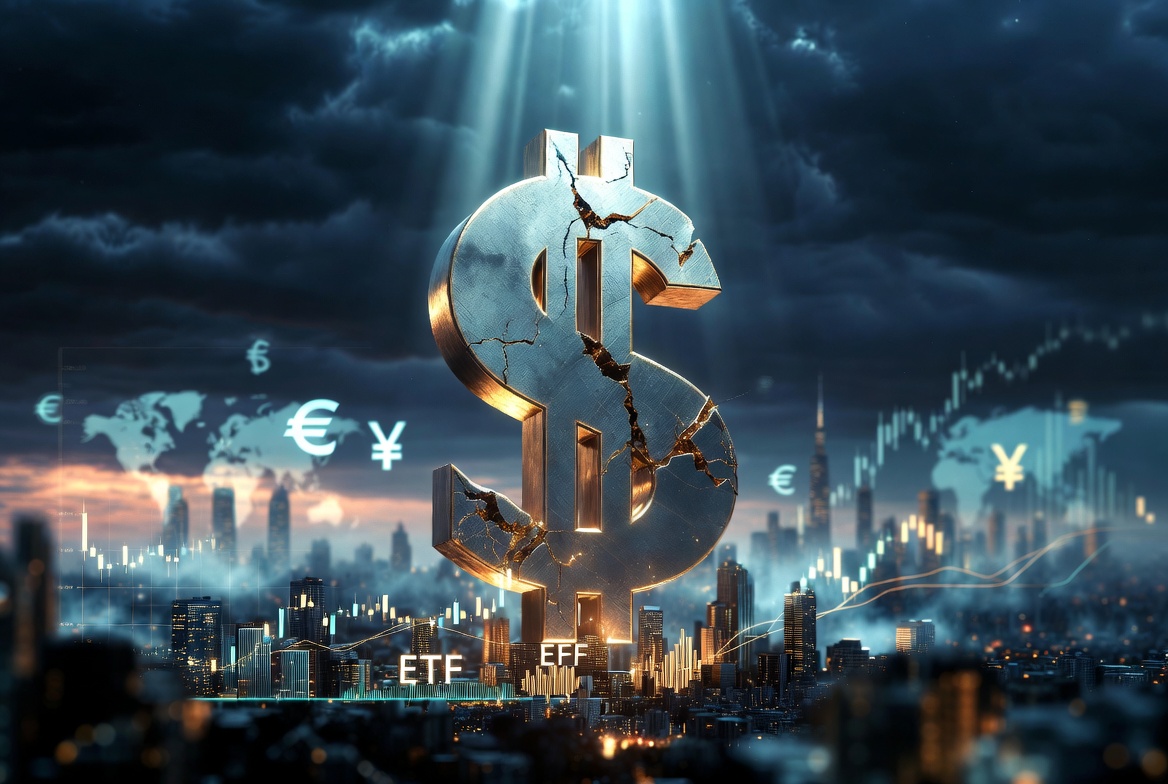
What if the Dollar $USDOLLAR isn’t quite as bulletproof as it once was?
The US Dollar remains the world’s dominant reserve currency and the backbone of many portfolios - including mine. Yet nothing lasts forever without vigilance. Gradual shifts in global trade, fiscal trajectories, and reserve diversification are worth watching.
$DXY currently trades near 98.2. While it still benefits from deep liquidity and US economic strength, longer-term pressures exist. Smart risk management means not putting all eggs in one currency basket.
That’s core to how I invest: large exposure to high-quality US assets with strong fundamentals, balanced by diversification across sectors, asset classes, and a portion of non-US opportunities. I buy quality, hold patiently (average ~34 months), and keep flexibility to act when valuations improve.
Currency moves are part of the cycle. My edge is staying disciplined through them - focusing on real businesses and compounding over years, not betting on short-term forex swings.
This is why I recommend a minimum 1-year copy period. Volatility is expected; patience is rewarded.
If a structured, long-term approach to quality assets appeals to you, feel free to copy the portfolio.
Disclaimer: This update reflects my personal market views and portfolio positioning. It is shared for information and transparency purposes only and should not be considered investment advice or a recommendation to buy or sell any financial instrument. Markets involve risk, and past performance does not guarantee future results. Always assess your own financial situation and risk tolerance before making investment decisions.
⚠️Weekly report for 20.04.–26.04.2026⚠️
The $SPX500 just closed its best month since November. In the middle of an active war.
That tells you something important about how markets are wired right now - they are forward-looking, earnings-driven, and increasingly desensitized to geopolitical headline risk. Fear is still present. But conviction in the long-term earnings story is proving stronger.
The week opened with a critical question: would the two-week Iran ceasefire hold, expire, or get extended? On Wednesday, President Trump extended the ceasefire indefinitely, even as Iran continued to control Strait of Hormuz access and refused direct negotiations. Markets took the extension as a net positive - not a resolution, but enough runway to keep the risk-on rotation alive. The $SPX crossed 7,100 for the first time in its history earlier in the week, and closed the week at 7,165, with the $IXIC finishing at 24,836 and $BTC hovering around $78,000.
Earnings season was the real engine this week. The quality of results has been the defining feature of April - and the message is clear: corporate fundamentals are absorbing the macro shock better than feared.
$TSLA reported Q1 revenue of $22.4 billion, up 16% year over year, beating analyst expectations on revenue, EPS, and free cash flow. The market reaction was mixed - investors fretted over the company's plan to spend $25 billion in capex this year as it pivots from EVs toward Cybercabs, robotics, and AI infrastructure. A beat masked by a transition story the market hasn't fully priced. $INTC was the week's standout surprise, climbing 25% to an all-time high after easily topping Wall Street's revenue and earnings consensus, with data center and AI revenue rising 22% year over year. $AMD followed with a 12% gain as the AI demand signal from $INTC rippled through the semiconductor space.
$IBM and $NOW were the week's notable disappointments - $IBM fell over 7.5% despite beating on revenue and EPS, as maintained full-year guidance disappointed, while $NOW dropped nearly 18% after Middle East conflict headwinds pressured subscription revenue growth. The software sector is navigating a real question: which platforms survive the AI transition and which ones get disrupted by it. That bifurcation will matter more as the year progresses.
The bigger test arrives next week. $AMZN $GOOGL $MSFT and $META are all reporting on April 29. The market is no longer rewarding AI spending on faith alone - $MSFT's Azure and Copilot results will need to show that heavy investment is translating into tangible revenue growth, while $META advertising business will be watched for evidence that AI tools are meaningfully accelerating monetization. $GOOGL has outperformed among the group year-to-date, with cloud revenue growth accelerating sharply and analysts expecting further acceleration in Q1 2026. These four reports, combined with the April 28–29 FOMC meeting, make next week one of the most data-dense of the year.
On the Fed: the market is also navigating Fed leadership transition risk, with Powell's term expiring May 15 and Kevin Warsh's Senate confirmation hearing scheduled. Uncertainty around the next Fed chair's policy posture is a genuine wildcard for rate expectations heading into Q2.
On $BTC: the week was constructive. $BTC climbed to approximately $77,500 mid-week following the ceasefire extension and a $2.54 billion purchase by Strategy - its largest $BTC acquisition since 2024 - lifting their total holdings to 815,061 coins. April spot $BTC ETF inflows are approaching $2 billion for the month, the fourth consecutive week of net inflows. $BTC is up over 13% in April, on pace for its strongest monthly performance in a year. The $80,000 level remains the key test - a clean break above it would signal the recovery has genuine momentum behind it.
The broader picture for long-term investors hasn't changed. The US tech sector is up 11% in April alone, earnings expectations continue to be revised higher, and $BLK investment institute is now overweight US equities - pointing to exactly the kind of environment where patient, diversified positioning earns its keep. Volatility will remain elevated as long as the Middle East situation is unresolved and Fed leadership is in transition. But the fundamental backdrop - earnings growth, AI capex deployment, and institutional accumulation of risk assets - remains intact.
The noise is loud. The signal is still positive.
If this long-term, fundamentals-driven approach fits your time horizon, you can copy the portfolio directly on eToro.
Disclaimer: This update reflects my personal market views and portfolio positioning. It is shared for information and transparency purposes only and should not be considered investment advice or a recommendation to buy or sell any financial instrument. Markets involve risk, and past performance does not guarantee future results.
⚡Why Interest Rates Matter More Than Earnings in 2025 - Here’s What $USDOLLAR and $VIX Are Really Signaling⚡
Hey everyone,
Here’s the simple version first: rates are driving almost everything right now - stocks, crypto, commodities, and even cash flows. Earnings matter, but policy direction matters more.
Now the full breakdown:
Why I’m watching rates more than earnings
We’re in a cycle where central banks still haven’t fully signaled the path for 2026. That means moves in $DXY and $VIX are telling us more about positioning than quarterly numbers from $AAPL or $MSFT When yields rise, mega-caps cool. When yields soften, everything with duration - from $QQQ to growth ETFs to crypto - reacts instantly.
What $DXY is telling us
The dollar has stayed stronger than many expected. A firm $DXY usually pressures $SPY , hurts commodities like $GC=F, and tightens conditions globally. It also slows flows into risk assets such as $BTC and $ETH . For now the index is signaling “not loose enough yet.”
What $VIX is telling us
$VIX remains low, which means investors aren’t pricing real fear into the market. But low volatility during high-rate uncertainty is often a setup for sharper swings.
Positioning thoughts as a long-term investor
I’m focusing on assets that benefit when rates eventually cool: quality tech, crypto leaders, and sectors tied to long-cycle themes. I’m staying selective in equities like $GOOG and $NVDA , watching rate-sensitive names in $ARKK , and keeping exposure to real assets that shine when policy shifts.
Question for you:
Do you think rates will fall fast enough next year to spark a broad rally, or will central banks keep pressure on risk assets longer?
If you want to follow my approach and get long-term positioning clarity each week, tap Copy on my profile.
⚠️ Disclaimer:
Past performance is not an indication of future results.
Trading history presented is less than 5 complete years and may not suffice as a basis for investment decisions.
This is not investment advice.