Spent 15 years making sure servers don't fall over at 2am.
Now I build AI agents. https://t.co/d7wNKC5lKa
Turns out the mindset is identical.
Don't over-engineer. Keep it simple. Make sure it works when nobody's watching.
Good infrastructure is invisible. Good AI should be too.
The #1 mistake I see when businesses start with AI:
They try to automate everything at once.
Start with one thing. One repetitive task your team does every single day. Fix that first.
When that works, you'll know exactly where to go next.
Best advice I got in my 20s: Nobody cares. When you’re winning, nobody cares. When you’re losing, nobody cares. Stop fearing the judgement of people who were never even thinking about you. Nobody is thinking about you. They’re too busy thinking about themselves. Go do the thing.
bro was right.
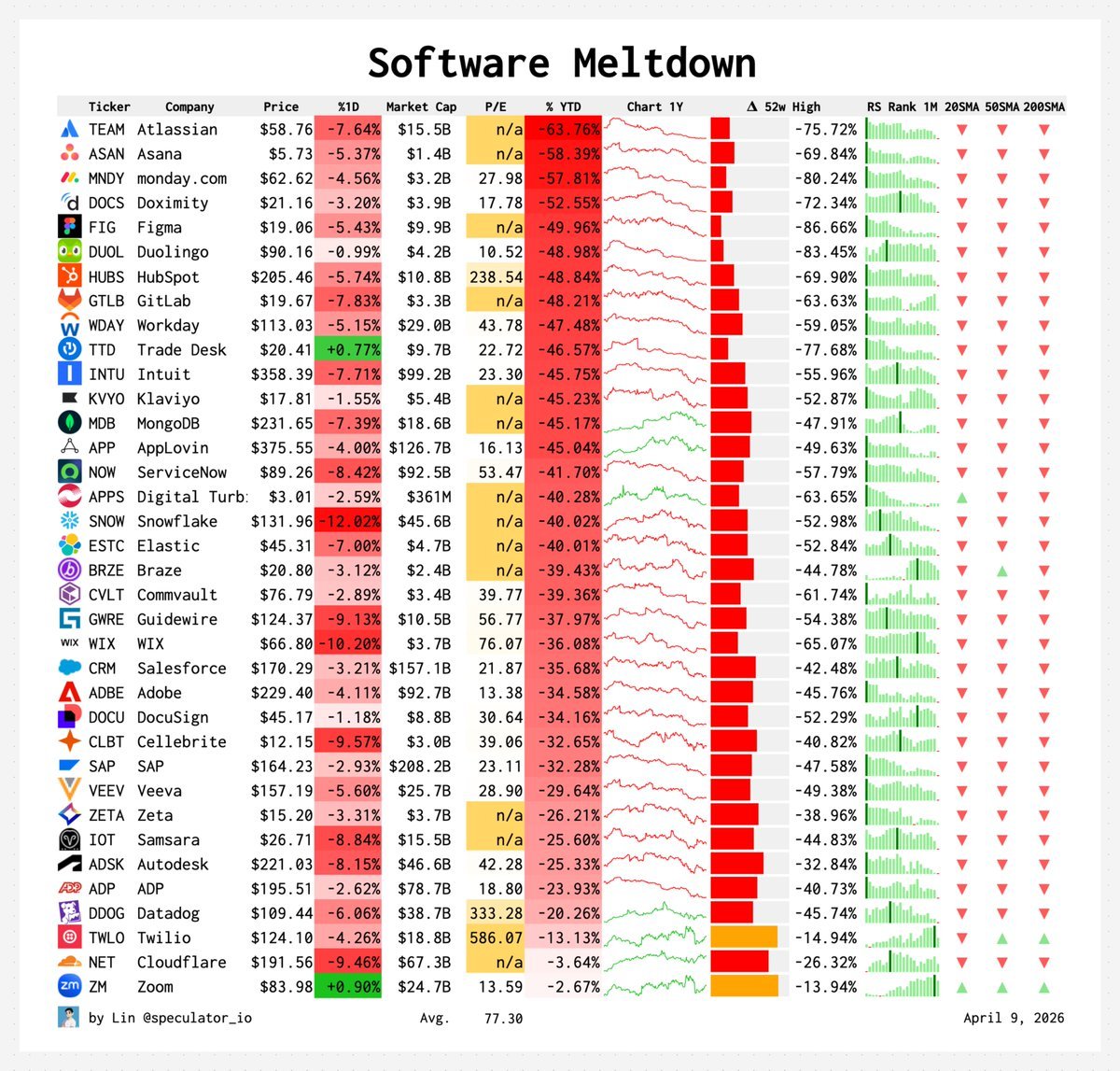
Atlassian down 75%. HubSpot down 69%. Figma down 86%.
Almost all of them down 30–70% from their 52-week highs.
AI is literally eating software alive and repricing every company in real time.
SaaS is cooked fr 😭
Amelia, our Chief AI Officer, spends 30% of her time monitoring and managing our 30+ AI agents — not building them.
Nobody tells you that part.
Agent ops is a real job now.
@KenSchnetz@SahilBloom It’s such a difficult trait to celebrate others wins! It’s good, but difficult. If you really have that nerve in you, who celebrates every time someone else wins, you are genuinely a very good person. Absolutely respect 🫡
My biggest takeaways from @bcherny:
1. Coding is now “solved” for most use cases. Boris hasn’t written a single line of code by hand since November, with 100% of his work now authored by Claude Code. At the same time, he remains one of the most productive engineers at Anthropic, shipping 10 to 30 pull requests daily while leading the team.
2. Anthropic has seen a 200% increase in engineer productivity since adopting Claude Code. As Boris notes, “Back at Meta, with hundreds of engineers working on productivity, we’d see gains of a few percentage points in a year. Now we’re seeing hundreds of percentage points.”
3. AI is moving beyond writing code to generating ideas. “Claude is starting to come up with ideas. It’s looking through feedback, bug reports, and telemetry, then suggesting features to ship.”
4. The next roles to be transformed are those adjacent to engineering. Product managers, designers, and data scientists will see similar transformations as agentic AI expands beyond coding. “Any kind of job where you use computer tools will be next.”
5. Build for the model six months from now, not today. One of Boris’s key principles is to design products for future AI capabilities, not current ones. “It’s going to be uncomfortable because your product-market fit won’t be very good for the first six months. But when that model comes out, you’ll hit the ground running.”
6. Watch for “latent demand.” Claude Code was built by observing what people were already trying to do, and then making it easier. Cowork emerged when they noticed people using Claude Code for non-coding tasks like analyzing MRIs or recovering wedding photos from corrupted drives.
7. Don’t optimize for token cost. Boris advises companies to give engineers unlimited tokens during experimentation phases. “At small scale, the token cost is still relatively low compared to their salary. If an idea works and scales, that’s when you optimize it.”
8. Underfund headcount on purpose. When Boris puts one engineer on a project, they’re forced to let AI do more of the work. Constraint drives creative use of AI tooling, not just faster typing.
9. The most successful people in the future will be generalists. “Try to be a generalist more than you have in the past. Some of the most effective engineers cross over disciplines. The people who will be rewarded most won’t just be AI-native—they’ll be curious generalists who can think about the broader problem they’re solving.”
10. Always use the most capable model, not the cheapest. A less intelligent model often burns more tokens correcting mistakes than a smarter one spends getting it right the first time. Boris runs maximum effort on Opus 4.6 for everything.
Here's the full conversation: https://t.co/4hHAEq0Nto
Every single thing you want in life is on the other side of something that sucks. That suck might be 100 hard workouts, 100 bland meals, 100 hours of focused work, or 100 hard conversations. Embrace the cost of entry. The answers you seek are found in the actions you avoid.