💡 Web3 Market Reality Check – Week 6
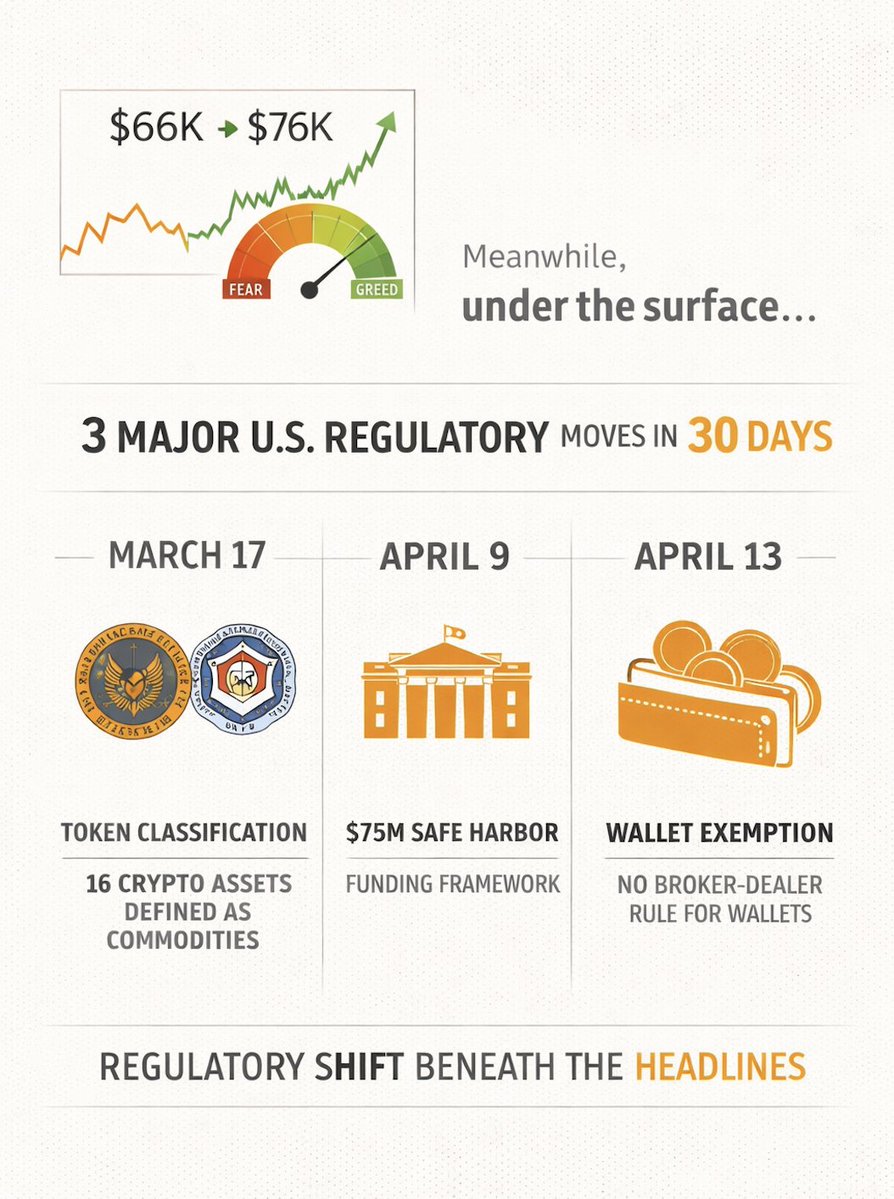
Bitcoin ripped from $66K to $76K this week on Iran peace signals and $277M in short liquidations. Fear and Greed flipped from 60+ days of extreme fear straight into Greed territory. Great headlines.
Here's what got buried underneath all of it.
Three separate U.S. regulatory actions landed in the last 30 days.
March 17: The SEC and CFTC issued a Joint Interpretation formally classifying 16 crypto assets as Digital Commodities under a new five-category token taxonomy. BTC and ETH were already broadly treated as commodities long before this. What changed was the status of assets like Solana and XRP. XRP spent years in legal limbo because of the Ripple lawsuit. SOL's classification was actively debated. Both are now formally settled, jointly signed by both agencies.
April 9: Reg Crypto landed. A $75M fundraising safe harbour for crypto projects, with reduced disclosure requirements. A separate startup track lets early-stage projects raise up to $5M over four years. It's at the White House for final review before public comment. Not final yet, but the framework itself is the first legal fundraising structure specifically built for crypto in U.S. history.
April 13: The SEC exempted crypto wallet interfaces from broker-dealer registration entirely.
Classification. Fundraising. Interface regulation. Thirty days.
If you're a founder, there's now a legal path to raise in the U.S. that didn't exist a month ago. If you're running a listing desk, the assets that actually shifted in compliance terms aren't BTC and ETH. It's the 14 assets below them that just got formal classification for the first time.
The CLARITY Act markup is targeted for the second half of April. If it clears, the U.S. will have shipped more regulatory clarity in Q2 2026 than in the previous five years combined.
Everyone's watching the price. The regulatory stack underneath it is the story of the quarter.
Bitcoin miners are losing $19,000 on every coin they produce right now.
Production cost: $88,000. Market price: $69,000. Hash rate down 22% in two weeks.
That's the capitulation story. Here's the more important one.
Over $70 billion in AI and high-performance computing contracts have been signed by publicly listed miners. Core Scientific sold $175 million in BTC in January — not to exit, but to fund the transition. Bitdeer's Bitcoin treasury hit zero in February. Some of these companies are projected to generate 70% of their revenue from AI by end of 2026.
This makes sense when you look at the infrastructure. Mining and AI inference run on the same physical stack: power, cooling, high-density compute. Right now, AI generates better margins on that stack than proof-of-work does.
Historically, deep miner capitulation phases — 2018 to 2019, post-LUNA 2022 — have preceded Bitcoin's sharpest recoveries. That pattern may still hold.
What's different this cycle: the survivors aren't rebuilding the same mining business. They're building something else entirely. Fewer machines, fewer coins produced, and AI revenue subsidising whatever mining remains.
The miners still standing in six months will look less like mining companies and more like infrastructure providers who happen to hold Bitcoin.
Watch what they do next.
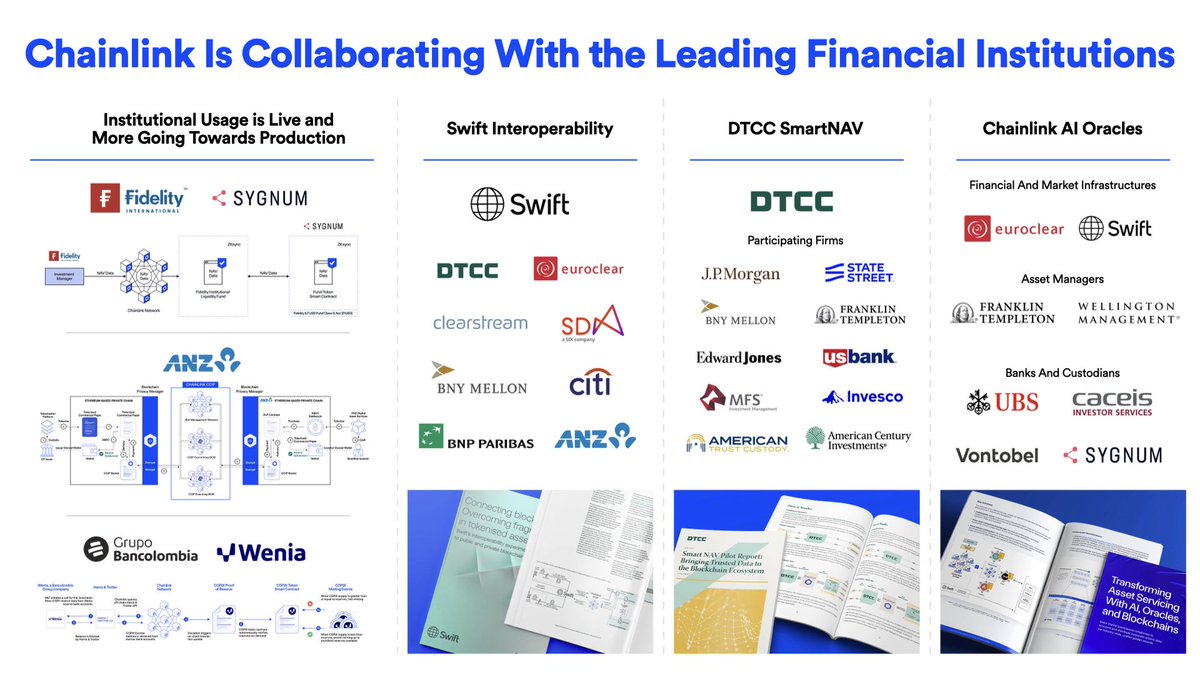
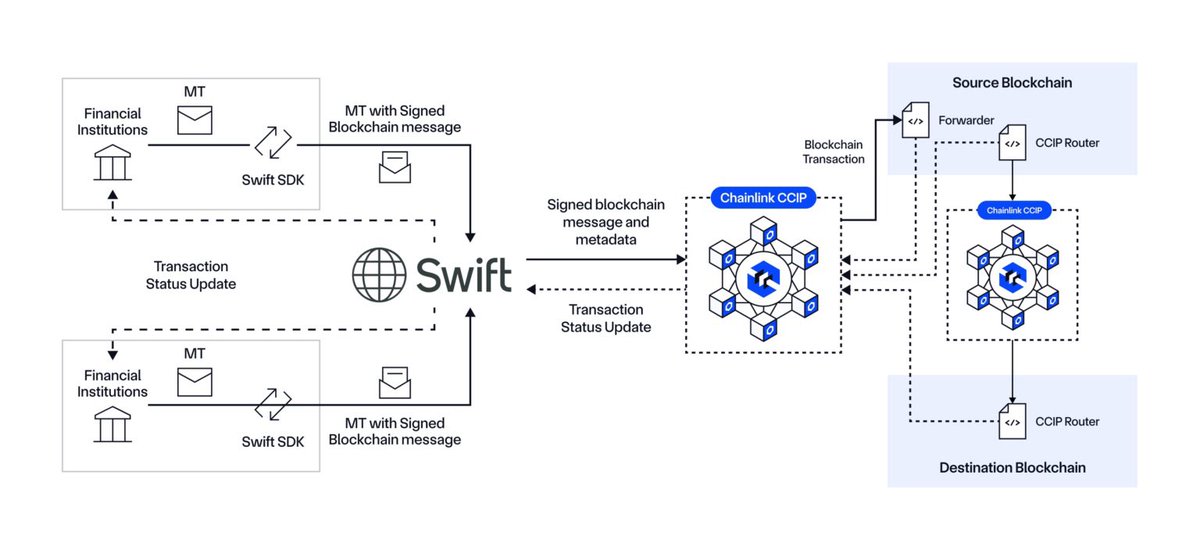
People claim $XRP will replace Swift, when in reality Swift is working with @Chainlink to connect 11,500 Swift member banks to any public/private blockchain
There’s a million examples of this kind of disconnect between narrative and reality
$LINK = institutional coin
$LINK is everything people thought $XRP was supposed to be
Onboarding all the world’s largest institutions onchain
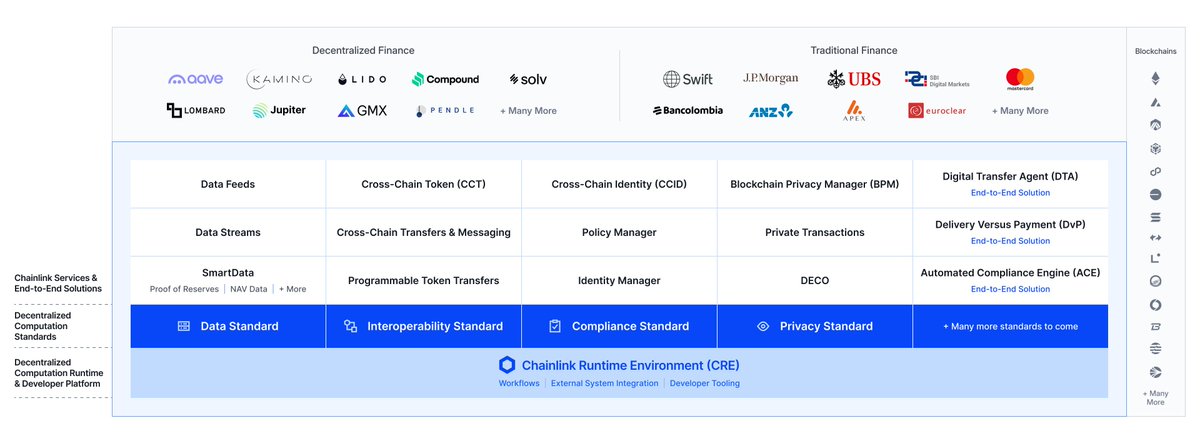
Swift, DTCC, Euroclear, J.P. Morgan, Mastercard, Central Bank of Brazil, UBS, SBI, ANZ, Fidelity International, and more all working with Chainlink
$LINK is everything people thought $XRP was supposed to be
Onboarding all the world’s largest institutions onchain
Swift, DTCC, Euroclear, J.P. Morgan, Mastercard, Central Bank of Brazil, UBS, SBI, ANZ, Fidelity International, and more all working with Chainlink
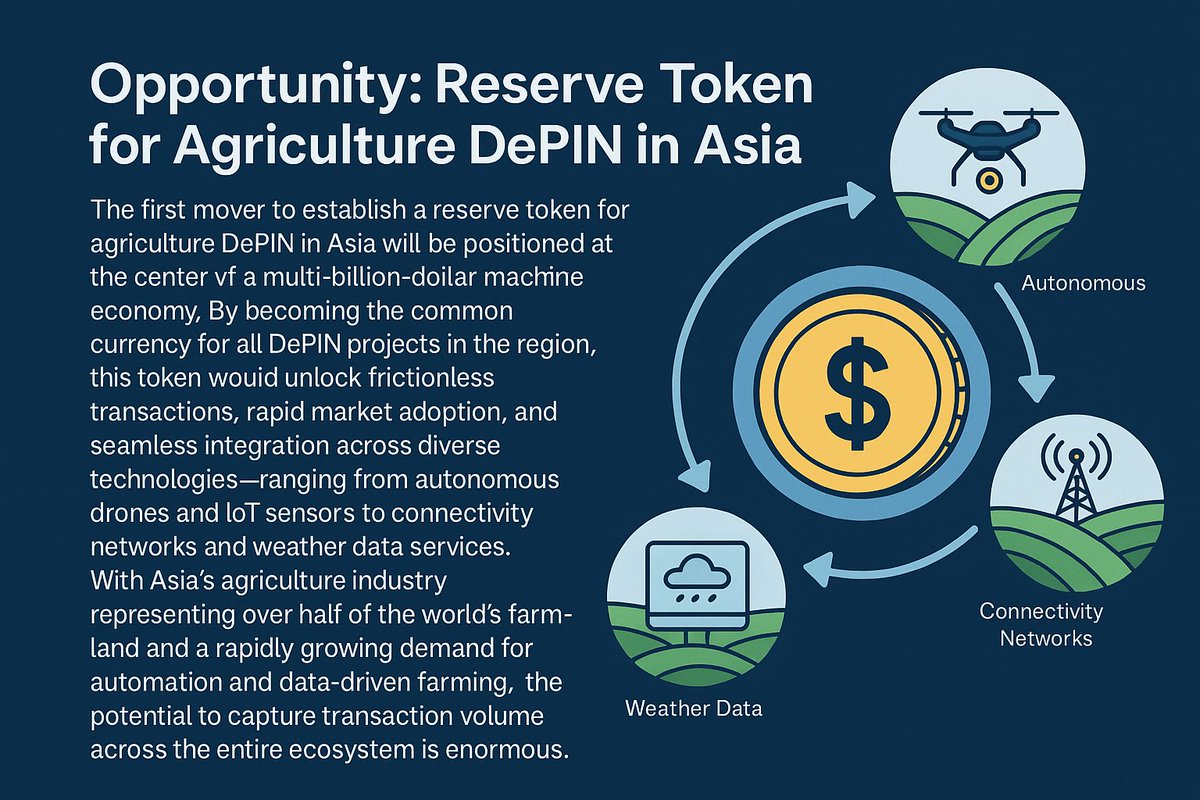
The first mover to establish a reserve token for agriculture DePIN in Asia will be positioned at the center of a multi-billion-dollar machine economy. By becoming the common currency for all DePIN projects in the region, this token would unlock frictionless transactions, rapid market adoption, and seamless integration across diverse technologies—ranging from autonomous drones and IoT sensors to connectivity networks and weather data services. With Asia’s agriculture industry representing over half of the world’s farmland and a rapidly growing demand for automation and data-driven farming, the potential to capture transaction volume across the entire ecosystem is enormous. The entity that provides this unifying currency won’t just participate in the market—it will become the market’s financial backbone.”
#DePIN #Web3 #MachineEconomy #BlockchainInnovation #DigitalInfrastructure #TokenEconomy #AgriTech #SmartFarming #AgriDePIN #AsiaAgriculture #FarmTech #AgTechAsia #NextIndustrialRevolution #FutureOfFarming #ConnectedEconomy #TokenizedFuture #DigitalTransformation #SustainableFarming #peaq #Binance #okx #Coinstore
10/
The bet is simple:
BTC opened the door. ETH is walking through it.
ETH is the next institutional asset.
As Tom Lee said: “ETH is the next Bitcoin.”
👇 Are you positioned for the ETH institutional wave?
7/
Meanwhile, ETH ETFs are quietly heating up.
Yesterday, they saw $717M in inflows, the largest in ETH history.
They’re already on the verge of flipping BTC’s inflows.
This is what real institutional demand looks like.
6/
And this is just the beginning.
We’re only 1 month into a race between ETH treasury firms, some aiming to accumulate ETH at the scale of Michael Saylor’s BTC strategy.
Many of the largest haven’t even launched yet.
5/
Then came the shift.
Wall Street insiders began making ETH-native bets:
@ethereumJoseph launched @sharplink
Tom Lee’s @fundstrat launched @BitMNR , with Peter Thiel backing it
For the first time, ETH is being positioned as a treasury reserve asset.
4/
📈 ETH fundamentals are exploding:
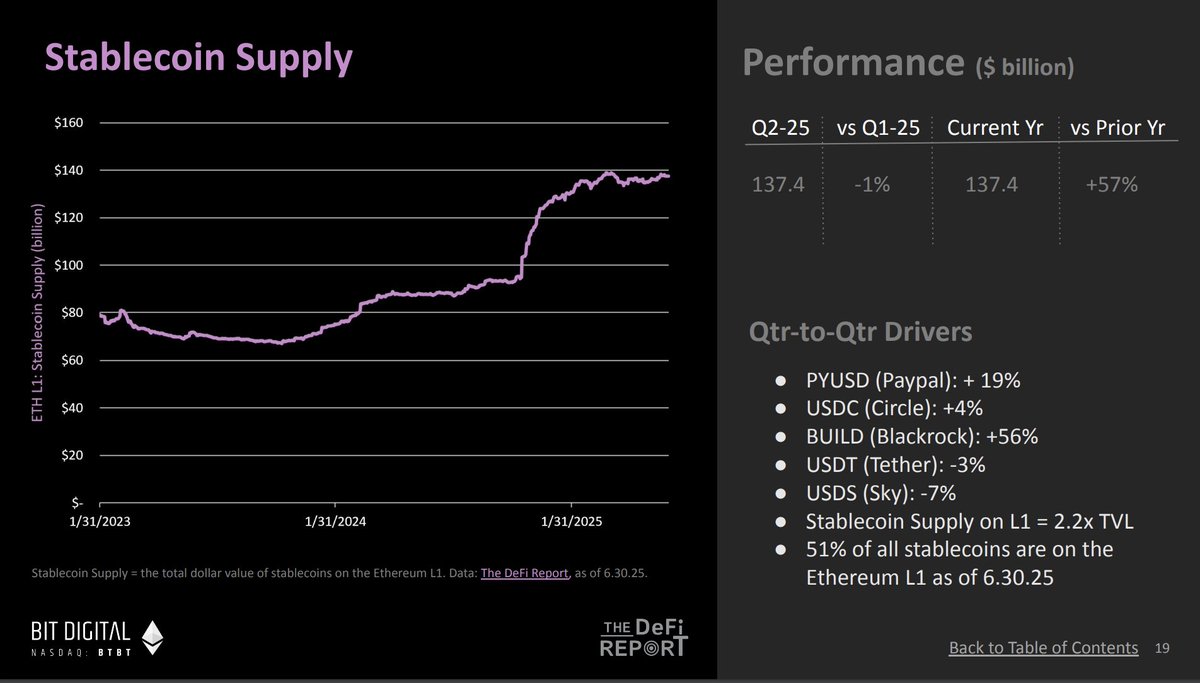
Stablecoin supply at ATH (before GENIUS Act kicks in)
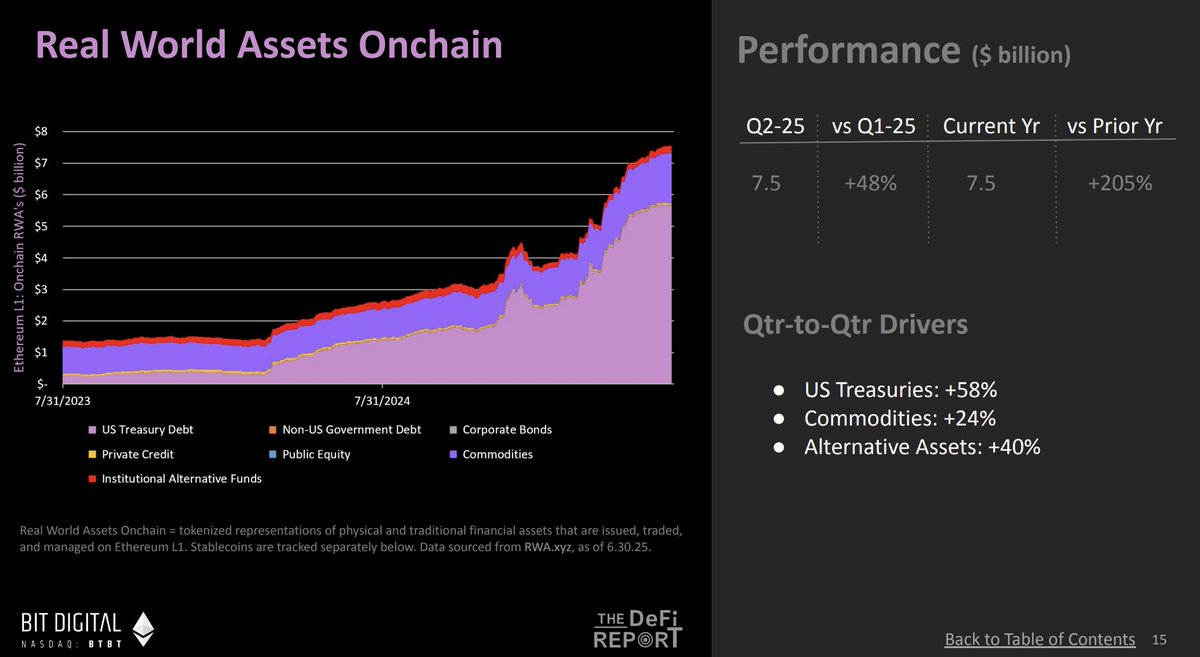
RWA tokenization gaining momentum, a $100T+ opportunity
Major players like Robinhood launching L2s secured by Ethereum
3/
As BTC rallied, many assumed it would be the only institutional-grade crypto asset.
Narrative follows price.
So even though Ethereum leads in stablecoins, tokenization, and L2s, buyers stayed sidelined.
But the smart money never stopped building on ETH.