@festus1501 The govt should take the lead and be transparent and accountable in borrowing by following the provisions of FRA 2007 to the letter.
Governance is all about following the rule of law which in turn would make the process of obtaining loans more open to public scrutiny. End
@festus1501 Over the years, there has been allegations that the Federal govt has violated the Act especially in the area of borrowing on concessional terms as well as pointing out the cost benefit analysis or repayment plans as required by Section 44(1)/3
One of the best TV series of the 20th century!
The series enriched my knowledge about slavery and its brutality on blacks during transatlantic slave trade.
I first read the book during my undergraduate days and later watched the series.
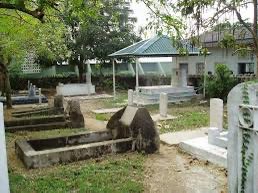
Each time we visit my mother in law’s grave in Ibadan, I see the headstone of a South African Air Force officer in front of her’s.
Lt. Pieter de Jager Fritz, a 22-year-old pilot, died in 1941.
I know the Commonwealth keeps meticulous grave records, so I decided to research.
From food, fashion, health, high visibility board membership and even politics, Africans keep upscaling their value in Canada.
This is the crux of my report for Afri-Canada.
Full 7 mins report is on YouTube. Link below.
Kindly subscribe as you watch.
https://t.co/nAZrdVnPmn
Whenever your aged parents are traveling from hot temperature Nigeria to a cold temperature country always advise them to do these things I’m about to highlight
Stay hydrated (drink water, avoid excessive alcohol/caffeine).
• Move around: walk the aisle periodically, do ankle/calf exercises.
• Consider compression socks for longer flights.
These will help keep blood circulation active and warm enough to welcome cold weather, this is not the first time we are losing our parents to the cold hands of death in this similar situation.
May her soul rest in the bosom of our lord 🙏
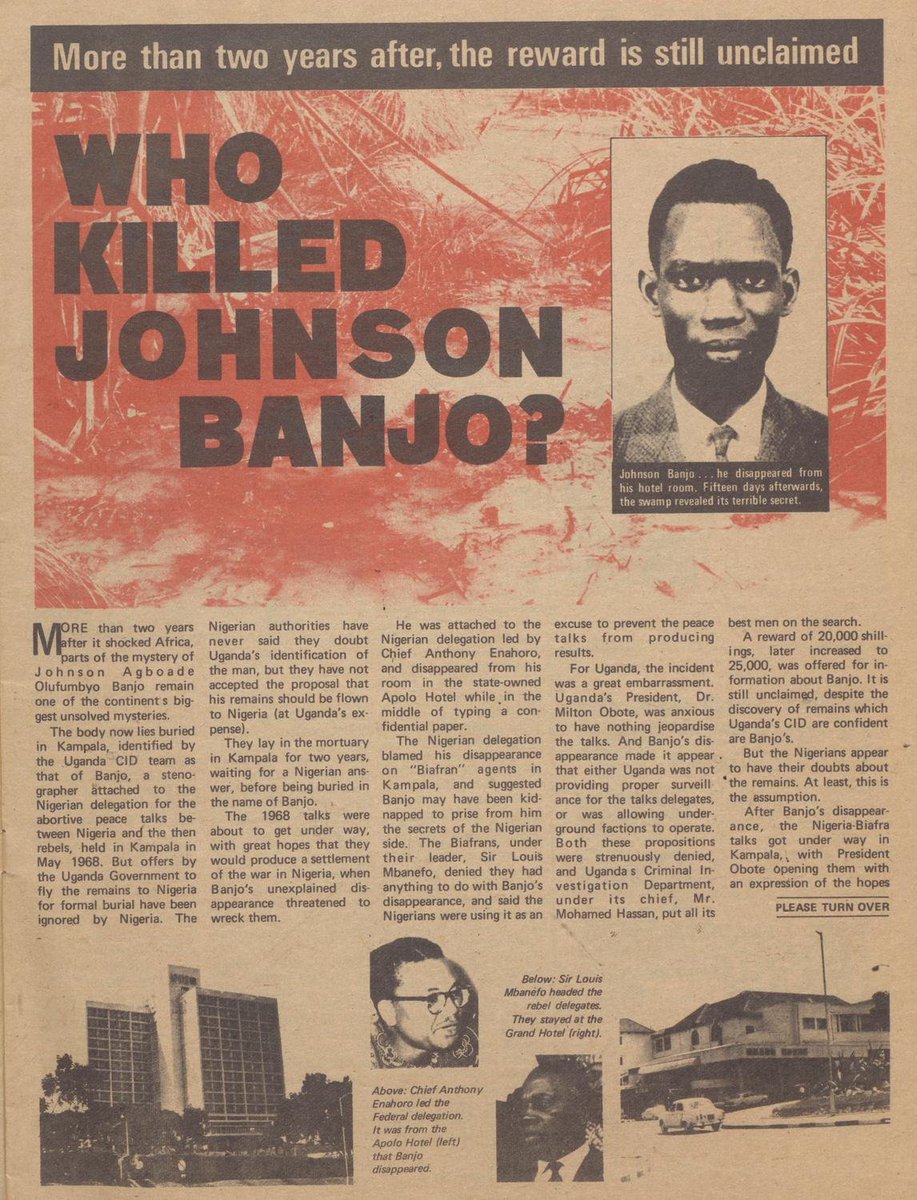
In the middle of the civil war in May 1968, Nigeria and Biafra met in Uganda for peace talks. The Nigerian delegation included Johnson Banjo, a 35-year-old typist who would become the main character of a mystery that remains unsolved till today.
Here’s what happened, according to DRUM:
▶️ On May 23, the day after he arrived in Uganda, Banjo disappeared from his hotel room while typing a confidential memo. Uganda’s Criminal Investigation Department, led by Mohammed Hassan, kept the incident quiet for four days, hoping to find him without causing a scene, but no one could explain what happened.
▶️ The Nigerian delegation, led by Chief Anthony Enahoro, accused the Biafran delegation of kidnapping Banjo to torture him for state secrets. The Biafran delegation, led by Sir Louis Mbanefo, accused Nigeria of using the incident as an excuse not to discuss peace.
▶️ Uganda was desperate to avoid disaster and offered a reward of 20,000 shillings, later raised to 25,000 shillings, but Banjo was nowhere to be found.
▶️ 15 days after he went missing, operatives discovered a swollen body in a remote swamp. Naked except for underpants, the body had decomposed severely. Nearby, police found a shirt and a pair of trousers.
▶️ Autopsy results suggested the man had been starved before drowning in mud and water. Despite some doubts from Nigeria, forensic comparison with an old passport photo, using overlay methods, confirmed the body was Banjo.
▶️ Uganda offered to return the body, but Nigeria stayed silent. For more than two years, Banjo’s remains waited in a Kampala mortuary. Tired of the stalemate, the Ugandan government buried him with no rites, no farewell, and no word from home.
▶️ No one ever admitted responsibility for Banjo’s disappearance and apparent murder. Some blamed Biafran intelligence. Others suspected someone on the Nigerian side. Had Banjo overheard something he shouldn’t have? Was he used to send a message? Or was he just a pawn in a bigger game?
▶️ The peace initiative that brought Banjo to Uganda ultimately failed, and everyone else returned home. It didn’t stop the civil war, but it marked the end of his life. To this day, the circumstances remain unclear. How did he die? Why? Who killed Johnson Banjo?
In 2003, Lawrence Agada, the general cashier of Sheraton Hotel, donated two generators (₦5.9 million) and 500 plastic chairs to Christ Embassy Church, where he also served as an assistant pastor. In March that year, he was accused of funding the donations with ₦39 million he stole from his employer.
According to a Newswatch report:
▶️ Agada confessed to stealing ₦39 million, admitting that part of the money was used to finance the church donations.
▶️ Two months after the scandal broke, Christ Embassy returned the generators and chairs. The recovered items were kept at the Ikeja Police Headquarters, where the case was being handled. But the matter did not end there.
▶️ Despite the return of the items, Sheraton’s director of security, Hezy Imonivwerha, petitioned the police, claiming Agada had confessed to channelling additional funds to the church through payments made to specific pastors.
▶️ The church disputed this account. Its solicitor, Chris Ebare, said Agada told him that several Sheraton staff members benefited from the stolen money, which he claimed to have shared among them.
▶️ Ebare said Agada was pressured to name only the church as a beneficiary because it was able to return the items donated to it.
▶️ He also questioned the ₦39 million figure, alleging that Agada confessed under duress after he was detained at the hotel for two weeks.
▶️ Following the public disclosure of the theft, Sheraton’s French finance director, Sakis Karagunznen, resigned and left Nigeria.
According to a P.M. News report:
▶️ In June 2003, Agada was arraigned before an Ikeja Magistrate’s Court. In his confessional statement tendered in court, he admitted to stealing the money and said it was used for the development of Christ Embassy.
Traffic no dey lie.
If you want to truly understand a country, sometimes you don’t need newspapers or political speeches.
Just watch how people behave on the road.
Traffic tells you everything.
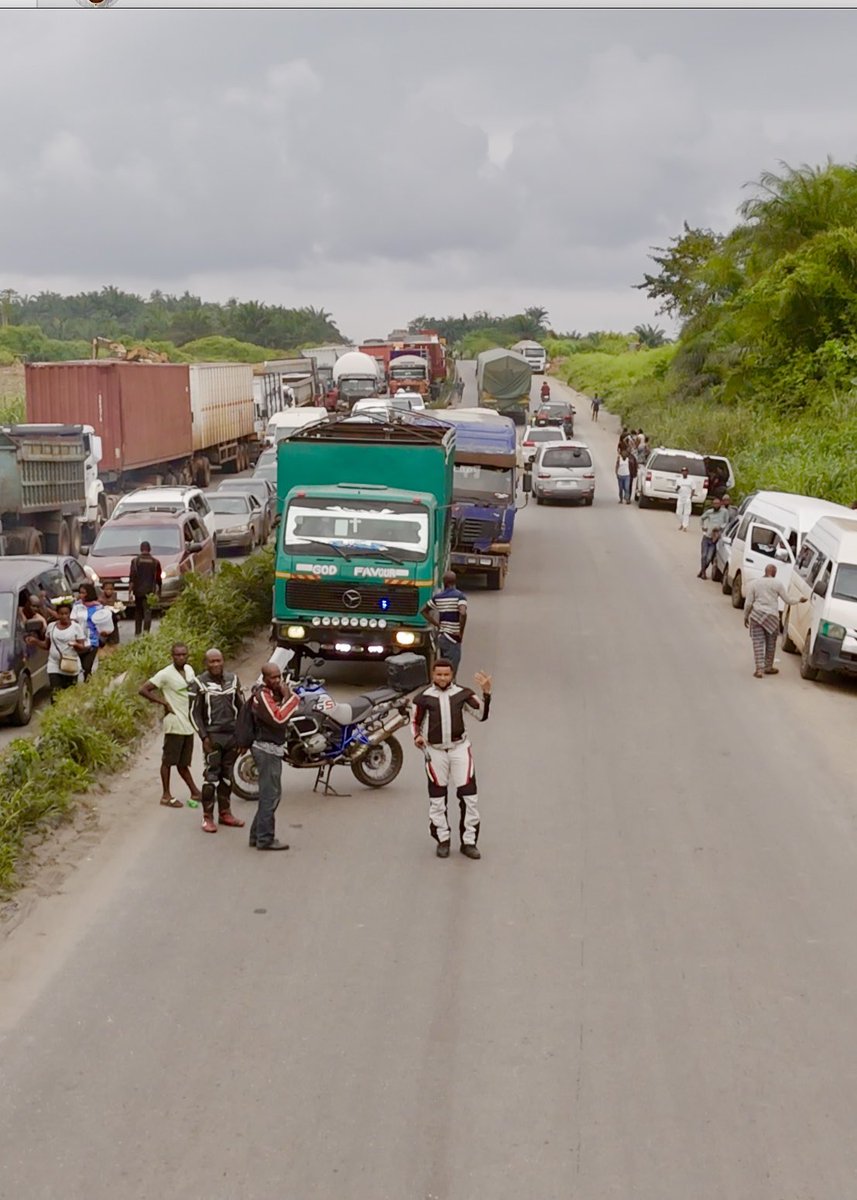
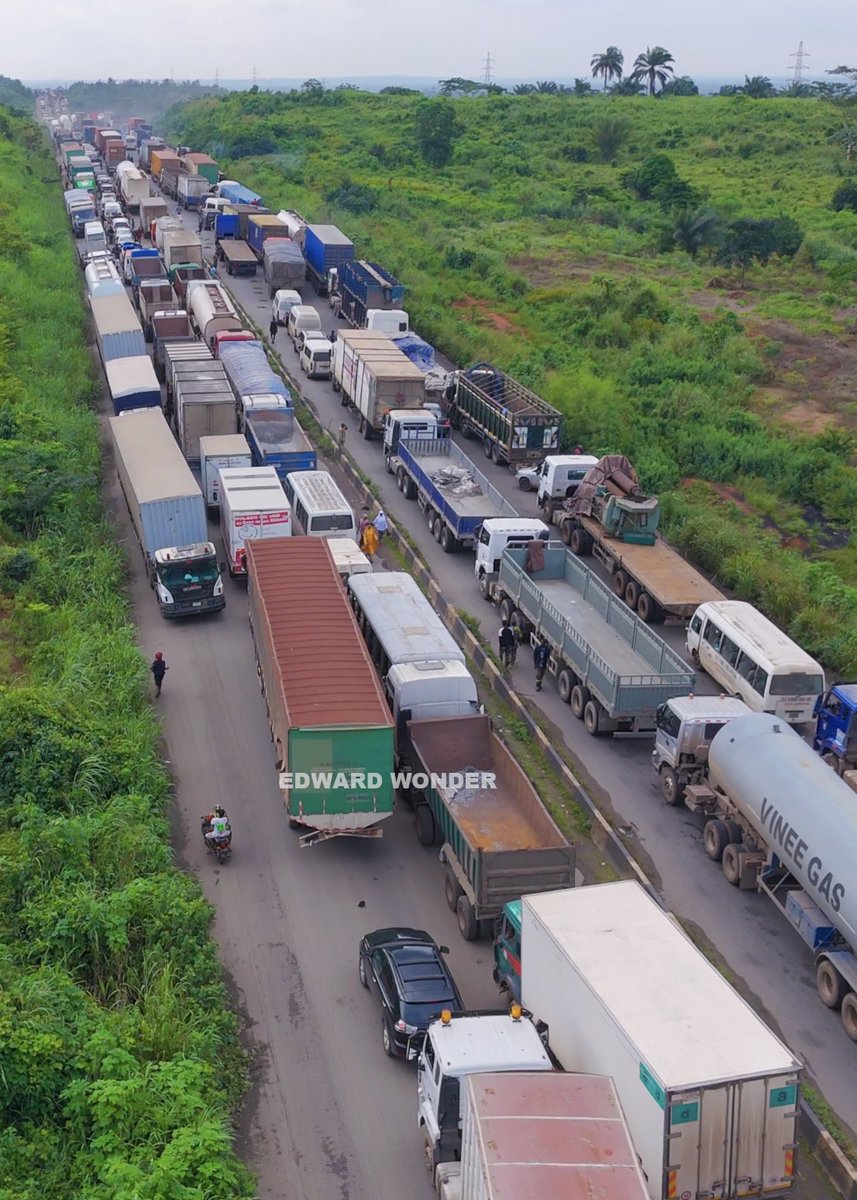
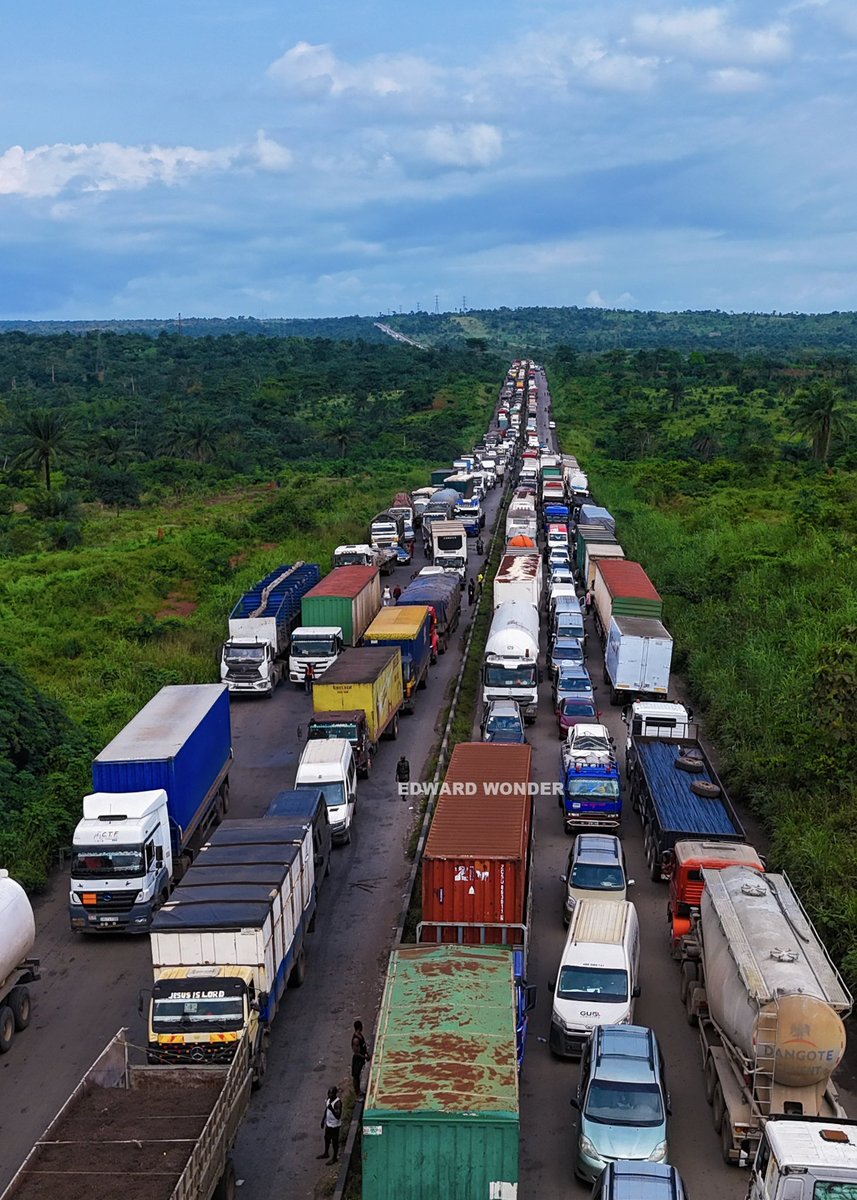
On the Benin–Ore expressway, I experienced this in real time. We ran into one of the longest traffic jams I’ve ever seen almost 10km. Ahead of us, a truck had fallen on a bridge and blocked the road completely.
What should have been a manageable delay quickly turned into chaos. Instead of patience, drivers started driving against traffic. Before long, both lanes were blocked. Total gridlock.
No road safety on sight. No coordination. Just frustration.
My riding partner, Buchi, and I couldn’t just ride past. “We no fit just waka pass and pretend say e no concern us”.
Buchi moved closer to the bridge to help manage traffic near the fallen truck, while I stood on the other end, facing drivers determined to go the wrong way.
E no easy at all. People don tire. One man begged me, Abeg make I pass.”
Another even offered me ₦3,000.
I told them, “I no be corrupt officer. I be traveler like you. If I allow you pass, na una go block una selves. We just dey try help.”
For 2hrs, we battled impatience, horn blasts, and arguments. Slowly, as local cranes lifted the truck and drivers began to cooperate, movement returned. The 10km frustration finally cleared.
That day on Benin–Ore road taught me something deep about us, our impatience, our disregard for order, and how sometimes we mirror the leadership we complain about.
But it also showed something else:
Sometimes, ordinary citizens can step up, take responsibility, and make a difference — even if it’s just for a few hours on a busy highway.
In this kind of situation, what would you do?
Wait? Drive against traffic? Or stop and help?
WAIT… HOLD ON. HOLD ON. (drinks water)
₦2 BILLION WORTH OF SHARES??? In Nigeria? Not possible.
Nah. Not in Nigeria!
I’m honestly gobsmacked.
What you’re about to read next is not normal.
This will utterly shock you.
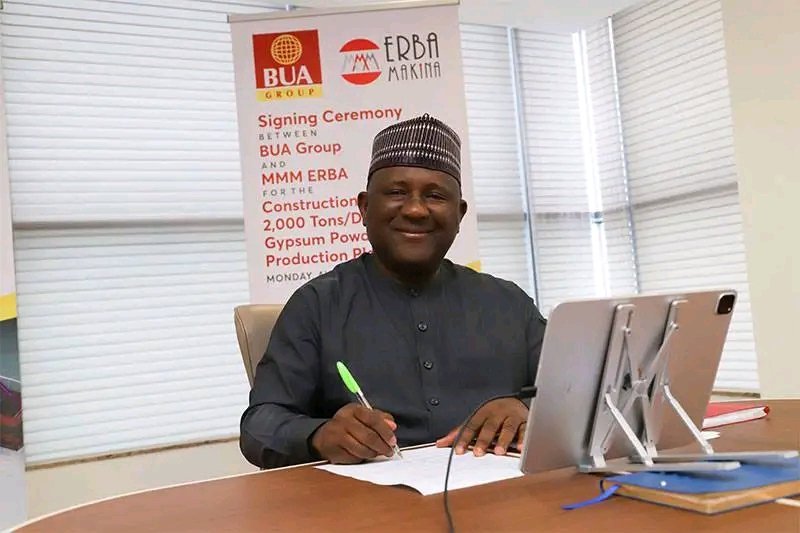
So just a few days ago, I made a post about how Alhaji Abdul Samad Rabiu gave out ₦30 BILLION to his employees.
And I truly thought that was the peak.
Then something interesting happened. One of his employees (I guess) sent me a DM and casually said,
“Oga, he has been doing this for years.”
He mentioned 2021, that Alhaji Abdul Samad Rabiu had given out shares.
I was impressed.
I really was.
But my schedule over the week didn’t give me room to properly dig in.
So this morning, I deliberately took that journey, to verify, understand, and get context.
And BOOM 💥
There it was.
The grand story.
Waiting like a bo*mb ready to explode.
₦2 BILLION worth of shares.
Let me say that again.
₦2 BILLION worth of shares given to employees.
Not company shares.
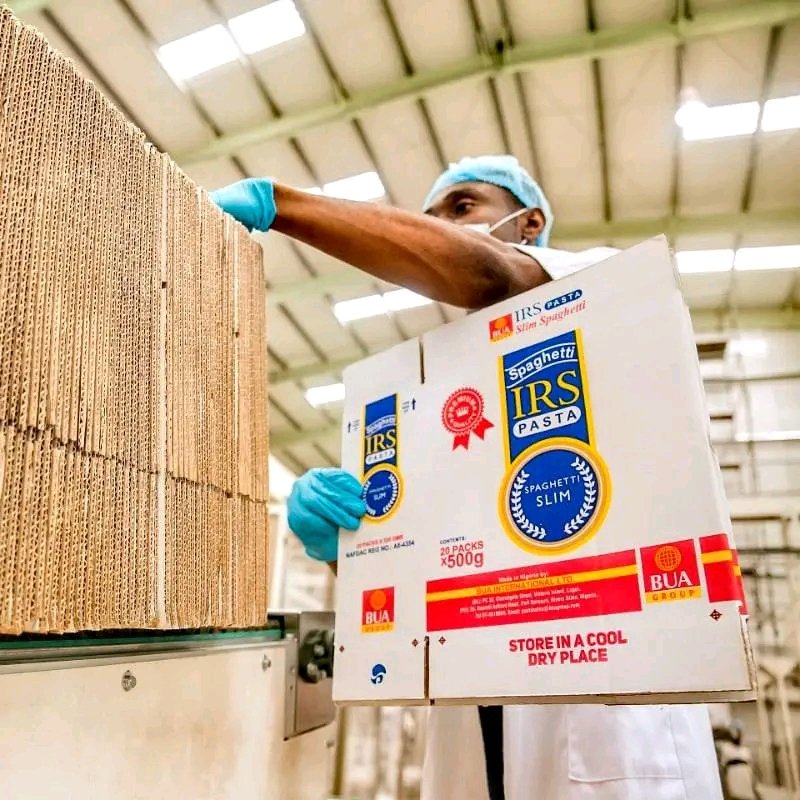
But from his personal shareholding, given to long-standing employees of BUA.
ARE. YOU. KIDDING. ME?
What?!
In Nigeria??
In a country where many employees are treated as expendable.
Where loyalty is often repaid with silence.
Where some CEOs delay salaries or say, “manage till next quarter.”
How did a story like this not go mainstream?
I mean, how do stories like this not dominate our public conversations?
This was four years ago.
We were all active on social media.
How did this news not trend?
How did we miss such grace-filled, human, deeply intentional leadership examples?
How?
Now let me give you context, because this one ehn… e sweet die.
A timeline of what this man has done in the last 4–5 years:
2021
₦2 BILLION.
Not profit sharing.
Not promises.
Actual share bonus given to BUA Cement employees, from his personal shareholding, to say “thank you” for standing strong through COVID.
This is phenomenal.
February 2024
In the middle of inflation, naira wahala, and cost-of-living pressure… BOOM! 50% salary increase across the entire BUA Group, permanent and contract staff included.
Who does that in this economy?
December 2025
At the BUA Night of Excellence and Long Service Awards, this man said, “Let’s go bigger.”
₦30BG
Sorry ₦30 BILLION CASH shared among 1,768 long-serving employees.
Some people went home with up to ₦1 BILLION EACH.
Billion o.
Not million.
Nah… this is PHEEENOOOMEEENALLLL.
This is wild, intentional, and deeply human leadership.
This is not CSR.
This is not branding.
This is not “let’s trend on social media.”
This is leadership with conscience, memory, and gratitude.
Honestly, I really love this.
This is our own Business and Leadership Stories.
At a time I’m championing the need for us to tell our own African/Nigerian Business and Leadership stories of those building African industrialisation, these stories are showing up.
For those of us raising the next generation of Nigerian entrepreneurs, this matters.
Because nations are not built only by policies, they are built by examples.
This is another story a generation needs to hear.
And this is my purpose.
I'll officially launch our podcast / media brand in 2026.
Stories like this must be documented, told, and preserved, not just scandals, outrage, and noise.
These are the stories that shape culture.
@FRSCNigeria why are your personnels and soldiers of @HQNigerianArmy causing unnecessary traffic jam at Abaji by unnecessary delay of motorists who are travelling.
@corpsmRmm
@rhichardo_o@OgbeniDipo Francophone countries have suffered a lot in hands of Paris. It's only a matter of time that the backlash will happen, and here we are. Those who rides on the back of tiger will be consumed by it