@YourGoodFriendR@OrinKerr So the Court does note 2 plausible reasons. The firearms storage right outside the interrogation rooms, and the fact that the subject didn't attempt to leave and encounter the lock during the brief (~5 min) period the officer was gone.
But they dont analyze either very much...
Today, we're launching shift. We're starting by cleaning your apartment in New York City, for free.
Here's how it works. Book a shift cleaning. A vetted shift operator comes to your home wearing one of our devices. They clean. They leave. You pay nothing.
In exchange, we record the cleaning. Robotics is being built on data about how people do daily tasks, and the value of that recording is what funds the service. Anything personal in it is anonymized before the recording is processed.
By now, you have heard about the shift to AI more times than you can count. About the shift toward you, the part where you actually feel it, you have heard almost nothing. Shift is what starts to make it concrete, in specific cities, with specific services.
Today, cleaning in New York. Soon, handymen, repairs, and errands across the globe. And this is just one side of shift, with more on the way.
Comment “shift” and we’ll send you an early access link.
The Pope is making exactly our point. LLMs “may imitate or even simulate, but they do not understand.”
This is the core epistemic fault line.
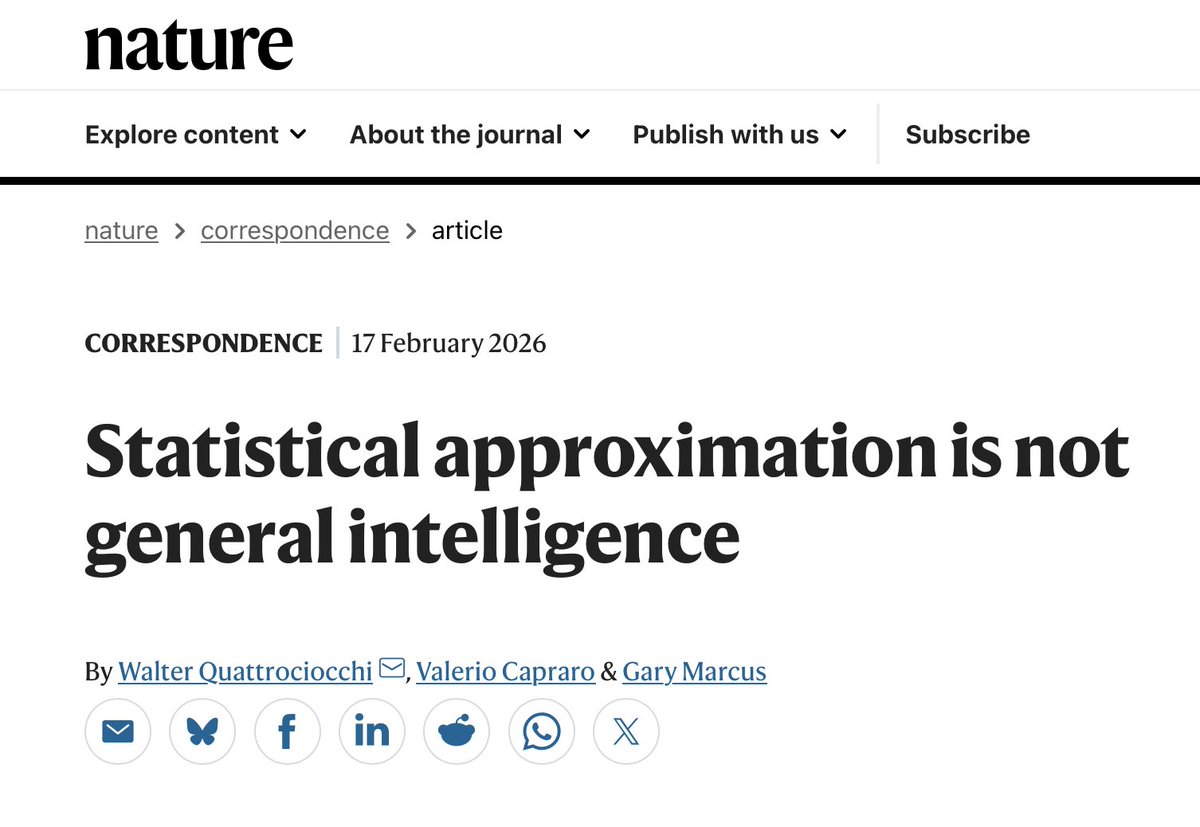
Most AI evaluation is still based on one assumption: if a system statistically approximates human behaviour, then it is close to human intelligence.
But approximation is not intelligence.
Simulation is not understanding.
LLMs can produce the right answer without knowing why it is right. They can simulate empathy without feeling. They can imitate judgment without responsibility. They can generate coherent explanations without having a world to which those explanations are accountable.
Stop confusing behavioural similarity with cognitive equivalence.
Human understanding is embodied, affective, relational, motivational, and normative. It is not just the production of plausible text.
*
Full paper in the first reply
The long overdue bill for the corrosion of vulnerability intelligence under the weight of marketing driven avoidance behaviors is now in collection, precisely when the vulnpocalypse pressures most rely on a too long abused ecosystem.
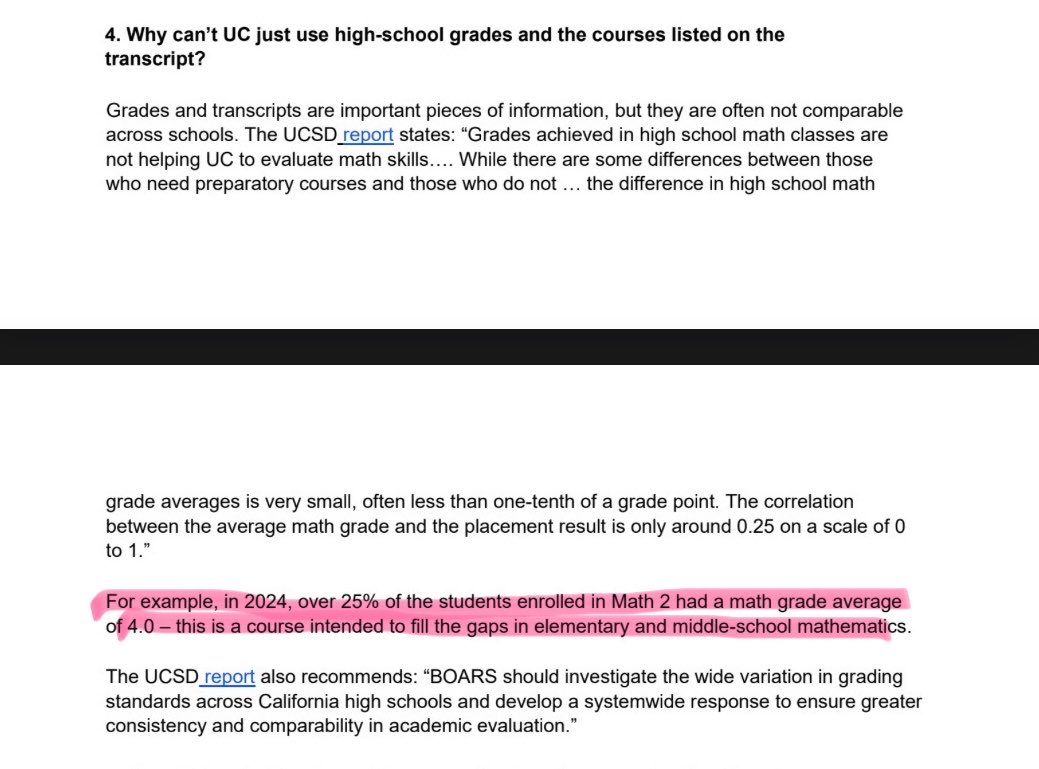
Another example why high school grades aren’t the most reliable indicator for academic competency:
Over 25% of students enrolled in a UC course “intended to fill the gaps in elementary & middle school math” had 4.0 GPAs in high school math 😬
A total of 93 judges nationwide require enhanced security “simply for presiding over high profile cases,” the Ninth Circuit’s Judge Jacqueline Nguyen said Wednesday before the Federal Bar Association's LA chapter, lamenting the threats facing the judiciary. This is an increase from the 67 who required such security measures reported in April 2025. https://t.co/wjK7KFVFaW
@IThinkIAgree@ARozenshtein Re your first point, we might be using "deterministic" differently -- my 🧵 addresses both points you raise (using the CS definition). "Intelligent" isn't the opposite of "deterministic" in that context -- "non-deterministic" is.
Re Turing - not clear to me which paper you mean?
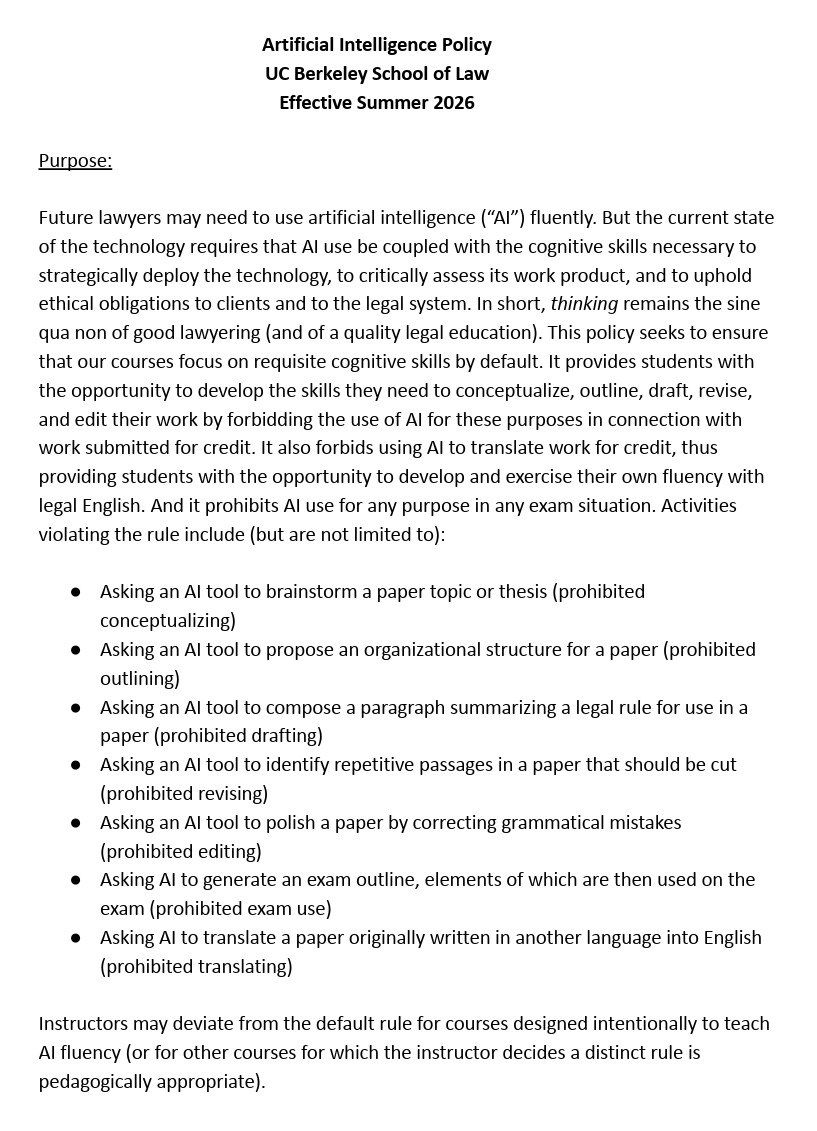
🖥️ The new Artificial Intelligence policy at UC Berkeley School of Law, effective Summer 2026.
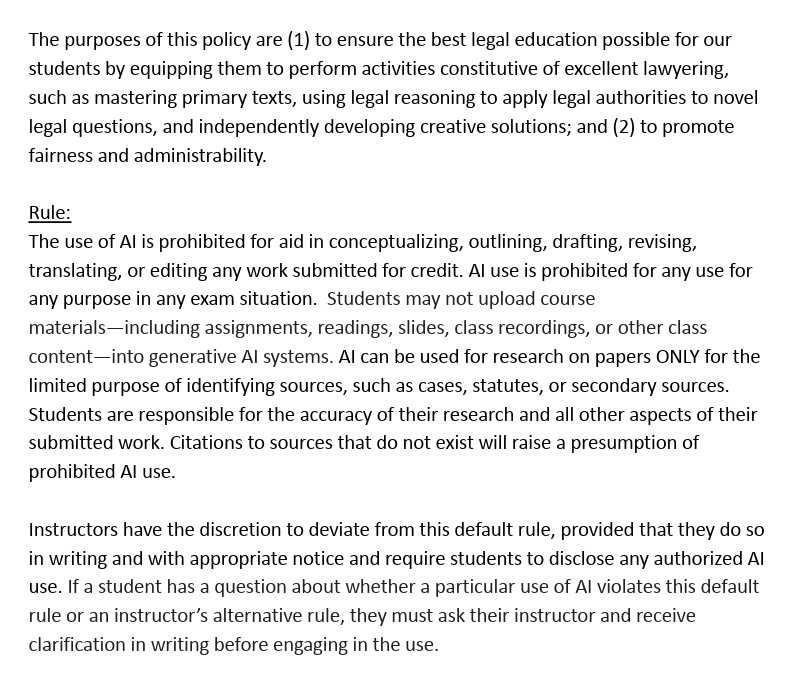
📝 Here is the main rule:
"The use of AI is prohibited for aid in conceptualizing, outlining, drafting, revising, translating, or editing any work submitted for credit. AI use is prohibited for any use for any purpose in any exam situation. Students may not upload course materials—including assignments, readings, slides, class recordings, or other class content—into generative AI systems. AI can be used for research on papers ONLY for the limited purpose of identifying sources, such as cases, statutes, or secondary sources."
@IThinkIAgree@ARozenshtein We know enough now to know that (2) will likely be answerable, but not soon.
I don't think we yet know enough to know whether/when (1) will be answered, only that all attempts so far have failed (the best examples being in cryptography trying to generate truly random numbers).
@IThinkIAgree@ARozenshtein The far more interesting question (to me) is the (likely paired) inquiry of whether:
(1) classical (deterministic) computation can *achieve* (not just simulate) human (non-deterministic) reasoning; and
(2) whether we're wrong in our assumption that humans are non-deterministic
@ARozenshtein@NSAGov Lots of conditionals in all this, of course. And no "prediction" from me yet (for the reasons above).
Also, a paper ("Impersonating Volition") covering some of this is forthcoming later this year in Belmont's symposium issue.
TL;DR care and nuance in prediction doesn't hurt.
@ARozenshtein@NSAGov Maybe that's about to change. Lots of $$$ flowing into AI research (including fundamental research).
Maybe it's not.
The point is we *don't know* and don't have good evidence either way.
To me, good science acknowledges that. Good interdisciplinary work should defer.
/9