Great summary.
There is a balance to be struck here, and states that choose to effectively quantify the benefits of data centers AND successfully navigate the related politics, will ultimately benefit 👍
Blanket bans are a cultural response to an economic question.
Make data centers pay the full cost of their power. Reconsider whether tax incentives are justified. But under the right conditions, they pay property taxes, create jobs, and provide a net benefit to many communities.
Just isn't true... Tech companies won't waste time with us given new uncertainties. Investment will flow to more receptive states. Further, concerns about data centers are largely unfounded. Water is recycled in closed loop system and tech firms are now building their own power.
Unfortunately, this is pandering to a very progressive and uninformed electorate and will cost the state in potential jobs, investment and tax revenue.
It is also extremely short sighted. If we want new and cleaner power generation, we should welcome tech firms investing in data centers with open arms. Much better for them to finance the new buildout of solar, batter and potentially nuclear - as they have pledged to do - than have rate payers. And as the AI models get more efficient, it's possible that in future data centers will have excess power that can go to rest of grid - driving down longer-term energy costs.
Very unfortunate decision. That's 2 wins we've given to Indiana today. Congrats...
More evidence to support @StuLoren and his economic theories 👍
Illinois can turn this around, but mindsets and actions HAVE to be changed...otherwise billions of dollars will continue to leave here too.
#LowerTaxes#PromoteSafety
https://t.co/LlO9kEQ0gq
🇵🇱 Today, we celebrate the Day of the Polish Diaspora and Poles Abroad.
🇵🇱 It is estimated that there are around 60 million Poles worldwide, with up to 20 million living outside of Poland.
🇵🇱 Thank you for your dedication to keeping Polish heritage alive, wherever you may be!
THERE IS NO EASTER WITHOUT GOOD FRIDAY—A meditation by the Carmelite Nuns of Fairfield, PA
There is a quiet truth at the heart of the Christian story: there is no Easter without Good Friday.
We love the light of Easter morning—the empty tomb, the risen Christ, the promise that death is not the end. But the road to that dawn passes through darkness. Before the joy of resurrection came betrayal, loneliness, suffering, and the Cross.
The night before His death, Jesus went to the Garden of Gethsemane. There, in the silence of the night, He prayed in agony. The Gospel tells us that His sorrow was so deep that He sweat drops like blood. Even His closest friends could not stay awake with Him. In that moment, the Son of God experienced something painfully human: the feeling of being alone.
He knew what was coming. The arrest. The false accusations. The abandonment by those who had followed Him. The suffering of the Cross.
And from that Cross came one of the most haunting cries in all of Scripture:
”My God, my God, why have you forsaken me?”
These are not the words of someone who feels triumphant. They are the words of someone standing in the deepest darkness of human suffering. In that moment, Jesus entered fully into the experience of human despair—feeling abandoned, misunderstood, and alone.
This is why the Cross matters so deeply to those who suffer.
When life feels heavy, when hope seems distant, when prayers feel unanswered, we are not standing in a place that Christ does not understand. He has been there. He has walked through the valley of sorrow, betrayal, and silence. The Cross shows us that God does not remain distant from human suffering—He enters into it.
For the Carmelite tradition, this mystery has always been central. The saints of Carmel speak often about the dark night—those seasons when God seems hidden and the soul feels lost in shadow. Yet these nights are not signs of abandonment. They are often the quiet places where God is drawing the soul closer, purifying faith and deepening love in ways we cannot yet understand.
But the Cross is not the end of the story.
What looks like defeat on Good Friday becomes the doorway to something unimaginable. The tomb that held Christ for three days is not a prison but a passage. The darkness of that Friday gives way to the light of Easter morning.
The Resurrection does not erase the Cross; it transforms it.
The wounds of Christ remain, but they are no longer marks of defeat. They are signs of victory, proof that Love has endured the worst the world could give and has overcome it
This is the hope that Easter offers to every heart that has known suffering: the darkness is real, but it is not final.
There are seasons in life when we stand in our own Good Friday. Times when everything feels lost, when the future seems uncertain, when God feels distant and silent. In those moments, it is easy to believe that the darkness will never lift.
The Carmelite saints remind us that faith is often lived most deeply in these hidden places. Prayer offered in silence, trust offered without answers, and love offered in suffering are precious in the eyes of God. Even when the soul feels empty, God is quietly at work.
The disciples did not know on Good Friday what Sunday would bring. All they could see was loss and grief. Yet even while they mourned, the greatest victory in history was already unfolding.
Hope often works this way in our lives as well. We may not see it immediately. We may not understand what God is doing in the middle of our pain. But the promise of Easter is that suffering is never the final word.
Light follows darkness. Life follows death. Resurrection follows the Cross.
There is no Easter without Good Friday.
And because of that, even in our darkest moments, we can dare to believe that the story is not yet finished.
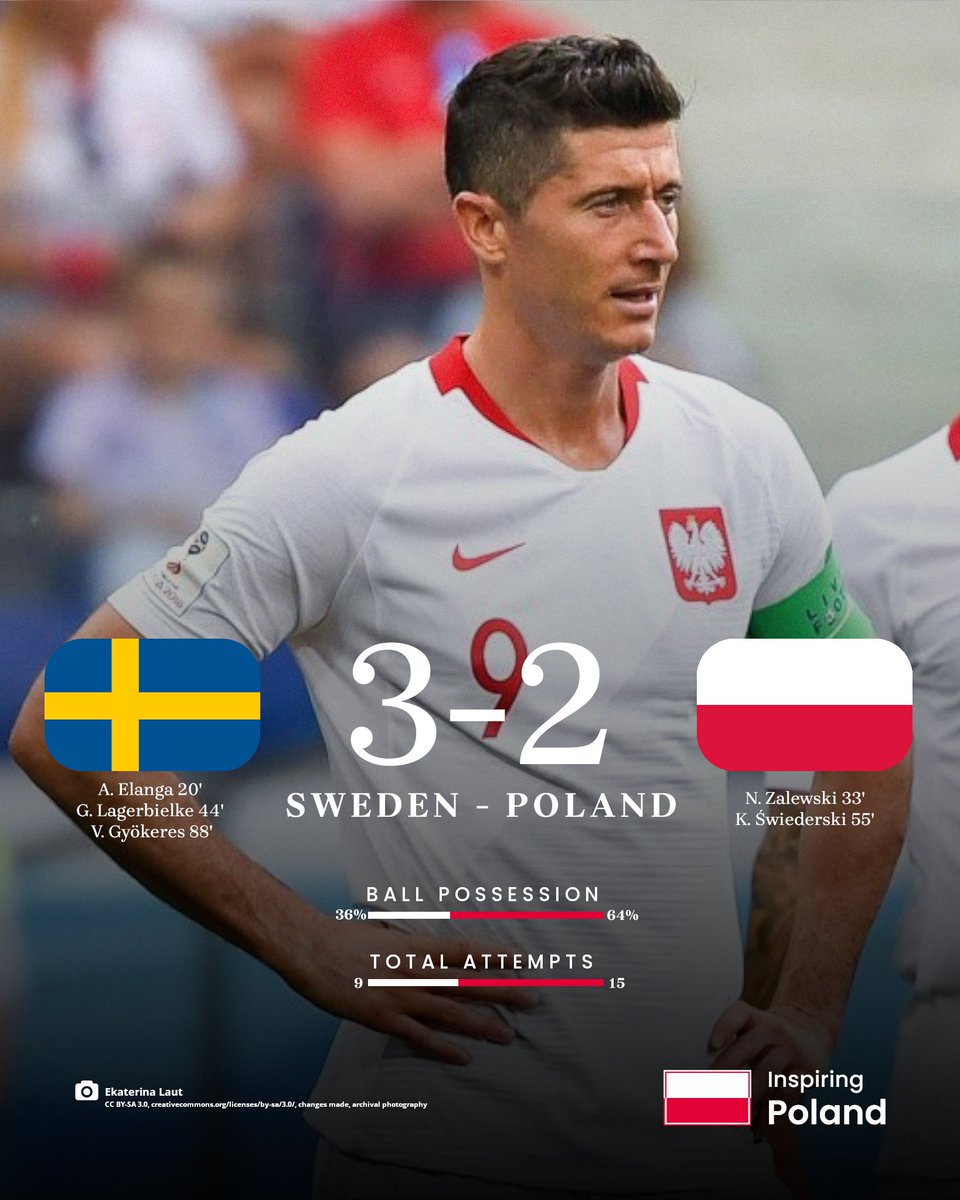
🇵🇱 The Polish national team fought to the very end. Although luck was definitely not on their side.
⚽️ Thank you to our Eagles for showing so much heart for the game!
🇸🇪 To you, Sweden, congratulations! Good luck at the World Cup.
#SWEPOL
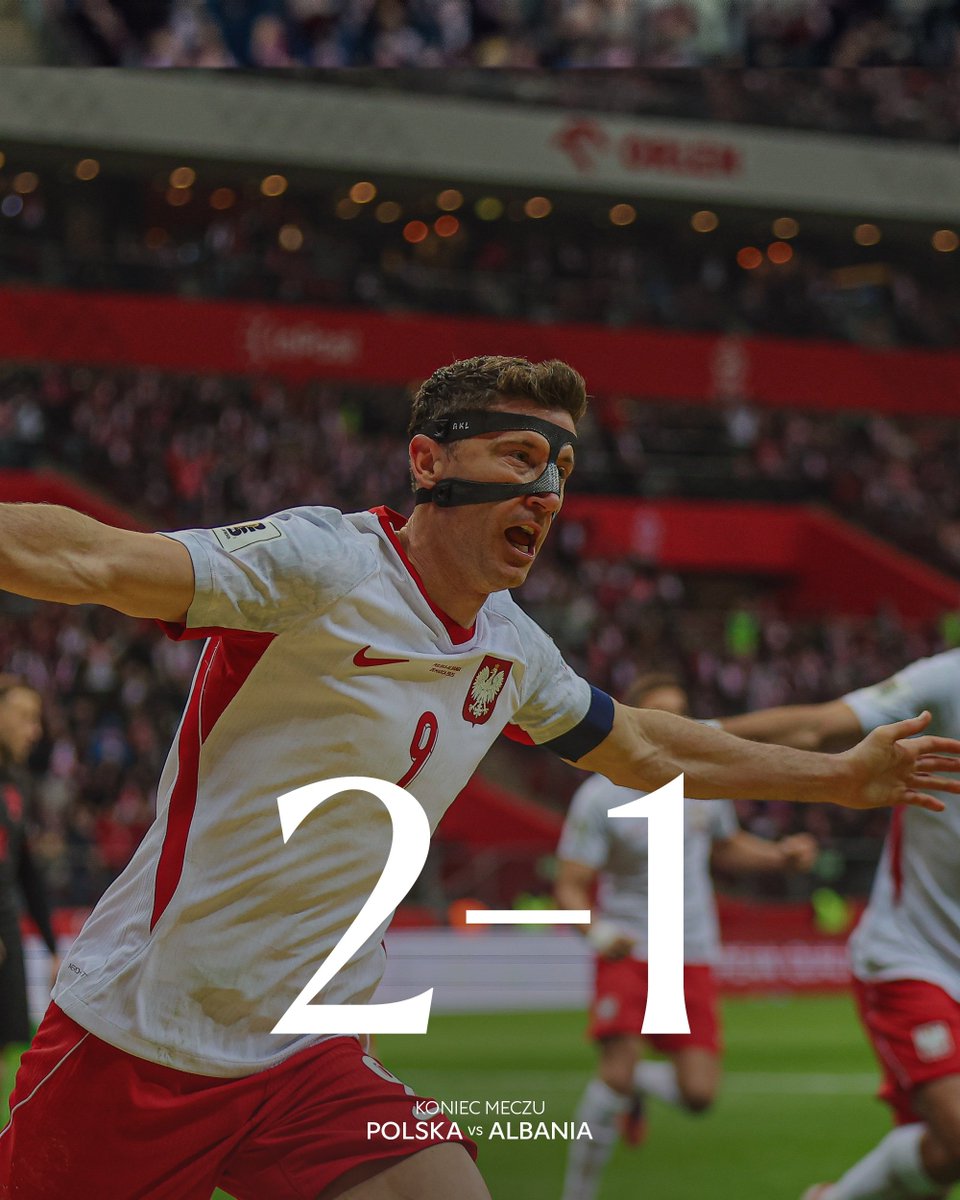
FINAL WHISTLE 🇵🇱🇦🇱
Poland complete a comeback to secure victory, with goals from Robert Lewandowski and Piotr Zieliński.
The Biało-Czerwoni now advance to the World Cup qualifying playoff final, where they will face Sweden.
#POLALB 2:1
Something I've been mulling, inspired by @EjmEj: Tax competitiveness is less about outmigration — though it certainly matters! — than about the dynamics of wealth formation.
Consider how new technologies improve productivity. Yes, existing firms adopt new technologies and make incremental gains over time. The biggest gains, however, come when new firms adopt new business models around the new technology. We saw this with electrification and the internet, we’ve seen this in the advent of remote-first firms, and we’re tentatively starting to see it in the domain of AI.
One can think about location decisions along similar lines, and this is something policymakers in New York City and other high-tax urban jurisdictions need to understand.
There is no question that middle-aged people with mortgages, established professional networks, etc., are sticky. (This is me, plus I don't drive, I hate humidity and change, and I love public transit and museums more than life itself.) They make location decisions in response to big shocks, positive or negative, macro and micro. For example, Covid and the sudden shift in norms around remote work represented a macro shock that made relocating a more attractive option. On the more personal, prosaic side, well-off people often relocate as they plan for retirement or a realization event, or to be closer to children or grandchildren.
Viewed through this lens, you don’t want to limit your analysis to, say, the absolute number of high-income households in a given jurisdiction. (“NYC has more millionaires today than we did a decade ago!”) Rather, you want to look to where the hockey puck is going.
I’d pay close attention to a city’s share of high-income households. Why? Because agglomeration matters, and if other cities are gaining market share while you’re losing it, that is going to shape location decisions for ambitious professionals going forward.
This is why I was so spooked by @EjmEj's excellent new report on the limits of New York’s “Tax the Rich” policy. Consider the shift in "market share" for wealth:
Since 2010, the Empire State’s share of all U.S. millionaire earners has dropped from 12.7% to 8.7%. Yikes.
You might also look to the aggregate capital gains of high-income households. Why? If you set an arbitrary threshold, e.g., households earning over $1M, you lose the distinction between households that are realizing massive capital gains and double-earner, salaried professional households that simply won’t represent the same revenue bonanza.
Lo and behold: In 2010, NY held 14% of the nation’s total capital gains realizations for millionaires, while Florida held 8%. By 2022, they essentially swapped places: Florida rose to 16.7% while New York plummeted to 8.9%.
The data shows that the "apex" of the pyramid—where income is most mobile—is shrinking fastest:
This trend is particularly stark: Between 2015 and 2022, NY’s count of filers earning above $10M decreased by 31% relative to the national total.
Moreover, for those earning $10M+, capital gains and nonwage sources constitute 83% of their income. Unlike wages, this wealth is highly portable and follows the taxpayer’s residence, not their office.
We are left with a revenue base that is incredibly fragile. Just 3,172 households now account for $10 billion in state income tax. On average, every 32 filers in that top bracket represent $100 million in revenue. If just 320 of those families decide the "Tax the Rich" climate is no longer worth it, it blows a $1 billion hole in the budget.
The real danger, though, isn't just who is leaving today; it’s who is deciding not to arrive tomorrow. Ambitious professionals and "remote-first" founders look at where talent is clustering, and if they see a jurisdiction losing its share of the national wealth base, they might conclude the environment is too hostile, unwelcoming, etc. They won't wait for the next tax hike to blow a hole in their own future; they will simply build the next great firms, and the revenue base that comes with them, wherever the puck is actually going.
https://t.co/fA7e0Pp3hF
What a milestone for Piotr Zieliński❗️
411 games in Serie A and now sitting 5th all-time among foreign players for appearances. Consistency at the highest level.
#SerieA
"It makes no sense to continue to subsidize a family’s rise from the middle class to billionaire status. Should the Bears move, the Park District should sell Soldier Field to the highest bidder."
Agreed.
NEW: Chicago’s greatest challenge is not a lack of natural resources. Nor top-tier universities. Nor basic infrastructure.
It is the compounded effect of decades of poor financial decisions.
Here are the top five steps Chicago's next mayor can take to fix city finances ⬇️
https://t.co/cLe0Et6LVG
Many people are skeptical of Calipari and understandably so.
But most of what he suggests here makes sense in the current "Wild West" of D-1 college athletics.
John Calipari goes OFF for nearly SEVEN MINUTES about current state of college athletics & the Trentyn Flowers story in CBB. I haven't seen him this fired up in a press conference...ever?