Director, MGH Collaborative Center for X-Linked Dystonia-Parkinsonism. Associate Professor of Neurology, Harvard Medical School. Hybrid Blue Devil/Tar Heel.
Pleased to contribute to this new study led by Drs. Jimi Rosenkrantz and Frank Jacobs further describing how ZFN91 suppresses the transcriptional defects induced by an SVA insertion in cells from patients with X-Linked Dystonia-Parkinsonism.
https://t.co/kg1fHl7cW6
Great new study from CCXDP grant recipients, Lizzy Fisher and Beth Simpson, describing the first mouse model bearing conditional knockout of TAF1, the causal gene associated with X-Linked Dystonia-Parkinsonism (XDP) and X-Linked Intellectual Disability
https://t.co/ZmiYE8z8Qx
Very honored to contribute to this new review in @TheLancetNeuro on neurological disorders caused by non-coding repeat expansions. A big thanks to lead author Dr. Andrea Cortese at UCL for bringing this together.
https://t.co/d07LR0vGDA
New CCXDP research led by Drs. Chris Stephen, Nutan Sharma, and Paolo Bonato describes how wearable motion sensors can be used to quantify complex, combined motor phenotypes in X-Linked Dystonia-Parkinsonism. #dystonia#parkinsons
https://t.co/6dhTlDBnGy
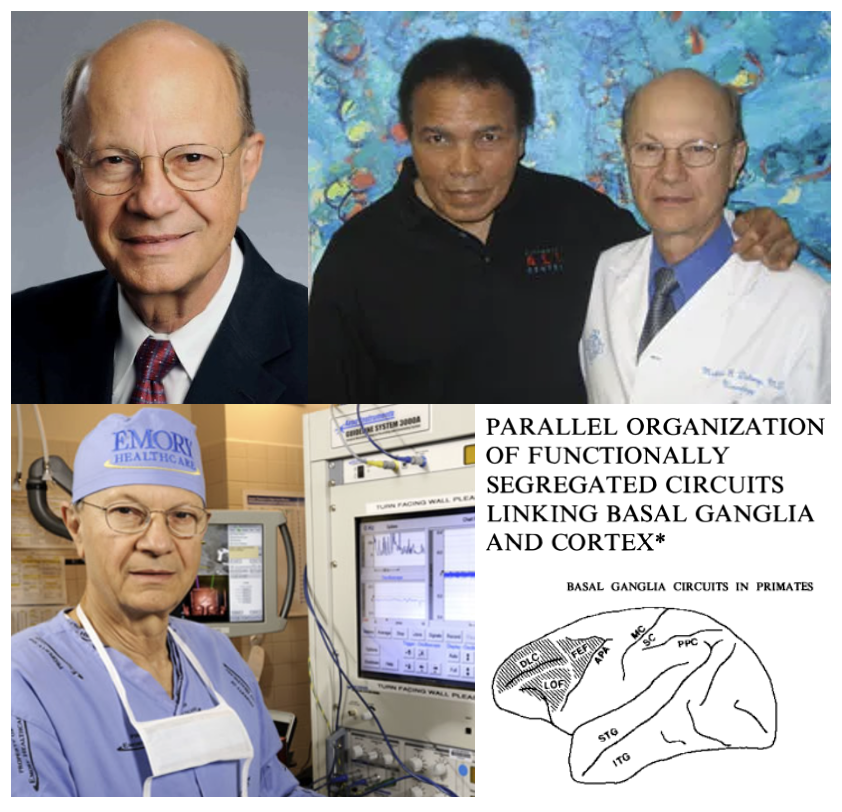
All of us at CCXDP are deeply saddened by the recent passing of Dr. Mahlon DeLong, whose contributions to dystonia are immeasurable. His leadership at @DMRF supported many of us in the field, including myself, at critical junctures in our transition to independence.
Mahlon DeLong (1938-2024) was the GOAT in his long-running career as a combined neurologist and neuroscientist. He took great care of the world's GOAT (Ali), however this is one title (GOAT neurologist-neuroscientist) that belongs to him, and him alone. It is with a heavy heart that I pen this message. He was a father to me when my dad passed, and a father for many others in neurology and beyond. He was a father to the new field of neuromodulation. He was a father to a generation of great neurologists, neurosurgeons and neuroscientists who are now growing the next generation. Mahlon DeLong was more than an empathetic person, he oozed kindness and compassion. RIP Mahlon, you have impacted countless lives all over the world, and your science has alleviated much suffering for this generation and the next.
Mahlon Robert DeLong, M.D. passed away peacefully at home on May 17, 2024, at the age of eighty six, with his loving family around him. His medical career spanned over fifty years with notable achievements that contributed to foundational science, pioneering treatments and research for the challenging diseases of Parkinson's, Dystonia, and other movement disorders, and decades of patient care. He was known for his humility, generosity, caring nature, and intense interests across a wide and diverse spectrum of topics, which he shared freely with all those around him. Mahlon was born in 1938 in Des Moines, IA, and spent his early childhood there and in Kansas. He soon headed west to Balboa Island in Newport Beach, CA, where he attended the Newport Harbor Union High School, beginning his life-long love for swimming in and being near the ocean. He graduated cum laude from Stanford University in 1961, during which he spent a year abroad at the Free University of Berlin, Germany. After a year in graduate school at Stanford University, he then traveled east and graduated cum laude from Harvard Medical School in 1966. After finishing an internship and the first year of his residency at Boston City Hospital in 1968, he moved south to work at the National Institutes of Health in Bethesda, MD. There he was a Research Associate at the Laboratory of Clinical Science, serving as part of the Reserve Corps in the U.S. Public Health Service. He continued as a Staff Fellow in the Laboratories of Clinical Science and Neurophysiology where he began his life-long passion for and focus on movement disorders, specifically focused on parts of the brain called the basal ganglia. At the time, while it was known that the basal ganglia were generally involved in movement, there was little known about the specifics. Mahlon and colleagues significantly advanced the knowledge about how circuits and networks related to the basal ganglia interacted with the rest of the brain and movement. He then moved to Baltimore, MD, where after completing his residency in Neurology in 1976 he joined the faculty of Johns Hopkins Hospital and School of Medicine. He became a full professor of Neurology and Neuroscience in 1986. During this time, he led intense and deep research into the basal ganglia and the associated brain circuits involved in movement, emotions, and cognition. In 1990, Mahlon was recruited by Emory University to serve as the Chair of the growing Neurology Department and served in that capacity until 2003. Under his leadership, the Department grew substantially, both in size and national and international impact. Among his many accomplishments, he and his team refined a ground-breaking neurosurgical procedure that brought profound relief to patients suffering from the debilitating symptoms of Parkinson's disease. Mahlon was elected to the National Academy of Medicine in 2004 and the American Academy of the Arts and Sciences in 2009. In 2014 he received the Breakthrough Prize in Life Sciences for his pioneering work in the basal ganglia and his development of a life-changing procedure for those affected by Parkinson's disease. He was likewise recognized for this work, along with his colleague Dr. Benabid, with the 2014 Lasker-DeBakey Clinical Medical Research Award. Throughout his career Mahlon held leadership positions and served on dozens of national and international foundations, associations, and advisory boards, including the American Association for the Advancement of Science, the American Neurological Association, the Society for Neuroscience, the Dystonia Medical Research Foundation, and the American Parkinson Disease Association. He published hundreds of papers and gave hundreds of lectures and symposiums to national and international audiences. He was a mentor to and fostered the career development of a whole generation of neurologists, many of whom have become leaders around the globe. Mahlon retired in 2019 as Professor Emeritus and spent time with family and friends, enjoying trips to the shore as he had throughout his life, ranging from the Pacific to the Atlantic - from Nova Scotia to South Carolina, and abroad. He was known for his endless curiosity, his care and love for those around him, and his passion for and love of gardening and dogs, many of whom he rescued throughout his life. He is survived by his wife, Mary DeLong; his children Bryan DeLong (Toni), Ariane DeLong (Roger Chalmers), John DeLong (Melissa), and Laura Aspey (Stuart). He was Grandpa to Sarah, Sam, Alex, Zack, Ella, Rosie, Will, Mary, and Abigail. He was also brother, uncle, cousin, and relative to many and an "adopted father" to a key few – always willing to help those in need around him. His concern for others, willingness to listen, and calm nature will be deeply missed. There will be a celebration of life at a later date. Mahlon was closely involved with a number of organizations including the Emory University Parkinson's Disease and Movement Disorder Center, the Dystonia Medical Research Foundation, and the American Parkinson Disease Association. A tribute in his memory can be made with a donation in his name to one or more of these organizations or another of your choice.
https://t.co/pw7PUFF8Re #parkinson #dystonia #basalganglia
A Handful of key papers to give you a flavor of the quality of his scientific contributions:
PARALLEL ORGANIZATION OF FUNCTIONALLY SEGREGATED CIRCUITS LINKING BASAL GANGLIA AND CORTEX (1986, over 10,000 citations)
https://t.co/BABswIjvHJ
Primate models of movement disorders of basal ganglia origin (1990, more than 4500 citations)
https://t.co/6LyXULyrd5
Reversal of experimental parkinsonism by lesions of the subthalamic nucleus (1990, over 2000 citations)
https://t.co/58NdCnU7VI
🧬#Transposons are movable DNA elements that contribute to genetic variation and can also cause disease. Diving deep into our genome, @JakobssonLab has revealed that the heterochromatin status of a disease-causing transposon affects the severity of X-linked dystonia parkinsonism.
Fantastic new study in @NatureSMB from CCXDP grant recipients Vivien Horvath and Johan Jakobsson describing how ZFN91 affects the transcriptional defects induced by an SVA retroelement that is the cause of X-Linked Dystonia-Parkinsonism. #dystonia
https://t.co/dpNCuJm0qm
.@JoseFlorezMDPhD, a longstanding member of the Mass General family, will become the new chair of @MGHMedicine, starting Sept. 1. Dr. Florez's impressive career and commitment to patient care, research and equity make him the ideal leader.
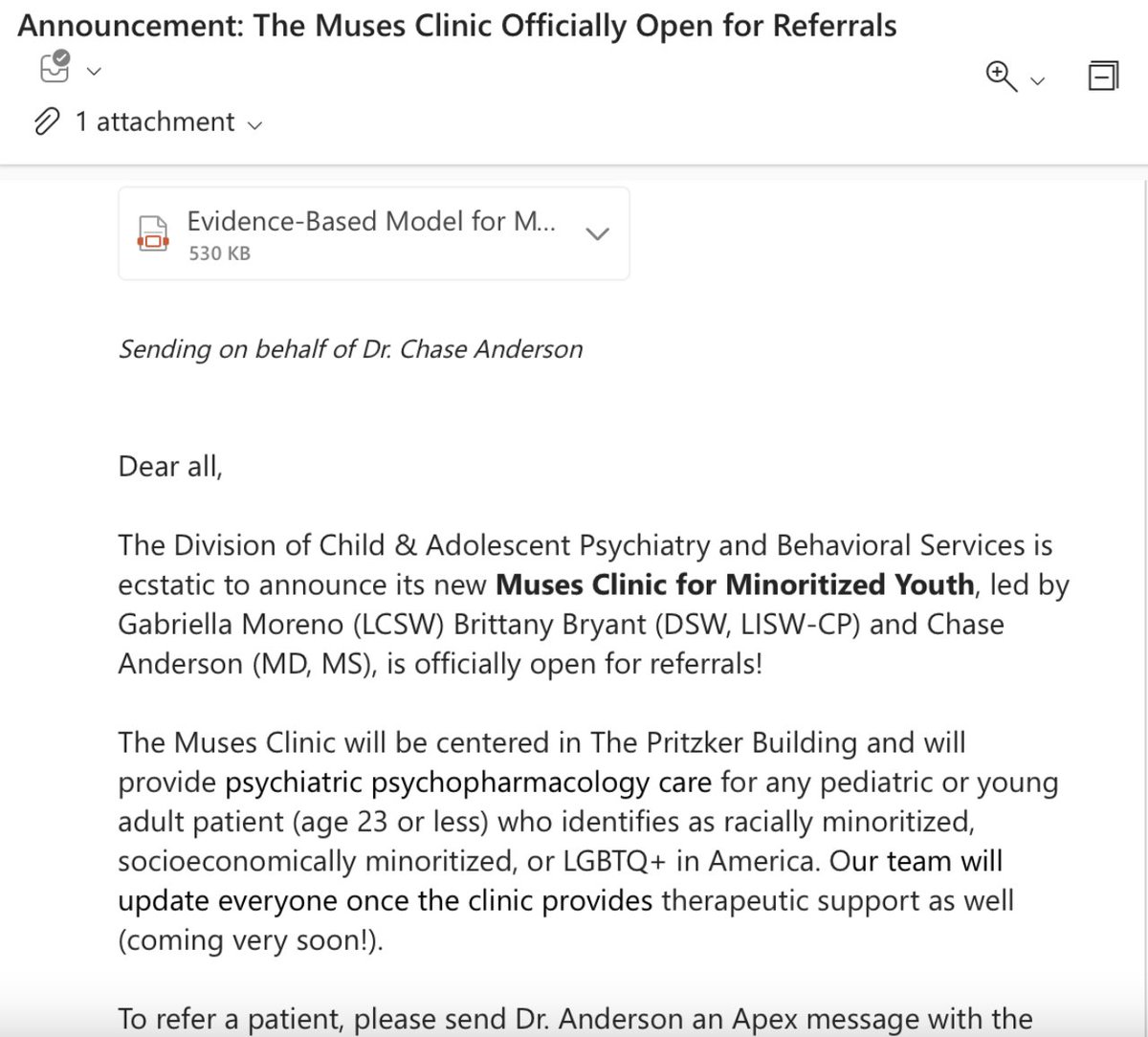
Absolutely delighted to announce the opening of The Muses Clinic for Minoritized Youth for @UCSFPsychiatry@UCSF@UCSFHospitals!
With @drbrittspeaks and other minoritized faculty + staff, our clinic will work with minoritized kids around discrimination and healing!🥰💖🦄🏳️🌈🦸🏽🔥✊🏽
While we & our lab will remain based at @broadinstitute, Sonia and I have just learned that we've both been promoted to Assistant Professor of Neurology at @MGHNeurology and @harvardmed. Huge thank you to @JRosand_MD and @MeritCudkowicz for believing in us!
Accelerometry may be a useful low-cost screening tool for determining individuals at risk of developing Parkinson disease.
It could also aid recruitment of individuals into clinical trials targeting the prodromal phase.
https://t.co/9Iam2fWTUc
Neurdle, June 19, 2023:
Dystonia is characterized by abnormal, involuntary muscle contractions resulting in abnormal posturing or twisting - a kind of cramp. Read more about the types of dystonia, their causes, and treatments, here: https://t.co/VZxVkjAAGq
Excellent commentary by Drs. Allison Brashear and Ihtsham Haq on our work characterizing the natural history of X-Linked Dystonia-Parkinsonism.
@MGHNeurology @MGH_RI #dystonia#parkinsons
https://t.co/7pMYL7V2LR
Excited to share our new paper on the natural history of X-Linked Dystonia-Parkinsonism describing quantitative measures that could serve as trial endpoints. A huge effort by an international team. @MGHNeurology @MGH_RI @MassGeneralNews#dystonia
https://t.co/aylJoNl3fO
Our new paper with @BreyneKoen, Katia Maalouf, and Xandra Breakefield describing a mouse xenograft model of XDP with a system for tracking CNS-derived exosomes is now out in Molecular Therapy. A big thanks to all co-authors for a great collaboration.
https://t.co/DJcO3uY4Vb
@jack_turban @WFKARS I've missed these roll calls. I'm Cris, a basic scientist in Neurology at Mass General. I direct a global disease consortium focused on a rare neurodegenerative disorder endemic to the Philippines.