Jogos de PS5 rodando NATIVAMENTE no Windows, sem emulação!
AnyPS5, projeto que visa converter arquivos executáveis do PS5, para rodar nativamente no Linux e no Windows.
O lançamento será feito, a partir do momento que pelo menos um jogo esteja totalmente funcional.
Iran’s President at the UNGA in New York:
“Yesterday, the president of the United States said we are terrorists. But as a matter of fact, we are the victims of terrorism.
I come from Iran, where they assassinated our leader, on no lawless grounds.
I come from Iran, where they bombed a school of children.”
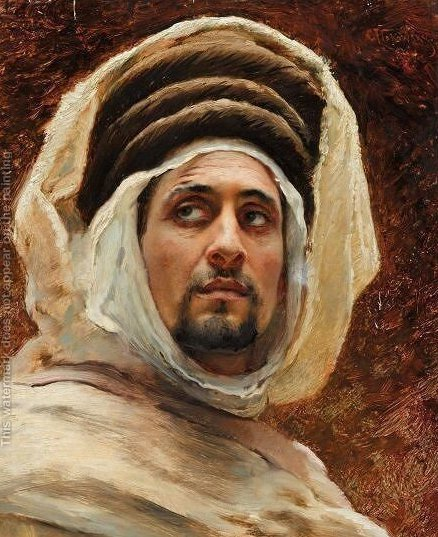
The Muslim scientist who discovered 300+ new medicines 🌿✨
Ibn al-Bayṭār (1197–1248 AD) was an Arab Muslim pharmacist, botanist, physician, and scientist from al-Andalus (Spain).
Born in Málaga at the end of the 12th century, he studied botany under the Andalusian botanist Abū al-ʿAbbās al-Nabātī. Together they collected and examined plants around Spain, giving Ibn al-Bayṭār an early grounding in direct observation and the identification of medicinal plants.
In 1219, he left Málaga and began a remarkable period of travel and field research. His journeys took him through Marrakesh, Béjaïa, Tunis, Tripoli, Barqa, Constantinople and Antalya, and later through Arabia, Palestine and Syria.
After entering the service of the Ayyubid Sultan al-Kāmil, Ibn al-Bayṭār was appointed chief herbalist. When al-Kāmil extended his authority to Damascus in 1227, Ibn al-Bayṭār accompanied him there, continuing his botanical investigations in Syria.
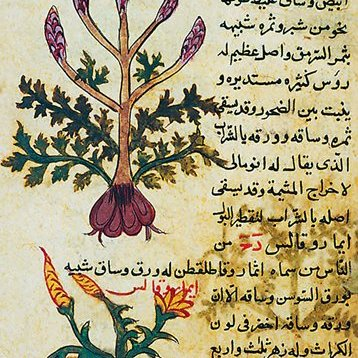
Kitāb al-Jāmiʿ li-Mufradāt al-Adwiya wa-l-Aghdhiya:
His most famous work, the Kitāb al-Jāmiʿ li-Mufradāt al-Adwiya wa-l-Aghdhiya (Compendium on Simple Medicaments and Foods), became one of the great pharmacological works of the medieval period.
The work records approximately 1,400 plants, foods and medicinal substances, arranged alphabetically. Ibn al-Bayṭār drew upon a vast body of earlier scholarship, citing around 150 Arabic authors and 20 Greek authorities, including Dioscorides and Ibn Sīnā (Avicenna). Yet the work was not merely a compilation. He incorporated his own observations and described numerous substances that were absent from the earlier works he consulted.
He systematically recorded the additions made by Islamic physicians in the Middle Ages, which added between 300 and 400 types of medicine.
Among the subjects he discussed were the preparation of rosewater and orangewater, the extraction of scented oils, and techniques involving heated oils, fats, retorts and condensation. His descriptions provide an important glimpse into the practical pharmaceutical knowledge of his period.
His second major work, the Kitāb al-Mughnī fī al-Adwiya al-Mufrada, was an encyclopedia of simple medicines organized according to the ailments they were used to treat, covering conditions affecting areas such as the head, ears and eyes.
He also wrote works including the Mīzān al-Ṭabīb, Risāla fī l-Aghdhiya wa-l-Adwiya, a treatise on the lemon, and a commentary on the first four books of Dioscorides' Materia Medica.
His Jāmiʿ stands as one of the major works of medieval botanical and pharmacological literature.
Ibn al-Bayṭār passed away in Damascus in 1248.
Iran produces so many engineers that even when losing thousands abroad it still has enough to achieve what the GCC shitholes cannot even fathom, dignity & self-sufficiency
YOU HAVE TO LAUGH when you hear the Finnair CEO complain that Chinese airlines direct routes to Helsinki have created “an extremely unfair and unlevel playing field”.
His airlines have to fly around Russia (see the green lines on the map), said Turkka Kuusisto, while Chinese airlines don’t (see the red lines).
The difference is a 12-hour journey compared to an eight hour one.
So everyone greatly prefers the Chinese jets—and Chinese airlines are expanding capacity on that route to take advantage of this.
.
NO SYMPATHY
It’s hard to have any sympathy. The west pledged in writing that it would not create a security threat on Russia’s border, and then did exactly that, triggering a conflict in Ukraine.
Finland and the rest of the EU then banned Russian planes, creating an air dispute that left western airlines unable to fly over Russian territory.
So, is there an “extremely unfair and unlevel playing field”?
Yes. But it’s one created by him and his pals, not the Chinese airlines.
The Europeans should have just played nice with their neighbors instead of obeying their conflict-addicted bosses across the Atlantic.
.
.