Asst Prof @microUCPH, University of Copenhagen | Passionate of innovation & biotech | Microbial ecosystem; single-cell analysis; Material science; Microfluidics
Navigating the future of nano‐pesticides: A perspective on design, efficacy, mechanisms, and environmental stewardship
🌱Nano-pesticides are reshaping crop protection toward sustainable agriculture.
https://t.co/zeT5XEpC8r
New preprint! A new direction for my research program: Bacteria can use antagonism to forage for nutrients in microbial communities. Shoot spearguns with toxins into other cells and leak out nutrients!
https://t.co/HGKArOPKKK
Exciting news! 🎉 The iMeta journal has officially been indexed in the Web of Science (#WOS) database, including both the Science Citation Index Expanded (#SCIE) and Essential Science Indicators (#ESI). This recognition is a major achievement for such a young journal, now just two years old.
iMeta is now indexed by SCIE, ESI, WOS, JCR, #PubMed, #GoogleScholar, and #Scopus. In 2024, it proudly received its first impact factor (IF) of 23.8 in WOS.
We are committed to upholding high publication standards and welcome all submissions! #AcademicPublishing #Research @wileymicrobio
We found a way to implant bacteria 🦠 in fungi 🍄and used it to induce artificial endosymbiosis. Read all about it in our newest research paper @Nature .
https://t.co/dJSITsVNOk
Incredibly proud to share this work, almost 6 years in the making, out in @ScienceMagazine!!! 🎇
We've known for over a century that eukaryotes of all kinds anticipate the seasons (think: hibernation, flowering, reproduction), but what about bacteria?🦠
https://t.co/I9vw5ZTKbT
Astonishing breakthrough in #organoid engineering, as reported in @Nature by T Recaldin,M Harter,L Steinacher,B Gjeta, and colleagues: intestinal epithelial organoids incorporating tissue-resident immune cells. @IHB_Research@Roche https://t.co/kALIiabRFK
Check out our new paper on the topic of cyborg bacterial cells 🦠🤖🧬! A nice protocol detailing how to create enhanced, semi-living bacteria using intracellular hydrogels @NatureProtocols@ucdavis@UCDavisResearch@ucdaviscoe@TanLabUCD https://t.co/Vjn9Nu98qq
Some bacterial spores can survive temps of 420 °C. Plastics are extruded at ~300 °C.
For this study, Bacillus spores were engineered to make lipase enzymes upon stimulation with xylose, and then embedded into plastic. When the spores are "activated," the plastic is destroyed.
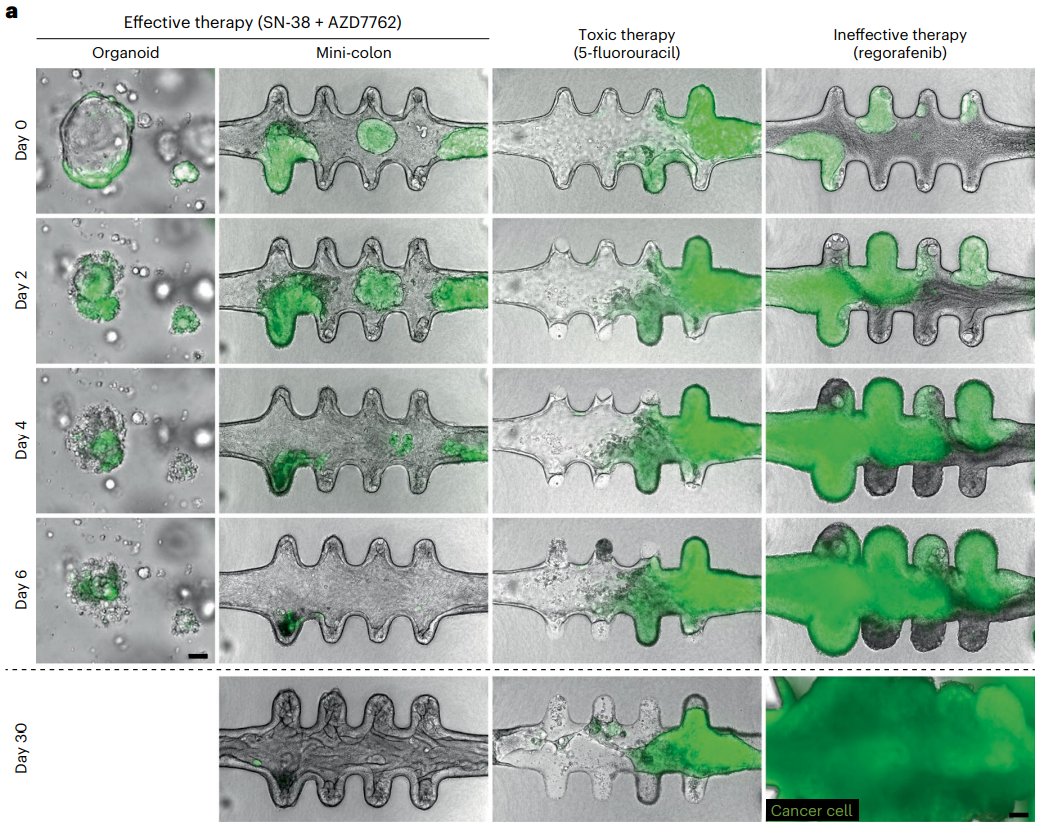
This is extremely cool: 'mini-colons' to mimic the structure of the colon and to study cancer
They're built from patient cells, so can be used to test drugs - both efficacy to kill cancer cells (shown in green) and toxicity to healthy cells:
The mini-colons seem have a number of benefits over conventional organoids: a structure that matches colon tissue, longer-term culturing, and a closer replication of the tumour microenvironment
Lorenzo-Martín et al. in Nature Biotech (https://t.co/dSe29AHIBQ)
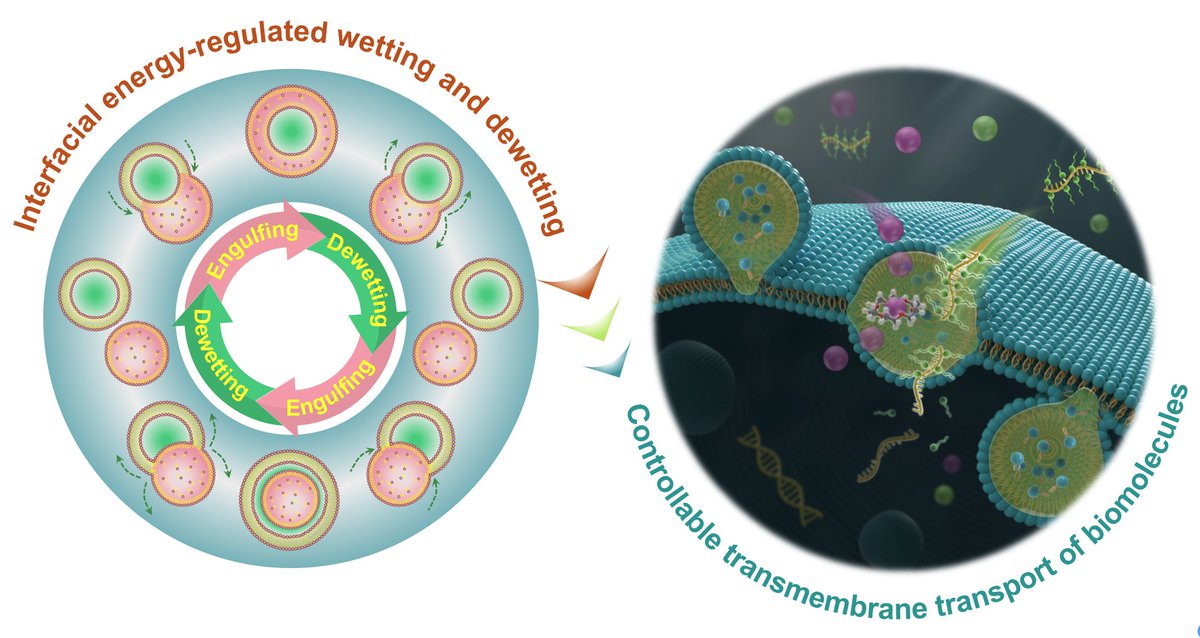
Delighted to share our recent Nat. Chem. Eng. paper on Interfacial Energy-Mediated Artificial Transmembrane Transport. 👇
https://t.co/g6MurFYqsg
Thanks to Wilhelm for the collaboration! @Huckgroup
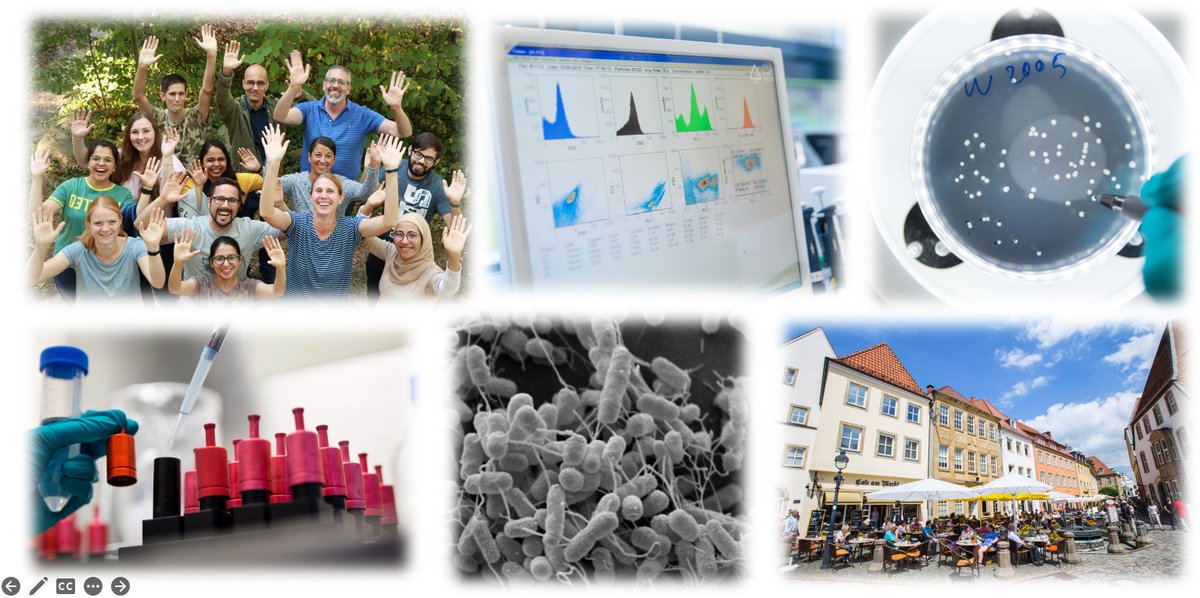
A fully funded (3 year) PhD position is available in my group. The project will focus on analysing how synergistically interacting bacteria coevolve.
Join my vibrant group at @UniOsnabrueck.
Please RT
Deadline: 28.07.2024
More information👇
https://t.co/gdMbN1ItJi
In our new paper, now published in @Nature, we report on the discovery and implementation of a chemical reservoir computer based on the prebiotic formose reaction.
Congrats to Mathieu, Thijs, @quentin_duez , @robn_will and Wilhelm!🥳
Read the paper 👇
https://t.co/14MsWzXFDR
Very proud to share this paper in Nature today. https://t.co/c1sNL6UpVW
A screen that lead to a completely unexpected regulatory mechanism linking soil nitrogen to the function of legume nodules.
A great collaboration with @JieshunLin@PeteBork Marie, Kasper and many others