President Carter taught all of us what it means to live a life of grace, dignity, justice, and service. Michelle and I send our thoughts and prayers to the Carter family, and everyone who loved and learned from this remarkable man. https://t.co/dZHL0Nu0Tj
New Website Alert! 🚨 WASA just launched https://t.co/AudoEoYXuF to highlight the financial challenges in WA K-12 education. Check it out! https://t.co/Ljj2SS0IjK #EducationFunding#WASA#K12
I have said this for years but I will say it again here. This is the education equation:
adult comfort < student success & well-being. As the adults in school systems we need to do hard things to make our students’ lives better. This also means that as district leaders 1/2
As we celebrate Black History Month and our progress, let's not forger we still have much work to do...
Abby Phillip breaks down the facts undercutting Haley’s racism answer https://t.co/ksgtJBRVsK
Problems that don't exist:
(1) children who don't want to learn
(2) a culture or mindset of poverty
(3) communities that don't value education
(4) educational disparities caused by an entire group's shortage of "grit."
Let's not use energy fixing problems that don't exist.
Dear politicians/political influencers:
When you evoke my father this #MLKDay, remember that he was resolute about eradicating racism, poverty, and militarism. And about corrective justice work.
Don’t just quote him.
Encourage and enact policies that reflect his teachings.
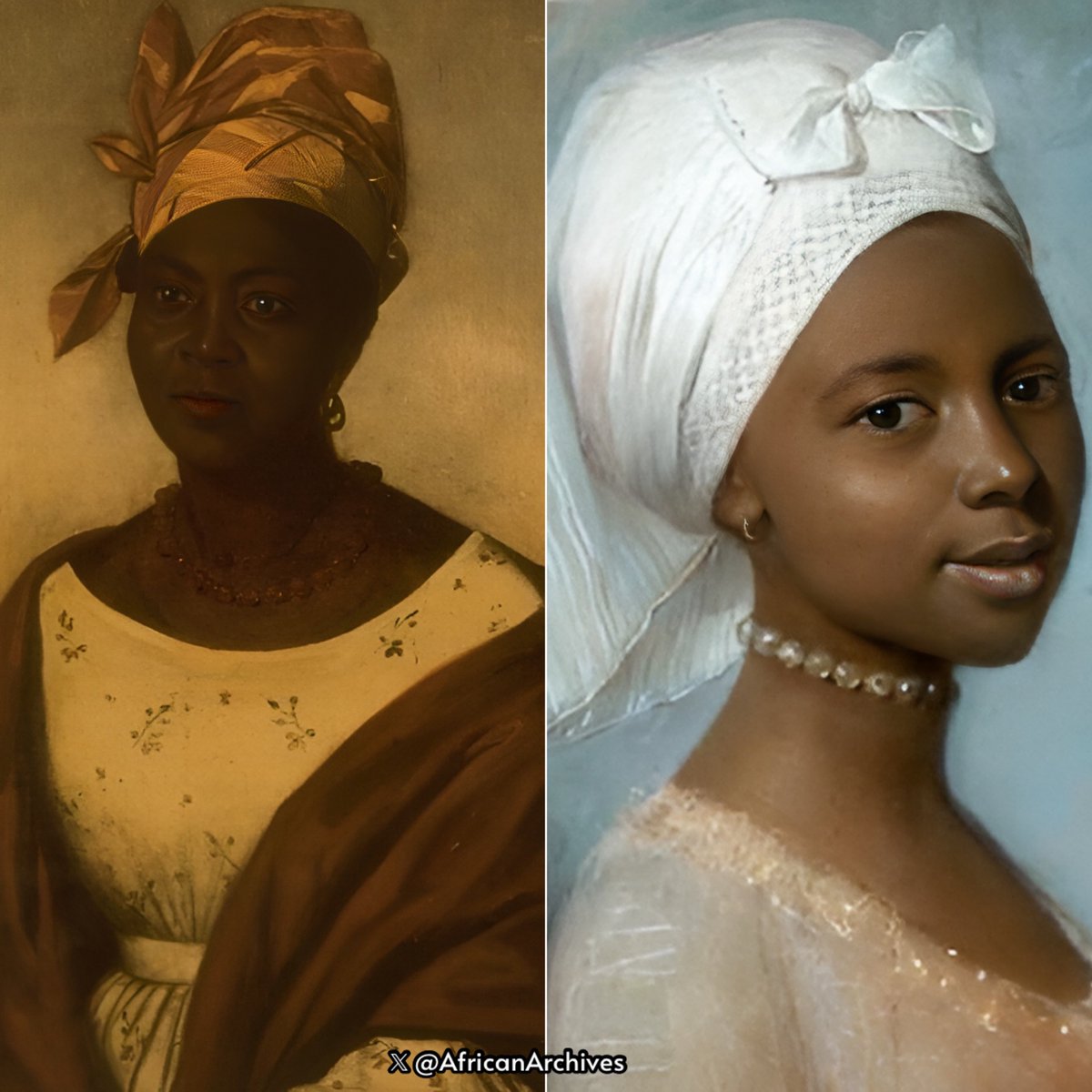
The Tignon laws of the 18th century were laws that banned black women from exposing their natural hair in public.
Their hairdos was obscuring the status of the white women and this threatened the social stability. The law would control colored women “who dressed too elegantly..”
Resembling today’s West African Gele, a tignon is a type of head-covering. It is a large piece of material wrapped or tied around the head to form a kind of turban concealing the hair.
Tignons were worn by free and slave Creole women of African descent in Louisiana from 1786. Historically, their prevalence was as a result of sumptuary laws passed in 1786 under Governor Esteban Rodriguez Miró.
These prescribed and enforced appropriate public dress styles for women of color in a white-dominated society. Hence, they were made as a way of regulating the appearance of black women in the U.S.
During the period, when black enslavement in America was at its peak, and places like New Orleans was unique in its high population of gens de couleur libres (free people of color), black women’s beauty and features often attracted white men who approached them as suitors.
This enraged white women who perceived them as competitors. Evidently, African women competed openly with white women through elegant dressing, including adorning their textured hair with gems, beads, and other accents that made them stand out from white women and possessing great beauty.
To take care of this perceived menace, series of sumptuary laws birthing the Tignon Law were put in place in order to stop white men from pursuing and engaging in affairs with women of colour, “while also being a class signifier,”
🖋️if you love our content, please consider supporting our page on https://t.co/16fHyPFENu (follow the ko-fi page too for weekly posts roundup)
Showing school leaders hospitality can in turn encourage them to treat their staffs in a similar fashion. #EWOpinion @SuitguyMike https://t.co/jFo7EdRoRu