There’s no overstating how extraordinary this Atlantic article is, given the author and the outlet.
As a reminder Bob Kagan is:
- The co-founder of Project for the New American Century, probably the single most imperialist Think Tank in Washington (which is quite a feat)
- A man who spent his entire life advocating for American military interventions, especially in the Middle East, and a vocal advocate of the Iraq war. He started advocating for intervention in Iraq before 9/11, which speaks for itself...
- The husband of Victoria Nuland, an extremely hawkish former senior U.S. official (a key architect of U.S. policy in Ukraine, with the consequences we all witness today)
- The brother of Frederick Kagan, one of the key architects of the Iraq surge
In other words, we ain’t exactly looking at some sort of anti-imperialist peacenik. This is quite literally the guy Dick Cheney called when he needed a pep talk.
And the man is writing in The Atlantic, the most reliably pro-war mainstream media outlet in the U.S. (also quite a feat).
So when HE writes that the U.S. “suffered a total defeat” in Iran that has no precedent in U.S. history and can “neither be repaired nor ignored,” it’s the functional equivalent of Ronald McDonald telling you the burgers aren’t great: it means the burgers really, really aren't great.
Extraordinarily (and somewhat worryingly, for me), his arguments for why this is such a defeat are virtually the same as those I laid out in my article “The First Multipolar War” last month (https://t.co/tbnOpdYqux).
Here they are 👇
1) Vietnam/Afghanistan were survivable, this isn't
He agrees that this war - and the U.S. defeat - is fundamentally different in nature from previous U.S. interventions.
Where I wrote that the wars in Vietnam and Afghanistan didn’t change the equation much in terms of power dynamics (“in the grand scheme of things, the giant walked away with little more than a bruised ego”), Kagan writes that “the defeats in Vietnam and Afghanistan were costly but did not do lasting damage to America's overall position in the world.”
And when I wrote that “it’s painfully obvious that the Iran war is of a qualitatively different nature” from these, he writes that “defeat in the present confrontation with Iran will be of an entirely different character.”
Same point.
2) Iran will never relinquish Hormuz and uses it as selective leverage
When I wrote that Iran has turned “freedom of navigation” on its head by establishing “a permission-based regime” through the Strait of Hormuz, Kagan arrives at the same conclusion: “Iran will be able not only to demand tolls for passage, but to limit transit to those nations with which it has good relations.”
He also agrees that “Iran has no interest in returning to the status quo ante,” when I myself cited Iran’s parliament speaker Ghalibaf in my article, saying: “The Strait of Hormuz situation won’t return to its pre-war status.” Same point and virtually the same words.
3) Gulf states will have to accommodate Iran
He agrees that most Gulf states will have no choice but to accommodate Iran, effectively making Iran into a, if not THE, dominant regional power.
Kagan writes “the United States will have proved itself a paper tiger, forcing the Gulf and other Arab states to accommodate Iran.”
On my end, I wrote that “the Gulf monarchies will eventually have to choose between two security propositions. One where they stay aligned with a distant superpower that [can’t protect them]. The other proposition being: make peace with the regional power that just proved it can hit [them] whenever it wants.” Which is not much of a choice…
4) Military impossibility to reopen Hormuz
Kagan writes that “if the United States with its mighty Navy can't or won't open the strait, no coalition of forces with just a fraction of the Americans' capability will be able to, either.”
On my end, in my article I cited Germany’s defense minister Boris Pistorius: “What does Trump expect a handful of European frigates to do that the powerful US Navy cannot?”
The exact same argument.
5) Global chain reaction
Kagan agrees that this is a global strategic failure that fundamentally changes the U.S.’s position in the world. As he puts it: “America's once-dominant position in the Gulf is just the first of many casualties… America's allies in East Asia and Europe must wonder about American staying power in the event of future conflicts.”
You’ll have guessed it, I wrote essentially the same thing: “Think about what it says if you’re Saudi Arabia, quietly watching your American-built defenses fail to protect your own refineries. Or any European country now facing the worst energy shock since 1973, caused not by your enemy but by your ally, and realizing that said ‘ally,’ supposedly in charge of ‘protecting’ you, couldn’t even protect Israel’s most strategic sites - when it’s the country with which it’s joined at the hip. I’m not even speaking about China or Russia who are seeing their worldview being validated on almost every axis simultaneously.”
6) Weapons stocks depleted, credibility shattered
Kagan: “just a few weeks of war with a second-rank power have reduced American weapons stocks to perilously low levels, with no quick remedy in sight.”
Me: “America’s most advanced weapons systems are much more vulnerable than previously thought - not theoretically, but in actual combat.”
Kagan: “America's allies… must wonder about American staying power in the event of future conflicts.”
Me: “The U.S. security guarantee has been empirically falsified in real time.”
-----------
So, yup, Bob Kagan and I agree on nearly everything. I need a shower 🤢
Reassuringly though, we still differ on a few fundamental aspects.
First of all, arguably the most important one, the moral aspect. In typical neocon fashion, his article contains not a word about the human cost of this war - not the 165 schoolgirls, not the devastation inflicted on Iranians during 37 days of bombing, not the toll this war is taking on the entire world through its devastating economic consequences (the economic devastation on ordinary people worldwide is referenced only as a political problem for Trump). For him, this is purely a strategic chess problem, morality and people don’t figure in his mental map.
For me, the moral bankruptcy of this war isn't separate from the strategic failure - it is the strategic failure. Much like Gaza can only be a failure because of its sheer abjectness.
Secondly, there is not an instant of reflection in the article on how we got there. Which is unsurprising because he personally, alongside his wife, his brother, and every co-signatory of every PNAC letter, spent a generation pushing for exactly this kind of confrontation. The man spend 30 years advocating for military dominance in the Middle East and hostility towards Iran, thereby forging them as an adversary and facilitating this very war that he now says has “checkmated” America.
I know introspection has never been the neocon forte but at some point you have to stop setting houses on fire and then writing op-eds about how surprising the smoke is.
Last but not least, we differ on what should be done. This is the funniest part of Kagan’s article - showing that the man is decidedly beyond salvation. On one hand he calls this a “checkmate” by Iran, and a U.S. defeat that can “neither be repaired nor ignored,” yet an the other hand his solution for it is… surprise, surprise… a bigger war still!
He writes that what’s to be done is “engage in a full-scale ground and naval war to remove the current Iranian regime, and then to occupy Iran until a new government can take hold.”
The arsonist's solution to the fire is a bigger fire ¯\_(ツ)_/¯
For my end, this was the conclusion of my previous article:
"There is almost a Greek tragedy quality to U.S. actions lately where every move taken to escape one’s fate becomes the mechanism that delivers it. The U.S. went to war to reassert dominance - and proved it could no longer dominate. It demanded allies send warships - and revealed it had no real allies. It waged forty years of maximum pressure to break Iran before this moment came - and instead forged the very adversary now capable of meeting it. It started the war in part to have additional leverage over China - and handed the world the spectacle of begging China for help. The prophecy was multipolarity. Every American action to prevent it reveals it instead."
I wouldn’t change a word. The only thing that's changed since I wrote it is that even the arsonists now smell the smoke.
Src for the Atlantic article: https://t.co/ItED9WS9Kn
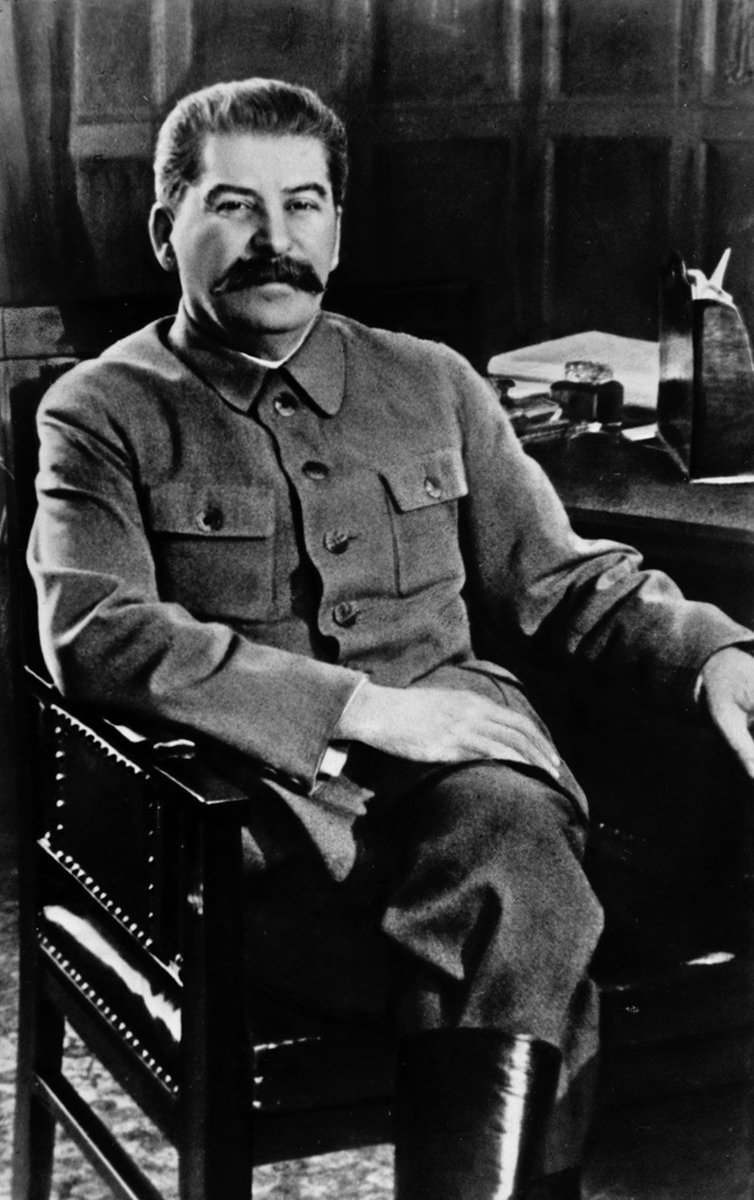
I have compiled a list of 100 accusations I have heard over the years against Joseph Stalin, and I have addressed every single one of them. Since this will be a very long series, I will pin this post and continue adding to it as a thread over the next few days.
Accusation #1:
Stalin personally orchestrated the Great Purge, killing 750,000 or more innocent people in a paranoid bloodbath.
Answer:
The standard Western narrative portrays the Great Purge as the irrational outburst of a single paranoid dictator personally directing mass terror with omnipotent precision. However, once Soviet archives were opened and historians gained access to internal documentation rather than Cold War speculation, that simplistic picture became much harder to sustain.
The reality is far more complex. Much of what occurred during the Purge was driven not only from above, but also from below by regional party officials, NKVD officers, ambitious bureaucrats, personal vendettas, false denunciations, and local power struggles. The Soviet system in the late 1930s was not a perfectly centralized machine where Stalin personally controlled every arrest, interrogation, or sentence across eleven time zones.
Historian J. Arch Getty, one of the most respected Western scholars of the Soviet archives and by no means a Stalinist, argued that the Purge has been heavily mythologized in Western memory. His archival research showed that regional NKVD officials often escalated arrests far beyond central directives in attempts to demonstrate revolutionary zeal and political loyalty. In many cases, the central leadership was reacting to a rapidly spiraling security crisis rather than calmly orchestrating every aspect of it from the Kremlin.
The often-cited figure of roughly 750,000 executions during the peak years of the Purge is tragic, but it also deserves context. During Nikita Khrushchev's de-Stalinization campaign, there were clear political incentives to portray Stalin in the darkest possible light in order to legitimize Khrushchev's own leadership. During the Cold War, Western writers routinely inflated the numbers into the millions. Once the archives opened after 1991, many of those exaggerated claims quietly collapsed.
The numbers commonly repeated in popular discourse also fail to distinguish between executions, imprisonments, investigations, and releases. Many people who entered the system were eventually released after serving sentences. This does not erase the injustices that occurred, but it contradicts the image of the USSR as a giant death machine exterminating everyone who crossed Stalin's path.
Most importantly, the Soviet Union in the 1930s was not operating in a peaceful environment. Nazi Germany, Imperial Japan, and other hostile powers were actively conducting espionage and sabotage operations against the USSR. Soviet fears of infiltration were not imaginary. Foreign intelligence networks inside the Soviet Union were real, documented, and dangerous.
By the late 1930s, Soviet leadership believed another catastrophic war was approaching, and history proved them correct. Within a few years, the USSR would face the deadliest invasion in human history. In that atmosphere, the Soviet state adopted extreme security measures that often swept up innocent people alongside genuine conspirators and hostile actors.
None of this means every arrest was justified or every sentence was fair. Serious abuses unquestionably occurred, and innocent people suffered. But portraying Stalin as a crazed tyrant murdering hundreds of thousands purely out of personal paranoia ignores the broader geopolitical reality, the role of lower-level officials, the archival revisions after the collapse of the USSR, and the real security threats facing the Soviet state at the time.
It was a harsh and often brutal episode that unfolded in a country preparing for what would soon become an existential war against some of the most destructive forces of the twentieth century.
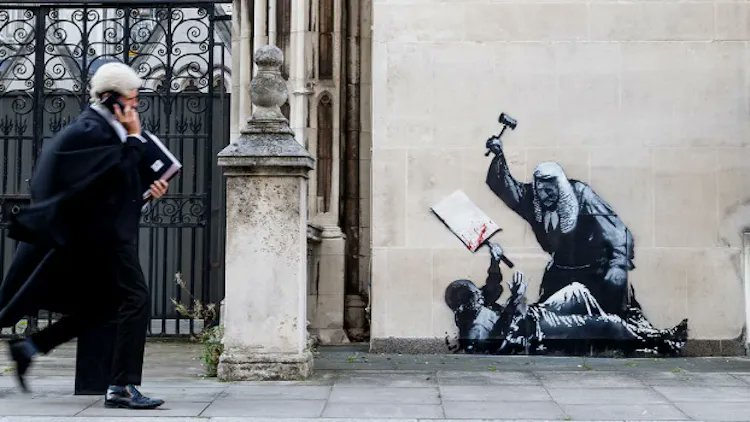
One of my most popular articles ever included a long extract from a powerful closing speech by barrister Rajiv Menon during a Palestine Action trial in January. In the end, the jury refused to convict the six defendants.
Menon is now on trial for that closing speech – for reminding the jury that they had a 350-year-old right in law to follow their conscience in reaching a verdict, even if it meant defying a direction from the judge to convict.
Paradoxically, Menon joked in his speech that, because of that earlier legal principle, the judge, unlike his counterpart in 1670, could not lock them, the jurors, up were they to choose to follow their consciences.
Instead, the judge is seeking to lock up the barrister. Does 2026 qualify as an improvement on 1670?
It is believed that this is the first time a barrister has been tried for comments made to a jury in his closing speech. That should serve as a potent reminder of just us how authoritarian the current political moment is, and of how quickly long-established legal rights are being dismantled to protect British collusion in genocide.
Read my article – and the part of the speech for which Menon is being tried – here: https://t.co/RyDHG3Iz81
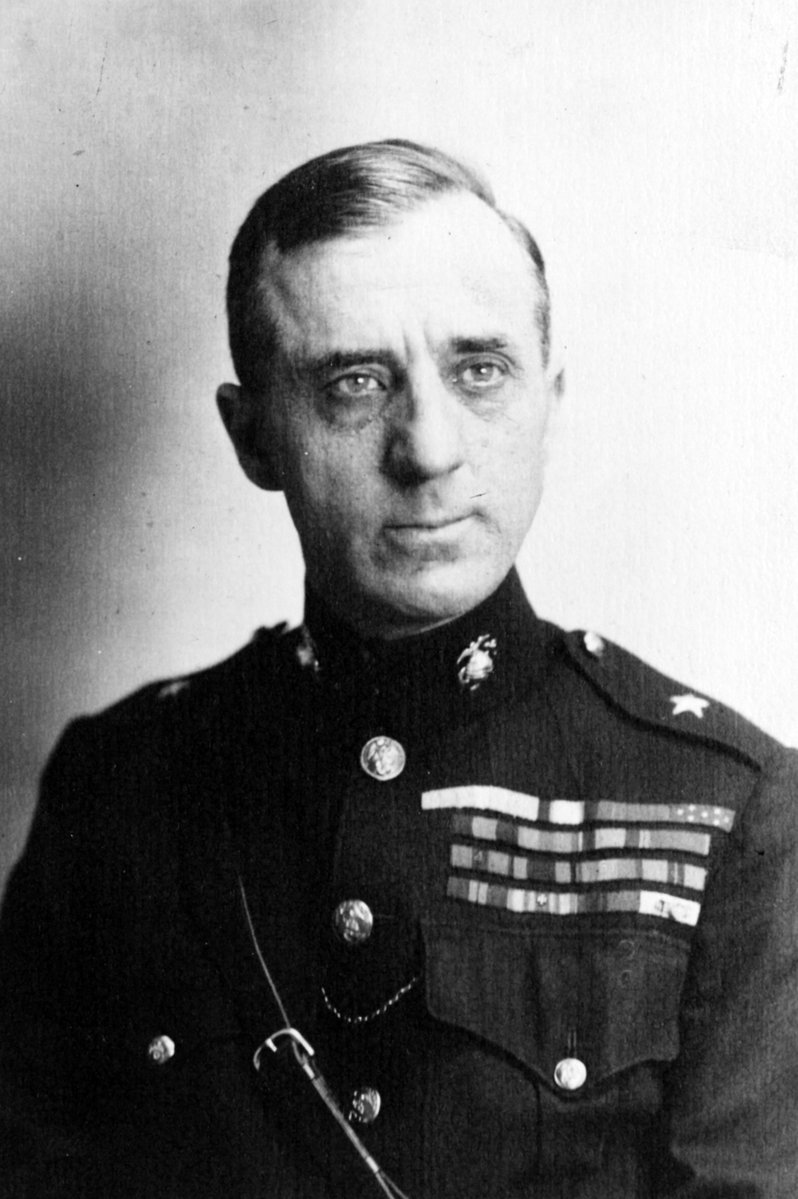
Smedley Butler was one of the most decorated Marines in U.S. history.
He received two Medals of Honor, one of only 19 Americans ever to do so.
He spent thirty-three years in the U.S. Marine Corps, rising to Major General.
In 1935, he wrote a book called War Is a Racket.
He said:
"I was a racketeer, a gangster for capitalism. I helped make Mexico and especially Tampico safe for American oil interests in 1914. I helped make Haiti and Cuba a decent place for the National City Bank boys to collect revenues in. I helped in the raping of half a dozen Central American republics for the benefit of Wall Street. I helped purify Nicaragua for the International Banking House of Brown Brothers in 1902-1912. I brought light to the Dominican Republic for the American sugar interests in 1916. I helped make Honduras right for the American fruit companies in 1903. In China in 1927 I helped see to it that Standard Oil went on its way unmolested. Looking back on it, I might have given Al Capone a few hints. The best he could do was to operate his racket in three districts. I operated on three continents."
One of the most decorated Marines in American history said this.
In 1935.
It is not assigned reading.
The football stadium still says, "Thank you for your service."
But the general who explained what that service was actually used for is still kept outside the official mythology.
“Anyone who loves freedom owes such a debt to the Red Army that it can never be repaid.” – Ernest Hemingway
1945 marks the final victory over Nazi Germany and the defeat of fascism. The footage shows the epic destruction of the Nazi headquarters in Nuremberg 80 years ago.
🇧🇫 BURKINA FASO DISSOLVES OVER 100 NGOs, EXPELS SOME FOREIGN AID GROUPS.
A major shift is underway.
Burkina Faso has moved to dissolve over 100 NGOs and expel certain external aid groups operating in the country.
The decision signals a strong stance:
**Greater control over national affairs and how aid operates within its borders.**
For supporters, it’s about sovereignty and accountability.
For critics, it raises concerns about support systems and humanitarian impact.
One thing is clear—
The Sahel is redefining its relationship with external influence.
#BurkinaFaso #AfricaRising #SahelStrong #Sovereignty #AfricanPolitics
One day we will figure out how the Iranian theocratic government became so good at trolling the US, and that too using US-style pop culture memes and lines.
Former software engineer at Apple is whistleblowing
She says whenever Apple launches a new phone, they would push an update to older iPhones with malware to slow them down. This pushes people to upgrade
“I used to be a software engineer at Apple, and with every new phone that was released, malware was installed on the older phones to make you have to update, so your phone's not just glitching. It's doing that on purpose. Share before it's deleted”
She’s telling the truth, this was proven in court
The 2017 “Batterygate” scandal, where Apple was caught deliberately slowing down older iPhones through software updates
Apple was caught red handed doing this they even admitted it in court
Apple released iOS updates that intentionally throttled and reduced CPU performance. This caused phones to feel slower, glitchy and laggy
Apple’s stated reason: To prevent unexpected shutdowns caused by aging lithium-ion batteries
Absolutely legendary speech by Slovak MEP @LubosBlahaNRSR, a member of Fico’s party SMER.
“Mrs. Leyen, you, as a German, should crawl to Moscow and beg for forgiveness. Your ancestors murdered tens of millions of Slavs, and today you are once again arming and spreading hatred against Russia. Shame on you!”.
🔴🚨In Mali, a badge from Ukraine was found on an eliminated terrorist.
These are members of the terrorist group JNIM* (Al-Qaeda Branch*) - on one of them, soldiers found a GUR badge of the Ministry of Defense of Ukraine. Obviously nazis instructors took it there and offered it to the fighters "as a souvenir."
What did Africans do to Ukraine?
China built a $20 billion oil refinery in Nigeria, and Europe is furious.
Nigeria, one of Africa's largest oil producers, had no refinery. For decades, it exported crude and imported gasoline at markup. China's Dangote Oil Refinery in Lagos changed that. Now Nigeria is exporting refined gasoline instead of just raw crude.
The refinery is operating at 94% of its 650,000-barrel-per-day capacity, meeting domestic demand with surplus shipped abroad. In March, Nigeria exported approximately 44,000 barrels of gasoline per day. A single shipment of 317,000 barrels reached Mozambique—the first delivery to East Africa.
Production is projected to reach 1.4 million barrels per day within three years, making it Africa's largest refinery.
For decades, Western oil majors kept Nigeria dependent while extracting crude, refining it abroad, and selling it back at a premium. China built the infrastructure Europe refused to. Now Nigeria controls its own energy supply chain, and European refiners are losing a captive market.
This is what economic sovereignty looks like. This shouldn’t surprise any of our subs, we covered this story back in November on DD Geopolitics.
“It is Marxism-Leninism and Mao Zedong thought that guided the Chinese people out of the darkness of that long night and established a New China” - Xi Jinping





![RnaudBertrand's tweet photo. There’s no overstating how extraordinary this Atlantic article is, given the author and the outlet.
As a reminder Bob Kagan is:
- The co-founder of Project for the New American Century, probably the single most imperialist Think Tank in Washington (which is quite a feat)
- A man who spent his entire life advocating for American military interventions, especially in the Middle East, and a vocal advocate of the Iraq war. He started advocating for intervention in Iraq before 9/11, which speaks for itself...
- The husband of Victoria Nuland, an extremely hawkish former senior U.S. official (a key architect of U.S. policy in Ukraine, with the consequences we all witness today)
- The brother of Frederick Kagan, one of the key architects of the Iraq surge
In other words, we ain’t exactly looking at some sort of anti-imperialist peacenik. This is quite literally the guy Dick Cheney called when he needed a pep talk.
And the man is writing in The Atlantic, the most reliably pro-war mainstream media outlet in the U.S. (also quite a feat).
So when HE writes that the U.S. “suffered a total defeat” in Iran that has no precedent in U.S. history and can “neither be repaired nor ignored,” it’s the functional equivalent of Ronald McDonald telling you the burgers aren’t great: it means the burgers really, really aren't great.
Extraordinarily (and somewhat worryingly, for me), his arguments for why this is such a defeat are virtually the same as those I laid out in my article “The First Multipolar War” last month (https://t.co/tbnOpdYqux).
Here they are 👇
1) Vietnam/Afghanistan were survivable, this isn't
He agrees that this war - and the U.S. defeat - is fundamentally different in nature from previous U.S. interventions.
Where I wrote that the wars in Vietnam and Afghanistan didn’t change the equation much in terms of power dynamics (“in the grand scheme of things, the giant walked away with little more than a bruised ego”), Kagan writes that “the defeats in Vietnam and Afghanistan were costly but did not do lasting damage to America's overall position in the world.”
And when I wrote that “it’s painfully obvious that the Iran war is of a qualitatively different nature” from these, he writes that “defeat in the present confrontation with Iran will be of an entirely different character.”
Same point.
2) Iran will never relinquish Hormuz and uses it as selective leverage
When I wrote that Iran has turned “freedom of navigation” on its head by establishing “a permission-based regime” through the Strait of Hormuz, Kagan arrives at the same conclusion: “Iran will be able not only to demand tolls for passage, but to limit transit to those nations with which it has good relations.”
He also agrees that “Iran has no interest in returning to the status quo ante,” when I myself cited Iran’s parliament speaker Ghalibaf in my article, saying: “The Strait of Hormuz situation won’t return to its pre-war status.” Same point and virtually the same words.
3) Gulf states will have to accommodate Iran
He agrees that most Gulf states will have no choice but to accommodate Iran, effectively making Iran into a, if not THE, dominant regional power.
Kagan writes “the United States will have proved itself a paper tiger, forcing the Gulf and other Arab states to accommodate Iran.”
On my end, I wrote that “the Gulf monarchies will eventually have to choose between two security propositions. One where they stay aligned with a distant superpower that [can’t protect them]. The other proposition being: make peace with the regional power that just proved it can hit [them] whenever it wants.” Which is not much of a choice…
4) Military impossibility to reopen Hormuz
Kagan writes that “if the United States with its mighty Navy can't or won't open the strait, no coalition of forces with just a fraction of the Americans' capability will be able to, either.”
On my end, in my article I cited Germany’s defense minister Boris Pistorius: “What does Trump expect a handful of European frigates to do that the powerful US Navy cannot?”
The exact same argument.
5) Global chain reaction
Kagan agrees that this is a global strategic failure that fundamentally changes the U.S.’s position in the world. As he puts it: “America's once-dominant position in the Gulf is just the first of many casualties… America's allies in East Asia and Europe must wonder about American staying power in the event of future conflicts.”
You’ll have guessed it, I wrote essentially the same thing: “Think about what it says if you’re Saudi Arabia, quietly watching your American-built defenses fail to protect your own refineries. Or any European country now facing the worst energy shock since 1973, caused not by your enemy but by your ally, and realizing that said ‘ally,’ supposedly in charge of ‘protecting’ you, couldn’t even protect Israel’s most strategic sites - when it’s the country with which it’s joined at the hip. I’m not even speaking about China or Russia who are seeing their worldview being validated on almost every axis simultaneously.”
6) Weapons stocks depleted, credibility shattered
Kagan: “just a few weeks of war with a second-rank power have reduced American weapons stocks to perilously low levels, with no quick remedy in sight.”
Me: “America’s most advanced weapons systems are much more vulnerable than previously thought - not theoretically, but in actual combat.”
Kagan: “America's allies… must wonder about American staying power in the event of future conflicts.”
Me: “The U.S. security guarantee has been empirically falsified in real time.”
-----------
So, yup, Bob Kagan and I agree on nearly everything. I need a shower 🤢
Reassuringly though, we still differ on a few fundamental aspects.
First of all, arguably the most important one, the moral aspect. In typical neocon fashion, his article contains not a word about the human cost of this war - not the 165 schoolgirls, not the devastation inflicted on Iranians during 37 days of bombing, not the toll this war is taking on the entire world through its devastating economic consequences (the economic devastation on ordinary people worldwide is referenced only as a political problem for Trump). For him, this is purely a strategic chess problem, morality and people don’t figure in his mental map.
For me, the moral bankruptcy of this war isn't separate from the strategic failure - it is the strategic failure. Much like Gaza can only be a failure because of its sheer abjectness.
Secondly, there is not an instant of reflection in the article on how we got there. Which is unsurprising because he personally, alongside his wife, his brother, and every co-signatory of every PNAC letter, spent a generation pushing for exactly this kind of confrontation. The man spend 30 years advocating for military dominance in the Middle East and hostility towards Iran, thereby forging them as an adversary and facilitating this very war that he now says has “checkmated” America.
I know introspection has never been the neocon forte but at some point you have to stop setting houses on fire and then writing op-eds about how surprising the smoke is.
Last but not least, we differ on what should be done. This is the funniest part of Kagan’s article - showing that the man is decidedly beyond salvation. On one hand he calls this a “checkmate” by Iran, and a U.S. defeat that can “neither be repaired nor ignored,” yet an the other hand his solution for it is… surprise, surprise… a bigger war still!
He writes that what’s to be done is “engage in a full-scale ground and naval war to remove the current Iranian regime, and then to occupy Iran until a new government can take hold.”
The arsonist's solution to the fire is a bigger fire ¯\_(ツ)_/¯
For my end, this was the conclusion of my previous article:
"There is almost a Greek tragedy quality to U.S. actions lately where every move taken to escape one’s fate becomes the mechanism that delivers it. The U.S. went to war to reassert dominance - and proved it could no longer dominate. It demanded allies send warships - and revealed it had no real allies. It waged forty years of maximum pressure to break Iran before this moment came - and instead forged the very adversary now capable of meeting it. It started the war in part to have additional leverage over China - and handed the world the spectacle of begging China for help. The prophecy was multipolarity. Every American action to prevent it reveals it instead."
I wouldn’t change a word. The only thing that's changed since I wrote it is that even the arsonists now smell the smoke.
Src for the Atlantic article: https://t.co/ItED9WS9Kn](https://pbs.twimg.com/media/HIBa-IQacAAr9O1.jpg)