What can be built with Rs3.5 trillion?
1. Around 9,700 primary and elementary schools at the cost of Rs100 million per school
2. Around 5,700 basic health units at the cost of Rs150 million per unit
3. Around 40,500 km of roads at the cost of Rs25 million per km
4. Around 2,640 water and sanitation schemes at the cost of Rs250 million each
5. All in just one year
https://t.co/g8RzWvDnQO
Al-Qaeda-linked accounts claim JNIM affiliates are advancing on multiple fronts toward Mali’s capital Bamako, have captured key strategic locations, and are now moving on the presidential palace. “There’re reports of the arrest of Minister of Defense,” accounts claim.
Iran without sanctions: Pakistan’s $36b upside
PAKISTAN shares a 900-kilometre border with one of the world’s largest energy endowments: 208 billion barrels of proven oil — about 12 per cent of global reserves, the third largest in the world — and nearly 1,200 trillion cubic feet of natural gas, the second largest after Russia. Combined, this resource base carries an estimated market value of around $20 trillion.
The 900-km border is the most under-traded, under-piped, under-utilised asset Pakistan has. What can move across it? One: crude oil — 8–10 million tonnes a year, worth $4–6 billion. Two: diesel, petrol, furnace oil — $2–3 billion. Three: LPG, ethane, naphtha — $1–2 billion. Four: fertilizer and downstream chemicals — $1–2 billion. Five: cross-border electricity — 1,000–2,000 MW, worth $1–1.5 billion. Total tradable energy basket: $9–14 billion a year.
Red alert: Pakistan’s most valuable corridor is not blocked by geography—it is blocked by policy. What can be piped? Natural gas — 750 to 1,000 mmcfd through the Iran–Pakistan pipeline — replacing imported LNG and saving $5–7 billion a year. Refined fuels through product pipelines — diesel, petrol — cutting logistics costs and import leakages by another $1–2 billion. Add it up: $6–9 billion annually. Not from new discoveries. From moving molecules more intelligently.
How can the 900-km border be monetised? Start with Gwadar — storage, blending, transshipment — a $1–2 billion opportunity. Add transit: Iran–Pakistan–China flows, pipelines and trucking corridors, another $2–3 billion annually. Then the real prize — petrochemicals. Feed cheap ethane, LPG, and naphtha into fertilizer, plastics, and polymers. Export more. Import less. That’s $5–8 billion. Add it up: $8–13 billion a year.
Add it up. At the low end: $9 billion plus $6 billion plus $8 billion — $23 billion a year. At the high end: $14 billion plus $9 billion plus $13 billion — $36 billion a year. A $23–36 billion opportunity. The menu is large. Execution has been negligible. Red alert: This is not theoretical. This is not distant. This is sitting on a 900-km border. Pakistan’s balance-of-payments problem is, at its core, an energy problem (annual energy imports $20–25 billion). Every dollar saved on LNG, oil, and diesel is a dollar earned. Stack those savings — gas substitution, crude discounts, imported electricity — and they begin to behave like revenue. This is Pakistan’s energy arbitrage margin.
Remember: Pakistan does not run out of rupees — it runs out of dollars. And those dollars leave for three things: oil, LNG, and petroleum products. Why hasn’t Pakistan monetised the 900-km border? Three reasons. One: sanctions risk — banks, insurers, and contractors step back. Two: contract credibility — investors fear policy reversals and payment delays. Three: fragmented decision-making — multiple ministries, regulators, and provinces, each with veto power.
Red alert: Capital does not wait. It walks away. The day sanctions lift, capital will not queue — it will race. China will move from Gwadar inward. Turkey will position itself as a westward hub. Gulf players will secure upstream stakes. The first mover captures the corridor. The late mover pays transit. What does Pakistan need to do? Pakistan needs three decisions. One: ring-fence energy contracts with sovereign guarantees. Two: create a single-window authority with binding timelines. Three: pre-negotiate pipeline, refinery, and grid agreements before sanctions lift. Yes, sanctions may persist. Yes, geopolitics can shift. But Pakistan must prepare for upside, not just manage downside. Countries that wait for certainty miss opportunity.
Total impact: up to $36 billion – roughly 10 percent of Pakistan’s GDP. That’s nearly one-tenth of the entire economy. That’s equivalent to most of Pakistan’s annual export earnings. That’s a large chunk of total federal revenues. This is not a marginal opportunity—it is a balance-sheet event. Pakistan is not energy-poor. It is policy-poor. Fix the 900-km border — and the dollars will follow.
https://t.co/JyoUNuqBBG
If the Pakistan-brokered ceasefire had not occurred over two weeks ago then, by now, Iran and all the Gulf states would have experienced catastrophic damage to their energy, communications, and water infrastructure, effectively turning the region’s demographic and economic clocks back to 1950.
This would have plunged the world into an economic depression comparable to 1929 and likely triggered a wider regional war or even global war.
The worst has been averted for now.
A better path forward is being constructed.
🇹🇷, 🇪🇬, 🇸🇦, 🇶🇦, 🇴🇲, 🇨🇳, are supporting 🇵🇰 in trying to bring an end to the war.
This is an incredibly difficult challenge, but if any nation can meet it its Pakistan.
Iran’s foreign policy has long been shaped, indeed constrained, by two enduring syndromes: the “Herat Syndrome” and the “Faw Syndrome.” These twin pathologies have persistently influenced its strategic behavior.
The Herat Syndrome refers to the absence of strategic patience; the Faw Syndrome reflects the inability to translate military gains into diplomatic advantage.
The roots of the Faw Syndrome go back to the capture of the Faw Peninsula during Operation Valfajr-8 on February 9, 1986. That victory led Iranian leaders at the time to believe a total defeat of Iraq was within reach, reducing their willingness to show flexibility in negotiations. Yet the military success failed to yield a diplomatic outcome, and the war ultimately ended with the acceptance of UN Security Council Resolution 598.
The Herat Syndrome reflects a lack of strategic patience; the failure to endure long enough to secure geopolitical gains. It traces back to the 1856 recapture of Herat by Hessam al-Saltaneh. As the Indian Rebellion loomed, he warned the Shah: “Whatever you ask of the British, they will concede. Do not give away your gains.” Yet Naser al-Din Shah, at the critical moment, granted major concessions to a weakened Britain.
Today, the issue of the Strait of Hormuz and the 400 kilograms of enriched uranium may once again be caught in this same dual trap.
The risk is clear: neither the “moment of conversion” is properly recognized, nor the “strategic patience” required to capitalize on it is sustained.
The outcome might be a breakdown between military operations and diplomatic action, neither translation nor continuity emerges between the two.
This is where history repeats itself; this time, at a far greater cost.
BREAKING: The US just struck Kharg Island, through which 90 percent of Iran’s crude exports flow, on the same day that bridges and railway lines are being destroyed across the country and the IRGC warned it would deprive American allies of the region’s oil and gas for years. Markets moved crude three percent on the Kharg headlines. They are looking at the wrong variable.
Kharg is where oil leaves Iran. Asaluyeh and Mahshahr are where oil becomes molecules. Both have now been destroyed. That distinction matters more than any barrel count, because the world does not run on crude. It runs on what crude becomes after it passes through a steam cracker at 850 degrees: the ethylene that makes your packaging, the propylene that makes your car dashboards, the ammonia that feeds your soil, the methanol that synthesises your pharmaceuticals, and the helium that cools the lithography machines fabricating every advanced chip on earth.
The IEA calls this the largest supply shock in the history of the global oil market. They measured barrels. The binding constraint is not barrels. It is molecules. And molecules do not respond to the mechanisms that clear oil shocks. You cannot release strategic reserves of propylene because no country has ever stockpiled it. You cannot substitute US ethane crackers because ethane produces ethylene but not propylene, not aromatics, not butadiene, and that is quantum chemistry, not economics. You cannot wait for a ceasefire because Dow’s CEO said last week that even after the strait reopens, petrochemicals will be last in the transit queue behind oil, gas, and fertiliser, and the heat exchangers required to rebuild the damaged facilities are manufactured by exactly five companies on earth with lead times of 18 to 36 months.
What happened today at Kharg compounds the crisis in a way nobody is modelling. The destruction of upstream crude export capacity eliminates the revenue Iran would need to fund petrochemical reconstruction AND eliminates the feedstock that would eventually flow to whatever crackers survive. The war is destroying the input and the output simultaneously. There is no historical precedent for the concurrent annihilation of a nation’s crude export terminal, its petrochemical processing capacity, its steel production base, and its transport infrastructure in the same five-week campaign. The closest analog is IG Farben after 1945, and full restoration of that integrated chemical ecosystem required over a decade.
The IRGC’s own threat confirms the duration thesis. They said years, not months. The industry’s own assessment confirms it. C&EN titled their April 3 analysis: “Iran war will debilitate petrochemicals for the rest of 2026,” and that is the most optimistic institutional estimate. QatarEnergy says Ras Laffan repairs take up to five years. The five heat exchanger manufacturers cannot simultaneously rebuild six countries. The biological clock for nitrogen-dependent crops does not wait for diplomatic negotiations.
Markets price the conflict in barrels and months. The chemistry prices it in molecules and years. The gap between those two frames is the largest temporal arbitrage in modern financial markets, and it widened today.
Full analysis - https://t.co/0fIdGsM5qH
In 1974, Henry Kissinger brokered a deal with Saudi Arabia: price your oil in dollars, recycle the surplus into US Treasuries, and America guarantees your security. The arrangement was never a formal treaty. It was a handshake backed by aircraft carriers. For fifty years, every barrel of oil sold anywhere on earth created demand for the dollar that financed America’s debt. The system required two things to function: Gulf oil priced in dollars, and an American navy guaranteeing the strait through which that oil flowed. Both conditions held until February 28, 2026.
Iran closed the Strait of Hormuz. Not physically but operationally, by mining approaches, attacking tankers, and establishing an IRGC toll booth that vets vessels, charges in yuan or stablecoins, and escorts approved ships through the Larak corridor. Traffic collapsed 95 percent. The oil that still flows does not flow in dollars. It flows in yuan, settled through CIPS, paid to an organisation the United States designated as a terrorist group. Iran has exported over 11.7 million barrels to China since the war began, all in the currency of a country that claims neutrality. The petrodollar is not being challenged by a BRICS policy paper. It is being challenged by a toll booth.
The United States holds $39 trillion in gross national debt. That debt is serviceable because foreign governments buy Treasuries. Foreign governments buy Treasuries because they accumulate dollars. They accumulate dollars because oil is priced in dollars. If oil stops being priced in dollars, the demand that finances the debt weakens. Saudi Arabia’s Treasury holdings fell to $134.8 billion in January 2026, down $14.7 billion in a single month. The Saudis let the 1974 agreement lapse in June 2024 without renewal. The recycling loop that Kissinger built is loosening at the same moment that the strait through which it operated is controlled by a hostile military collecting tolls in a rival currency.
This is what the war is about. Not the nuclear programme, which was the stated justification. Not the missiles, which are the visible weapons. The war is about which currency buys the molecule that powers the global economy, and the answer to that question is being determined at a 34-kilometre chokepoint by an entity that charges admission in yuan. Every American strike on Iranian infrastructure degrades the capability to maintain the toll. Every barrel of Iranian oil sold to China in yuan during the war demonstrates the toll’s viability. The strikes and the sales are running simultaneously. The petrodollar and its replacement are being tested in the same theatre at the same time.
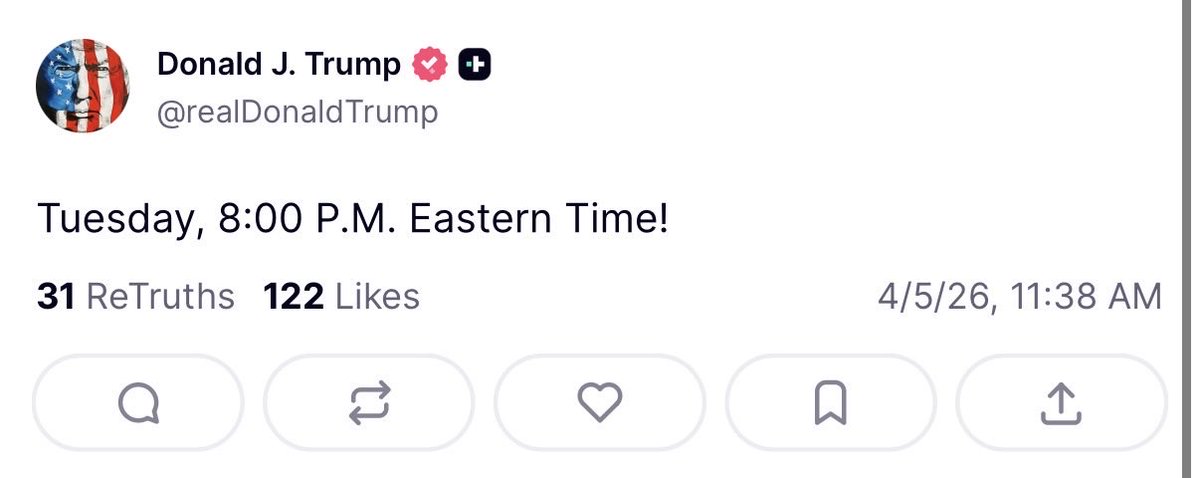
Trump’s Tuesday deadline is the enforcement mechanism. “Power Plant Day” is not about punishing Iran for closing the strait. It is about ensuring that when the strait reopens, the oil flows in dollars and the $39 trillion remains financeable. The F-35 sales to the UAE and Saudi Arabia are not arms deals. They are petrodollar anchors, binding Gulf security to American hardware that requires American currency. The rescue proved reach. The strikes prove capability. The F-35 contracts prove commitment. And the toll booth proves that all of it might not be enough.
The 1974 handshake held for fifty years. The 2026 toll booth has operated for five weeks. The question the deadline answers tonight is whether fifty years of dollar dominance or five weeks of yuan experimentation determines what comes next.
https://t.co/dAOBBMsgDS
The Strait of Hormuz disruption is affecting more than #oil and gas, with impacts emerging across a range of key #commodities. Here are 9 materials now most exposed to the shift in global supply flows. https://t.co/4MZ70p50Gb
The very basic thing which the U S. And the rest of the world needs to understand :
"The Islamic revolution saw Itself liberating Iran from American imperialism. That was the grand narrative of the revolution. I know we’re very focused on the Islamic dimension always. And yes, it was an Islamic revolution, but the worldview of the Islamic Republic and its anti-Americanism come from the fact that they believe that in the 19th century, Iran was under the thumb of imperialism, much like China, much like India. And then in the 20th century, the Pahlavi monarchies were captured by the United States and that the Islamic Republic truly liberated Iran. And it has been in a struggle with America to protect that liberation. And they see the war in June and this war essentially as a determined U.S. effort to subjugate Iran again. And so the response is very much like the response they’ve had over the past. They now see Israel essentially as an extension of the U.S. in the region. So for them, the the grand narrative of the Islamic revolution is that for the past 2-3 hundred years, Iran had basically lacked genuine independence." says @vali_nasr in an interview with India's best expert @johnstanly on international affairs and geopolitics.
A must read conversation!
https://t.co/IvKEkw6ZiC
In tonight’s show, I speak with Dr Robert Pape whose theory of the Escalation Trap is the hottest trending topic in the world today. This is Dr Pape’s first interview to a Pakistani channel.
A superb interview of Mearsheimer by Fahd Hussain.
Bottom line - the US has stepped on the wrong rattlesnake. The war will continue until the US & its allies make major concessions to Iran. Iran is in no hurry to make a deal. The world better prepare to manage the fallout:
#Chinese research on Taliban-ruled #Afghanistan
A Chinese researcher has recently visited Afghanistan and concluded that the Taliban are simply not inclined to consider China's demand for the extradition of leaders and members of the terrorist East Turkestan Islamic Movement (#ETIM).
Liu Zongyi, the Director of the Center for South Asia Studies at Shanghai Institutes for International Studies (SIIS), says he visited Kabul at the invitation of the Taliban foreign minister, Amir Khan Muttaqi, to conduct research on the multiple challenges facing Afghanistan.
In his post-visit interview published by his institute on its website, Liu Zongyi states that many terrorist groups, such as #ISKP, East Turkestan Islamic Movement (#ETIM), Pakistani Taliban or #TTP, and Baloch Liberation Army or #BLA, remain active in Afghanistan, with some of these having "even relocated their headquarters to the country and are poised to expand further."
He highlighted that the "ETIM has become one of the most difficult sticking points" in exchanges between China and the Taliban. De facto Afghan authorities "confidently claim" that ETIM is now "fully under their control," but clearly show reluctance to hand members of the terrorist group over to China, the researcher said, adding that his hosts listed several reasons for their refusal to make any concessions. They stated that ETIM members fought alongside the Taliban against the Soviet invasion, forming a so-called “comradeship in arms,” with both sides sharing the Islamic faith, according to Liu Zongyi. He quoted the Taliban as insisting that they have an obligation under their Pashtun tribal customs to protect those seeking asylum in Afghanistan rather than hand them over, while socially, these ETIM individuals have developed family ties, including marriages with local Afghans. The Chinese scholar stated that the ETIM has also pledged loyalty to the Taliban leadership and helps them in maintaining order in certain Afghan areas.
The rare Chinese study clearly shows that Afghanistan's Islamist leaders are determined to shelter and protect transnational extremist groups, whether they are anti-China, anti-#Pakistan, like the #TTP, or others, rather than prioritizing better relations with neighboring and regional countries. https://t.co/c8TY8S9akL
Are you paying attention???
Joe Kent >
"I will not send young Americans to die on foreign land"
This is a campaign speech.
He is clearly positioning himself as a potential US presidential candidate.
The pedo-Epstein elites are clearly manufacturing their new candidate who will tell people what they want to hear > "no more endless war BS mantra."
He is another Obama, Gabbard, Trump reading the elites'script.
And he is going to be given a MASSIVE EXPOSURE.
Demonised, yes probably by some as he need to appear as "anti-system".
But the exposure will say it all, real opposition is cancelled, obliterated.
He is no Hero, he is no anti-war, he will fool American voters, a vicious circle of deceptions.
Welcome to Obama.2
There have been a bunch of really outstanding articles on Iran, like this granular look on US nuclear diplomacy, on @amwajmedia. I haven’t followed it for long—which is my loss—but its great to see in-depth journalism flourishing https://t.co/TtmBU57Yj8