Trilateral German-US-Russian Project to Analyze the Next Steps in Arms Control and Disarmament. RT ≠ endorsement. Tweets ≠ opinion of Deep Cuts Commissioners.
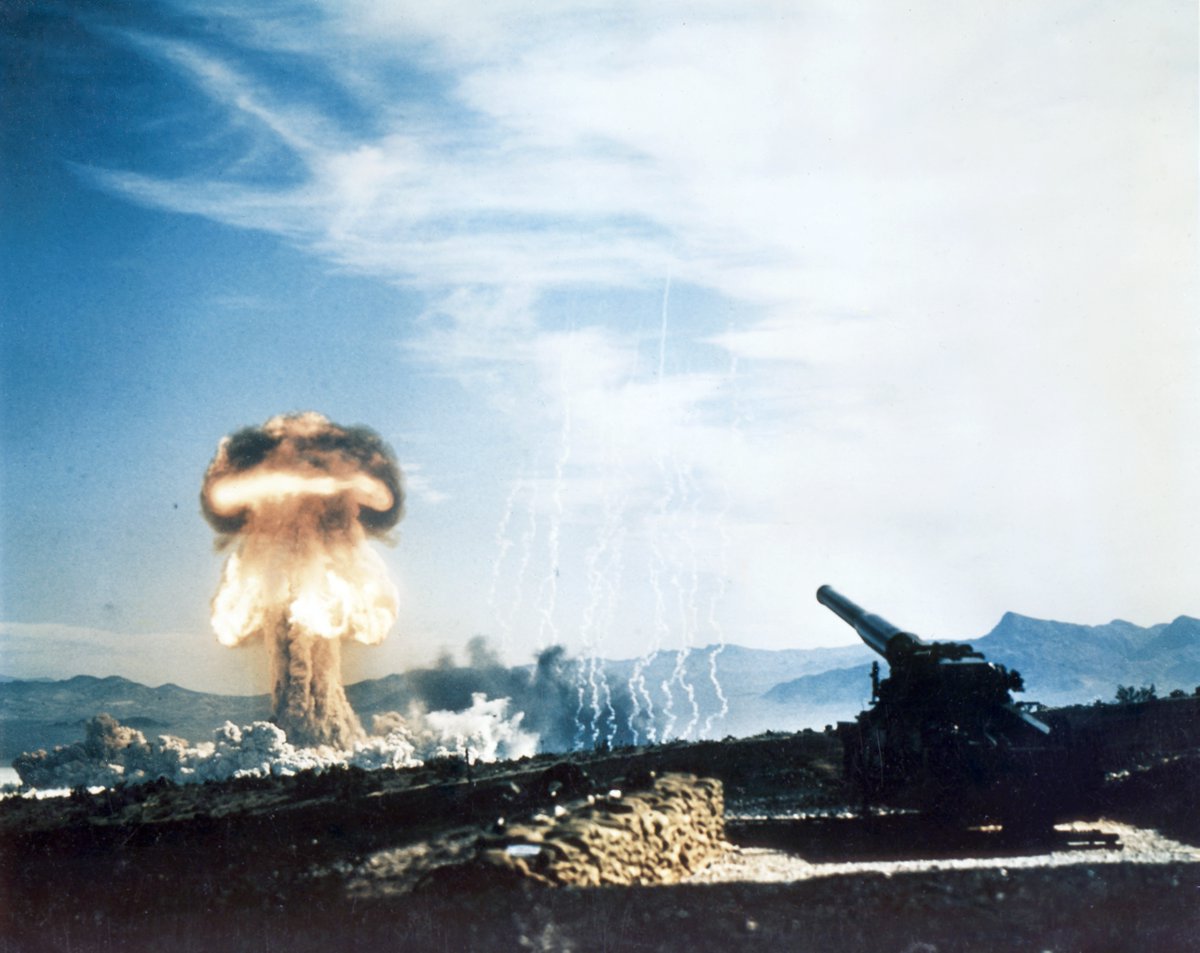
With President Trump's announcement that the US should prepare for nuclear weapon tests nuclear explosions are back on the agenda. Our report from last year covers the policies and incentives for resuming tests of the three major nuclear states 🇷🇺 🇨🇳 🇺🇸 https://t.co/VIgxLu2BTr
https://t.co/P4xpvdNgSL Full version of President Putin's statement on the readiness to comply with New START limits one year after its expiration if the US do so as well
President Putin announced Russia will stick to New START limits for a year after the treaty expiration in 2026, and will review its policy according to the US actions after https://t.co/AxgCZwiQ9J
An important and positive move: "Putin offers Trump a temporary nuclear arms control deal that would extend status quo by one year." https://t.co/wqRE0x7SDC via @@Yahoo
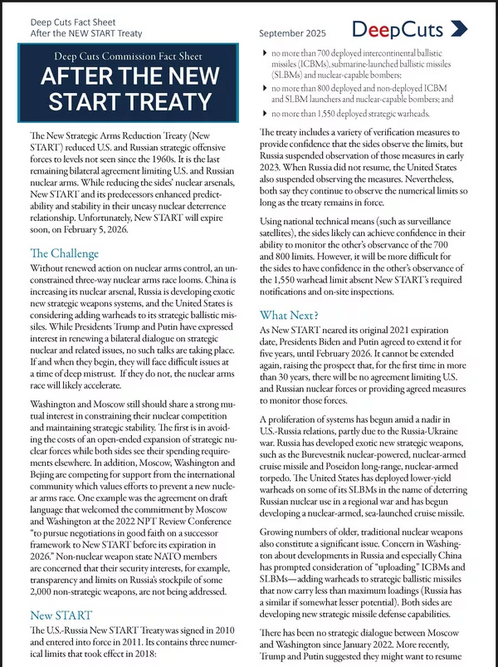
Time is running out. With New START expiring in February 2026, Washington and Moscow can still avoid an unconstrained nuclear arms race. The Deep Cuts Fact Sheet shows how—and the role the P5 and international community can play. https://t.co/jplkq4GFkx
The Deep Cuts Commission mourns the loss of Sergey Rogov, who passed away at the age of 76. Sergey was a distinguished expert on deterrence and arms control and a cherished colleague with whom discussions were always enriching. Sergey, you will be deeply missed.
To avoid this:
- The P5 should recommit to the CTBT and uphold unilateral moratoria on testing
- 🇺🇸, 🇷🇺 & 🇨🇳 should undertake unilateral and reciprocal test site transparency measures
- 🇨🇳 & 🇺🇸 should work to ratify the CTBT simultaneously with Russia re-ratifying it
States are talking about nuclear testing again. This new Deep Cuts working paper looks at indicators that we are moving closer to a return of nuclear tests and what states can do to avoid this. By Lynn Rusten, @HannaNotte and Anastasia Malygina! https://t.co/VIgxLu243T (1/4)
This paper examines shifting geopolitical landscape and highlights increasing activities at nuclear test sites in China, Russia, and the U.S. that could indicate preparations for testing, alongside the enduring challenges posed by the CTBT's ratification process. (3/4)
Unilaterally, states can conduct nuclear fail-safe reviews and share best practices among all nuclear-armed states. The US could lead by sharing its review.
by Lynn Rusten, @steven_pifer, Götz Neuneck and Victor Mizin
Global nuclear arsenals have declined to ~13,000 warheads due to US-Russia arms control. However, other states are expanding their capacities. Future agreements need to involve more nuclear-armed states and additional systems. https://t.co/9mXGi7xFNs
The UNSC Permanent Five should intensify dialogue on nuclear arms issues, including strategic balance, uniform reporting, and risk reduction. If possible the exchange should be elevated to under-secretary of state level and discuss possible formats for negotiating reductions.
The US is set to join Russia and others in deploying hypersonic weapons – traveling at speeds over Mach 5. While alarmism is misplaced, #hypersonic boost-glide vehicles bring new risks for inadvertent escalation and arms control challenges https://t.co/p1FXrVpAyA
To mitigate these risks, states should clarify BGV missions, maintain open hotlines between commanders who can make strategic decisions and coordinate for future arms control opportunities amongst allied states. #RiskReduction#GlobalSecurity